Showing posts with label electronics. Show all posts

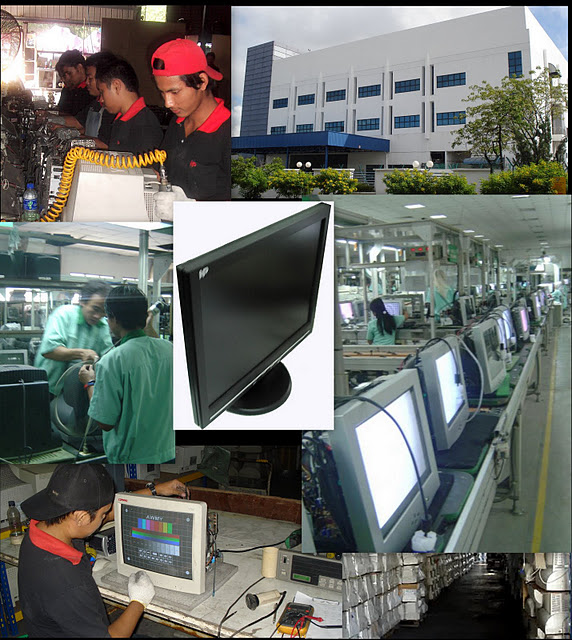
Defense of Importation of Used Electronics and the Geeks of Color


Tonight I asked AI to summarize the theme of my blog in two paragraphs.


Meanwhile I have had zero feedback or demand for my company's INDIUM bearing panels

Robin Ingenthron's "Pecha Kucha" presentation (2018)


For me, the rules of Pecha Kucha are a bit like Fight Club... I was so nervous after this 2018 presentation in Burlington, Vermont, that I have never told anyone about it, or mentioned that it's recorded online. I went home and resolved never to watch it.

But I just did... and really, it's not that bad.  *continued

First "Fan Mail" from Secondhand, Right To Repair in Connecticut

Got a letter from a resident in Connecticut this morning, who had just finished reading Adam Minter's new book "Secondhand".  I won't expect many of them, but figured I could be public in my response as to why Connecticut is the ONLY state in the Northeast we do NOT collect used electronics from.

The history has to do with the regulators who wanted to apply hazardous "Universal Waste Rule" regulations to used electronics, effectively classifying "Secondhand" as "Waste" under RCRA. A regulator once told me he believed he could legally take away my smart phone if it was "non-working".  

Here's the response to our fan in Connecticut...

Hi Chris, 
Thanks so much.  
Ironically, I was Division Director at Massachusetts DEP when Tom Metzner was writing the regs for your Connecticut. We split over the issues (exports, and what I felt was racially profiling the tech sector in emerging markets) that keep my company (established 2001 when I left MA DEP) from doing business in Connecticut (the only state we don't collect in). In Tom's defense, we were both being bombarded with propaganda from the hazardous waste and Big Shred sectors. I was just fortunate to have travelled to meet the people who were trying to buy stuff, and having surveyed 200+ TV and computer repair shops in New England (who explained a TV is a lot more hazardous plugged into a wall and broadcasting ads in your living room than it is in a landfill or recycling yard).
Yep, we accept 1) anything with a cord, and 2) cordless electronics.  
If you want to contribute further, or spread the word, visit WR3A.org or its new website fairtraderecycling.net, a non-profit that acts as an "anti-defamation league" for geeks of color. 
Robin

Ethical Gravity 4: Moral Moving Targets, Beautiful Gray Markets

Is an "illegal" market, or a "black market", unethical?

It is illegal to sell the Holy Bible in many nations, but who would consider it unethical?  It is important to distinguish ethics from laws passed by authorities to grant - well, more and more authority.

Beautiful, beautiful gray.


Racketeering or Certification 6: Defamation Is The Only Product BAN Sells

The 2019 Certification or Racketeering series of blogs began about Total Reclaim of Seattle.  Craig Lorch and Jeff Zirkle were sentenced last week on their fraud case.  I offered to fly in to testify, and sent them a letter for the judge, to make the case (as in the blog) that the executives at Total Reclaim had been told by BAN that 80% of recyclers were shipping 80% of goods overseas, where 100% percent were smashed by hands in primitive conditions. As I testified at Brundage's sentencing hearing in Chicago, those were false claims.


  • BAN begins by defaming the Tech Sector overseas, with wild hallucinatory descriptions of thousands of orphans in rice paddies beating electronics with hammers. 
  • BAN creates a lie about the Basel Convention having been "amended" to criminalize legal exports (reuse, repair and recycling are ALL legal under the actual Basel Convention, not just "tested working")
  • BAN then defames those who (like yours truly) question or rebut the initial defamation, or correct information they give about the Basel treaty.
  • BAN defames the companies who don't pay tribute through E-Stewards certification, and defames the alternative certifications.
  • If the companies like Intercon or Total Reclaim threaten to withdraw from BAN, or defend themselves (Total Reclaim exported far less than 10% of the material they received), BAN's enforcement is to defame them.

Essentially, defamation and slander are BAN's only product. And at its root, the initial domino of defamation - of people in faraway geographies beating LCDs and CRTs with hammers - is a fake statistic. BAN is the most ruthless in attacking anyone who questions their credentials.


What percentage of what Total Reclaim exported became "waste"? Was that the source of the corporate profits? Or were those profits, and the repeated purchse of flat screens from Asians, evidence that the exports were likely NOT WASTED?  How does the Department of Justice conflate fraud, profit, and mercury to poison our minds with racist assumptions about Asia's Tech Sector when there is no evidence that the goods were dumped?  The crime Total Reclaim execs pled guilty to was lying about the export, not knowing the goods were dumped or that the buyers were poisoned.

It's a sin to kill a mockingbird.


The Thorny Distraction of Environmental Police / Malaysia Rhino Horn

It has been a couple of years now since WR3A's last meeting with INTERPOL in Lyon, France. After our first and second visit to Agbogbloshie, laughingling labelled the "world's largest e-waste dump", INTERPOL officials let me know that "Project Eden" was a misfire. They would sunset it silently.  This is what grown up environmentalists do.

The #ewastehoax launched by Jim Puckett of Seattle almost two decades ago has distracted environmental regulators, and has diluted their enforcement, from much more important concerns.  Like this.


Fifty rhino horns, worth $12M, seized by Malaysian environmental officials in Kuala Lumpur. This is a big news story. Yet it's been distracted from and diluted by Basel Action Network, and there's been no country more so distracted by BAN's war on repair than Malaysia DOE.

Rumors Update 3: Deauville, Normandy, Film Festival

This is just a sneak peak. Leapfrogs #2 because it's so hot off the press...


The collateral damage to geeks of color over the past 2 decades has left scores of witnesses.


360 Degree Racism: The Privileged Wage Collateral Damage on Emerging "E-Waste" Markets


Do rich people have more leverage and 'unfair' advantage in a marketplace?  Absolutely.  No one denies that in a used car transaction that the wealthy owner of the car doesn't have the same need to make the sale, and the poor person - who needs an affordable car to get to work - has more to lose if the sale doesn't happen.  The wealthy have the power and privilege.

That said, the stupidest and most ignorant conclusion is that poor people should be put in a different marketplace than rich people.  That they shouldn't trade together.  Years ago, an NGO leader told me that poor people should repair poor peoples stuff, and rich people should repair rich peoples stuff... that identity should define the legality of the transactions.

It is a kind of stupid that could only occur in a marketplace contaminated by "identity politics".  Instead of talking about the transaction, and what's in the best interest of the free market participants, we are defining them as representatives of social groups.  In a market where some collective guilt or social liability has been whipped into a froth such that the rich person feels liability or exposure to the idea that they have exploited the poor person in a transaction, and therefore choose to shred the car rather than allow anyone to say they sold it in a transaction, to a poor person, in a marketplace where they held the upper hand.

#360DegreeRacism is the spawn of identity politics.


Used Chevy in Poorest Rural Mexico

Another EU EWaste Documentary: E-Life by Ed Scott-Clarke (Teaser)

Have only seen the E-Life Youtube trailer so far.  Ed Scott-Clarke did respond to my email and suggested I wait to see the documentary.  So... this is only a review of the trailer. A teaser of the teaser (I'll review the whole doc when I see it).

So far, same old same old. A 40 year old TV plastic housing is used as a frame to film men ("boys") burning wire on that spot on the lagoon shore.  Supposedly, 40 year old TVs and VCRs are being dumped on primitive tribesmen on the shores of Ghana.

http://www.edwardscottclarke.com/news/2017/8/3/e-life-wins-its-first-award

Executive Directors Lars Wogen, John Ditchfield, and James Scott-Clarke (relation?) had access to both sides of the story. The trailer shows one side. I can hold my breath, but the fact that they use the exact same "50 year old kitchen CRT TV plastic" in a smoky Agbogbloshie frame for their title shot makes me pessimistic.


E-Missionaries Saving African Recyclers: 9 Stages Of Eyes Adjusting to Dark

Senegal Computer Salesman - 2006
The 2006 picture of white computers shows a Tech Sector importer in his shop in Dakar, Senegal.  The Pentium 3s and 4s were likely 5 years old. They'd be 15 now. The picture itself is 11 years old. Someday, the computers will be Senegal's e-waste, if not already.

Until then, they brought the internet to people who could not afford to buy new.  And Souleymane, the geek in the white shirt, was one of the most interesting people I've met in a decade.  He stayed at my house.  We cooked and broke bread together. I accepted his money, and he accepted those computers from Vermont.

Most of us don't have a personal connection with Africans in photos of exported e-waste.  And most of the photos in the mainstream press do not have any specifics... names, age, date of import, chain of possession, etc.

Contrast the 2006 import shop with the 2016 photo.


Unfortunately, neither photo is typical in news reports on exports of used electronics to Africa.

What do the photos below say to you as an Electronics Recycler?  It depends at what Stage of the Recycling Export Experience you have achieved.  To end racism and environmental injustice, you must first remember a lesson from childhood. Let your eyes adjust to the dark, and it won't frighten you as much as it does at first.

Here are the 9 Stages of Export Denial and Acceptance.

Euro Agbo Photo Journos 4: Update Placebo Video (Sasha Rainbow) in Agbogbloshie

UPDATE: Life Is What You Make It (Placebo cover)

The 1990's European rock group Placebo has launched a new hits album featuring a haunting cover version of "Life is What You Make It". The Music Video used to launch the release was filmed in June 2016 at Agbogbloshie, a slum near the center of Accra, Ghana.  The rockers declared to fans on Facebook that Agbogbloshie is The Largest E-Waste Dump In The World. The slickly filmed and haunting video is "dedicated to the workers of Agbogbloshie", and ends with three austere warnings urging fans not to allow their cell phones and computers to fall into African hands.


Most recent academic research (Memorial U, USC, PCUP, MIT), has revealed the amount of e-waste in Agbogbloshie to be globally inconsequential, and many headlines to be wildly exaggerated. Agbogbloshie is not populated with thousands of orphans "pawing" through 500 sea containers of European e-waste per month. Nor is the site a remote wetland - its status as a heavily polluted urban river was established decades before personal computers were sold in the USA.  The modest sized scrap yard (mostly auto scrap) in a city of 3-4M does receive E-Scrap in scrap metal by pickup truck and wheelbarrow carters in an informal cash economy based on copper and aluminum - and reuse - value. Baseline World Bank data show millions of Ghana households had televisions in the 1990s. UNEP and UNU data show the site accounts for far less than 1% of the e-waste traffic in the world, and probably generates most of that on its own.

To get a professional assessment of the site, in 2015 The Smithsonian and Sci.Net each sent reporters who were experienced with scrapyards. Both experienced reporters found mainstream press coverage to have been grossly exaggerated and prejudicial. The NGO which had originally named Agbogbloshie to be a significant electronic waste dumping ground now claims otherwise, now from a defensive position of having "racially profiled" the Ghana Tech Sector who successfully reuse and resell 90% of the imported goods (a record superior to brand new product sales).

Placebo SashaRainbow Filmtaker Alasdair Mitchell with Awal, Razak, Abdullah, and unknown


Defending Geeks of Color In Vacuum of Nuance


The April Fools blog on Saturday returned to familiar ground.  I'm a little uncomfortable with one of the jokes, which I softened in a later edit.  The GPS Not In 88 Electronic Recycler acronym was cringeworthy.

But in backing away, I'm also caving in to the neutering of nuance by political correctness.  You see, by nature of my privilege, many say I cannot joke about certain things.  Such as the white privilege of those who would criminalize used appliance repair.

Mark Twain's use of the n-word in Huckleberry Finn is still "controversial", at least among people whose IQs are either much higher or much lower than mine.

Essentially, the majority of human beings agree with me and not those who have claimed the mantle of "Steward".  But the majority does not have the e-waste megaphone.

Ghana Fair Trade Recycling Album

The strict European definitions that place repair and reuse under "waste management" regulators was a reaction to a false statistic, which was perhaps created innocently but was funded with millions of dollars of Planned Obsolescence, Anti-Gray-Market, and Big Shred money.  An obscene amount of money as compared with the number of dollars that ever went to the families of people whose photos among waste were used to pass the legislation and garner those donations.


SEERA, HR 917 - A New Protectionist Message?

First let me say that there are several paying members of the Coalition for American Electronics Recycling (CAER) who I really respect.  We use several of them as subcontractors for our company. (My hunch is that they wouldn't want to be thanked here individually).

They haven't reached out to me directly, but appear to have taken serious note of admonishment on the blog.  They have dropped references to the "80% Dumping" claim (which was still on their website after Basel Action Network disavowed it).

The "perception - reality" logo, featuring the African guy carring a 1977 white Magnavox at Agbogbloshie is gone from the website.  "Primitive" Africans no longer feature in the press releases for the legislation that CAER was formed to promote...


But their interest is the same as any other heavy industry.  "Big Shred" are the companies with multi-million dollar investments in big heavy machines to automate electronics recycling.

How To Pay For Africa E-Waste Cleanup?

15 years later, let's just ask what he imports
After 2 weeks back in Ghana, the #1 Finding of our research still stands.  E-Waste NGOs made up fictitious numbers about the percentage of imports to Africa that are "waste" and the percentage of waste in places like Agbogbloshie that come from faulty used good imports ("Exaggerations have been made" said Jim P. on our Salzburg panel).  Photojournalists flew to Accra (Agbogbloshie is about 20 minutes from the airport, 9 minutes from Accra's finest hotel), and took close-up photos of Africans in exotic poses.  And EU policymakers got project funding to "save" Africans from e-waste dumping.

Neither the NGOs, nor the journalists, nor the EU Policy funders checked out existing data on Accra stormwater runoff (the water quality at the Odaw Korle lagoon was hideous in the 1970s), the number of households with televisions in Accra 15 years ago, or the number of people employed in the scrap industry generally as compared to the number seen in Old Fadama slum of Accra. They didn't even find it on mapquest, which would show it's at the center of Accra, not a remote fishing village on the outskirts (as should have been suggested by the cab ride from the hotel). They would have found the phrase "Sodom and Gomorrah" appears in a 2002 AMA publication calling for razing the slum to build shopping malls and parking lots.

There was no basic secondary research.  No control group.  No null hypothesis.

OEM Sponsorship of Electronics Recycling - Enlightened Self Interest

This could have been a chapter 9 in "Collateral Damage" series started in October. Original Equipment Manufacturers have been at ground zero in the "Ewaste" War.

But Original Equipment Manufacturers aren't really collateral. They are are active players, for better and for worse, in the battle over recycling policy.  Their role has been extended to finance recycling of products at end of life.  Or not at end of life.  Product support, software upgrades that turn "obsolete" into a verb, negotiations over broadcast changes (Telecommunications Act of 1996), VHS or Beta, copyright law...

They are targets, and they are targeters.  They are allies and adversaries.  Interested parties with a stake in the game.

It's just business.


Right Wrong 2: African Ambiance at MIT Senseable City Lab

I'm looking for time to edit down the long post I've written for "what the NGO's and MIT got right, what the NGO's and MIT got wrong" piece.  That's a problem for me, finding time to edit stuff.

The 14 months that have now passed since March-April trip to Ghana in 2015 have been in large part the editing or digesting of the experience there.  I'm still re-editing things I wrote at the time, I'm still reviewing interviews we filmed.  And new information keeps coming, even as the situation is evolving.

Wahab - our business partner in Ghana - has been back and forth four times to see his cousin Kamal, CEO of Chendiba Enterprises.  And I continue to take calls every week from young men I met there.   Kamaldeen has now finally graduated the engineering school program (he had been working at Chendiba Enterprises to help pay for his studies).  And Awal, the "lead guy" of the wire burning men at Agbogbloshie, still calls several times a week.  When Wahab's here, it's easier, because my pidgin English is really rusty.  Wahab and I help ground each other's wires;  my compassion for Awal keeps Wahab from spanking his ass for calling and shilling, and Wahab's grown up expectations of the men (and Awal is definitely a man, not a "child labor orphan") who will twist a guilty knife is welcome intervention in the role-play.  I've had good and bad experiences intervening in Africa, and having time and partners from the area give needed perspective.

What I need to say about Jim Puckett, Kevin McElvaney, and the MIT team, PBS and @Earthfixmedia is important, but I do owe it to them to take the time to edit.  They deserve the same compassion and patience we show Awal and the company at Agbogbloshie.  And this extends of course to Dr. Jack Caravanos and PureEarth, and the StEP team, and everyone in the business of "saving Africa".  I need to edit, and to demonstrate the dignity these researchers and journalists deserve.

It takes time.  Primum non nocere. Don't rush to judgement. Listen to your human subjects.  Basics.


#1 Finding of Agbogbloshie Report


A look at Old Fadama / Agbogbloshie 3 months before the mass razing (across river)

As I finalize our 100 page report from 2015's investigation of Agbogbloshie, there is one overwhelming finding which is simple and brutal and efficient to explain.  The most obvious candidates a year ago were things like "this is not remote wetlands outside the city".   Or "this is automobile scrap wire, not electronics".  Or even, "there are not thousands of children here, there are 25 guys ages 14-34".  The tonnage estimate alone seemed like the obvious finding... it's in pounds per day, not thousands of tons per day.

But #1 Lesson?

No, the number one finding is that NGOs and journalists and photojournalists did not even pretend to do any data research.  The number one finding is that data (number of households with electricity, TV, phones, internet) about consumption and generation in Ghana and other West Africa locations has been available for decades.  World Bank and IMF have done major studies to support infrastructure and power grid needs in greater Accra, Kumasi, Tamale, Tema and other cities.

There was absolutely no need to travel to Ghana to predict what we'd see there.  

The UNU and other NGO reports had no baseline data for Africa electronics ownership. 

And yet they had it in spades for EU electronics ownership, so they clearly understood it.  The charts showing "flows" of used WEEE and scrap around the world are calculated from generation by EU businesses and households, based on ownership in previous 2 decades.   But they didn't get the same data for AFRICAN businesses and households ownership over same 2 decades!

No baseline data.   As in "this paper gets an F".  An NGO cannot possibly determine that 80% of imports are waste or "too quickly disposed" by looking at a dump.  It's like making health care recommendations based on a trip to the cemetery.  You can photograph a westerner getting a haircut in a foreign city, but that doesn't mean the hair outside the barbershop came from illegal OECD waste.  Even if you purposefully sabotage a device and sneak it to a foreign refurbisher - or send a European Rapunzel with exceedingly long hair to the African barber shop - that demonstration does not prove anything.  If I say "80% of the apples sold in Ghana had razor blades hidden in them" and then I hide a razor blade in an apple and send it to Ghana and say "see"?  That does nothing to support the 80%.  But cutting a wire in a TV and selling it to Joe Benson has been presented as a "smoking gun" that most of the trade is sham recycling, supported by photos of a fairly innocuous mount of city generated waste.  Neither of these is quantitative, and neither shows causality.

So the methodology sucked, but unlike the hair cutting analogy, there is actual data on Ghana business and household ownership... We know how much hair is there to be cut, how much must be generated with 0 tourist hair.

Fair Trade Recycling has been trying to make this point for over a decade, but too many editors and journalists told us "but I've seen the pictures".   Of children, of wide white eyes on sad black faces with a familiar looking junk VCR in the background.

Photojournalism trumped datajournalism.

So for our report, we flew in, we visited the required places, we filmed interviews both in English and local languages.  But the fact is that you could have known this was a hoax just by asking "how would a metropolis of 4 million people who have had 20 TV stations for 20 years manage to:

  1. acquire enough TVs to explain the level of consumer ownership documented in the city 20 years ago, and 
  2. dispose of the eventual electronic scrap the city generated?
If C is waste photographed at Agbogbloshie, and D is appliances in productive use by Africans, C + D = A (bad shipments )+ B (good shipments).   If you find C, you haven't yet determined that A is 80% of imports.  But what you can do is say that 215,000 tons per year is the total of A + B.  If 80% of that is bad, then how do we arrive at D - households with devices in use - which is publicly available data?

In the absence of a control group (arguably, like India and China which ban import of second hand goods but still generate scrap), baseline data is "Go" in the Monopoly Game of Agbogbloshie.

It turns out that using NGOs own figures, without ever flying to Accra, you know they are incompetent or lying, because you cannot reach (D) the number of devices in use, or the teledensity, without a higher percentage of B (good shipments).  And if you have D for a decade ago, you cannot have had D without producing C (waste at Agbogbloshie) because even EU generates more C per D than that.

Oh, and guess what?  By doing actual research before and after our investigation, we found out that the Asian electronics manufacturers all have this data for the purpose of replacing second hand goods sales with a) brand new appliances, or b) refurbished (to new in box standards) appliances, the SKDs they made for decades for the Asian market.

Banana peels in the bottom of a monkey cage do not prove that people are illegally dumping banana peels at the Zoo.  If you suspect that 80% of the banana peels at the zoo were dumped by OECD recyclers seeking to avoid composting costs, you don't just go directly to the News Outlets and announce it as "fact", and if you do, editors need to make sure it isn't repeated as fact.

5 Bells: Blogger Declares "E-Waste Hoax is Dead"

Shaba Kahamba, the Artist formerly known as Prince, and the E-Waste Hoax are dead.*

The second of the list, Prince, the incredibly famous purple dancer, was found passed out in an elevator, and declared dead at age 57.  Shaba Kahamba, the Congolese Soukous bassist legend, died peacefully in retirement in the Netherlands on Tuesday... in somewhat undeserved obscurity.   And the E-Waste Hoax will be remembered only by its silence.  There is no "correction" forthcoming from BBC, Economist, NYT, NPR, etc.  But I predict no further national or international coverage of any "e-Waste" emergency this Earth Day, one year after the news "jumped the shark" in declaring a small scrap metal pile in Western Africa to be the largest E-Waste Dump on Earth.

After a decade of NGO hype, what makes me think that "ewastegate" is over?  And not with a clang, but a whimper?

There may be some residual stories about "e-waste exports" cropping about here and there, but mostly they are coming from rank amateurs like Kevin McElvaney, people in their 20s with a camera. But the source of the hoax statistics is running out of funding, and not a decade too soon.

*homage to "the Oxford Comma"... Shaba K and TAFKAP are two different people.

Eight EWaste Facts For 2016

What we know about the "e-waste crisis"?  Every point below has been documented and footnoted in this blog in 2015, with photographic evidence (see photoessay in National Geographic YourShot).  Documenting it takes a lot of time, but I've done it.  In 2016, let's ask anyone who makes a living protesting "e-waste" to refute or respond to the following points.

If you are a data journalist working on the story, there is definitely one here, and it hasn't really been reported.  Most of what's been repeated about "e-waste exports" in the Western press is a hoax.

Resolve to end the Boycott of Geeks of Color ...  Eight Ewaste Facts for 2016


What a "Hurricane Joe Benson" load looks like

Over the past decade, the Wealthy Nation West (WNW) suffered under the heavy load of conscience-grubbing photos by Pieter Hugo combined with "fun anti-facts" by Basel Action Network and Greenpeace.  The bright regulators in Europe and PACE, Interpol, StEP and Secretariat of the Basel Convention were busy at work, designing tests and enforcement procedures to protect African consumers from the wicked or accidental fallout from Africa Tech Sector Importers like Joe "Hurricane" Benson.

The tests were difficult, a thankless task for scores of customs agents who struggled to program their VCR machines in the 90s, and who probably paid for Windows 8 upgrades and have 2 smartphones and 3 flip phones in their dresser.  The diagrams drawn by Europeans showed used PCs heading down a pipeline of decisions, like a stool down a chamber of drains.  The generator was the "actor", a fetish of guilt and liability attached to the used electronic "waste" device.

WNW could have saved a lot of money on sewers if Africans were at all motivated to come to America and Europe and pay to ship our feces and urine to unregulated rivers.  But of course, why would an African do that?

Interpol, UNEP, and others repeated ad nauseum the fake fact that TVs and monitors had lots of gold and were worth lots of money when banged apart by kids with hammers.  That millions of dollars were spent, and Hurricane Joe Benson imprisoned, based on the malarky that avoided disposal cost was an ATM for Africans is shocking because anyone who spent 15 minutes taking apart a display device and weighing the copper on a bathroom scale could tell you it was nonsense.

They counted the number of TVs in Joe Benson's containers, but they never employed the math to show that the value of the copper never paid for the shipment of the container, only the reuse did.  But far be it from Europe to take economics and African judgement into consideration.

The used electronics resembled waste, and anything downstream from Europe was to be mopped up.

As it turns out, "it's not about you".