Showing posts with label market. Show all posts

360 Degree Racism: The Privileged Wage Collateral Damage on Emerging "E-Waste" Markets


Do rich people have more leverage and 'unfair' advantage in a marketplace?  Absolutely.  No one denies that in a used car transaction that the wealthy owner of the car doesn't have the same need to make the sale, and the poor person - who needs an affordable car to get to work - has more to lose if the sale doesn't happen.  The wealthy have the power and privilege.

That said, the stupidest and most ignorant conclusion is that poor people should be put in a different marketplace than rich people.  That they shouldn't trade together.  Years ago, an NGO leader told me that poor people should repair poor peoples stuff, and rich people should repair rich peoples stuff... that identity should define the legality of the transactions.

It is a kind of stupid that could only occur in a marketplace contaminated by "identity politics".  Instead of talking about the transaction, and what's in the best interest of the free market participants, we are defining them as representatives of social groups.  In a market where some collective guilt or social liability has been whipped into a froth such that the rich person feels liability or exposure to the idea that they have exploited the poor person in a transaction, and therefore choose to shred the car rather than allow anyone to say they sold it in a transaction, to a poor person, in a marketplace where they held the upper hand.

#360DegreeRacism is the spawn of identity politics.


Used Chevy in Poorest Rural Mexico

When Formal Market is Criminal, is Informal more Moral?

Quick thanks for a tip from a pal via Tweet, here's a thought-provoking article on Informal Trade in East Africa.  Kate Douglas writes in HowWeMadeItInAfrica.com

Wheelbarrows of dollars: Understanding informal trade in East Africa 

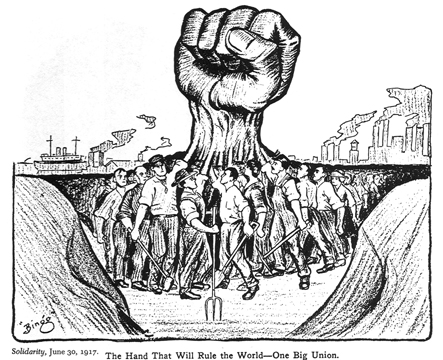
"The Hand That Will Rule The World—One Big Union"I'll leave you to read it, it's about the underestimation of the power and importance of "informal" markets in Africa, and how "off the books" trade makes African commerce look smaller than it really is.  That's not a huge surprise - how much of the growth in China's economy came from record-keeping of trade previously off the record?

The thoughts provoked here are based on my sadness and disgust at the levels of corruption I witnessed while living in Africa in the mid-80s.  I remember going through checkpoints in East Zaire (Dem Republic of Congo) which were set up by soldiers on dirt roads in the jungle.  Using a fallen tree to block the road, the soldiers would stop taxivans and demand bribes, while waving machine guns.

When "formal" is run by criminals, the moral market may be the informal.

Injury Box Blog: Pics Parasites Poverty

Last week I "kinda severely" injured my left hamstring in two winter-home-weatherization related incidents.  What has been frustrating has been to be home-bound but unable to sit still, upright in a chair for long.  Makes for halting, sporadic blogging.

Last weekend's post "Missing Poverty: Poverty Comedy" was messy, but I'm kind of excited by something that turned up from inside it.   The parallels between 1960s Ozarks and 2010s West Africa is not exactly uncanny, we've even been there before.  But the Hans Rosling videos I've been engrossed by this winter helped me generalize my subjective insights.


In 2009, South Korea became the first former recipient of OECD economic assistance to join the assistance giving committee.   South Korea was admitted to the OECD in 1996, 25 years after OECD was defined.  The 1961 original OECD membership list was whites - only (not even Japan was considered "developed").  Kids in college today are getting a message about "developing world" from people who considered South Korea a charity case, and they are getting the message on Samsung handheld devices (which they use to shop for Hyundais and Subarus in another tab).

You can track affluence and progress through lifecycle of appliances.  Koreans bought used products from affluent 1970s Japan.  Selling a first used car to a teenager is not necessarily "exploiting" the teenager.  Selling a starter home to a young family is not making them poor.  The guilt-by-association with poverty dogs the used goods market, and photographic snapshots of poverty should not become a modern soul snatching juju.

It's a fallacy that invokes instincts of nurture and instincts of aversion, and it sways crowds of people who self identify as "Agents of Conscience".   The key is to understand spiritual materialism (the desire to be a good soul) and history of development.  Rosling has shown how the majority of humans, like my Ozark cousins, have emerged from poverty within generational memory.  We need to explain to the Royals that fixing and recycling stuff isn't suffering.

Many places have been wealthy for so many generations that they do not have any institutional recollection of the end of poverty.  But for those of us who can remember, boycotting the poor is not how affluence went down.

How to Fix E-Waste in Africa in 5 Easy Steps

StEP into recycling
Here is a roadmap for recycling used electronics in Africa, in 5 Simple Steps.

1.  Correctly report the problems.  
African cities have had TVs and electronics for several decades and generate their own "e-waste".  Most of the "ewaste" filmed (BAN, Greenpeace) at dumps was not recently reported, but "takeback" from reuse markets which import newer product.  We want to further reform the trade, not to nuke it.

2.  De-Criminalize Purchase for repair and reuse in the EU.   
The reuse people are not "going back to Eden" if you boycott them.  They are tinkerers who create good jobs and affordable product in African marketplaces.  We want to improve their jobs, not to nuke them.

3. Use value of exports to incentivize domestic African takeback infrastructure.   
Many Africans who purchase imported reuse goods also do repair for domestic electronics. The abandoned repairs are a form a product takeback infrastructure. In fact, it's EXACTLY the same as the evolution of electronics repair and sale in Massachusetts in the 1970s.   
TV repair shops learned they could make more money if they offered a choice of Retail Replacement as well as Repair, letting the consumer make a choice.  When the consumer chooses not to repair (or worse, asks for the unit to be repaired but then changes their mind and doesn't return for it), the TV repairperson becomes a takeback operation.  When Masschusetts DEP enacted the first "ewaste" law in America (CRT Waste Ban), it was a TV repair family which created the largest TV recycling operation in the USA.  Africa is on the same path.

4.  Recycling, Reconciliation and mass balance.   
Hand-labor recycling is actually cleaner and produces better results than mechanical shredding. Just don't burn the items you disassemble, and recycling is still profitable.  The caveat is CRT glass and mercury backlighting.
Left purely to the free market, Africa will have little incentive to properly recycle CRT glass (the most expensive component).   The value of reuse exports should be adjusted, reducing sale price to Europe or the USA according to the actual recycling and takeback, and should be monitored, or they will accumulate the same CRT glass piles the USA has accumulated.
This system preserves Tinkerer Blessing jobs (compared to StEP's OEM-funded solution).  It will also work in India and other emerging markets.  But there's one immediate step we need to take first.

5.  Where scrap recycling, repair, and refurbishment already exist, nurture it.
Major CRT glass recycling operations have been shut down by friendly fire.    In Indonesia, Malaysia, and Southern China, semiknockdown (refurbishing) factories, glass washing operations, and warranty-repair-turned-takeback operations have been closed.  It is not too late to save repair in Africa.  
As Recycling Director for the Massachusetts DEP in the 1990s, I tried always to preserve existing expertise and infrastructure.   Massachusetts had not prepared Salvation Army, Goodwill or St. Vincent de Paul for new freon rules in the 1980s, and created a "white goods" glut.  I was determined not to do that, and we took care of our scrap paper packers, our TV repairpeople, and our charities.   The Massachusetts model of charity partnerships was later adapted by Dell in its Goodwill ReConnect program (I met with Michael Dell and Pat Nathan personally in 2001, suggesting the partnership would take them out of the BAN attack on Dell's Unicor prison recycling program at that time). 
The same partnership approach can succeed in Africa. Rather than demonize, demoralize, insult and ridicule the scrap boys and repair technicians, the entrepreneurs like Joseph Benson or Hamdy Moussa or Souleymane Sao, we need to defend them.   Touche pas a mon pote, E-Stewards.

Research E-Waste, Free the Hurricane Tinkerers in Africa

That Exotic Africa, the "Back to Eden" goal, the backwards Heart of Darkness, in need of the Great Green White Father to rescue them from their primitive E-Waste "e-waste hell".  Ok, this is not just another insult blog.  This contains some really terrific leads for academic researchers who want to publish something new about "e-waste" exports.  I have some very new and interesting leads below.

I'm fooling around with some background research, looking at the growth in number of households in Nigeria which have televisions in use (World Bank), the number BAN and ITC and UNEP say are imported, the percentage of sales which UNEP says are used/secondary to new.

Guess what?  Yet another data point.   I don't have time to really polish the argument below, but it adds up to about 85-90% reuse.

The growth in the number and percentage of Nigerian households who own TVs correlates to two things:

  1. the number of units entrepreneurs like Joseph Benson shipped there (BAN, UNEP, USITC)
  2. the growth in use of internet and TV use in Nigerian households (World Bank)
  3. the percentage of e-waste from Nigeria's own cities (UNEP)


There's nothing exotic going on here.  The "Great White Father", Jim Puckett, acts like some kind of a "no dancing dad", an Environmental Fundamentalist from Footloose II, a back-to-Eden, anti-growth, anti-globalization preacher, who has a right to point fingers at free market traders who obey the Basel Convention - which permits export for repair, something Jim voted against and lost.   BAN adorns its NGO website with fire and brimstone photos of poor kids at dumps, and says those photos trump the data.

J.Lepawsky photo, Accra (property of ... African)
But all the data is adding up to the same thing.   African cities are getting electricity.   Africans are moving closer to the city, where the electricity is.  Africans growth of internet and television use is exponential, much greater than the growth in OECD.   The growth is high where per capita income is $3000 per year, a market which cannot afford brand new equipment.  The brand new equipment sales in Africa are rife with ESD (electrostatic discharge) failure rates, as faulty equipment in new packages finds its way to countries with lesser warranty law enforcement.  And the per capita generation of "e-waste" grows in these countries, along with the growth of the internet.

Hardly a case for the arrests of Hurricane Joe Benson, Hurricane Hamdy, or Hurricane Chiu.

Link to Cahil Milmo and BAN, months before the sting by Milmo on Benson.  Follow up by Milmo, crowing over Benson's conviction of exporting TVs for dumping and burning.

UNEP found containers like Benson's, analyzed during his trial, were 91% reused... a higer reuse rate than brand new product.  The rest of this blog shows how World Bank data could have exonerated Mr. Benson, and disproven BAN's "Digital Dump" allegations, without even the benefit of the UNEP sampling.
The eight men, whose firm’s operated across the country, were found to have been at the heart of a lucrative trade which sends tonnes of waste computers and other consumer durables to west Africa and Asia every year to be stripped of valuable metals in grim conditions, often by children. 
One of the company owners, Joseph Benson, whose BJ Electronics toured civic waste sites picking up electronic goods to be sent illegally to Nigeria from east London, was convicted following an investigation by The Independent,Sky News and Greenpeace.
Except the premise "to be stripped of valuable metals in grim conditions, by children" is completely false.  That allegation was presented to the UK Independent by Basel Action Network (first link).   It was disproven by UNEP.  Like a modern day Mockingbird Robinson, Joe Benson has given up on the trial process.   Below, I provide hard evidence that BAN's "statistic" was false to begin with, and allege that our society would never have taken the accusation seriously in the first place if the trade in used TVs was between two white men.

"How E-Waste Benefits Your Children"


It has always been "think about the children", perhaps.

Programming was made for children.   OEMs used it to sell the appliance to the parents.

Description:
                                                          file://M:\Courier
                                                          

                                                          Email\\Outbound
Images\image010(8).jpg

So, the electronics get sold to us via "cognitive risk" - that our children will be left behind socially and intellectually if they don't get the electric gadget.  Then, if we sell it for reuse (so someone doesn't buy a brand new one), we are sold the cognitive risk the "e-waste" poses to the poor black children.

It's all about consumption, selling consumption any way they can.  We own stocks and retirement IRAs in their corporations and can't complain too loudly about the way they market sans sustainability.  And ENGOs are really not any different at all in their use of this "think of the children" marketing.  But we can be smart about what panics us.

I'm from the WWF generation - that's "World Wildlife Fund".  That's when Greenpeace was powered by Jacques Cousteau, and caring about endangered species and whales.   It's a dicey topic to debate which we should care more about - whale, tiger, orangutan, and rhino extinction vs. toxics in a child's environment.

But let's start by being smart.  What are the real numbers?  What are the real risks?  Is this about children's health, or is it about planned obsolescence?  Look at the enormous resources spent on non-toxic ink cartridge refilling.  Grinding those cartridges into pieces of plastic to be plastic-recycled in China is a lot worse of a job than refilling those ink cartridges with new ink for the "grey market".   But look at the attention given to ink cartridge refill risk vs. plastic recycling.

It's howdy doody time, it's howdy doody time...

NYT: Seeing People for what they Can Do

... not just for what they cannot do. 

Today's New York Times has a refreshing take on the story of slums.   It's a very different perspective than the Bloomberg story on cotton farming in Burkina Faso.  "In One Slum, Misery, Work, Politics, and Hope", by Jim Yardley, is worth the read.
In the labyrinthine slum known as Dharavi are 60,000 structures, many of them shanties, and as many as one million people living and working on a triangle of land barely two-thirds the size of Central Park in Manhattan. Dharavi is one of the world’s most infamous slums, a cliché of Indian misery. It is also a churning hive of workshops with an annual economic output estimated to be $600 million to more than $1 billion.

2011 Display Device Price Freefall

Market Report on Used and Refurbished LCDs

The used CRT display device market has been on a slide for some time.  We have one of the only, and best, CRT refurbishing factory account purchase orders (which includes certified recycling of incidental breakage and parts recycling).  But the orders there have been cut from 180,000 units per month in 2006 to 5,000 units per month in 2011.

Part of that pressure comes from supplies from within Asia itself.   Office buildings in Hong Kong, Shanghai, Kuala Lumpur, Singapore, Taipei, Seoul, and Jakarta were replacing their working CRTs in mass between 2008-2010.   Even steady demand in Africa, South America, and the Mideast was fulfilled cheaply by Asian supply.  Shipping from the East Coast of the USA through the Panama Canal, across the Pacific, for refurbishing in Indonesia, and shipping back to Egypt... that was more expensive than refurbishing locally for export.

That, by the way, was one of the big factors to the "California Compromise" collapsing a year ago this month.  While BAN and California explored the idea of setting high standards for Asian Refurbishers to meet, the Asians decided it was too little, too late.

Now, the same thing is happening with used LCD prices.   Below is an excerpt from one of my favorite, Taiwan-based trade journals.  Today there is oversupply in the large (new) LCD market causing layoffs and work stoppages, and some factories are going back to cutting LCDs into smaller sizes and targeting the same emerging markets as refurbishers.