Showing posts with label Fair Trade Recycling. Show all posts

Recycling Is NOT a "LIE". Alexander Clapp Fails Math Racially Profiles Geeks of Color

New York Times Opinion Editor Tim Schneider introduced us all to another "tell all" author, Alexander Clapp, with the headline "The Story You've Been Told about Recycling is a Lie".  It's been forwarded to me by a half dozen colleagues, readers, and scholars, who know that these "Recycling is a Lie" claims have been the whole reason this blog exists. 

It's strange.  "Health Care is a Lie".  "Barber Shops are a Lie". We never see those finger waving headlines.  But somehow a writer gets a flight - and yes, Alexander Clapp's focus in the Op Ed is on Agbogbloshie, in central Ghana - stays in a hotel and spends a few days with poor African primary school dropouts who burn wire (mostly from automobile harnesses, not electronics) which been in use in the city since the Akosomba Hydroelectric Dam was built in the mid 1960s.  And how he's an expert, telling everyone that people like me are lying about recycling.

I will start by disproving Mr. Clapp's completely false claims about Agbogbloshie, and then if I have time, take on his judgement of plastic recycling in Southeast Asia - which I've also visited decades ago.

Funny how Agbogbloshie is in the highest electricity consuming city - per capita - in subsaharan Africa... 100% electricity access. But Alexander Clapp finds TVs in the city dump, and jumps to a bizarre conclusion. 

Tim Schneider, let's start by taking about ELECTRICITY in Ghana (NASA, 2018), the number of televisions per household, and see if you can distinguish between the geniuses in Africa's Tech Sector and the primary school dropouts in Agbobloshie, and how the mystery is how good African Techs are and why that explains there is so very little E-Waste in Accra City dumps compared to a city of 5M in the US or Europe.  I sent Mr. Clapp a link to a 2011 Op Ed I had published in Vice, and sent him a Linkedin and X.com invitation to meet.


To the NY Times Editors (Tim Schneider et. al.)

While international Recycling is certainly not perfect, the patently false claims made by Alexander Clapp author of a new book Waste Wars: in "Recycling Is a Lie" have been called out by dozens of University research studies and noted authors such as Adam Minter (Bloomberg columnist and author of Junkyard Planet and Secondhand). 

I will start with my many filmed interviews of the so-called burner boys of the Agbognloshie described in the piece, at the scrap yard in Accra Ghana, whom I've introduced not just to Minter, but to many other reporters with integrity.

No one has ever seen a sea container unloaded there.  The idea that African city junkyards are fed directly by USA exports is absurd to anyone who has spent any significant number of years there (as I have).

The E-Waste there is collected from the streets of the city of 5 million by men with push carts. They collect it from the millions of businesses and households in Ghana who have had electricity since the 1960s. 

If you search for World Bank data on televisions per household since 1999 in greater Accra, the glaring question is why there are so few e-waste tons at the city dump.

The answer is that they repair and reuse electronics far longer than wealthy westerners do. Yes, Africans do conservation better than we do. A lot better. Poor people tend not to throw working stuff away.

Data exists.  Electricity consumption. Televisions per household. Lack of sales of new electronics. If the electronics they buy and test are really burned as junk, what is using the electricity and creating the blackouts and brownouts from record demand? If there were over 300 TV stations in Africa when I first arrived in 1984, who was watching them? Where did the critical mass of users (UN term) come from who made those investments possible? There were no BestBuys or Walmarts. But there were thousands of talented Geeks of Color, who deserve credit for creating African Mass Communications. Summing them all up as wire burners is a liberal own-goal.

It's distressing that authors fail to interview ANY, not one of, the talented importers in Africa's tech sector, and to see the NYT profile them as wire burners is painful. Those wire burners (who I also know pretty well), by the way are mostly burning automobile harness wire from the scrap automobiles. Racial profiling is not something do-gooders are immune to.

If you don't do any secondary research and expect a city of 5 million people to have a dump full of coconut shells and banana peels, it hardly qualifies you to call Africa's talented tech sector liars about what they are capable of selecting testing and reusing.  The Op Ed calling us liars doesn't have any data at all. The words "much of" did not use to pass editorial muster.

I don't have time to explain how plastic buyers fly here and inspect the plastic they buy and pay for not just the plastic but the shipping and the customs fees. But start with plastic consumption in rapidly emerging markets and you see that the plastic waste photojournalists see there was domestically generated. 

Who is the liar?

My son (now 28) spent a 7 week internship with Karim, a TV refurbisher in Ghana while at Middlebury College.  There is just no way Alexander Clapp can pass himself off as an expert if he believes wire burners are buying used electronics from Americans.


How can you explain the electricity, the TV stations, the traffic, the mobile phone towers in Africa if you are so much better at recycling and repairing than they are?

See the youtube video by Alex Wondergam, "In The Life:  Scrap Metal Men" to see how the scrap at Agbogbloshie is collected, busines-by-business, house-by-houses, street by street.  And you will start to get a feel for the mystery here - why is the Accra dump so SMALL?????  Because of men like Karim.  And I wanted to make sure people in my son's generation got to experience circuit-board-level repairs that Americans once did 50 years ago.

Same history in Asia, by the way. I wonder if Alexander Clapp or Tim Schneider has ever heard of Simon Lin, Terry Gou, or Lee Kun-hee?  All three started out like Karim.  As did Steve Jobs and Michael Dell.  See? If you can stop racially profiling the Tech Sector as "primitive recyclers" you might learn what I did.

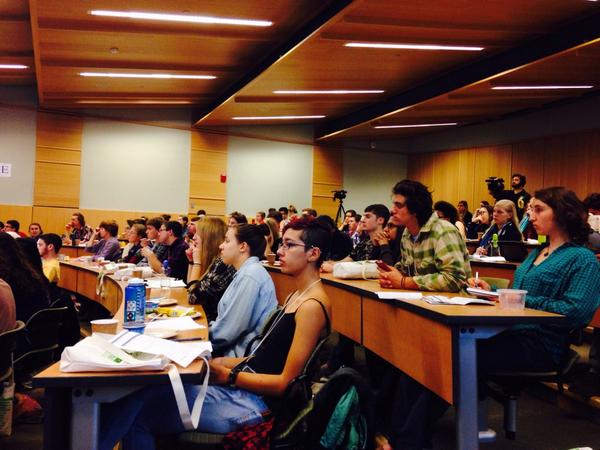
10 Year Anniversary: Middlebury College / WR3A Fair Trade Recycling Summit of 2013

Ten years ago, we had speakers from ISRI, EPA, Basel Convention, and attendees from Panasonic, Tradeloop, and many others gather at Middlebury College for a two-day session on the REALITY of the e-waste trade.  Professors from Middlebury, Memorial University, MIT met to discuss the "poverty porn" ramifications on the so-called "informal sector". The evening dinners and roundtable discussions included the former attorney general of Burkina Faso, a young Emmanuel Nyalete (future public speaker in USA and Europe representing Ghana's Tech Sector), Katharina Kummer-Peiry, Eric Harris, Adam Minter, Kyle Wiens, and others (see below).

We enjoyed coverage from USA Today, VT Digger, Vermont Public Radio, and several college and university papers.

See more coverage here.

Footnote - the evening re-broadcast of the Vermont Edition was canceled due to coverage of the Boston Marathon bombing that afternoon.

USA Today

This summit was inspired by Fair Trade Recycling's "California Compromise" effort of 2010 to partner with Basel Action Network to get California to supply our fair trade recycling partner in Penang, Malaysia.   When that broke down, it led to my most-read blog of the decade (10k+ views), the "California Compromise Sopranos E-Waste Episode".

Open AI Plaigerism and the Star Trek "Liar's Paradox"

 As I wrap up the blogs for 2022, I wanted to share an alternative source of blog authorship - Artificial Intelligence.  https://chat.openai.com/chat allows you to create an account and then, like a word transcribing program on steroids, the AI generates dramatically impressive text.

This is not truly "intelligence" in my opinion - if the information on the web is wrong, or Wikipedia is wrong, the AI will generate a well written text that's wrong. If it ran a thousand years ago, it might well tell us very convincingly that the world is flat.  You can read more about this in the December 2022 weekly edition of SLATE.

Open Letter to WR3A / Fair Trade Recycling Interns 2007-2019

Hello summer 2019 team, and past WR3A interns

Thought you'd appreciate this coverage of Adam Minter's new book, Secondhand.  He has already been interviewed by NPR OnPoint and Marketplace, and will be on Fresh Air on Cyber Monday.  The concluding chapters of his book focus on our work, at Good Point, and in Ghana, on Fair Trade Recycling.

This has been a long and steady slog. Adam's research was enormously supported by interns from 2007 thru 2019.  Adam was inspired to write this book at the 2013 Middlebury College Fair Trade Recycling Summit, and the research by interns at Memorial University, Univesidad Pontifica Catholica (Peru), USC, MIT, Middlebury, U of Amsterdam, U de Paul Cezanne, Univ Monterrey de Guadalajara, developed a tome of documentation and research (much of which was consolidated in the excellent 2018 MIT Press publication Reassembling Rubbish by Dr. Josh Lepawsky).

On Adam Minter's second trip to Ghana, he followed up on the fate of the laptop "Junkyard Planet" was written on

Jaleel of Chendiba Enterprises identified a bad video chip, 

Regulatory Gymnastics: Officials' Time Out for Recycling Waste Offset

Hey, just a quick note to those of you who have been asking what the latest is with the Fair Trade Recycling Offsets.  I remain really excited about this.  But we had a little setback which has stalled the project.

Here's the history, the latest roadblock in RED.

1. Fair Trade Recycling started with Purchase Orders and Fair Trade Contracts.  When we wrote down what overseas buyers DID NOT ACCEPT, it became pretty clear very quickly that they were not buying stuff to burn it or to operate a "Pollution Haven".  Someone paying us 10 times more for a CRT than it's worth in scrap, but paying ZERO for the same make and model which has damage (disqualifying it from the purchase order) is presumed to be a good actor.

regulatory gymnastics (Labadi Beach Accra, Ghana)


Fair Trade Recycling invited to present at IERC Conference in Salzburg, Austria

"Writing export rules for used electronics without consulting Africa's Tech Sector is like writing health rules without ever talking to a doctor." - Emmanuel Nyaletey, 2018 IERC Congress


One week ago, one of Fair Trade Recycling's representatives and board member, Emmanuel Nyaletey, presented on a panel to address European Union representatives on their e-waste export policies, especially the ones directed at Africa.

Electronics Recycling Conference 2017 Presents Jim Lynch Lifetime Achievement Award To

Scary Times in New Orleans...

What a great time I had last night, here in New Orleans, Louisiana.  I'm here to attend the 2017 ERC conference, run now by Sarah Cade of Chicago.  The annual international conference is a unique group of people, which took off from the launching pad of an organization, TechSoup, run by my pal Jim Lynch of San Francisco.  Jim's a legend, and each year this electronics reuse conference presents an achievement award in his name.

While the Bourbon Street Halloween Parade was truly a sight to behold, and Jazz Saxophonist Gary Brown was giving rare encores late into the night, the pinnacle of the evening, for me, came early.  At 6PM, I was presented a "Lifetime Achievement Award" for alleged contributions to the field of electronics repair and reuse. The honor was bestowed on me by Jim and Sarah, based on a vote of past Jim Lynch honorees, such as the distinguished Nancy Jo Craig of Baton Rouge, Charles Brennick of InterConnection in Seattle, Kyle Wiens (founder of IFIXIT!) and others.

Thanks.

Not cultural appopriation b/c photo snapped by Swiss woman? Oh and Halloween. That.

Jim Lynch himself introduced the award.  I was touched that he spoke about the several hour drive he and I shared together coming back from Retroworks de Mexico. He hit the sweet spots of my career, and my passion for defending reuse techs in emerging markets.


Fifth Week of USA College Students Apprentice Program in Africa Tech Sector

Fair Trade Recycling Update:  How Four USA College Students Will Change The Way You See Africa's E-Waste.
Zacharia is amazing

Fair Trade Recycling has a positive message.  Like the message in Hans Rosling's seminal "chimpanzee test" video - that ignited Gapminder in Sweden - our programs teach more about emerging markets.  The 1960s "Third World" images are, themselves, a form of pollution.

This summer we have 4 USA college interns working across 2 continents - Africa and North America - to create a partnership in parts supply.  Two students (U of Florida and Middlebury College) have been working in an apprentice program for flat screen TV repair in Ghana.  They are not just learning about T-con boards and controllers, or how to spot and replace overheated capacitors.  They are seeing Africa's Tech Sector as equals.

"Karim Zacharia is amazing!!!"

I like getting that message.  These two Americans are not "saving Africans".  They are not introducing a new "less primitive" technique. They are being exposed to Africa's best and brightest, to people who may well have been on scholarship to an engineering program if they'd been born in different circumstances.


Fair Trade Recycling [WR3A] Launches "E-Waste Offset" Initiative In Africa


[Middlebury, Vermont May 22, 2017]  Fair Trade Recycling has launched a strategic partnership in West Africa to create capacity for proper recycling of junk "e-waste" devices without impugning, racially profiling, or interfering with the imports of Africa's talented "Tech Sector".

The initiative is based on "carbon offset" models, and is derived from conclusions Fair Trade Recycling representatives arrived at during research in Ghana from 2015 to the present.

Under the new program, African Tech Sector buyers will be rewarded with lower prices for used computers and tech sector equipment they import when they "offset" or "exchange" the tonnage for a similar quantity of obsolete or irreparable electronics taken back from African cities.  The model is patterned after "carbon offset" or carbon exchange models and the recycling training program for the women's collective "Retroworks de Mexico".

For every 50 containerloads of used electronics imported by Ghana's Tech Sector, the reuse shops will take back 10 containerloads of junk TVs and computers which were imported to Ghana two or three decades ago.  And the Tech Sector will pay for proper tools, training and methods - all funded by the profitable and appropriate reuse of newer second-hand products.

The "Agenda Shift" has already resulted in calls from major manufacturers interested in promoting takeback in Africa as a solution to junk buildup.

WR3A is Fair Trade Recycling - 10 Years


The World Reuse, Repair and Recycling Association, doing business as Fair Trade Recycling, was legally incorporated in Vermont a decade ago.  How have we done, and what it the status?

The group originally had great success by finding very very large import orders (places like Malaysia's Net Peripheral) and working as a collective to supply those orders from USA companies willing to export to the right people.  It was financially interesting to both the buyer and seller.  However, this model created a disincentive to add more members (increasing supplier members diluted USA members, recruiting demand members diluted vetted overseas companies).  Membership reached a critical mass it could not grow from.  We added more USA suppliers, the price of exported goods went down, etc.

The coop model severely imploded in 2012, when a copy of one of our audits of the Malaysia company was sent by a USA Big Shred investor to the Malaysia Department of Environmental Conservation.  The import letter was valid, Malaysia officials said, but they also visited the factory and took away the import permit.

"No good deed goes unpunished."


"Poverty was not created by export of used goods. Wealth was created by import of used goods."

BAN MIT MoniTour Teardown: Inside the Ewaste Export Controversy

The MIT MoniTour @KCTS-9 Basel Action Network "Expose on Exporting" #trackingewaste is still being reviewed by review researchers, recycling experts, and reporters.  Memorial University has helped plot final landing points for devices.  There are still a large number of items in places that BAN can't quite explain.  [There are data points missing, which we located on Monitour but are not in the table per MUN]

- There are good places overseas (BAN now says "never said there weren't")
- People who never exported are highlighted for political reasons (BAN says it's justified)
- BAN's own math suggests 11% total exports (good or bad end points)
- BAN's conclusion (use E-Stewards) belies BAN's financial interest

As one of the people who never exported the tracked device, but whose clients were assaulted by BAN's innuendo I've got a particular axe to grind.  But the main point is that I have consistently made the same argument before BAN attacked me personally.  Jim Puckett has told a reporter directly what I inferred from the article - that I came up with EcoPark, etc., to cover up my shipment to Mr. Lai's Printer Farm.  It's in print, and it's provably false, and I need another apology.

BAN made a very legitimate point via their GPS tracking study - that despite normal diligence, we should not assume for sure material exported to Asia won't go "sideways" to a scrap metal vendor (any more than we can assume that via E-Stewards).  But Jim Puckett tries to push the point too far, and in so doing damages the names and reputations of state of the art repair geeks overseas, Boston area MIT hippy coops, Vermont ADA employees, and legitimate discussion of environmental policy.

Perhaps Jim yielded to his frustration and inability to control the story in a tidy direction, and now has injured people that shouldn't be injured.  He needlessly involved innocent MIT students, Carlo Ratti, KCTS, and The Body Shop Foundation in a pissing match over environmental justice.  Jim simply needs to say "I'm sorry".   Again.

Watchdog Issues Apology For Personal Attacks in E-Waste Article

Jim documenting CRT glass was not exported as he claimed (AZ)


DEBUT - Fair Trade Recycling Offset - Recycled Content Jewelry from Computer Scrap

[10/6/2016]  Just a little celebration.  We just made our first "Fair Trade Recycling Offset" transaction.

We sold about $10,000 worth of computers to Chendiba Enterprises, who have a Vermont based tech testing all the displays and PCs at our plant before he buys them for export.  He's our "Joe Benson".

Normally, we take a deposit of 80% when the computers leave Vermont ($8,000 say), and wait for the computers to be received and reconciled in Ghana.  Then the next containerload is $10,000 - $2000 for the reconciled shipment #1, and another 80% / $8k deposit for shipment #1.


This week, we told our Ghana buyer to take $100 out of the $2,000 reconciliation and give it to the father of one of the Chendiba Techs (who I met and filmed in 2015).  He is a retired high school teacher who kept his own father's tradition of small scale metal smelting.  He made our Fair Trade Recycling bracelets in 2015.

Jujitsu Lesson: Toxic Culture of Victim Identity

Over the decades, this poverty identity has grown from subconscious awareness to thematic.

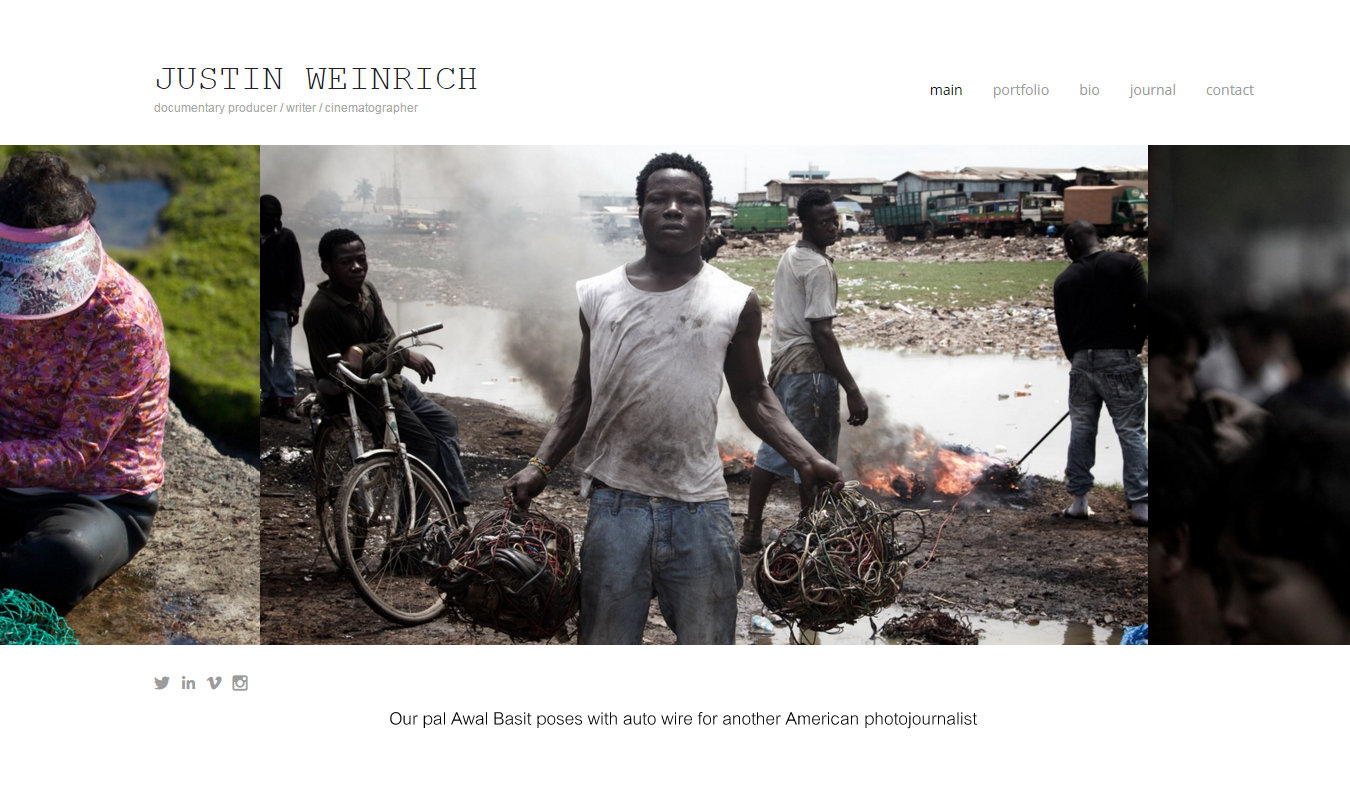
A few weeks ago, Awal Basit [E-waste Scrapper, Dying for Attention, 1/16], one of the leaders of the "Scrap Men" (rather than "scrap boys", cred to Lalouschek/Wondergem) was calling my cell phone a ridiculous number of times per day.  I try to keep relationships with people I spent weeks with in Ghana.  Drive by saviorism isn't sustainability.

The technicians - Kamaldeen, whose dad made me the fairtraderecycling,com bracelet, Elvis, Yussif, Kamal and his wife, etc [all from Chendiba Enterprises]- might call occasionally, and we chat by Facebook Messenger or WhatsApp at least a few times per week.


How's it going?  How's the family?  Hey, it's national service day.  yeah? what's that?  You know, it's good to stay acquainted.

Awal and the scrappers are the Ghanaians of the north who never went to school.  He struggles even with Pidgin English.  Awal's text messages, outside of a few platitudes, are a mystery.  He's from the other side of Tamale's tracks.

The young men burning wires in Agbogbloshie typically don't have the parenting or resources of Chendiba dudes.  Geeks of color are typically valedictorians. Awal and his crew are not just "out of Africa", they are out of an unpenned Soukous Hilife William Faulkner novel.  They all live in a poor country, they all come from the same tribe and language and region.  But the Chendiba Techs are using downloaded schematics to fix TV tunerboards. They feel somewhat awkward around the guys who took the bus to the big city and live in a lean-to on Agbogbloshie's skid row.

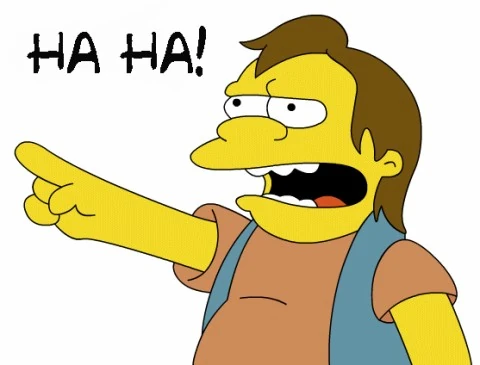
In the Simpsons, the Chendiba techs are Lisa, and Awal is ("ha-ha") Nelson.  Awal is on the streets and he has to show he's tough.  He calls me whenever he feels like, having evolved far afield of pleasantry and shyness.  When I get perturbed and stop taking his calls (usually when I've forgotten to turn on airplane mode and my phone goes off at 3AM with the whispering distinctive ring I've applied), he starts sending photos on whatsapp.  Photos of burning wire.

"Your guilt gives me leverage!"
As I said before, he wants attention.  He's alone.  He sees an opportunity but doesn't understand what to do with it  Like the proverbial dog who caught the bus, Awal has a personal relationship with someone he may imagine to be as rich as Donald.  And what got him that attention, and the interviews with Justin Weinrich and other photojournalists, is burning wires.

When someone begins to feel that their disadvantage is their attraction, it can become toxic in a whole new sense.  As in toxic employee, toxic manager.  I'm important because of my gripe.  My victimhood, my lack of privilege, is the only currency I have.  Your guilt gives me leverage.

Refining the Fair Trade Recycling Mission Statement


"Recycling needs to be materials science, not a belief system. Collecting during bad markets is smart, shows reliable long term supply grid."

Fair Trade Recycling is pro recycling.  But we are not exactly defined as part of "Zero Waste" movements.  We are somewhat resistant to "producer responsibility", at least as a solution for secondhand goods markets - planned obsolescence and right to repair are opposing forces (if producer implies mining and virgin material extraction, we are all ears). If any group has a close affinity to Fair Trade Recycling, it's probably USA's "Net Impact"... young professionals in the business sector who are agents of conscience, making the world better by participating in, rather than reacting to, global markets.  The worst recycling is better than the best mining.

At the same time, while we defend and participate in the overseas recycling and repair and reuse sector, we are confronted with the eventual waste and unplanned obsolescence of goods we once exported.  Our vision is to turn this into an opportunity, a circular economy, rather than reversing course on the international trade which is clearly benefiting standards of living and information and education in emerging markets.

Our primary incentive is to create a transitional economy for Africa's Tech Sector, the reuse and repair markets for used electronics, which we project will face increasing pressure from new affordable devices (seen in Asia in the past decade).  We believe the value of the sector is in the minds and education and ingenuity of the repair market 

The "Tinkerer's Blessing" is the working title of a book I'm writing about development and "savior complex" and "charitable industrial complex".  It's actually very optimistic, a defense of trade and free market activity in Africa, Asia and other emerging markets.  Terry Gou, Simon Lin, Steve Wozniak, etc. were tinkerers very much like the laptop and cell phone repair shop gurus from Tamale and Accra, we want to pitch them as a functional distribution and maintenance market for inevitable growth of solar power models in Africa.

Where will Africa's Wosniak emerge?  Who will monetize the "good enough market" in a way that is scaleable (like Foxconn and Wistron), creative like Apple, and sustainable as Microsoft?

It will probably be in the energy sector.  Which brings us back to Solar power.  Can SolarCity (Elon Musk's transformational solar panel financing scheme) scale solar power in a cash-based economy like urban Africa?  Or do we need other innovative financing models, like cell phone plans, to secure investments?

We will need people.  Africa's Geeks of Color.  Africa's repairers, tinkerers, fixers.  We need to stop arresting the people who buy and sell teledensity equipment in Cairo and Lagos and Accra and Nairobi, we need to silence the charitable industrial complex which defines its goodness in misleading photojournalism depicting Africa as a "victim".  We need to push out of the closet the NGOs who use pictures of African kids at dumps to raise money which is never, ever spent on Africans.

Photojournalism without data journalism jails and fails.  Our mission will outlive me, because it's rooted in the same scientific method and inspired conscience which has made the world's best practices.

- Robin Ingenthron 11/9/2015

Fair Trade Recycling's 2020 Vision for Agbogbloshie Ghana


2020 Vision


In March of 2020, five years after Fair Trade Recycling toured Ghana, a thriving refurbishing, assembly, and recycling operation exists.  Chendiba Recycling Enterprises, headquartered in Tamale, has hired most of the Ghana scrap workers who previously hung about Agbogbloshie looking for copper on a barren and charred landscape.  The recyclers have uniforms, appropriate tools, and safety training.  They offer tours of the recycling operation to Western university students, reporters, regulators and photographers.  Visitors are housed in a new affordable housing complex, erected where the slum was bulldozed in 2015.  This “urban eco-tourism” has created opportunities for economic migrants in Accra, and also at similar “recycling parks” in Tamale and Kumasi.

Transforming attitudes, not Africans

The recycling staff are overseen by Technicians of Chendiba Enterprises, a computer, cell phone and television "R and O" (Repair and Overhaul) operation.  Chendiba was nearly shut down by misdirected environmental enforcement in 2015.  Happily, Africa’s “Tech Sector” workers are now recognized as the best and brightest of Ghana’s economy.

        “We would no more boycott the Techs of Agbogbloshie than we would a manufacturer takeback program,” said a spokesperson for an environmental NGO, who is taking university surplus property officials on a tour of the grounds.  Referring to the past decade of boycotts as “collateral damage” and “friendly fire”, the NGO leader now promotes a “Hurricane Joe Benson” scholarship to bring students from around the world to see “win-win” in action.  "The Tinkerer's Blessing" is seen as the best, most sustainable economy in emerging markets - the opposite of the Resource Curse.  Africa's geeks add value to e-scrap with their minds, and use the profits to clean up Africa's own recycling yards.

Environmentally and Economically Sustainable

The program is funded not only by the environmental tourism,  but by the very import-for-reuse economy once targeted by anti-globalization NGOs.  Chendiba is now the leading importer of, and recycler of, flat screen LED and LCD televisions worldwide, and employs hundreds.  “While the major cause of waste generation in Europe and the USA is physical screen damage, Africa’s flat TVs most often suffer from blown boards due to ‘fuzzy current’,” explains Muhammed Odoi. “We import and part out the TVs and use them to provide affordable parts in Ghana.”

The Fair Trade Recycling program does not need European customs agents or Interpol staff to interfere with Chendiba’s imports.  It encourages the import and export as a "value added, job creating industry".  Asked whether the parts are “properly tested” in America, African regulators now shrug.  They explain this recycling system is based on “carbon trading” models.  “For every ton of electronics we import to Ghana,” explains Muhammed, “we collect and recycle two tons of old electronics from Ghana’s cities.”  

Opportunity vs. Embargo

        The Fair Trade Recycling program has been much easier to monitor and enforce than "PAT tests" (which never accurately predicted African consumer demand or shelf life) or traditional "certification" programs.  The Chendiba traders order and buy what they want.   Chendiba must simply show it recovers and properly recycles at least as many pieces of "ewaste" from Africa's cities as it imports. VCRs, CRT televisions, Pentium 1 computers, etc. were imported in the 1980s and 90s, used productively for years, but now need a recycling solution; Chendiba is there.  

As more countries allow export under Fair Trade, the quality of imports has improved.  “We no longer have to choose between buying in back alleys and staying barefoot and off the internet,” says Kamal. "We benefit from more choice of suppliers, lower prices, legally enforceable contracts, openness, and transparency.  It is a "computers for clunkers", or needle exchange, or carbon trading model.  We recycle as much as we import, period."

Marketplace Solution vs. Enforcement

The 2020 “ewaste trading” project has been far more successful than western certification programs.  It is less paternalistic, more transparent.  It involves less liability for sellers, and frees up valuable Interpol time to pursue endangered species poachers, rather than "geeks-of-color".   This circular economy interferes less with the “good enough market” African consumers depend on.  The main question, students here ask, is "why did it take so long to accept a solution so simple?"

Just as it is more efficient for an airline to pay for carbon removal by planting trees than to squeeze more carbon from jet fuel combustion, it's easier for Africa's Tech Sector to recycle the urban e-waste than to "certify" every piece they import. Fair Trade Recycling assures that even if an item is damaged in shipping, that a recycling infrastructure is in place to manage it, and that another piece of junk was properly recycled in exchange.  The program brings Ghana’s poorest scrappers and drop-outs from the slums, and surrounds them not with Western “saviors”, but with the Africa’s high-tech entrepreneurs, Africa’s valedictorians.

Legal, Safe, and Necessary

American and European recyclers now get to meet the technicians overseas who were once impugned as shady characters, and pay less tax money to prosecute them.  They see that Africa is not a jungle, not a dystopia. They see that African techs, African consumers, and African recyclers are no more “primitive” than Americans, Europeans, Asians and Latinos.  They need affordable technology, and then have decades of older machines to recycle.

“Most Africans live in the Africa the media never showed you,” says Wahab. “Fair Trade Recycling sees Africa for what it can do and must do, not for what we cannot do.”

"We are transforming attitudes rather than Africans."

This is a pre-published excerpt from the 2015 Fair Trade Recycling report on Agbogbloshie, Ghana by WR3A.org. This is our vision - not of boycotts and paternalistic "training" by Western NGOs. It harnesses what Africa's Best and Brightest already have, right now. Like most win-win paradigms, it can be self funding, but needs help in the development stages (e.g. to cross train Americans in Africa, and Africans in the USA). Please contribute to WR3A via FairTradeRecycling.org to help make this real.


Why do we always define signs of intelligence as something we understand and recognize?  It usually turns out that we didn't recognize it because of our own "lack of intelligence".  - WR3A

"EWaste Crimes in Ghana", Part 6: The Defense Case and Affirmative Plan

https://vimeo.com/65961078  Pieter Hugo's Permanent Error

It's agreed that constant improvement is necessary in Ghana.  Traffic jams, electricity and water outages, flight delays, bad water, bribes and incompetence would not be acceptable in the USA or EU, and people shouldn't accept it here.

Virtually nothing in Agbogbloshie's scrapyard, with a couple of exceptions, is remotely acceptable.

The headline that imports go here, at least in any remotely significant proportionality, is the problem.  Consider the modest statement:  
"The majority of western diners at Chinese restaurants are being fed cat meat.  80% of those cats were sent by western pet owners to Chinese veterinarians". 
One would not want to condone eating cats, or deny it occurs, yet the broad statement would be considered outrageous, if not blatantly racist.  Yet similar allegations made about Agbogbloshie recycling, illegal dumping, and Ghana importers of electronics throwing away 75% - "facts" equally stupid and outrageous - fill any google search for the placename  "Agbogbloshie".  Imagine if you googled "Chinese restaurant" and virtually every search result said the majority of western diners are fed cat meat... imported from Western humane societies."   Ludicrous flamebait, yet accepted and repeated by reporters based on close ups of sweaty African faces.   Not even any significant piles of "ewaste" cats in the photos.

It's just shocking.   Shocking educated westerners are repeating this BS.

If Hugo, Dannonitzer, and other slum tourism cinematographers found a cat butcher and filmed the process of preparing cat meat, it might or might not be in good taste.  That's not the issue here.  The problem is that they allow their film skills to be used to denigrate honest businesspeople in emerging markets, and to somewhow give visual credence to a bogus hoax statistic. 

Basel Action Network made up fake statistics on more than one occasion (the 80%, and the 75% specifically attributed to "extensive investigation" in Ghana).   Artists like Hugo and Fedele see a "fact" so alarming and outrageous that it excuses videographic exaggeration.   Blacksmith Institute may not have technically asserted that Agbogbloshie was "scientifically determined" to be one of the Top Ten most polluted sites on the planet, but given the BAN.org "facts" they could smile and think they are accomplishing change. 

Or maybe everyone will see if recyclers admitting to export here (Ghana) would defend themselves.

Stunning, Profound Ignorance Of International Cultures: 3B3K

I was watching a Nigerian television interview with pop singer Nneka Lucia Egbuna this morning, and making travel plans with Ghana Electronics Technician and new WR3A Board Member Emmanuel Eric Prempeh Nyaletey.   Eric will be attending this year's Resource Recycling E-Scrap Conference in Orlando.

Nigeria has morning news programs, kind of like our Today Show, or CBS This Morning, which people in Lagos watch while drinking coffee in their apartment buildings, getting ready for the morning traffic jams and commute to work.

Over the years, WR3A has sponsored travel to E-Scrap conferences for many international representatives.  Su Fung and Allen Liu of Malaysia, Roberto and Alice Valenzuela, and Oscar A. Orta and Mariano Huchim of Mexico, Wahab Muhammed Odoi of Ghana, Souleymane Sao of Senegal, Hamdy Mousa of Egypt, to name a few.  Emmanuel Eric is special, however.  He's a geek from Accra who was head technician for Good Point Recycling in Vermont for 2 years, and he flew back to Ghana last spring to revisit Agbogbloshie and the tech/repair warehouses in Accra.

Emmanuel Eric Prempeh Nyaletey fixes Good Point Security Camera
Emmanuel Eric will be circulating the #FreeHurricaneBenson petition, and trying to get people to renew their WR3A.org memberships.  He'll also be answering questions about Africa.

No, they don't all have Ebola.   No, they don't pay money to import e-waste for copper value.  Yes, they have had television and computers for decades and generate their own e-scrap. 

Emmanuel Eric is now on a full scholarship for coding at Georgia Tech, but we are looking for people to help us pay him to keep him at least part time working for Fair Trade Recycling.

LIVE from UNH's Post Landfill Action Network: Internship, #FreeHurricaneBenson


Presenting to 150 Recycling "Zero Waste" Activists in Durham NH.  

1)  We go LIVE with the iPetition to #FREE Hurricane Joe Benson (see tab at right)
2)  We go LIVE with the Fair Trade Recycling Ambassador Program Applications (Internship).

Much has been written, and will be written, about Joe Benson's ridiculous trial, convicted based on the "common knowledge" that the "majority" of TVs and electronics he purchased would be dumped and burned.

The Fair Trade Recycling Ambassador Program is being launched to recruit students interested in international travel to fly to countries where used electronics are being purchased and interview the buyers.  Find out what's being dumped (if anything) and negotiate improvements (if necessary).

WR3A/FairTradeRecycling would provide relief to the legitimate Geeks Of Color - like Benson's buyers - who are being branded as ignorant children.   A college educated Recycling Ambassador could go to Agbogbloshie and find out where the dumped TVs came from (as Grace from Memorial University did, finding they were collected in carts from the City of Ghana, NOT from sea container yards).  At the same time, if the buyers aren't all they claim to be, that could also be revealed.

Instead of "fly and buy" (or "fly and lie"), think of it as "fly and sell".

Embedded image permalink

Africa Tech Taught Techie Stuff to Vermont: Now Georgia Tech Scholar


Emmanuel Eric Prempeh Nyaletey, the head Technician at Good Point Recycling, has been offered a scholarship at Georgia Tech to earn a degree in coding and programming.  He leaves Vermont with his wife in the coming days, his last day at work tomorrow.