Showing posts with label Accra. Show all posts

Elective Upgrades Supply Good Enough Markets

Elective Upgrades Supply Good Enough Markets

Is imitation the sincerest form of apology?

There is a guilt dilemma in "First World" aka "Wealthy" aka OECD consumer markets.  While there are repair and delayed gratification reuse trends (my company sells about $25k per month worth of TV parts to USA repair shops), there is also a lot of guilt about "elective upgrade", which remains the driver of most new sales.

Organizations like Basel Action Network and Greenpeace made a false assumption about 2 decades ago that "e-waste" was a product of equipment failure and inability to repair. That Americans, Japanese, South Koreans, Germans, Brits and Italians patiently wait for their CRT televisions, flip phones, and Pentium 4s to become hopelessly unrepairable before buying a plasma TV, smartphone, or i-Series laptop. 

The fact that it is patently obvious to nearly everybody that it was not the case, in hindsight, has been a point of reflection of this blog since I started it in 2006. 

Unnecessary elective upgrades, if indeed they are discarded as "waste" (or sentenced to a desk drawer, attic, or file cabinet) are indeed a wasteful use of mined, refined, extracted raw materials. But if they are reused, they create access for poor people to establish a "critical mass of users" to justify investments in TV broadcast, internet cable, and the estimated 170,000 mobile phone towers today that connect the continent of Africa... all financed by secondhand flip phone sim cards, replaced by black technicians on streets like Lagos, Accra, and Kinshasa.


It's a story older than this bad head gasket... sold to a Cummins motor geek in Florida, who re-exports trucks to rapidly emerging markets. Roads were paved in Appalachia and Ozarks by hillbillies like my grandparents, who could only afford vehicles they were smart enough to buy and fix.

5. How Too Quietly Big EWaste Lies Buried: Top Five E-Waste Lies Mapped

Let's ReMap the Five Biggest E-Waste Lies (before the April Fool's Blog traditionally comes out).  In Part Five, let's look at five geographic places the bodies of the truth were buried underneath a pile of false narratives and bogus "E-waste Export" claims. If you are doing a thesis or term paper on electronics recycling this semester, take the blue pill and see how normal ordinary places were sensationalized with poverty narratives despite prima facia evidence that the story was bogus.

We can forgive reporters and news producers like Solly Granatstein (CBS 60 Minutes) at the proximate time that they report. We can roll our eyes at well-meaning do-gooders who react to false claims with alarm, out of a sense of liability. 

But I question why so few reporters do as Ira Glass did following his sharing of Mike Daisy's Foxconn exaggerations and lies. This American Life is alone in re-tracing its steps, and learning that activists and environmentalists are not immune from biased reporting, sensationalism, and creating bricks that build the House of Big Lies.

The Big Lies are about PLACES visible on Google Earth. Please, I need some unprejudiced university student help to link and map these, and I can provide the photos.

1.Guiyu.

2. Foshan

3. Basel

4. Accra

5. Hong Kong

Punjab / Faisalabad is the Sixth Man... Penang, Malaysia gets honorary mention.


Systems Founded in Byproduct Management: Ingenuity 101

Lucid Energy, Stormwater X, Toilet 3.0, and Africa's Tech Sector and Scrap Sector might solve 4 problems with byproduct management.

If you are an agent of conscience, and choose to either be perfect, or become someone guided by perfect intent, you need maintenance. Like a regular teeth-cleaning or oil change, you need to regularly evaluate your interior motives, your pridefulness, your righteous indignation, and cognitive biases.  Preemium primum non nocere.

Like a machine that has been well maintained, you will, through the cumulative exposure and effort towards the improvements you've devoted yourselves to, be in the right place when the right time for an insight, inspiration, or opportunity occurs. If, for example, you care about people living in slums in emerging markets, you might spend years doing Mother Theresa one-on-several assistance, and begin to be inured to the scale of the problem. Keep your ego in check, and your eyes open, because someone else may have a good idea and never have your insight into an application that would "save the world", or your piece of it.

Where is this going? Downhill to the problem, whose byproduct is opportunity


Nuance Delivery 3: Eyewitnesses To Hell - Oluu Orga

The Agbogbloshie waste site has really become a crucible for examination of the charitable industrial complex. The richer the African city, the more consumer electronic waste it generates.  When I go to Agbogbloshie, I don't see anything I didn't see in Mobile, Alabama.

But once, I thought did.  When Westerners go to unfamiliar places, something happens. We photograph something that seems exotic, and the more shocking and unfamiliar, the more valuable the photo.  It's interesting to contrast our Western photos of Agbogbloshie to those taken by an African who lived and worked at the place. Western photojournalists (e.g. Kevin McElvaney) earn a better living selling their photos if there's a nice Biblical Halloween Titled Hyperbole around them.

In Nuance 1 and 2, we focused again on Awal Muhammed of Savelugu, Ghana, the guy in his mid-20s who figured out that adding more gasoline - literally - to the ewaste (and tires, mostly) burning fire was a recipe for handouts. On my first visit to Agbo in 2015, he certainly stood out. (And he video calls me too often ever since, see last night).

Today, let's focus on an authority, Oluu Orga, who is everything Awal is not. He also came to Agbogbloshie from the North, he also pushed a cart around the city, but he didn't ever learn to perform fire tricks for the Photojournalist convention (which started in earnest a year after Oluu left).

Oluu Orga didn't have much to spend on film, but he took pictures of his friends doing different jobs.

In the mid 1980s, I returned from 30 months in Africa with 7 undeveloped rolls of film. When they were all developed at once, I could see where my priorities had been.  Excited to be in remote Africa, the place I had heard about as primitive and natural and exotic.. many photos apparently were intended to "validate" my time there. More shots of grass roofs than corrugated steel, no pictures of paved roads.  When I went through Oluu's photos of his time there, Agbogbloshie finally got real.


Smoke Screen in Africa: German Photography Needs Self-Ctrl-X

WR3A Photo January 2018
One of the most tiresome themes in the "eyewitness" reporting on African recycling are accounts of smoke from burning wire.  It's definitely one of the most photogenic activities at Agbogbloshie.

Sure, Sasha. Agbogbloshie e-waste oft goes unmentioned - for minutes at a time.

The anecdotal wire burning in Agbogbloshie is a product of underemployment and boredom. But if you ask people in the recycling community how much e-waste wire burning contributes to African urban air pollution (smog), you find it gets mentioned a wee too often.

Where smoke comes from:
  • Cars and Trucks
  • Diesel Generators
  • Charcoal Stoves
  • Smelters
  • Tire Burning
I asked German photographer Kai Loeffelbein a polite question on twitter about the photo below - from Agbogbloshie.  No response.  I presume he has done just a little bit of background research, enough to know not to climb in the ring.  He's going to ring the bell and get his cash from the publisher for a titillating expose, and let's see if a dime goes to Ibrahim, Muhammed, Awal, Razaq, Yaro and their pals.


Kai, notice how everyone at the largest dump on Earth is on first name basis?
So let's talk about smoke.  The photographers like to tell us that's how their work is benefitting the Africans - by saving them from health effects of burning electronics.

Connecting Traffic in Los Angeles, EWaste in Agbogbloshie


There are two really good things about Twitter.  The First One is the "search" box on the top right.  It allows you to research an obscure topic (like "Why is Taney County Missouri named after the Dred Scott Case Supreme Court justice Roger B. Taney, and why are they pronounced differently?") and meet someone across the globe who is also tweeting about the subject.  You might have found the same article through a Google search, but it is very hard for a recent article to move up Google's ranking, and virtually impossible to pass Wikipedia etc.  But enter "Roger Taney County Missouri" in Twitter search, and you'll get some very recent and current insight and thinking on the matter.

The second good thing about Twitter is it forces you to be brief.  It rewards "pithy"

(Blogger does not, evidently).

So most of the "facts" about African e-waste and Agbogbloshie that you find on Twitter are just retweeted BS.  But add some other key words, like "Dagbani", and you can meet someone through the smoke and fog who also sees what you know about the place.

Most of the photos on the web of traffic in Los Angeles are actors in colorful wardrobe, dancing on the tops of their cars in @LaLaLand.

Shadenfreude or Unbehagens Wohlstand? Finger Lickin Guilt


"It's finger-lickin' guilt"

The German phrase for the guilty pleasure of rubbernecking - observing another person's tragedy with chilly over-interest - is now part of the American lexicon.

Schadenfreude is somehow connected to "poverty porn".  Sure, I've always said their is a genuine "nurture" instinct at play, an innocence in wanting to help.  The Charitable Industrial Complex is a crime committed out of love.  Or self love (and love itself can  be an uncomfortable mixture of the two - right OJ?).  We care about  the poor, and we love the part of us, and the part of others, that cares about them.  See the Narcissus blog...


But is there a similar good German phrase for "discomfort with other peoples increasing affluence"?  It's different from jealousy (which is the discomfort with affluence or conspicuous consumption, but relegated to those who don't enjoy the same - the "have nots").

People we have always thought of as "poor" start to resemble - well... - US.  And today's NYT article wants us to see that as a bad thing.


Another EU EWaste Documentary: E-Life by Ed Scott-Clarke (Teaser)

Have only seen the E-Life Youtube trailer so far.  Ed Scott-Clarke did respond to my email and suggested I wait to see the documentary.  So... this is only a review of the trailer. A teaser of the teaser (I'll review the whole doc when I see it).

So far, same old same old. A 40 year old TV plastic housing is used as a frame to film men ("boys") burning wire on that spot on the lagoon shore.  Supposedly, 40 year old TVs and VCRs are being dumped on primitive tribesmen on the shores of Ghana.

http://www.edwardscottclarke.com/news/2017/8/3/e-life-wins-its-first-award

Executive Directors Lars Wogen, John Ditchfield, and James Scott-Clarke (relation?) had access to both sides of the story. The trailer shows one side. I can hold my breath, but the fact that they use the exact same "50 year old kitchen CRT TV plastic" in a smoky Agbogbloshie frame for their title shot makes me pessimistic.


Achtung Germany! Agbogbloshie (Ghana) Pollution is from AUTOMOBILE Waste Not E-Waste / WEEE

MISDIRECTED FOCUS

The 'Burning Environmental Issue' is Automobile Waste, not e-waste.

Clean up Africa's car pollution, worry about electronics later (when you understand it).

Hey, Listen..."Sending European used cell phones" to Africa is not the problem, and arresting African export-import traders won't clean the water or bring back "Eden".


For two years, I've been making the point that Agbogbloshie is not the largest e-waste dump in the world, and that geeks of color are being racially profiled and arrested.  Those things are true.  But Accra is polluted, and the grants to date are misspent and misdirected.

Before Germany spends $15M - 25M on an e-waste recycling solution, they should look at the photos in the link more carefully.

It's a tire, and a ball of automobile wire, not a cell phone.

There is a serious pollution problem in Accra and other African cities. Its cause should be obvious as you wend your way from Accra's Kotoka International Airport to the hotel, the day before you spend another hour wending your way to Agbogbloshie's slum... or stuck bumper-to-bumber in Accra (or Lagos, or Nairobi) traffic.


Cars.
Autos.
Vehicle-Waste.

Follow the trail.

[photos taken at Agbogbloshie Scrap Yard by Robin Ingenthron for WR3A - except for the screenshots from MTV music videos of Placebo and Beyonce, and DW article]


Euro Agbo Porno Photo Journos 3: Credits Making Poverty Porn Placebo in Agbogbloshie!

Video Produced by Sasha Rainbow for RiseRecords and Placebo creates more "Collateral Damage".  

"Life is what you make it" music video, filmed at Accra city dump, uses gasoline fueled fire, children, and recycling images.

Well, well, well... it has been a busy week for Agbogbloshie.  We are looking for a release document for one of the "three musketeers" (Awal, Razak, Yahroo), who featured prominently in a new music video released for Placebo by Rise Records.  Not trying to scare them away, but to get them into their role in the dialogue.  They probably meant well, and are "collateral damage" from BAN propaganda... which they append at the video's final seconds, as if spreading fear for Africans victimization is compensation enough for a day of scrap circus performances.

First, some actual journalism happened the same afternoon as the video was released, and from the same state (Oregon).  Resource Recycling magazine had a thoughtful cover article on our Fair Trade Recycling "carbon offset model" waste trading with Ghana.

Same day, Rise Records (Beaverton, OR) released a film by director "Sasha Rainbow".   The music video for glam-punk-rock rerelease UK group Placebo advertises albums and t-Shirts.  The Song is "Life's What You Make It".

The film opens with the line "dedicated to the workers of Agbogbloshie".  Well, that's nice.  What's fascinating is that Sasha Rainbow uses only a handful of the people there, and the most prominently featured is Awal Muhammed of Savelugu (north of Tamale), who I spent several weeks with in January and February.

Here's Awal in the music video.  I am struggling to know how to feel about this.  His name, at a minimum, should be in the credits.  He's not a "nameless faceless worker of Agbogbloshie".


Here's Awal wearing my company T-Shirt (with Yahroo)


So I was kind of mock-exploiting these "most photographed dudes in Africa".  But I don't know if I paid them as much as Placebo or Sasha Rainbow paid them - or far more.  And I very much want to find out.  Because if Sasha Rainbow and Rise Records did compensate these workers, they should proudly name them (like a check would require) and say so in the credits.  Because Bellini, McElvaney, and other Euro Agbo Porno Photo Journos did not.  None of us assumes the scrappers are given more than a thank you, and if that's the case here, the Glam Rockers need to find out, and correct that.  If I see these people in a video that's making money, I want to read that the dudes were paid a fair crew wage.  The ironically titled video "Still Not Sponsored" is perhaps the grossest, most disturbing example, with smarmy ridiculing voice over by Mike Anane, a guy these scrappers detest.

Breaking News: As HK WEEETRF, So Follows Accra's "Ewaste" Moon Shot?

Another logical conclusion to all the research into NGO's proposed bans on E-Waste Exprot Trade.

"Hey, we can do it right.  We can repair and recycle better than you can"

As goes Hong Kong, so goes Agbogbloshie, Accra, Ghana.  A $30M State of the Art E-Scrap Recycling Plant is breaking ground in Ghana.   In January, I'll be there.
The Ministry of Environment, Science, Technology and Innovation in partnership with the Environmental Protection Agency are set to commission the construction of a recycling facility at Agbogbloshie in the Greater Accra Region. 
Estimated at $30 million for the first phase, the facility is expected to recycle all waste electrical and electronic equipment to final products in an environmentally sound manner, relieving the people of Accra and its environs, specifically Agbogbloshie community of toxic pollutants generated from the burning of e-waste. - See more at: http://citifmonline.com/2016/11/23/govt-to-construct-30m-e-waste-facility-at-agbogbloshie/#sthash.EpjnrmbK.dpuf
Once again, the solution to "sweatshops" is found to be "air conditioners".  Given the choice between moving business back to "Big Shred" in Europe and the USA, the Tech Sector in Emerging Markets says "Thanks but we like managing this, and by the way we're really, really good at it".


Finally the End of Ewastegate?

Ewaste Witch Hunt #6: Portrait of African Scrapper, Dying for Attention

If you've been following the last 8 blogs about Agbogbloshie in Ghana, you see the tricky place we are approaching.  If the slum dwellers in Accra are burning wire for less than $3 per day, does chasing away the photojournalists do more harm than good?

There's this sense that photos have value, and a sense that some kind of exploitation is going on.  But it travels like a rumor, and the Africans are conflicted in whether to participate or boycott the photojournalists.  It's part of the #charitableindustrialcomplex that they know is "happening" but don't really understand how to monetize.

If the hyperbole about the  "largest e-waste dump on earth" goes away, if the source of the scrap in Agbogbloshie is not "hundreds of containers from sham recyclers" but just pushcarts collecting junk from a city that had 20 TV stations 20 years ago, where does that leave Razak, Awal, and Rachid, the scrappers we did Q-method interview with on film last spring?

Are they still "important"? 

It's a tricky thing.  They have no problem at all "outing" Mike Anane.  The scrappers clearly can't stand the guy. Every time Anane's name or picture came up, Awal's crew would begin talking over each other, standing and yelling.  That didn't come from me.  "HE DEY LIE!" [he lies] It was cried with emotion because they knew what Anane charges for his "photojournalism tours", they know his bogus relationship with the idealist young journalists like Kevin McElvaney, or "BitRot" Bellini, and with Jim Puckett and Lord Chris Smith etc... and they suspected it was part of the "Sodom and Gomorrah" propaganda campaign to evict them from their homes for the Accra Metropolitan Association could take the land over and develop it with hotels, malls, and office complexes.

Fair Trade Recycling's 2020 Vision for Agbogbloshie Ghana


2020 Vision


In March of 2020, five years after Fair Trade Recycling toured Ghana, a thriving refurbishing, assembly, and recycling operation exists.  Chendiba Recycling Enterprises, headquartered in Tamale, has hired most of the Ghana scrap workers who previously hung about Agbogbloshie looking for copper on a barren and charred landscape.  The recyclers have uniforms, appropriate tools, and safety training.  They offer tours of the recycling operation to Western university students, reporters, regulators and photographers.  Visitors are housed in a new affordable housing complex, erected where the slum was bulldozed in 2015.  This “urban eco-tourism” has created opportunities for economic migrants in Accra, and also at similar “recycling parks” in Tamale and Kumasi.

Transforming attitudes, not Africans

The recycling staff are overseen by Technicians of Chendiba Enterprises, a computer, cell phone and television "R and O" (Repair and Overhaul) operation.  Chendiba was nearly shut down by misdirected environmental enforcement in 2015.  Happily, Africa’s “Tech Sector” workers are now recognized as the best and brightest of Ghana’s economy.

        “We would no more boycott the Techs of Agbogbloshie than we would a manufacturer takeback program,” said a spokesperson for an environmental NGO, who is taking university surplus property officials on a tour of the grounds.  Referring to the past decade of boycotts as “collateral damage” and “friendly fire”, the NGO leader now promotes a “Hurricane Joe Benson” scholarship to bring students from around the world to see “win-win” in action.  "The Tinkerer's Blessing" is seen as the best, most sustainable economy in emerging markets - the opposite of the Resource Curse.  Africa's geeks add value to e-scrap with their minds, and use the profits to clean up Africa's own recycling yards.

Environmentally and Economically Sustainable

The program is funded not only by the environmental tourism,  but by the very import-for-reuse economy once targeted by anti-globalization NGOs.  Chendiba is now the leading importer of, and recycler of, flat screen LED and LCD televisions worldwide, and employs hundreds.  “While the major cause of waste generation in Europe and the USA is physical screen damage, Africa’s flat TVs most often suffer from blown boards due to ‘fuzzy current’,” explains Muhammed Odoi. “We import and part out the TVs and use them to provide affordable parts in Ghana.”

The Fair Trade Recycling program does not need European customs agents or Interpol staff to interfere with Chendiba’s imports.  It encourages the import and export as a "value added, job creating industry".  Asked whether the parts are “properly tested” in America, African regulators now shrug.  They explain this recycling system is based on “carbon trading” models.  “For every ton of electronics we import to Ghana,” explains Muhammed, “we collect and recycle two tons of old electronics from Ghana’s cities.”  

Opportunity vs. Embargo

        The Fair Trade Recycling program has been much easier to monitor and enforce than "PAT tests" (which never accurately predicted African consumer demand or shelf life) or traditional "certification" programs.  The Chendiba traders order and buy what they want.   Chendiba must simply show it recovers and properly recycles at least as many pieces of "ewaste" from Africa's cities as it imports. VCRs, CRT televisions, Pentium 1 computers, etc. were imported in the 1980s and 90s, used productively for years, but now need a recycling solution; Chendiba is there.  

As more countries allow export under Fair Trade, the quality of imports has improved.  “We no longer have to choose between buying in back alleys and staying barefoot and off the internet,” says Kamal. "We benefit from more choice of suppliers, lower prices, legally enforceable contracts, openness, and transparency.  It is a "computers for clunkers", or needle exchange, or carbon trading model.  We recycle as much as we import, period."

Marketplace Solution vs. Enforcement

The 2020 “ewaste trading” project has been far more successful than western certification programs.  It is less paternalistic, more transparent.  It involves less liability for sellers, and frees up valuable Interpol time to pursue endangered species poachers, rather than "geeks-of-color".   This circular economy interferes less with the “good enough market” African consumers depend on.  The main question, students here ask, is "why did it take so long to accept a solution so simple?"

Just as it is more efficient for an airline to pay for carbon removal by planting trees than to squeeze more carbon from jet fuel combustion, it's easier for Africa's Tech Sector to recycle the urban e-waste than to "certify" every piece they import. Fair Trade Recycling assures that even if an item is damaged in shipping, that a recycling infrastructure is in place to manage it, and that another piece of junk was properly recycled in exchange.  The program brings Ghana’s poorest scrappers and drop-outs from the slums, and surrounds them not with Western “saviors”, but with the Africa’s high-tech entrepreneurs, Africa’s valedictorians.

Legal, Safe, and Necessary

American and European recyclers now get to meet the technicians overseas who were once impugned as shady characters, and pay less tax money to prosecute them.  They see that Africa is not a jungle, not a dystopia. They see that African techs, African consumers, and African recyclers are no more “primitive” than Americans, Europeans, Asians and Latinos.  They need affordable technology, and then have decades of older machines to recycle.

“Most Africans live in the Africa the media never showed you,” says Wahab. “Fair Trade Recycling sees Africa for what it can do and must do, not for what we cannot do.”

"We are transforming attitudes rather than Africans."

This is a pre-published excerpt from the 2015 Fair Trade Recycling report on Agbogbloshie, Ghana by WR3A.org. This is our vision - not of boycotts and paternalistic "training" by Western NGOs. It harnesses what Africa's Best and Brightest already have, right now. Like most win-win paradigms, it can be self funding, but needs help in the development stages (e.g. to cross train Americans in Africa, and Africans in the USA). Please contribute to WR3A via FairTradeRecycling.org to help make this real.


Why do we always define signs of intelligence as something we understand and recognize?  It usually turns out that we didn't recognize it because of our own "lack of intelligence".  - WR3A

"E-Waste Crimes in Ghana" 9 - Great White Savior Gam

We revisited Agbogbloshie in urban Accra yesterday.   Having 9 days in Tamale, learning the Dagbani context, was important.  It honed and shaped our thinking.  Wahab and his 2 cousin/friends could focus their Dagbani translation on our questions, rather than siphon off the translation for American and Italian reporters.  As importantly, we had 9 days to think about the questions we didn't think to ask on the first day.


Since it was Agbogbloshie, of course there was yet another documentary being filmed that day... Justin from New York said he's a masters degree film student.   That's basically all he'd tell us.

This time we got to the wire-burning "hot spot" via the long and windy route.   We saw much, much more of the scrap metal site and trash dump.  It is indeed impressive in the context of a city of 1 million residents.  Of course, this city has closer to 5 million.   Recyclers will get my point... there has to be a lot of stuff still out in the city somewhere, waiting for a decision maker to let it be recycled.

money shot
The white photojournalist had Awal (Howell) set up along the canal, sitting on a TV housing, with his back to the tire fires east of him.  We took a vantage point under the sun canopy where the scrap burners and hanger-abouters rest and have lunch.

Agbogbloshie as a scrapyard has little to do with wire burning, and the wire burning has much more to do with automobile wire than with "e-waste".  But those wire fires, while a very small part of the equation, attract thrill seekers - unemployed teenagers and #greatwhitesaviors like me and "Justin".  

The site, seen from above, is mostly scrap automobiles, motorcycles, and bus recycling,.  It's not the largest electronics dump in the world, not even in the top 100.  Given the number of African households who have had electroncs for decades, there should be much more e-scrap.  "E-waste" is a very small part of the scrap, apparently because Africans are still holding onto it, "speculating" that used electronics they don't use now will be sellable to someone.  Today's Agbogbloshie is probably the tip of an iceberg as decades of reuse and repair will eventually cascade from a next generation of smart phone users.

"Ewaste Crimes in Ghana": Intermission

End of Week 2 in Africa.

To catch everyone up, here are the cliff notes.

1) In 2002 three Americans were in Guangdong... Jim Puckett (BAN), Adam Minter (Shanghaiscrap.com), and yours truly.   We saw different things.   But the report with the least nuance (BAN's 80% dumping claim, claim that the water pollution was from e-Waste etc) got the biggest headline.  

Make the biggest claim, get the biggest coverage.

Where there's smoke, there's Tires.  Most of the visible smoke s from the tires.


2)  In fact Guiyu China was not receiving the CRT monitors, they were going to SKD semiknockdown factories for remanufacture, and the water pollution found in "Exporting Harm" was telltale from textile dying.    However, BAN ignored the nuance and created a Pledge of True Stewardship to raise more funds for their fledgling NGO.

"Ewaste Crime in Ghana": Day 4-5-6 Tamale Chendiba

Wahab Investor, and Kamal, Owner - Chendiba Enterprise in Tamale, Ghana


I've put most of this part of the trip into a 12 page chapter which I can't post by blog here, at least not yet.  Here's the rundown.   We were always planning on going up to Tamale, Ghana, in the far north, closer to Burkina Faso than Accra.  But my host, Wahab, was contacted with sad news last Thursday AM.   That morning, his father had passed away.

Muslim funerals don't dally, and we had to drop some plans (to visit MakerSpace in Agbogbloshie on Saturday, and to meet Emmanuel Nyaletey on his flight from Atlanta) and to head north in a hurry.

In a nutshell, Tamale has lots of recycled scrap.  The age of the scrap is proof of the UN 2013 Report that said 85% of the "e-waste" found in African dumps (like Agbogbloshie) was productively used by African consumers for years and years prior to discard.

If that means used goods should be banned, we should consider banning bicycles, used everywhere in Tamale, and imported by the thousands and thousands into Tema Port.   Because after repairing and using and using, they eventually wind up here.

A witches brew of Huffys, Schwins, and Panasonic bicycles


Tamale is very different from Accra.   If it was 1930 in the USA, Accra would be New York City, and Tamale would be Arkansas.   The young men (labelled "scrap boys" - a "boy" term that makes my skin crawl when I use it) burning wire and scrapping metal in Agbogbloshie are mostly from Tamale environs.   We were quite lucky, in fact, to have been brought to Agbogbloshie by Wahab and two of his cousins from the area.   After an initial scowling at the cameras, those young men of Agbogbloshie were engaged in conversation with the three visitors in their mother tongue, and came to shake our hands.


"E-Waste Crime in Ghana" Day 3: Port Tema Scene of Crime?

I'm falling behind, it will be 7 days as of tonight, and I won't bother writing up every day of the trip.  But the third day was also a long one.   We went to watch the containers being unloaded, at the Port of Tema / Ghana Port Authority.  Then we went to meet some personalities in the e-scrap realm in Ghana (some by accident).

We thought we'd have time to stop at the Ghana EPA in the morning before heading to Tema Port authority with the USA reporter.   The traffic was so tough it took nearly a half hour to circle the block looking for parking, and we were 41 kilometers from Tema, where the sea containers arrive.

There is a lot of open land (and wetlands, we saw fresh eels for sale by fishermen along the highway) between Tema Port and Agbogbloshie.  You can experience the drive on youtube, compare Accra traffic from the 1950s, and even see about the big, big plans for a monorail.


Agblogblogshie: E-Waste Tsunami Covers Sodom-Gomorah in Understated Hell

Agbog-blog-shie Unplugged:  E-Waste Tsunami Covers Sodom & Gomorah in Understated Hell

Starved of facts and nuance, reports from African city of Accra - found on verge of catastrophe.

[BSNewsire, Accra, Ghana  April 1 2015]

Longtime a skeptic of "ewaste" dumping claims, WR3A Founder Robin Ingenthron arrived in Ghana last Sunday, and was shocked to find the situation far graver than he imagined.

"It began when our Delta Airlines flight was unable to land," said Ingenthron.   "We could see the junk televisions from 4,000 meters above Accra.   They were scattered in stacks, up to 90 feet high, on the runway and tarmac, and along the highway."

The Agbogbloshie dike, which separated greater Accra from the largest collection of electronic waste on the planet, had broken.    Teenagers could be seen pouring out of the Agbogbloshie fences, trying to regather the discarded computers and televisions.  But as fast as the kids worked to burn them, a tsunami of CRT televisions continued to spout through the gates, covering the streets of Accra and stalling traffic.

Ingenthron and other passengers were dropped via small white parachutes, like baby Dumbos, into the zoo of e-waste.  From the ground, the confessed electronics reuse kingpin came face to face with the toxic consequences of his "reuse excuse".

As reported in The Guardian, by Greenpeace, and at weather.com, "millions of tons" of obsolete electronics arrived in Agbobloshie each year.  At 34 units per ton, or 102 million TVs and monitors per year, 279,452 pieces had to be burned each day, keeping the 27 scrap boys who work in Abogbloshie on double shifts.  American households throwing away an average of 2.8 TVs per day are blamed for the mess.  Unfortunately, faced with the relatively small fires and lack of lighter fluid, the scrap boys had allowed a tinderbox of 10 decades of throwaways to amass.

Forget the Word E-Waste: World Bank's "Critical Mass of Users"

Here is a link to just one very interesting World Bank metadata paper...

Report prepared for the World Bank by 'Balancing Act'.

It explains something I observed in Cairo.   Before an internet utility wants to invest in providing internet, it requires a "Critical Mass of Users".   You can't build cell phone towers if no one has a phone.   Unless you have the Tennessee Valley Authority (USA project to provide electricity in areas people lacked critical mass) or Marshall Plan, you depend on the "Good Enough Market".   The "GEM" is the definition for basically affordable goods that function well enough.   A 17" CRT monitor sold in Cairo for $21 will be available to 1,000 times more people than a $400 new flat monitor.  It is the 1,000 people who own the $21 CRT monitor which make it possible for private enterprise to run internet cable or sell satellite dishes.  It takes 1,000 people with the $20 used cell phone to make it possible to provide enough cell phone towers that people can talk to each other.

Agbogbloshie (the red dot below) is a tiny neighborhood in a very big city (Accra) which has hospitals and highways and factories and universities and TV towers and radio stations and nearly universal access to cell phones.  The World Bank is concerned with the entirety of the economy below.   And there are scads of newly published Metadata now public at World Bank.   You don't need to narrow your view to Mike Anane, Greenpeace, Jim Puckett, Kyle Wiens and SkyNews images of burning wires.  There is a massive, massive city here, and as Hans Rosling showed us, the news is mostly good.

I'm advising everyone to get outside of the word "e-waste", the very word has a fetish attached to it which I believe has created fear and group-think.  Look at the photos of the Green Advocacy report below.   While the reports show 85-91% reuse of imports to Ghana and Nigeria, better than new product, the report is decorated with photos of "poverty" and "pollution".  It is a mindset around the words "e-waste", even people telling good news feel obligated to take pictures of poverty to prove they were in the same place as the other e-waste reporters.

Blacksmith Institute Ghana Project: Environmental Injustice or Economics?

Blacksmith Institute's "top ten list" of "most toxic places" put Agbogbloshie, Ghana at the top. (Later it was clarified that it was at the top of the alphabetical list because it began with A).  The Blacksmith press release is now 16 months past.  While I've tried to call Blacksmith out in debate, both with personal calls and emails and with a little blog chiding of Dr. Jack Caravanos' use of disavowed BAN export statistics (bad data), my friends have warned me to be careful.  Blacksmith Institute isn't a Greenpeace or a Basel Action Network.   They'd be a powerful adversary.

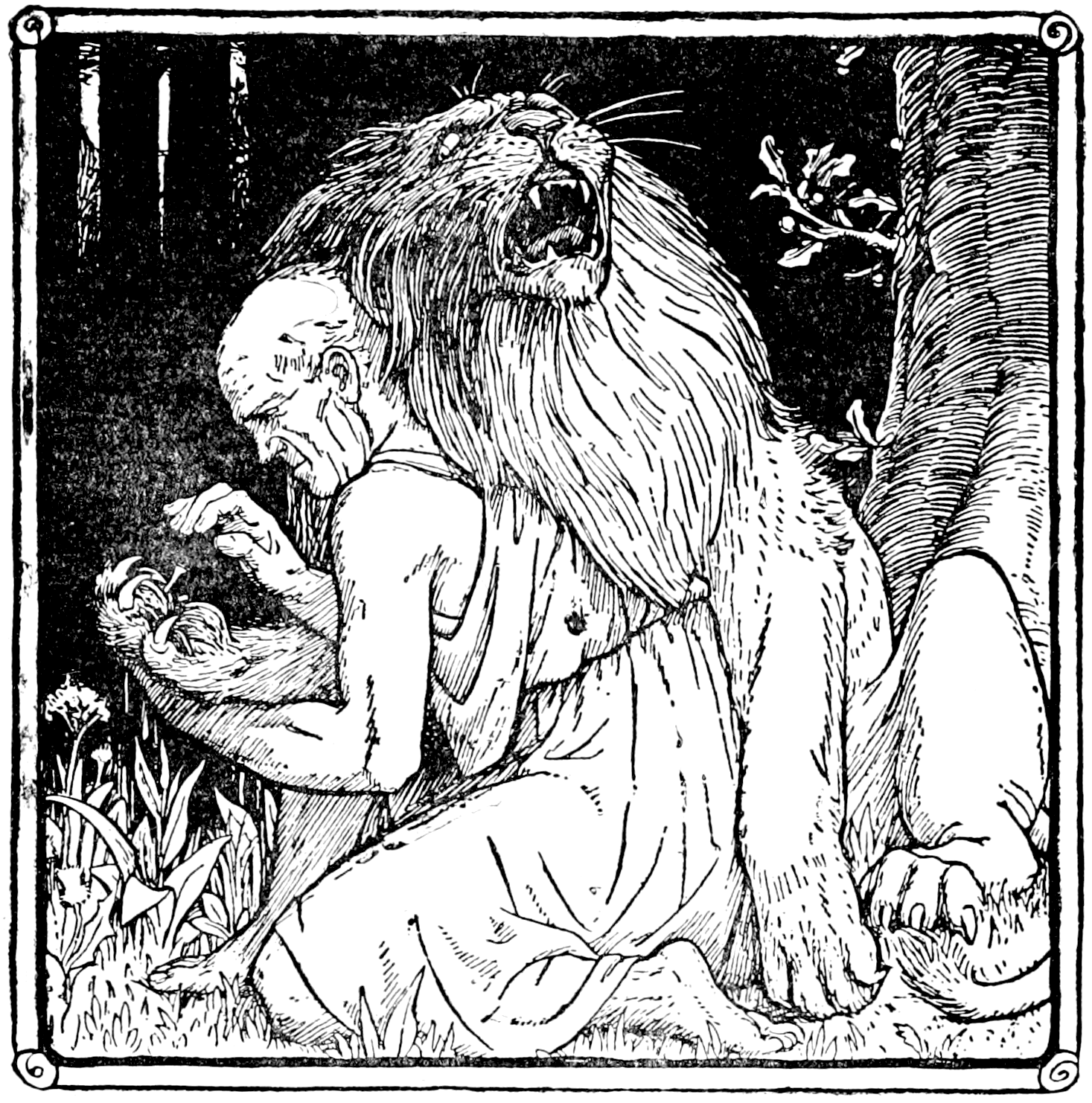
Androcles pulling a thorn from the lion's paw
My response has pretty much been that scientific and academic approaches applaud "peer review", it's part of the Scientific Process.  If I've been wrong all this time, I believe in Socratic method, and like Plato said, would be as happy to have a wrong idea removed from my mind as I would to have a thorn removed from my skin.   If I'm making a mistake, I want the mistake to be corrected.

I trust Blacksmith would see it the same way, if they take the time.


This morning I got an email from Rafa at @RecyHub, cc'ing a subset of interested parties like Josh Lepawsky following #Ewastegate, with a link to a public update on the cleaning up of Agbogbloshie project.


It's about AMP Project, the MIT-CoLab style "appropriate technology" approach to wire burning in the Accra city dump, which has provided the update below.
More on the Blacksmith Institute, what do you think?
http://www.pureearth.org/wp-content/uploads/2014/01/Ghana-Pilot-PCR-2015.pdf
Link to the project completion report for phase 1 of the pilot project. 
I was trying to figure out who to cc in my response, and decided to post it for the world below.