Showing posts with label blacksmith. Show all posts

Euro Agbo Porno Photo Journos 2: Dr. Jack Caravanos Back on Duty - Let's Flog The Mining

Since I've been quite the heckler of Blacksmith Institute / PureEarth for allowing themselves to be cited as a source of many, many incorrect and false reports on Agbogbloshie e-waste, it's refreshing to be able to give them a kudos.  I was just going after "data journalists log, photojournalists flog" on Africa in the previous blog.

Now what? I'm back so soon?

Blacksmith's main researcher on toxic sites across the globe is NYU's Dr. Jack Caravanos. Dr. Jack's research on soil and processes at Agbogbloshie was actually very good... too bad no one citing the report as saying things it doesn't say has ever read it.    The Guardian and other press who cited it as evidence that Agbogbloshie was some kind of significant world dumping ground would have done well to interview Jack rather than Mike Anane.  Jack's twitter account should be followed, because he's the first place I saw this story.

But here's where we are in total agreement - it's the mining.

And the Kabwe Lead Ore Mining in Zambia, to be more precise.


Jack Caravanos and Blacksmith Institute first put Kabwe lead ore mines on the map.  The worst recycling on earth is better for the environment than the very best mining.  And Kabwe, in Zambia, is one of the worst mines.

Compare the Guardian photojournalism of Kabwe to the Stephano Stranges photography of Agbogbloshie.  They meet in the middle, with StephanoStranges Coltan mine...  Is this where grisly photojournalism redeems itself?  Or is this where Robin tries to salvage relationships without being hypocritical?

I told the Guardian in 2014, "It's the Mining, Stupid".  Can we finally take on the toxic legacy of the General Mining Act of 1872, and the precedent it set for mining across the earth?

SMOKING GUN: Multiple Reports on Agbogbloshie, Ghana, source pollution!!


"Urban waste pollution in the Korle Lagoon, Accra, Ghana" ("Urban Waste") is an article that appeared in The Environmentalist in November, 2002.  It was written by Markku Kuitunen and Kwasi Owusu Boadi at the University of Finland, following announcement of a major grant (mostly OPEC) to dredge the river and abate annual flooding.

BANG BANG.  E-Waste Hoax is Dead.  (note that CAER has removed all the Agbogbloshie Boy photos from the website, and is now a "national security" focus for RERA... E-Wastegate Agenda Shift)


Anyone writing any report on E-Waste Crime in Agbogbloshie is incompetent if they don't do background research.  I don't have time to cite every one of these, but this one has a great bibliography, and is really a "smoking gun" for the Agbogbloshie "E-Waste Hoax", as well as a sobering account of past grants and efforts to "save Accra" from urban pollution.

The pollution and flooding is described as a problem since the early 1970s and 80s, and is attributed to "rapid urbanization" of Accra, Ghana's capital city.
"The Korle Lagoon in Accra, Ghana, has become one of the most polluted water bodies on earth. It is the principal outlet through which all major drainage channels in the city empty their wastes into the sea. Large amounts of untreated industrial waste emptied into surface drains has led to severe pollution in the lagoon and disrupted its natural ecology. The increased levels of industrial activity and consumption by the urban population lead to the generation of copious quantities of waste. Managing the volume of wastes poses a major challenge for the city authorities, particularly, ensuring that all the waste generated is collected for disposal. In Accra, the Waste Management Department is currently capable of collecting only 60 percent of the waste generated daily. The rest is dumped in open spaces, in surface drains, and into water bodies which end up in the Korle Lagoon. High eutrophication levels have developed in the shallow water body. The net effect is that, at the slightest downpour, the lagoon overflows its banks causing regular flooding in parts of the city.
"The Government of Ghana, having realized the adverse impacts of pollution in the lagoon on the physical and economic environment of Accra, with the support of donor agencies, is implementing measures to restore the lagoon to its natural ecology. Attempts are also being made to get the communities in the catchment area to become involved in managing their environment through environmental education and awareness programes."[sic]
The article stresses that problems cited in two previous studies (Biney, 1982 and Mensah, 1976) had continued to increase, and that by the time of the 1976 and 1982 studies, the lagoon was dead.  As Accra (and Lagos, Douala, Nairobi, Kinshasa, etc.) has grown, so has pollution from the waste generated by people who live there.
Before the onset of this severe pollution, and in the early 1950s, the lagoon supported a thriving fishery of both fin and shellfish, which served as a source of employment and income for some people in the nearby shantytown, which incidentally derives its name from the lagoon. However, due to the grossly polluted state of the waters, the lagoon has lost its fishery (Biney and Amuzu, 1995), and it is hard to believe that this black, nauseating muddy water could ever have supported any such life. The Korle Lagoon is the major basin into which the greater proportion of the flood waters of Accra flow before entering the sea (Biney and Amuzu, 1995). The lagoon receives water from a total catchment area of 400 km2.
It receives discharges from three main sources—the Odaw River and two major drains on its eastern and western sections (Fig. 3). These major drains are mostly uncovered and usually collect silt and debris which are transported into the lagoon (Mensah, 1976). Waste discharges, including industrial effluent, are the major sources of pollution. The wastes originate from residential, commercial and recreational areas, offices and institutions, such as hospitals and schools. They include food waste as well as paper, batteries, glass, plastics, textiles, excreta aerosol cans, and much more (Biney, 1982; Mensah, 1976).
So Mike Anane's descriptions of the "E-Waste Tragedy" starting with bad e-waste exports in Europe is late to the game.  Here are descriptions of the dumps upstream of the river, citing reports from Amuzu 1976, Laing 1994, etc.
"The water in the upper part of the lagoon is muddy, and the stench emanating from it is unbearable.  An abundance of saw mill dust from the timber market industrial area is disposed into this part of the lagoon.  Also, the Waste Department's dump which is covered with industrial sawdust, is gradually encroaching into the water body. Sediments in this part of the lagoon trap effluents from upstream.  These include industrial, domestic, and hospital wastes which have further deteriorated the water quality upstream. According to Liang (1994; 141), a survey of manufacturing industries in the Greater Accra Region showed that the metal industry creates 16 percent of the total industrial waste, garment and textiles - 30 percent, chemicals and cosmetics - 20%, electricals and electronics at 1 percent and mineral products at 0.7 percent.  Most of the untreated industrial waste waters are discharged into surface drains which flow into the Odaw River and Korle Lagoon.  Since the upstream part of the lagoon is the usual point of discharge, and the receptor of wastes, it is the most affected." 
So we knew in the 70s, 80s, and 90s that the lagoon was already polluted and dead, and that the source of the pollution was upstream of Agbogbloshie.  And the 2002 study estimates the contribution of electric and electronics as contributing 1%.  I'm not saying that Accra isn't polluted, and I'm not saying that pollution isn't tragic.  But accusing African Techs, Geeks and Nerds, or Dagbani scrappers, of making this mess amounts to not much less than criminal defamation.

Sample clip, 1994 Accra Waste
So certainly ownership of second hand electronics increased in Ghana homes, certainly teledensity increased, as did pollution, sewage, and people throwing batteries and car stuff in the gutters and river.  But arresting internet cafe owners, TV resellers, cell phone repairers, etc. seems like the most hideous, disgusting, moronic solution to the problem that anyone but a planned obsolescence industry could come up with.

And the Urban Waste Pollution articles bibliography, on page 309, involves numerous water studies of the Odaw River and Ghana pollution.  Not a single one of these, however, is cited in Greenpeace (Poisoning the Poor), Basel Action Network (Digital Dump), or Blacksmith Institute (aka Pure Earth) report with CUNY.

Environmental Malpractice: Old Fadama (Agbogbloshie) Still Shaken by Bullyboys

First the good news:   Three great articles came out making the same points that I've been trying to make for ten years, adding a great deal of intellectual value to the discussion of the E-Waste Export controversy.

Restart Project, Representations of Waste Matter
http://therestartproject.org/repair-elsewhere/representations-of-e-waste-matter/

Lepawsky, Goldstein, Schulz:  Criminal Negligence?
http://discardstudies.com/2015/06/24/criminal-negligence/

Minter, Anatomy of a Myth
http://shanghaiscrap.com/2015/06/anatomy-of-a-myth-the-worlds-biggest-e-waste-dump-isnt/

Ghana's Parliament is now involved, and is asking the same tough questions posed by the Twittersphere through the week.   If it's about flooding, why did they start in the rainy season?  Why did the AMA start on the populated side of the river, rather than dredge from the opposite (scrapyard and landfill) side of the water?  Why start on the first day of the holy Ramadan?

The bad news is that it's too little, too late to help the dispossessed refugees of the shantytown.   My friends and acquaintances there describe homeless children now sleeping on the floors of mosques, unable to purchase mandatory school uniforms and supplies burned or bulldozed.

But the worse news is the slum will be rebuilt much faster than the reputations of environmentalists and journalists.  Too many environmentalists are ignoring our role in the propaganda campaign.

We are living up to our label as "parasites of the poor".  We are losing a generation of influence, as the scrappers of Agbogbloshie grow to dislike us and distrust us, believing that the people repeating lies about them are raking in enormous sums of wealth.

Bullyboy environmentalist, Joe Benson called us.

Sadly, in proportion, it's more true what they say about us than what we are saying about them.  I'm sorry to be the bearer of that news, but don't kid yourselves, I'm not making it up, I have these conversations recorded on film.

My role as a blogger is to remind my fellow environmentalists, including the NGOs and EU-based bureaucrats who are making hundreds of thousands of dollars (or millions, in the case of one NGO) off of the #ewastehoax, that hyperbole harms.

Hoaxes Harm. Agbogbloshie Land Grab Reportedly Underway

#WORLDREFUGEEDAY June 20, 2015

IMG-20150620-WA0005Look, it's hard for a westerner to establish a credible campaign about urban land reform in Africa.   The use of land in central Accra, 9 minutes from the city's most prestigious hotels and government buildings, has been a powderkeg for some time.

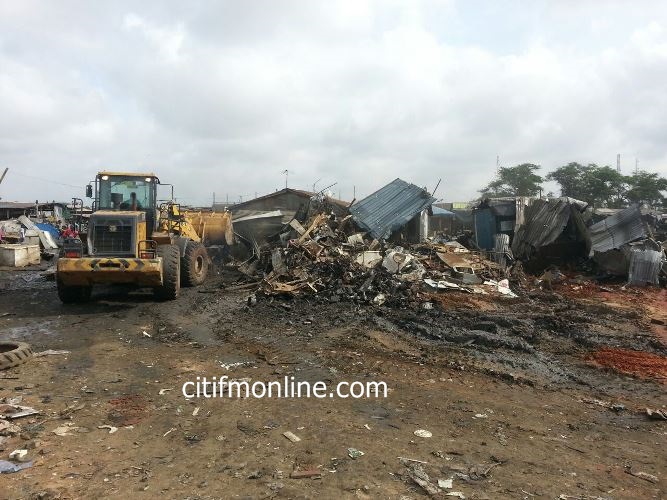
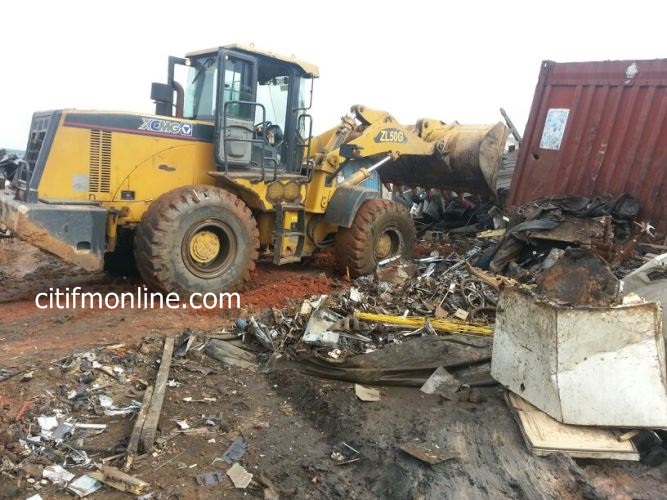
But Interpol and CWIT and UNEP's role in the "Agbogbloshie Sodom and Gomorrah" hyperbole should be investigated.   Posing as concerned about the Dagbani speakers who were Accra's Recycling Caste, they set up this cruel display of heartless eviction-by-bulldozer, which started yesterday.

Agbobloshie Demolishing Underway (citifmonline.com) has photos

Best way to get the news at this point is on Twitter.   @RecyHub, @AdamMinter, @Rubbishmaker, @Heatha_a, @RestartProject, @AfricanSolarLLP, @Kwiens, have been there and know what they are talking about, and new voices, like Abhassan Ibn Abdalla are reporting from the scene.
  1. Forced eviction is not a method of slum redevelopment. Demolishing homes and livelihoods is not good governance.
 2 hours ago2 hours ago2 hours agoAgbogbloshie children centre which was sheltering displaced people is being demolished now
  1. agreed. My sense is 'we' flatter ourselves to think our names relevant to those doing the clearing or those being cleared.
The imprisonment of Joe Benson in the UK for "wastecrime" (secondhand computer sales in Africa) was just a part of the story of #ewastegate. The Blacksmith Institute, GAHP, and Green Cross meant well but the use of the $1.2M was tone deaf to the underlying issues. Kevin McElvaney and other photojournalists have reaped their share of "sponsorship". But the worst part is putting Basel Action and Mike Anane on an expense paid promotional tour that makes destruction of recycling yards and arrests of Tech Sector workers pass as "environmental justice" or "remediation".
It just hurts to have a campaign of connected Accra developers take advantage of an environmental story completely misunderstood by Western NGOs, and label Dagbani neighborhood "Sodom and Gomorrah", as if recycling Accra's scrap was doing something wrong. I don't know if it's as bad as Egypts "cleaning of the Zabaleen" (something I was incensed about a decade ago, now forgotten), or China's flattening of "informal recycling" sites during it's rapid urban development phase. As Josh Lepawsky says, we flatter ourselves to think the Accra AMA powers that be will listen to our Western tweets. But the news editors who printed the "Agbogbloshie E-Waste Tragedy" Propaganda need their clocks cleaned. This cannot keep happening to recyclers and refurbishers.

IMG-20150620-WA0010
This was not really about recycling. This was about forced relocation.
The story is still developing, and the flooding of the area was real, and the photos on twitter don't really show the extent of the evictions. Reportedly classrooms and homes have been demolished, but the story still needs a chance to develop.

"Here to Help" Part 1: Is GAHP a Charitable Industrial Complex Honeypot?

#dennismoorecrime #environmentalmalpractice #parasitesofthepoor #whitesaviorcomplex #whiteguilt #morallicense #charitableindustrialcomplex #heretohelp
[Any photos or screen shots from the following sites below are claimed under the "fair use" exception, they are specific evidence in a commentary, policy critique, and use of public and charitable tax exempt funds]

Demonstration of $75K portion of $1.2M investment:  Turning 1kg of wire worth $0.70 into 0.7 kg of wire worth $1.00 

From the outset, let's acknowledge the do-gooders mean well.  They are here to help.  If they turned out to be what one Africa directed blogger coined as #parasitesofthepoor, or arrested one of Africa's best and brightest Tech Sector employers, it's a "Dennis Moore crime".  Redistribution of recycling was trickier than they thought.

"E-Waste Crimes in Ghana" 9 - Great White Savior Gam

We revisited Agbogbloshie in urban Accra yesterday.   Having 9 days in Tamale, learning the Dagbani context, was important.  It honed and shaped our thinking.  Wahab and his 2 cousin/friends could focus their Dagbani translation on our questions, rather than siphon off the translation for American and Italian reporters.  As importantly, we had 9 days to think about the questions we didn't think to ask on the first day.


Since it was Agbogbloshie, of course there was yet another documentary being filmed that day... Justin from New York said he's a masters degree film student.   That's basically all he'd tell us.

This time we got to the wire-burning "hot spot" via the long and windy route.   We saw much, much more of the scrap metal site and trash dump.  It is indeed impressive in the context of a city of 1 million residents.  Of course, this city has closer to 5 million.   Recyclers will get my point... there has to be a lot of stuff still out in the city somewhere, waiting for a decision maker to let it be recycled.

money shot
The white photojournalist had Awal (Howell) set up along the canal, sitting on a TV housing, with his back to the tire fires east of him.  We took a vantage point under the sun canopy where the scrap burners and hanger-abouters rest and have lunch.

Agbogbloshie as a scrapyard has little to do with wire burning, and the wire burning has much more to do with automobile wire than with "e-waste".  But those wire fires, while a very small part of the equation, attract thrill seekers - unemployed teenagers and #greatwhitesaviors like me and "Justin".  

The site, seen from above, is mostly scrap automobiles, motorcycles, and bus recycling,.  It's not the largest electronics dump in the world, not even in the top 100.  Given the number of African households who have had electroncs for decades, there should be much more e-scrap.  "E-waste" is a very small part of the scrap, apparently because Africans are still holding onto it, "speculating" that used electronics they don't use now will be sellable to someone.  Today's Agbogbloshie is probably the tip of an iceberg as decades of reuse and repair will eventually cascade from a next generation of smart phone users.

2015 "Ewaste Crimes" in Ghana: Day 2

In 1985, when I lived in Cameroon, and visited a large city like Yaounde or Douala, crossing the street was not too difficult.   As you stood at the corner and watched vehicles go by, it looked something like this...
Taxi.  Taxi.  Taxi.  Truck.  TaxiVan. Taxi. Taxi. Mercedes.  TaxiVan. Taxi. Truck...
Here in Accra, capital of Ghana, thirty years later, things have changed.
Taxi. Toyota.  Honda. Truck.  Taxi.  Mercedes.  Infiniti. TaxiVan.  Truck.  Taxi. Truck. Jaguar.  Truck, Hyundai, Taxi, GMC, Taxi, Taxivan, Truck, Nissan, Toyota.... and the sentence goes on and on for half a page.
We were on our way to the "scene of the crime".  The place Blacksmith Institute placed at the top of their list of most toxic places on the planet.  Where Frontline interviewed Jim Puckett, describing the place where "most" of the world's e-waste goes.  Where Mr. Mike Anane says 500 sea containers per month arrive for primitive dumping.  Where several sources describe, and I quote, "Millions of tons of e-waste per year" are dumped and burned.  The site described by Joe Benson's prosecutor as "common knowledge" that 80 percent (that #$%$ stat) winds up after Benson exported it.


I will have to upload some of the photos later.

Millions of tons (I actually had to edit that claim out of Wikipedia and identify the source had misquoted a study saying that was the world's generation, and then applied 80% literally to Agbogbloshie). That's 60 to 90 million CRTs, if it's at least 2 million tons.

(I took about 150 photos, but most of my photos were of the photographers... I'll talk about why.  The shots are too big to upload here from my Ghana pocket wifi Vodaphone transceiver.  Some from Fair Trade Recycling e-waste reform Facebook Page).


There were about 50 people, including myself and an American and two European reporters and my friends  who took us there - my Ghana Geek pal Wahab, two of his cousins (all from same tribe and locale as the teenagers at the dump) and a lawyer and import agent.  About 25 of them were "on the job".

Halloween Images Of E-Waste (Scary Black People)

Sweet Mother, I no go forget you... 

This was what I remember dancing to at my farewell party in Ngaoundal, Cameroon, in 1986.   Prince Nico Mbarga's small tabletop TV would have been at least 9 years old by then, probably older.  Prince Nico Mbarga was born in 1950 of a Cameroonian father and Nigerian mother,  he died in 1997.  He was considered a bit of a "one hit wonder" for his iconic tune "sweet mother", sung in pidgin English, which has become the "happy birthday" of mothers day music in my family (embedded towards the bottom of this post).

I'm a white man, with a little black used television.  Here is a black man, with a little white used television... How does poetic language make us afraid to trade with one another?


While I think that a Prince Nico Mbarga outfit would be a fantastic Halloween costume, I cannot say that I find it scary.  But his little white television set has been labelled a big, big, e-waste problem, worthy of laws to keep the next Prince Nico Mbarga from ever buying another used RCA.   Today I want to look closely at the TV in the 1977 photo, and ask how poetic language can make something seem more ghoulish, more noble, more scary, or more heroic.

The United Nations Environmental Program has definitively shown that 85% of used electronics imported to Nigeria are reused (70%) or repaired (15%), and the remaining 15% is a figure very close to the 11% of new-in-box returns at Wal-Mart.  The trade in used electronics, like the trade in used cars here in the USA, was found to be... um... dull.

But the legislation HR2284 finds the trade in used electronics to be anything but dull.... It declares them harmful and dangerous.  HR2284 would put a stop to this.  Why are we sooooo afraid of Prince Nico Mbarga's little white television?

It's Sunday, and sometimes my blogs go off on a tangent on Sunday.  As I listen to Prince Nico Mbarga, and I recall the pidgin English of my years in Cameroon, I'm struck by the similarities in emotions I feel to the first poem I ever learned by heart.  H.W. Longfellow, The Village Blacksmith, was about hard work done by hand.

Criminalizing Hard Work Done "By Hand"

Society recoils from hard work when toil is presented in a racially charged manner.

reported from the road in Ozark Mountain country.


My kids Posed "Toiling" Cameroon 1985
Hard work was good.  Working with your hands was nothing to be ashamed of in Arkansas and Missouri, where I spent every summer.
But the Western Press increasingly presents anything done "by hand" in the developing world as being an unsafe and sad "state of affairs".  See again the coverage of "fair trade" by Victoria's Secret, headlined "Children Toil With Bare Hands in Burkina Fields."
In the Ozark Mountains, toil was something to enjoy, something to be proud of.   But during the attack on fair trade cotton, "Toil + Manure + 13 years old labor" was a damning equation for Victoria's Secret.  Manure to a farmer is non-toxic fertilizer, but to an American reporter, seems simply odorous.
In Burkina Faso, girls marry at 13.  Most girls that age are lucky to be in school, even part time.   If they are not lucky enough to be in school, there is a short list of careers for them.  If a girl is an orphan or foster child, the choice of careers is shorter and the choices more perilous.  One of two girl students of mine at 9th Grade of CES Ngaoundal in Cameroon, the privileged daughter of the Sous-Prefet, died in childbirth the night before I was to hand out her grading card (she failed my English class).