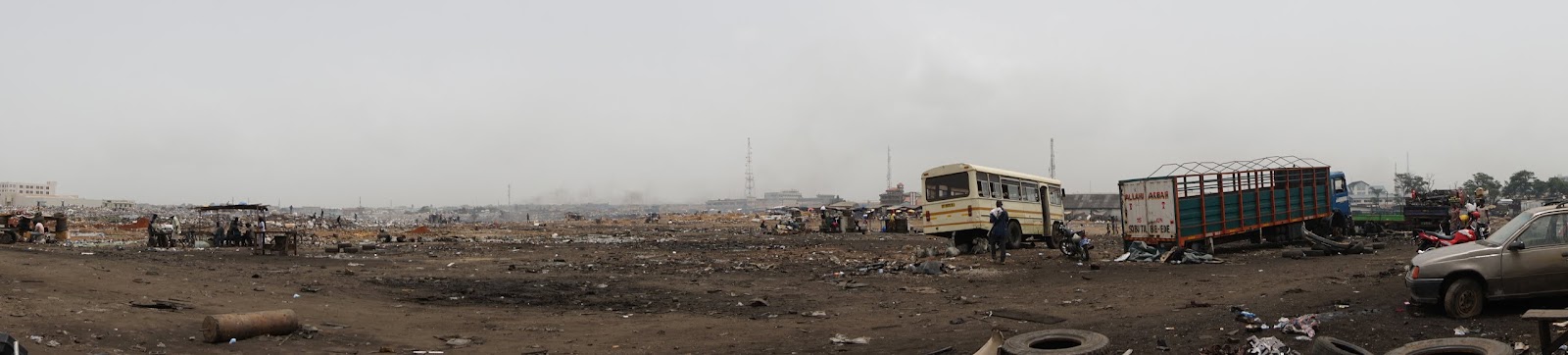
Showing posts with label #Agbogbloshie. Show all posts

E-Waste Blamed for Dolphin Brain Pollution?


The Independent in the UK goes way back in the annals of waste-blaming. The Independent was one of the first to herald the arrest of Joseph "Hurricane" Benson, accepting that the African born technician was somehow making a financial gain by exporting used televisions for dastardly intentions - anything but reuse and repair. I tried corresponding with The Independent's reporter for years. Even when Benson was released, and Interpol's Project Eden closed after multiple researchers found Agbogbloshie's waste to be domestic city of Accra devices, not recent imports, the Independent never followed up.

So today's headline seems uncannily responsive to my last blog about the intelligence of dolphins. Weird.


E-waste found contaminating dolphin brains: ‘This is a wake-up call’  
Toxic chemicals in dolphins and porpoises seem to originate mostly from television and computer screens

Vishwam Sankaran

https://www.independent.co.uk/news/science/pollution-electronic-waste-brain-dolphins-b2928621.html

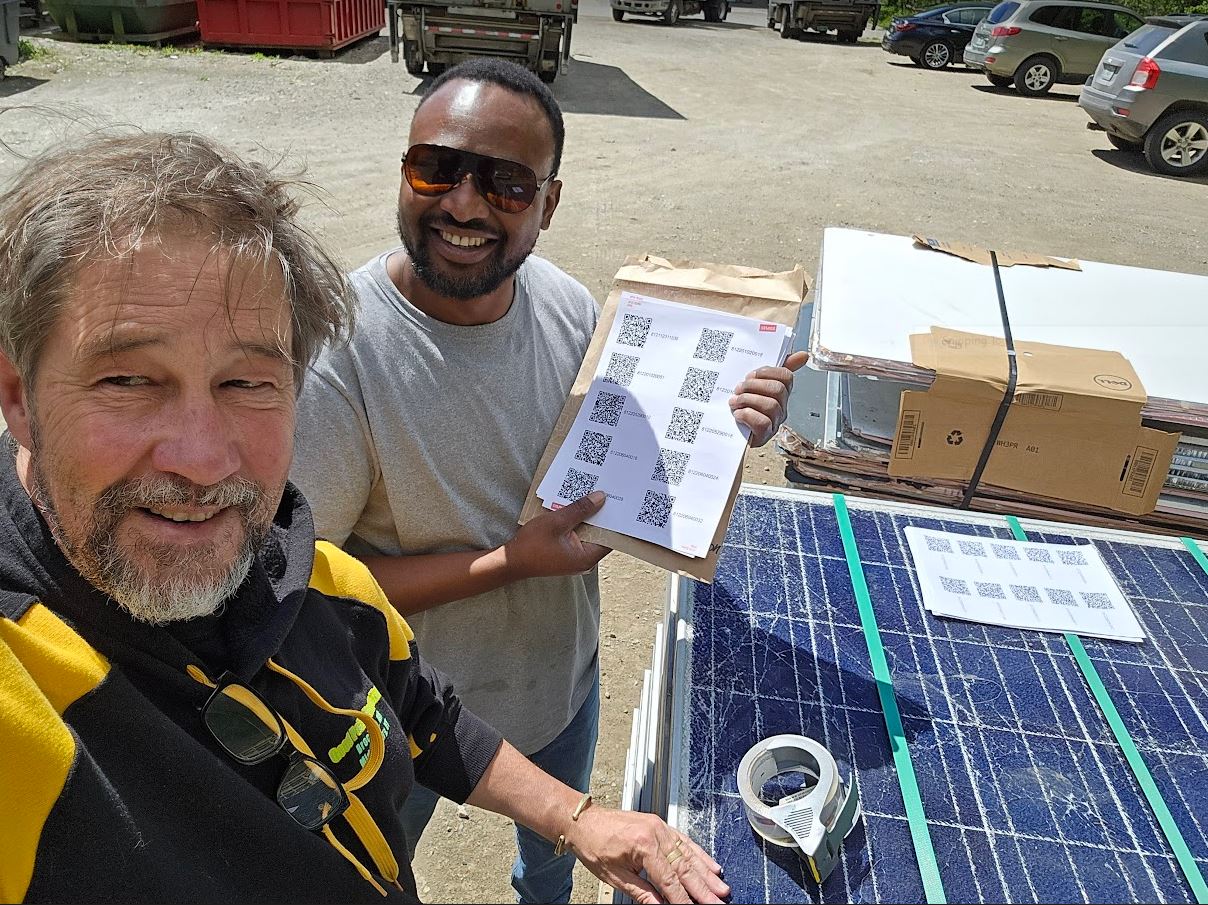
Emmanuel Nyaletey and BridgeSolarPower.com

Emmanuel Nyaletey and BridgeSolarPower.com

One must always balance the expression of joy against the "humble brag".  From time to time, I can't resist open enjoyment of the staffers and buyers who came to Good Point 


At this year's Orlando E-Scrap Conference, Emmanuel Nyaletey (and Patty Whiting) will be on a panel with our old friend, Jim Puckett.

Blog Readers will doubtless remember Jim Puckett's description of Agbogbloshie ("on the outskirts" of Accra rather than "dead center") in his creative writing essay "A Place Called Away". Less familiar, perhaps, was Emmanuel's 2014 X.com (TWITTER) video describing what Agbogbloshie actually is/was, from the point of view of a Ghanaian who grew up blocks away and who refurbished computers as a kid in Ghana.

The BridgeSolarPower.com plan is to work with OBADA.io to create Digital Product Passports. Africans who purchased secondhand solar panels - upgraded due to high real estate costs in OECD nations - can tag (QR code, blockchained) and regularly report on reuse for carbon credits.

Who might be against that?

Should we switch to Substack?

There are still important things that we, in the actual trade in electronics reuse and recycling, can share. But if Google is de-platforming its own blogspot platform, I have to consider moving this entire discussion to Substack.

The risk is that we lose the 30-55 average blogspot views (way down from 2015) and have an unviewed substack. Substack is not showing up in my page 1 Google searches, there's probably a riff (maybe Google is "protecting" blogspot while another wing of the office is killing it?)

And here is your reward for reading this.


Reused solar panels will be tagged with these Avery Labelled stickers, with OBADA.io blockchain tracked QR codes, which Africans can scan with their mobile phones to upload photos - which have GPS location - proving it is NOT IN AGBOGBLOSHIE.

more

Recap: Spain SETEM's Mobile Social Congress E-Waste Session 2023

Spain


[Update: Now my address is on Youtube. And very impressive Battery Recycling Expert Hans Melin Eric comments on Linkedin here]

Three weeks ago I returned from a strange and wonderful invitation to speak to a conference in Barcelona. Spain's Mobile Social Congress closed with my session on a Friday evening following the end of the larger European Mobile World Congress (MWC) which is the equivalent of Europe's CES if CES was specific to mobile phone technology.

Thanks to an invitation from Claudia Bosch and Sara Dominguez and SETEM, I had a chance to "cross-examen" a documentary they'd shown at a previous conference - 2018's E-LIFE by Ed Scott-Clarke. They showed the one-hour documentary, then gave me alone the stage for the next hour. 

Now I don't know everyone at SETEM, I only know a couple of people who could not have been surprised when I sharply criticized that documentary. I had a number of facts to share, and I used them.

And I beat that thing like a pinata.

As background, I was interviewed by Ed Scott-Clarke, but not used in the documentary.  That's not important. But more importantly, I had flown in Ghana Tech Sector expert Emmanuel Nyaletey - a superb public speaker who grew up very close to Agbobloshie... and Scott-Clarke didn't use him either.

First things first:  Who is SETEM? Here's an English translation of their web page.

We are people who want to change the world. We believe in a culture of international solidarity that is respectful of the dignity of the peoples of the South and aimed at denouncing and eradicating the structural causes of inequalities.

The SETEM Federation was born in 1995 as the result of the association of the SETEM associations of different autonomous communities, each with its own legal entity, but all with a common objective: to raise awareness among the Citizens about North-South inequality and its causes, promoting the personal and collective transformations necessary to achieve a fairer world.

So this progressive, environmentalist organization had a few years ago learned about the E-Waste dumpsite of Agbogbloshie and made several trips to "save the Africans"... and while learning more and more about the place, some of my contacts there realized that something wasn't adding up.  For one, there was never a sea container. No one has ever seen one there, much less "400 to 500 per month". The materials were being collected by young men with push carts from around the city of Accra... just like the ubiquitous African scrap carters that abound on streets of Barcelona, Madrid, and Seville - and the Canary Islands.

During my hour tearing apart Edward Scott-Clarke's documentary, I had another documentary playing behind me without sound - Scrap Metal Men, In the Life, by Alex Wondergam.

#PhotoJournalism and the Tire Fire Mirror: The Vampire Class Can't Find Its Own Footprints

#PhotoJournalism and the Tire Fire Mirror:  The Vampire Class Can't Find Its Own Footprints

Poverty Porn photographers claiming to "hold up a mirror" to society fail to document the true value of reuse and maintenance is in saving the environmental expense of virgin material extraction and production. The vampires can't see themselves because they are holding the mirror facing forward, where goods go to be reused, instead of at our own extractive environmental footprint.

The perfect example? The tire fire. A fresh one appears today in the respected Council on Foreign Relations... even they use the African Tire Fire to lead their story.

African burning tires - Council on Foreign Relations


Council on Foreign Relations Gets Into the Act.


(This blog is summarized on my Twitter feed in 5 tweets plus 2 postscript, copied at bottom)

ENVIRONMENTALISM cannot be scatalogical. While waste analysis is as vital to earth environmental policy as a pap smear, urine sample, or colonoscopy sample, it isn't the cure for obesity, heart disease, disease exposure, or stupid behavior... all of which are bigger predictors of death than excrement.

PHOTOJOURNALISM likes to tell us (or themselves) that they make complicated science more understandable and relatable. Photos definitely stir a human empathy (nurture) or anger/fear reaction.

For years this blog has drummed about the danger of simple looking solutions which are in fact comically fictitious if the photo is given a time lapse treatment. In today's twitter feed, I use tires as an example of photojournalist "whistle blowing" to well-meaning environmentalists - triggering collateral damage via subconscious racial profiling.

To get your attention, I'll start with the guilty western pleasure of whacking off to an African burning a pile of tires.


Long term followers will recognize this 30 year old man as Awal Muhammed of Savelugu, used here to solicit hand-wringers to view "Welcome to Sodom", the most recent "documentary" to add to the pile of lies about Agbogbloshie, the auto scrapyard in central capital of Accra, Ghana. Here's another shot of Awal, from #SashaRainbow's glam-rock-band Placebo music video of the same vein of lies about Africa's waste being not African, but recently illegally imported externalized waste from OECD evil recyclers who refused to boycott Africa's Tech Sector entrepreneurs.

I don't credit the photographer, sorry. But the photographer didn't credit, or describe, Awal Muhamed, so call it even. In any case, after one more guilty pleasure shot of Awal's accelerant dowsed tire fire performance art, I will share an actual diagram of the life cycle of automobile tires, from rubber plant production to crumb rubber or cement kiln fate in the USA or Europe.


The entry point here is Sasha Rainbow and whatshisnameWelcometoSodom and Kevin McElvaney's re-treaded claim that they are not exploiting men like Awal, that their photo-economy is necessary to HOLD UP A MIRROR to wealthy societies who, they claim, are unaware that their OECD recyclers are faking it and dumping your electronics (as evidenced by tires) on Africa.

BusinessInsider: New Zealand Company Extracts Gold from PC Boards Using Microbes (and...)

This Business Insider video on gold recycling just came out on Youtube.

I haven't even finished watching it yet, because the opening minute uses footage of African city junkyards to repeat perposterous claims that African are using a toxic leachate chemical process to extract gold from circuit boards.

https://www.youtube.com/watch?v=4yGPm1U7U6s

Look, if you are claiming to make a engineering or scientific breakthrough, don't start with a blatantly false and discredited claim.  I've been visiting African scrapyards for years.

The gold bearing printed-circuit boards that come from hand-demanufacture and disassembly (an honorable process, superior to Western "Big Shred" machines designed to avoid labor) are sorted by type and either a) reused in ubiquitous repair shops in Africa, or b) sold to Chinese buyers who harvest integrated chips from the boards for remanufacturing (e.g. into lower scale toys and appliances).

The whole "acid bath" claim was bogus since Guiyu reporting in 2002.  The claims made about Agbogbloshie and other African dumps (that they import EU and USA electronics for scrap, rather than collect from generators in African cities after decades of re-use) were disproven by multiple research papers over the past 10 years.

<iframe width="560" height="315" src="https://www.youtube.com/embed/4yGPm1U7U6s" title="YouTube video player" frameborder="0" allow="accelerometer; autoplay; clipboard-write; encrypted-media; gyroscope; picture-in-picture" allowfullscreen></iframe>

@BusinessInsider is ordinarily a great journalism organization, and the rest of the story may be quite interesting aside from the postulation that white people have better processes. 

Part 3: How (too) Quietly the Big Ewaste Lies are Buried ("Behind Her Feet")

BEHIND HER FEET 


Conversation about my 5- Twitter Post today (different photo mashup).

Thesis:  Post Colonialist OEMs continue to benefit from virgin raw material extraction, which was opposed 50 years ago by Environmental Activists. Today, the Planned Obsolescence Privileged OEMs (POPOs) have twisted environmental laws to inflict collateral damage on the #RightToRepair and #Reuse Tech Sector.

They do it with #PovertyPorn, and lies about exports being dumped 80% of the time in small city scrapyards like Agbogbloshie. They use our enviro sense of shame about out own consumption to trick us into shredding stuff that poor people need and want, lest it be one day discarded by the poor after decades of reuse. We unwittingly fell for a Ptolemy Story, that the Circular Economy Revolves around White Countries. We let our atonement #RighteousnessTrap for colonialist past crimes distract from the Mining, Forestry, Petroleum and other Subsidized goods.  Without the raw material and energy subsidies, and extraction from the global south, the value of Secondhand Goods would increase to full potential.


Many Blog Posts are Emails To Academics: Urbanization Politics of Agbogbloshie

This is an email I just sent to a European graduate student, who is attempting to do a major research (thesis?) paper on Agbogbloshie.

I always have taken time to encourage researchers. It is part of my "fishing for swordfish, surrounded by perch" philosophy of blogging. The blogs are ignored by most people, because most people don't have the bandwidth to really focus on them, or to do a deep dive, or review ground already covered.

But these emails and blogs reach people who are truly concerned, and who ultimately discover that there is an almost sinister systemic manipulation of "do-gooders" empathy to accomplish monetary gains. I usually talk about the Western (and now Asian) lobbies - Big Shred, Planned Obsolescence, and Charity Industrial Complex.  But in this morning's email to the Swiss based graduate researcher, I like to remind us that Africans have Agency, even if some of their agency is systemically marginalized by the desire for shiny white consciences. 

In Accra, Ghana, it's the land value stupid. Agbogbloshie, for decades (IMF and World Bank papers go back to the 1960s) has been an urban scrapyard next to the Old Fadama slum.  If you want to know what is ultimately going to happen, read about the Kowloon slum in Hong Kong. All the "recycling" story is just using BAN propaganda to leverage demolition and expulsion of some of the most valuable real estate in one of the richest African urban centers.

It's not about you, or your old computer.


A Separate Peace: E-Waste Activism's Collateral Damage

Amsterdam #GeorgeFloyd Protest May 31 2020


"Nothing endures, not a tree, not love, not even death by violence"

For over 10 years, this blog has thoroughly documented the false narrative that "exports" are driven by "waste externalisation" and "avoided costs" rather than by "importers" in the "Tech Sector" of emerging markets.  The blog managed to land a few "swordfish", such as Adam Minter, Reed Miller, Josh Goldstein, Josh Lepawsky, NPR Marketplace, USA Today, and many more Ph.D's and press. 

The false statistic that 80% of used electronics was "sham" recycled has been exposed. - not least importantly by the main NGO itself. Despite trying to rig their last EU GPS tracking study by not affixing GPS to things Africa doesn't want, BAN.org found only 5% export. Despite embarrasing MIT and Oregon PBS with the rigged 2016 GPS tracking study, the NGO E-Stewards racket continues to bring millions of dollars into the lush Seattle offices. Despite questions on the bare faced exploitation of children's photographs in the "third world" dumps, who receive nary a penny from the millions raised, the NGO stands unapologetic. 

"Sodom and Gomorrah", "primitives", "ghoulish", and other halloweeny words remain slurs against the talented valedictorians of the Tech Sector in emerging markets. It was racial profiling by the left. That's what structural racism and implicit racism is all about.

The NGO has largely found they don't have to promote lies as fervently, that OEMs with anti-gray-market designs and "big shred" investors who don't like competing in the Good Enough Market will fund them anyway. Why issue lies today, if the money tree is shedding fruit from the lies you told (about Agbogbloshie, Guiyu, etc) a decade ago? 

Nuance Delivery 1: Awal is Sasha Rainbow's Tire Burning Boy

Another reminder from the Placebo "Life's What You Make It" controversy a year ago... Sasha Rainbow, who made the Placebo music video in Agbogbloshie, didn't ever - even once- respond to me or talk to me.  She said I was a liar.


Here (in Pidgin English) is an interview with Awal Muhammed of Savelugu (village north of Tamale).  Oh, he's also featured in BBC reporter Reggie Yates feature on Agbogbloshie.

Sasha's documentary is coming out soon, I've been told.  Good for her that she spent more time down there.  I've heard nice things about Sasha Rainbow from people I know in Accra. 

The Fireworks Economy, Part 1: Burning Wire Adds No Value

European and American NGOs and Regulators who are entranced by the flames at Old Fadama's "Agbogbloshie" scrapyard have three main boogeymen.  Many argue that sales of used goods should be banned to Africa based on public concern over three "questionable" practices:

1) Burning Wire
2) Breaking CRT Tubes
3) Circuit Boards

So many documentaries have now been filmed with close up camera shots of each of these, that we receive RFPs that ban our company from doing work unless we promise not to do business with Africans.  As someone who lived in Cameroon for 30 months in the 1980s - and is still in touch via Facebook with my landlord from the small town of Ngaoundal there after 30 years - this "segregation" of business distresses me greatly.


Connecting Traffic in Los Angeles, EWaste in Agbogbloshie


There are two really good things about Twitter.  The First One is the "search" box on the top right.  It allows you to research an obscure topic (like "Why is Taney County Missouri named after the Dred Scott Case Supreme Court justice Roger B. Taney, and why are they pronounced differently?") and meet someone across the globe who is also tweeting about the subject.  You might have found the same article through a Google search, but it is very hard for a recent article to move up Google's ranking, and virtually impossible to pass Wikipedia etc.  But enter "Roger Taney County Missouri" in Twitter search, and you'll get some very recent and current insight and thinking on the matter.

The second good thing about Twitter is it forces you to be brief.  It rewards "pithy"

(Blogger does not, evidently).

So most of the "facts" about African e-waste and Agbogbloshie that you find on Twitter are just retweeted BS.  But add some other key words, like "Dagbani", and you can meet someone through the smoke and fog who also sees what you know about the place.

Most of the photos on the web of traffic in Los Angeles are actors in colorful wardrobe, dancing on the tops of their cars in @LaLaLand.

BBC E-Waste Recycling Documentary on Agbogbloshie: Reggie Yates 2017

BBC Insider Series 2:1. Reggie Yates A Week in a Toxic Waste Dump 2017


If Agbogbloshie is the "largest e-waste dump in the world", or one of the largest, how can we explain the uncanny coincidence that everyone who visits there, even for an hour, meets the same people?

[Edit 9/28/17: While several other Reggie Yates BBC video docs remain on Youtube, this one has been pulled as of today]

DailyMortion has made the documentary accessible again here

The Insider S01E01 Reggie Yates A Week in a... by Eirador

Also on Reddit


Reggie Yates is a British journalist who is (like Vero, DK, Heather, etc) a second generation Ghanaian immigrant.  In this video documentary, he decides to live the life of three random wire burners from the Old Fadama slum.  The 53 minute documentary, like previous "Euro Agbo Journo" experiences last summer, revolves around the byline.  The journalist is the protagonist, and the background research  (into actual dumping claims) is practically nil (gleaned from Anane youtube appearances). I cringed at the opening montage of myths, assuming the hyperbole would once again propel the story.

But watch the video... there is progress...

Surprise!  He immediately hooks up with our pals Yahro, Razak, and Awal!  The same three musketeers who travelled with me (and PalmAndPlay, and Adam M) to stay with "Ghana Tech" and pal Wahab Odoi, a translator and importer from their Dagomba-speaking tribe around Tamale.  The ones who took us to meet their families, where we observed the tech sector, the charcoal stove fuel business, and copper jewelry craftsmen in the area. (See May press release on 'e-waste offset')


These shots are mine - taken when the guys stripped wire by hand to make "fair trade recycling bangles" like the one they give to the BBC reporter at the end of the documentary.


I've been to many slums before, and to this one several times over the years. I know Yahro, Awal, and Razak well.  I visited their families in Savelugu and Tamale, have pictures with their kids, and we chat a few times each month by Whatsapp. Reggie Yates' personal contact with them seems very genuine, if he perhaps misunderstands some of the Pidgin (for example Yahro doesn't say he hasn't seen his family for 4 years, in fact he was there with me in January and February 2017 - 4 Months).

You have to hand it to these Three Musketeers.  Awal has learned that photographers are attracted to flames, and by squeezing the most fuel into a tire, he can take control of every film crew.  Not that there is much competition... we only counted 25 people at the wire burning site on most days.  (Not thousands).

Our trip north to meet 3 muskateer fams
While it is irksome that BBC's Reggie Yates gets his information about Basel Convention and export from quite discredited claims from 5+ years ago, this is worth watching.  Not for "facts" about "e-waste exports" - Yates displays no evidence of reading research funded by Secretariat of Basel Convention, Interpol, MIT, Memorial University, and others who investigated - and dispelled with prejudice - the original Basel Action Network propaganda.

It's worth watching because, at least for 'e-waste', yes, this really is it. The 7 days Yates spends there pretty much capture the entire Agbo e-waste scene.  You can watch this whole thing and pretty much know everything.

Did you miss the 500 sea containers being unloaded?  Nope. There aren't any.  With time, I hope Yates will go see what 10 tons of e-waste actually looks like, at a facility like mine, and imagine seeing that arrive in an hour by wheelbarrow.

The only African Tech Sector representative appears in the video when Awal takes Yates to buy scrap from an imported goods shop.  The (unnamed) secondhand shopkeeper tells Reggie they are not importing "waste" or "scrap".  Study after study has proved the shopkeeper is, for the most part, correct.  Importers cannot afford to import junk, and they don't.  They fly and inspect goods, they will sample store returns to see if it's an easy repair.  The cost of shipping from the UK is about $5,000 and they certainly don't import VCRs (the junk Awal buys for scrap).  Reuse shops did import VCRs 10-30 years ago, used.  But today, Ghana residents bring them in for repair or exchange for something newer, a laptop or cell phone perhaps, leaving them at the secondhand shops.

Yates does find a UK store return at the shop and raises his eyebrows.  I've seen imported recalls, perhaps the one he saw in the shop.  But they are usually purchased and tested in the UK.  Yates doesn't plug it in, or find out how representative the sample is (this is photojournalism not data-journalism).  Certainly he can see that the shopkeeper isn't selling it for scrap, and that it's too expensive for Awal to buy for scrap, and stuff he sees at the junkyard is much older... nothing adds up.  Awal buys the scrap VCRs, not the store return. In any case, I challenge anyone to find enough "bad goods" in Accra shops to fill the Agbogbloshie they describe. Yates implies it's evidence of controversial import of bad goods. This "tidy little shop" isn't newsworthy... but Yates handling of Awal's negotiation gives us another glimpse of the reporter as protagonist.

The film does capture a lot of junk at the scrapyard. Junk cars, junk bikes, junk tires, junk coconut shells... Junk that comes from African Consumers, living African lives, in African cities.  The cell phone Razak points at Reggie will, in a few years, be scrapped for boards at the junkyard.

Reggie hasn't quite made the case that Agbogbloshie is anything but a city junkyard, similar to one in Essex or Dublin or Marseille, but with lower wages, more smoke, and lesser tools.  And I think if he sits and has a beer with me in a year or two, he'll agree the situation is kinda ordinary.

African consumers have been "consuming" electronics since at least the 1980s (when I lived in Cameroon for 30 months). A lot of "waste" is eventually generated in West Africa.  The more affluent the African city, the more e-waste.  If the export economy was really based on externalization and poverty, that wouldn't be the case.  Yates shows us the scrap exchanges up close, and we can see with our own eyes that it's being collected house-by-house, piece by piece, not dumped by container ships.

Yates shows how Awal buys the VCRs for a scrap metal price, and they wheel them to a consolidator, who pays Awal for footwork.

The journey of the scrap VCRs, by foot, is an example of where the documentary shines. The 3 musketeers do not remain "props", and are not nameless faceless viet cong in this BBC production.  Though he has no Dagbani translator, Reggie Yates deserves credit for listening, as best he can, to the individuals who make the fires. The guys told me this morning that Reggie was cool.

Here's a screenshot of Awal, in the documentary, who you will also recognize was the Blazing Tires "child" filmed by @itsSashaRainbow for the @officialPlacebo MTV video early this summer.


Even if it's not his intentional focus, Yates finds himself surrounded by a slum full of smart phones, FIFA jerseys, and rappers.  We can see with our own eyes that even the lowest scrapper has a TV set in his room.  Yates notes the traffic on a nearby highway.  He says he's been to Accra many times, and didn't know the slum was there.

World Bank data clearly demonstrates that Ghana is not a "primitive" place, and that the vast majority of Accra households owned at least one television in 2001.  World Cup and Africa Cup viewership is nearly universal. 20 TV channels are viewable in Accra, and there were 250 TV stations in Africa in 1977, for heavens sake.  The amount of junk at the Agbogbloshie scrapyard is if anything too light for a city of 3M residents... probably because Africans hang onto their electronics as long as they can.

Inline image 1


Of course, up close and personal is also the "byline trap". When a reporter's name or face features prominently in a story, it too often stops being journalism, and becomes a kind of talking-head on reality-tv. Yates remains seduced by his role in the lives of "the boys", and while he obviously means well, a great deal of footage is wasted on him demonstrating just that.  I learned after Peace Corps that having been to a brave and exotic place can help one seem interesting, help you pick up chicks, etc. Etc! Etc.

Like tire fires, journalism can be a testosterone high, or what I call a "graffiti economy" (time spent which is not really explained by monetary added value of the product).

Reggie Yates producers could have contacted some of the experienced reporters (Minter, Spaull) and researchers (Akese, Lepawsky, Miller) who have dispelled most of the hysteria about "hundreds of sea containers" being dumped and "pawed through" by "thousands of orphans" (I'm not exaggerating, the claims - with "millions of tons" - published in 2010-2014).  He should demand a follow up.  We can arrange for him to visit laptop repair shops and other importers, without whom Accra would never have had the "critical mass of users" to invest in cell phone towers, internet cable, etc.  I usually go to Agbogbloshie with savvy tech sector workers from Tamale, who translate the Dagbani language with Razak, Awal, Yahro, Muhammed etc.

We made the copper bangles (bracelets), and filmed the process, and I encourage the "boys" (I call them guys, musketeers, or men) to give them out to reporters if they have been honest and fair with them.  I take it from Reggie's parting gift that he passed that test.


Anyway I've been in touch with the guys and shared Yates photo - they remember him and seem to think well of him.  So I won't bash him, just gently chide BBC for re-publishing these outlandish crazy stories about hundreds of sea containerloads being dumped there.  And, yes, thank him for showing how little scrap is there, how many people (30 in e-waste, 250 in car scrap), how specialized a place it is, how little money is made in fire compared to hustle, how wheelbarrows (not sea containers) drive sales.  If you turn the sound off, you can learn a lot.

Agbogbloshie workers are a living, breathing part of the Circular Economy.  And that circle does not revolve around Europe.  While the used goods may disappear into reuse for decades, all the copper and circuitboards eventually get purchased and re-enter the world economy.  The TV on Joe Benson's sea container goes on a much deeper dive, has a much longer life, but the copper will emerge, bringing wealth to a place that added value. #freejoebenson

Euro Agbo Porno Journos need to meet one challenge.  In composing your "takeaway", please do not advocate for those who insist that arresting geeks and boycotting emerging markets does something compassionate. You can push the button on the shredder yourself, but you haven't done anything to improve anyone's lives.  You probably made them worse.

Instead of leaving UK citizens with a foolish notion that arresting #freejoebenson and boycotting #geeksofcolor and shredding, rather than exporting, used electronics will somehow benefit these young men, reporters could promote the clean copper recycling process.  You can buy the same bangles, made by the same men and women, and actually put some money on the table, and share the contacts Reggie Yates and others are making among your friends. The conditions of fair trade bangles include the safety measures (masks, gloves, doctors visits, etc) that Yates 'invents'.

With "fair trade rules", you only resell the copper rings, earrings, and bracelets that are collected without burning.  By doing that, you use the trade with Africa to actually make a difference in Awal, Razak, Yahro, Muhammed etc.s lives.

Reggie Yates was there in June (Ramadan), the anniversary of the AMA bulldozing and forced evictions (not mentioned), and 4 months after Awal posed with this copper bangle, filmed in a fair trade process, near the home of Kamaldeen - the laptop technician whose father is the metalsmith.  Kamaldeen is about the same age as the three musketeers, speaks the same local tongue, and grew up in the same places.  Kamaldeen did not drop out of school - he went on to college and got a degree in electrical and electronic engineering.  Today he fixes and resells laptops in a shop in the center of Tamale.  Reggie should meet him, too.

Reggie Yates gets a recycled copper Agbo bangle
One other theme I'm noticing is the territorialization of Agbogbloshie reporting as 'cultural appropriation'.  Increasingly, investigators (Agyepong, Yates, Vero) make their own bi-nationalism front-and-center of their reports.  It appears an evolutionary reaction to Hollywood's #whitesaviorcomplex. But it also forces the investigator to meet a broader range of African experts - scrap sector, tech sector, importers and regulators - to gain personal credentials.

If Reggie Yates and BBC want to go back and tell the other side of the Exotic Story of E-Waste in Africa, give me a call and I'll show you the intersection of Agbogbloshie and Chendiba Enterprises.  You will feel a little bit better about Europe and UK's roles in "exports".  I "f*king promise", Reggie.


see more by following #agbogbloshie on twitter


Achtung Germany! Agbogbloshie (Ghana) Pollution is from AUTOMOBILE Waste Not E-Waste / WEEE

MISDIRECTED FOCUS

The 'Burning Environmental Issue' is Automobile Waste, not e-waste.

Clean up Africa's car pollution, worry about electronics later (when you understand it).

Hey, Listen..."Sending European used cell phones" to Africa is not the problem, and arresting African export-import traders won't clean the water or bring back "Eden".


For two years, I've been making the point that Agbogbloshie is not the largest e-waste dump in the world, and that geeks of color are being racially profiled and arrested.  Those things are true.  But Accra is polluted, and the grants to date are misspent and misdirected.

Before Germany spends $15M - 25M on an e-waste recycling solution, they should look at the photos in the link more carefully.

It's a tire, and a ball of automobile wire, not a cell phone.

There is a serious pollution problem in Accra and other African cities. Its cause should be obvious as you wend your way from Accra's Kotoka International Airport to the hotel, the day before you spend another hour wending your way to Agbogbloshie's slum... or stuck bumper-to-bumber in Accra (or Lagos, or Nairobi) traffic.


Cars.
Autos.
Vehicle-Waste.

Follow the trail.

[photos taken at Agbogbloshie Scrap Yard by Robin Ingenthron for WR3A - except for the screenshots from MTV music videos of Placebo and Beyonce, and DW article]


Editors Note: Status of WR3A Good Point Blog

Blog Status December 6, 2016.

Wahab, left, points to photo in Washington Post of Idrissa, who was struck and killed by a truck in 2013 or 14
Catching up on editing 4 blog articles (from "Collateral Damage" series) and one magazine article, and preparing for my presentation at ICM in Salzburg, Austria.  Also getting all my vaccinations for the re-visit to Ghana.   I'm double checking things from the draft Fair Trade Recycling report (2015 visit).

1- Does something bad happen  at Agbogbloshie?  Bad for health, for the environment, etc.?

2- If something bad happens, is it related to unfair export and import trade?

3- If something bad happens, due to unfair trade, is it illegal or a "loophole"?

4- If something bad happens, due to unfair trade, and it is illegal, should Joe "Hurricane" Benson and other Tech Sector African businesspeople pay fines or go to prison for it?

The answer to the first question is yes and no.  Or rather, some bad things happen, and some good things (better than if the goods were in the USA or EU) happen.  The worst thing is probably the men who burn wire and then use their bare hands to scrape metal out of the dirt and ashes.  The earth there will be contaminated by lead.  Some of the lead is from automobiles, some from leaded casings in older electric wire (not computers).  If they aren't washing their hands really well, they are likely to suffer consequences.

The good thing is that the goods are used for far longer than westerners use the goods.  Even after westerners have finihsed using the electronics, Africans will tend to reuse them twice as long as that. And hand disassembly is better for the environment than shredding.  And the cost of achieving internet, phone, TV, radio and other teledensity measures, per African is a TINY FRACTION of the upstream environmental cost per capita done by Western countries.  And most of THAT damage, from mining, occurs in places like Africa.

2 - No.  The junk in Agbogbloshie is far more likely to be collected from African city residents and businesses after 10-20 years of use than it is to be imported. The people saying that it came from sea containers being dumped to avoid recycling costs are making it up at best, and in some cases lying.

3. Not under Basel Convention Annex IX.  But - in reaction (over-reaction) to lies about #2, some EU countries have passed stricter laws.  It's like if you thought bananas were poison, and passed a law against selling bananas... yeah, banana sellers would be criminals.  But seriously.

4. No. This was a witch hunt.

Ethical Photojournalism or Manufactured Victims, Packaged Nurture?

2011 Crock of *#%^ Agbogbloshie 
Part of me knows the way American Hillbillies were portrayed.  My kin certainly had a chip on their shoulders.  But on the other hand, I do understand that to run a company or a non profit or NGO or government organization, you gotta do some things that you gotta do.

Environmental writer Dave Currey posted a blog this morning which, I think honestly, takes up the same ethical questions about what I call "nurture packaging" or "victim manufacturing".  It's the first time I've read Currey's blog, and I haven't been much deeper into Environmental Investigation Agency (a non-electronics EIA)  that Twitter or Animal Detectives.

But since I've been dishing out a lot of criticism of photojournalism in the #ewastegate hoax, it's time to take pause and recognize a thoughtful, ethical post about how photography drives fundraising, and how ugly the fundraising business is.

Currey sees it.  And in my interviews with StEP, BAN, and R2 staff, they are aware, too.  The business of "solving a problem" or cause-based fundraising is a tricky ethical maneuver.  At a certain point, "ethical professionals" need to send "ethical passionates" out into the field to raise dough.

My retweets of Currey's blog center on the power of photojournalism, respecting the way it leverages exoticism and nurture, but also calling on ethical scrutiny.  The photos sent out by NGO Basel Action Network in 2009 were used to manufacture a "hoax" victim - Africa's "Eden".  Greenpeace also filmed ludicrous claims (by AMA "journalist" cough-cough Mike Anane) that Agbogbloshie was a lush fishing and swimming greenfield before used electronics were imported.
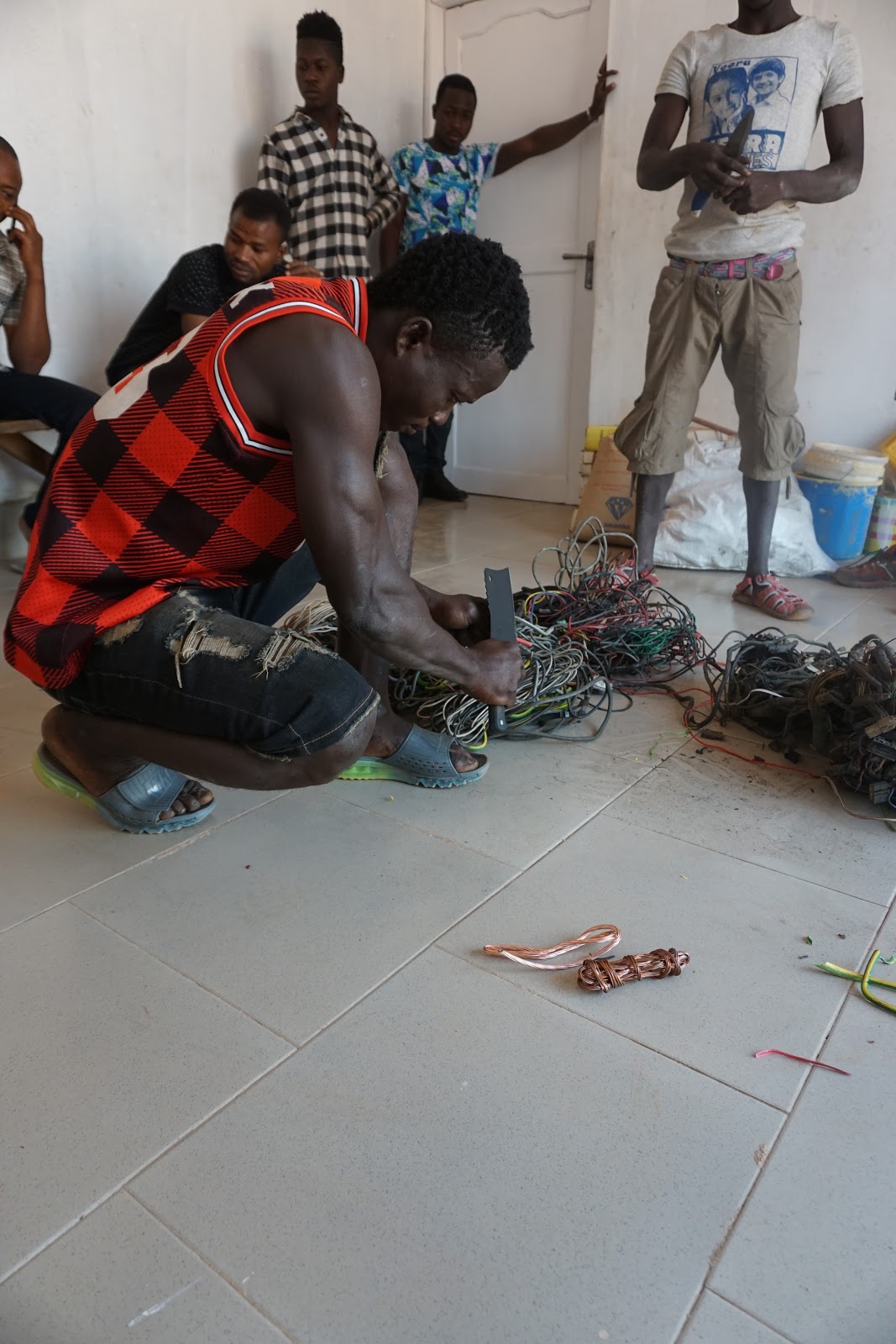
Africa Needs Buses and Trolleys

While the NGOs stay stuck as depicting Africa as a place that couldn't possibly be the source of its own junk TVs and computers - despite World Bank data and history of mass communications investments in the 1970s-90s - I thought I'd take a closer look at what we saw in Agbogbloshie.

Metropolitan bus scrap.  They have been towing junk automobiles to Agbogbloshie for so long, you even find tow truck scrap.

And motorcycle scrap, and scrap tires, and car doors.


BREAKING: Lord Chris Smith's African Witch Hunt Continues: Part 1

UNEP doubled down, using photos of "primitive recycling" in its 2015 report on "e-waste".  But the actual statistics hidden throughout UNEP's own report told a different story from it's press release headline.  If the majority of sea containers of used electronics shipped from Europe are "illegal", then why do the seizures of hundreds of containers only find 1/3 which had anything illegal?

Just one of dozens of examples where the #ewastehoax needs to answer the simple question, "duh?"

UNEP is only pointing fingers, however.  One nation abandoned nuance with flair 5 years ago.  Indictments and prison sentences. While Agbo workers burn wire, England is burning witches.

The photo above shows Mike Anane of Ghana briefing reporter Raphael Rowe of BBC Panorama, on the ground in Agbogbloshie, Ghana.   Mr. Anane was back at Agbogbloshie 2 days before my arrival in March... briefing Jacopo Ottaviana of Aljazeera's #ewasterepublic... see below.

"When I look at these things, I would not call it importation. For me the bottom line is dumping, because from all of these containers that come, only about 20% are functional, and 80% are junk, garbage" - Mike Anane Aug 2014

http://tegenlicht.vpro.nl/biografieen/a/mike-anane.html


PRISON FOR DANIELS RECYCLING? 

Anane's accounts to journalists were covered on this blog a few days ago.  I met him face to face at an Interopol Meeting in Washington DC in 2010, where he presented between UK Environmental Agency Director Lord Chris Smith and Jim Puckett of BAN.  You know the claims... 80% dumping. 500 sea containers per month arriving at Agbogbloshie. The biggest E-Waste Dump in the World. Teeming with fish, Anane recounted, just 10 years earlier.

Mike Anane: "For the past 11 years. That was when I first saw the trucks with e-waste coming from the port to Agbogbloshie. Agbogbloshie happens to be a place I’m familiar with. I have been hanging around the area when it was a lush, green, beautiful wetland with lots of birds and some wildlife, and the river and the lagoon that run through the dump site had so much fish. The fishermen, the people in the communities depended on these rivers for their livelihood. Agbogbloshie used to be an amazing, beautiful wetland, a Garden of Eden. A wetland performs enormous environmental functions. When the water from the city goes to the sea, it goes through the wetland and gets filtered. Fish from the sea come and make babies. Wetlands are so important to every country, to nature, and to mankind.
"But now, the river and the lagoon are both dead: no fish, no organisms, nothing. The river and the lagoon both end up in the sea, and when the fishermen at the seaside throw their net, hoping to catch some fish, they get computers, television sets, and fridges. Their poisons spill into the sea every single day... So for me Agbogbloshie, which was a green Garden of Eden, is now paradise lost."
Note that this interview was in August 2014, describing "11 years" of experience.  But his 2010 interview with me at Interpol, he said it had been ten years.  And in his first interview, with Greenpeace in 2008, it was ten years.  And on PBS Frontline, it was since he was a boy.

My personal interview was during the meeting that set Lord Chris Smith up against Hurricane Benson. Lord Chris Smith, as I recall, introduced Jim Puckett and Mike Anane to the audience of Interpol enforcement experts.  It set up the first arrest and indictment of "Hurricane Joe Benson". And this week, LetsRecycle.com, a British environmental online newsletter, reports that "Hurricane Joe Benson" has company.

MORE AFRICAN TECHS FOR UK JAILS

Accusations of Denial, Hoax, and Racism Haunt Agbogbloshie Ghana

2015-04-15 07.38.35.jpg
 
Yesterday I mentioned Mr. Jim Puckett's Op Editorial in Resource Recycling - Exporting Deception: The Disturbing Trend of Waste Trade Denial. I will have a chance to respond in Resource Recycling next week, in simpler terms than I traditionally write by blog.  The blog is directed at the best and brightest in our field.

The masthead photo of Agbogbloshie, by Amaia Benito, shows three young men, standing near the side of the Odaw River Lagoon, burning auto harness wire.  A 1990s CRT monitor case, used to carry the wire after burning, implies that there is e-waste, too.

No doubt.  When Wahab and Emmanuel and I interviewed the wire burners (27 at the site) last April, they estimated that 20-50 pieces of electronics arrived there each day.

That is in the largest slum of a city of more than 3 million people.
  • The hard working, poor men are not a hoax.
  • The "e-waste" is not a hoax.
  • The toxics are not a hoax.
  • The import of second-hand devices isn't a hoax.
These are specifically what Jim rebuts, and it appears he purposefully misses the point. I have never claimed the Odaw River is clean, or that we should ignore the environment in African cities, nor that Africans import second hand goods.
  • What is a hoax is that 400-600 sea containers full of western waste is dumped at the site each month. 
  • It is a hoax that the goods that Africans pay to import are quickly dumped 80-90% of the time.
  • It is a hoax that the Basel Convention has been amended and the trade in repair is illegal.  
  • It is a hoax that Agbogbloshie's a very large dump, much less one of the largest in the world for "ewaste".

And it's a hoax that "e-waste" ruined a pristine, lush, Odaw River. The exaggerations of Agbogbloshie trump the reality.  I objected to the exaggeration of African import crime in an interview with Jim Puckett in 2005, but no one had yet studied his claims of "75%-80% dumping" (and he had then as yet to later deny his claim).  Finding something I didn't say and responding to that, instead of what I did say, will fool some of the people, some of the time.

Extensive peer-reviewed studies and World Bank reports on teledensity in Africa can't simply be labelled "denial" and "associated" with tobacco and climate change skepticism.  And citing news sources that cited your own *claims* hardly matches wits with extensive research by Memorial U, ASU, MIT, and the UN.

In his editorial, Jim Puckett has repeatedly accused me of "ad hominem" attacks.  The claims he makes about Josh Lepawsky of Memorial University, Reed Miller of MIT, and researchers from US International Trade Commission aside... Jim would have a legitimate complaint if I have, as he implies in the article, called him a racist.

If Jim has really misunderstood me, my apologies and condolences.  But as likely he hasn't.


SMOKING GUN: Multiple Reports on Agbogbloshie, Ghana, source pollution!!


"Urban waste pollution in the Korle Lagoon, Accra, Ghana" ("Urban Waste") is an article that appeared in The Environmentalist in November, 2002.  It was written by Markku Kuitunen and Kwasi Owusu Boadi at the University of Finland, following announcement of a major grant (mostly OPEC) to dredge the river and abate annual flooding.

BANG BANG.  E-Waste Hoax is Dead.  (note that CAER has removed all the Agbogbloshie Boy photos from the website, and is now a "national security" focus for RERA... E-Wastegate Agenda Shift)


Anyone writing any report on E-Waste Crime in Agbogbloshie is incompetent if they don't do background research.  I don't have time to cite every one of these, but this one has a great bibliography, and is really a "smoking gun" for the Agbogbloshie "E-Waste Hoax", as well as a sobering account of past grants and efforts to "save Accra" from urban pollution.

The pollution and flooding is described as a problem since the early 1970s and 80s, and is attributed to "rapid urbanization" of Accra, Ghana's capital city.
"The Korle Lagoon in Accra, Ghana, has become one of the most polluted water bodies on earth. It is the principal outlet through which all major drainage channels in the city empty their wastes into the sea. Large amounts of untreated industrial waste emptied into surface drains has led to severe pollution in the lagoon and disrupted its natural ecology. The increased levels of industrial activity and consumption by the urban population lead to the generation of copious quantities of waste. Managing the volume of wastes poses a major challenge for the city authorities, particularly, ensuring that all the waste generated is collected for disposal. In Accra, the Waste Management Department is currently capable of collecting only 60 percent of the waste generated daily. The rest is dumped in open spaces, in surface drains, and into water bodies which end up in the Korle Lagoon. High eutrophication levels have developed in the shallow water body. The net effect is that, at the slightest downpour, the lagoon overflows its banks causing regular flooding in parts of the city.
"The Government of Ghana, having realized the adverse impacts of pollution in the lagoon on the physical and economic environment of Accra, with the support of donor agencies, is implementing measures to restore the lagoon to its natural ecology. Attempts are also being made to get the communities in the catchment area to become involved in managing their environment through environmental education and awareness programes."[sic]
The article stresses that problems cited in two previous studies (Biney, 1982 and Mensah, 1976) had continued to increase, and that by the time of the 1976 and 1982 studies, the lagoon was dead.  As Accra (and Lagos, Douala, Nairobi, Kinshasa, etc.) has grown, so has pollution from the waste generated by people who live there.
Before the onset of this severe pollution, and in the early 1950s, the lagoon supported a thriving fishery of both fin and shellfish, which served as a source of employment and income for some people in the nearby shantytown, which incidentally derives its name from the lagoon. However, due to the grossly polluted state of the waters, the lagoon has lost its fishery (Biney and Amuzu, 1995), and it is hard to believe that this black, nauseating muddy water could ever have supported any such life. The Korle Lagoon is the major basin into which the greater proportion of the flood waters of Accra flow before entering the sea (Biney and Amuzu, 1995). The lagoon receives water from a total catchment area of 400 km2.
It receives discharges from three main sources—the Odaw River and two major drains on its eastern and western sections (Fig. 3). These major drains are mostly uncovered and usually collect silt and debris which are transported into the lagoon (Mensah, 1976). Waste discharges, including industrial effluent, are the major sources of pollution. The wastes originate from residential, commercial and recreational areas, offices and institutions, such as hospitals and schools. They include food waste as well as paper, batteries, glass, plastics, textiles, excreta aerosol cans, and much more (Biney, 1982; Mensah, 1976).
So Mike Anane's descriptions of the "E-Waste Tragedy" starting with bad e-waste exports in Europe is late to the game.  Here are descriptions of the dumps upstream of the river, citing reports from Amuzu 1976, Laing 1994, etc.
"The water in the upper part of the lagoon is muddy, and the stench emanating from it is unbearable.  An abundance of saw mill dust from the timber market industrial area is disposed into this part of the lagoon.  Also, the Waste Department's dump which is covered with industrial sawdust, is gradually encroaching into the water body. Sediments in this part of the lagoon trap effluents from upstream.  These include industrial, domestic, and hospital wastes which have further deteriorated the water quality upstream. According to Liang (1994; 141), a survey of manufacturing industries in the Greater Accra Region showed that the metal industry creates 16 percent of the total industrial waste, garment and textiles - 30 percent, chemicals and cosmetics - 20%, electricals and electronics at 1 percent and mineral products at 0.7 percent.  Most of the untreated industrial waste waters are discharged into surface drains which flow into the Odaw River and Korle Lagoon.  Since the upstream part of the lagoon is the usual point of discharge, and the receptor of wastes, it is the most affected." 
So we knew in the 70s, 80s, and 90s that the lagoon was already polluted and dead, and that the source of the pollution was upstream of Agbogbloshie.  And the 2002 study estimates the contribution of electric and electronics as contributing 1%.  I'm not saying that Accra isn't polluted, and I'm not saying that pollution isn't tragic.  But accusing African Techs, Geeks and Nerds, or Dagbani scrappers, of making this mess amounts to not much less than criminal defamation.

Sample clip, 1994 Accra Waste
So certainly ownership of second hand electronics increased in Ghana homes, certainly teledensity increased, as did pollution, sewage, and people throwing batteries and car stuff in the gutters and river.  But arresting internet cafe owners, TV resellers, cell phone repairers, etc. seems like the most hideous, disgusting, moronic solution to the problem that anyone but a planned obsolescence industry could come up with.

And the Urban Waste Pollution articles bibliography, on page 309, involves numerous water studies of the Odaw River and Ghana pollution.  Not a single one of these, however, is cited in Greenpeace (Poisoning the Poor), Basel Action Network (Digital Dump), or Blacksmith Institute (aka Pure Earth) report with CUNY.