Showing posts with label urbanization. Show all posts

Many Blog Posts are Emails To Academics: Urbanization Politics of Agbogbloshie

This is an email I just sent to a European graduate student, who is attempting to do a major research (thesis?) paper on Agbogbloshie.

I always have taken time to encourage researchers. It is part of my "fishing for swordfish, surrounded by perch" philosophy of blogging. The blogs are ignored by most people, because most people don't have the bandwidth to really focus on them, or to do a deep dive, or review ground already covered.

But these emails and blogs reach people who are truly concerned, and who ultimately discover that there is an almost sinister systemic manipulation of "do-gooders" empathy to accomplish monetary gains. I usually talk about the Western (and now Asian) lobbies - Big Shred, Planned Obsolescence, and Charity Industrial Complex.  But in this morning's email to the Swiss based graduate researcher, I like to remind us that Africans have Agency, even if some of their agency is systemically marginalized by the desire for shiny white consciences. 

In Accra, Ghana, it's the land value stupid. Agbogbloshie, for decades (IMF and World Bank papers go back to the 1960s) has been an urban scrapyard next to the Old Fadama slum.  If you want to know what is ultimately going to happen, read about the Kowloon slum in Hong Kong. All the "recycling" story is just using BAN propaganda to leverage demolition and expulsion of some of the most valuable real estate in one of the richest African urban centers.

It's not about you, or your old computer.


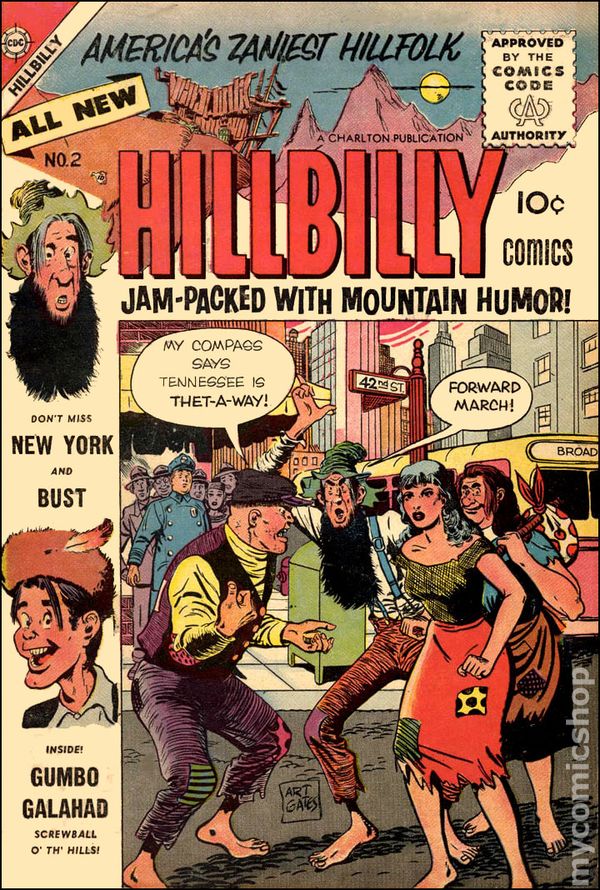
Cultural Gulfs in Developing Markets 9: Deliverance from Comics

"Dueling Banjos" composer Arthur Smith passed away this week, at the age of 93.  If you call me on my cell phone, the (originally titled "Fueding Banjos") song slowly erupts, and builds crescendo the longer I wait to answer.  When Arthur Smith was born, few Americans lived in cities.  When I was born, more than half of Americans lived in cities, and my Ozarks family was already in the minority.

I grew up very aware of the "cultural gulf" between USA's urban and rural families, at a time too many of us got our news about the world from comic books.   My future wife studied "Snuffy Smith" and "L'il Abner" from her home in Paris (Rosny was considered a kind of ghetto), and I learned about urban life from "The Cross and the Switchblade" comic, and "learned about" Europe from Richard Scarry, and about Africa by reading "Tintin".


Today, you no longer need to go to a college library to find out about what the world is really like.   But many of us hold onto our simplified stereotypes the way we hold onto comic books, hoping they'll become vintage collectibles.

The term "lesser developed country" or "LDC" was retired, and "emerging economy" is much more in vogue.  The same transition which occured in the richest nation on earth, the USA, is occuring everywhere.
"The world is undergoing a sustained urbanization process that's pulling more people into city centers and turning more places from rural outposts into denser urban organisms. A new report [PDF] from the United Nations projects that the world's urban population – roughly 3.6 billion in 2011 – will grow by about 72 percent between now and 2050, bringing the urban population up to 6.3 billion. That's about the same amount of people on the entire planet in 2002." - Nate Berg, The Atlantic Cities Blog
Those of us who see the world first hand, who travel from city to city, comparing Kinshasa, Cairo, Paris, Singapore, Kansas City, New Orleans, Paris, Copenhagen, Hong Kong, Guangzhou, Lima, notice more similarity than differences....  we see the world is melding and growing and culturally merging and mingling.   The internet, stoves, and the city traffic have more in common.  The music is in a state of free exchange, Soukous has rap lyrics, rap has sampled bluegrass.  African, Asian and European visitors to my home in the Ozarks are sometimes a little disappointed how similar it is to Vermont.  Having spent all that money on travel, they want to point their cameras at a hillbilly, the same as I was tempted to take snapshots of 'poverty porn' in city scrap markets in Asia, Africa and South America.

Comic books and photos are not substitutes for policy data.  Fortunately, there are far more people studying cities and urbanization than there are studying "e-waste".  Electronic scrap is an intellectual policy backwater compared to projects like NYU Stern Urbanization Project.   Billions of people are consuming and discarding in ways which make Annie's Story of Stuff seem oversimplified to an almost Biblical degree.

NYU SUP has produced 4 short Youtube videos to show the growth of cities, like modern art ink spots bleeding onto a white canvas.  Paris, Chicago, Sao Paulo, and Los Angeles... from space, they grow like fungus in the fingerprint of a petri dish.  Cities as they would be visible from space.


Cities recycle, and cities finance extraction of metals from rain forests and coral islands.  Cities repair and reuse, and cities discard.

Cultural Gulfs in Developing Markets #5: Urban Youth

Basel Amendment to End E-Waste
When we discuss the rapid meshing of cultures in rapidly growing cities, and how the "last mile" of people tend to migrate to the first mile of track (and electric cable, TV broadcast, and internet), there's another factor to consider in making comparisons:

Age.

Rural families tend to be large.  My late buddy Yadji had a brother in Yenwa who had 12 kids and 4 wives, and said his goal was to have 25 kids.   I met other men in Cameroun who boasted of 30 children.  It has been well studied that this is a rural phenomena that tends to decluster within a couple of generations of living in a city.  Quarters are more cramped, school is expensive, and multilingualism is mandatory. Girls get to school more often, and educated women have fewer kids.

But life is tough in the slums for the first generation.  As Adam Minter told me, the young Cantonese may take the super-long workshift at Foxconn for a year or two, but they burn out and adapt more reasonable habits.   It's a difficult way out of rural poverty.  But the rural immigrants don't remain "suckers" for long...
It’s estimated there were 1.2-billion people in extreme poverty in 2010. That’s a decline of 700-million since 1990.  - Chronic Poverty Report
There are about six billion people in the "non-OECD", but "non-OECD" doesn't mean poverty or hunger for most.  The young kids from rural villages have it the worst, and they are the fodder for sex traders, child soldier warlords, pirates, drug runners, etc.  The worst jobs Africa has tend to fall disproportionately on the families with the most children.

Youths have a reputation in every country for thinking they are ten foot tall and bullet-proof.  If you want a challenging environment for OSHA rules, hire a bunch of recently graduated blue collar high schoolers.  The race of the kids doesn't matter, the geography doesn't matter, kids are willing to exploit themselves and to be explioted, especially if they are hungry.

But the flame of experience burns quickly.  You can fool them once.  You cannot exploit them permanently, you either have to hire more rural immigrants, or move to a place where they are more abundant.  And in the meantime,  you have grown an urban middle class which will stick around another 40-50 years.  Visit the demographics in Shanghai, Hong Kong, Taipei and Incheon.
[China's] costs have grown while surplus labour has shrunk, as three decades of the one-child policy means China’s working age population will likely fall by 20% in the next 40 years, and by a further 20% from 2050 to 2100.
Tweets responding to Fareed Zakaria's links (to Jack Goldstone in TheCoversation.com) always yield interesting links.   Jonathan Berman's Havard Business Review (10/13) article "Seven Reasons Why Africa's Time is Now" points out, among other things, that Africa will have more working population than China by 2050, and that investments in "assessembly" jobs are already coming strong.   Today only 24% of Africa's $2 Trillion economy come from natural resource extraction.  The "resource curse" in Africa is beginning to look a lot like Indonesia and Malaysia, which (as I've frequently written) are seesawing away from resource economies into "tinkerer blessing" repair-and-assembly economies... the same path as Singapore, Taiwan, South Korea and originally Japan followed.   The less rural land a country has drawn ("lines on maps") around it, the faster it makes this motion.  Singapore was originally part of Malaysia, and it's stunning growth is as attributable to its cessation from rural geography as it is the country's difference from Penang, KL or Jahor Bahru.  The growth of Taiwan correlates to its ability to concentrate on the "first mile of track".

Cities shrink families. Smaller families have more disposable income.  That's the parentage of e-waste at African dumps, smaller families from a generation passed own TVs, and the TVs are scrapped by kids from rural families, more recently immigrated.  It's ripe for improvement and reform, either through StEP or Fair Trade Recycling or by Indian and Taiwanese entrepreneurs.    It has nothing to do with ratification of the "Basel Convention".  

Ask Nneka Egbuna (Soul is Heavy artist)

@Nnekaworld

Bullyboy 5: Urban Waste is a "Story of People"

Human Waste is Generated by Humans (Silent Spring)
Human Consumption is consumed by Humans (The Waste Makers)
Human Racism is Human-on-Human Crime (To Kill a Mockingbird)

This chart shows the urban share of the population in Australia, United States, Japan, South Korea, India and China. China’s urbanisation rate has increased rapidly from 19 per cent in 1980 to 50 per cent in 2011, and the United Nations projects that it will continue to rise steadily to 73 per cent by 2050. India is also expected to see a rapid increase in its urbanisation rate from 30 per cent today to around 55 per cent in 2050.
URBAN SHARE OF POPULATION
This is not the "Story of Stuff", it's a "Story of People".   Fair Trade Recycling is an effort to see other humans for what they can do, not for what they cannot do, and to make the exchange of goods and services, driven largely by urbanization, as constructive as possible.  Call it Alter-Globalization if you will, call it "reform".   It's not about exploitation and victimization or waste externalization when the African cities and Chinese cities are paying for the goods and transport... it's economics of urban geography.

China has been buying scrap.  Egypt has been buying used computers. Nigeria has been buying used TVs.   All three are "non-OECD", but they buy different things.   Look at urbanization, and you will see that industrialization correlates with smelters, internet cable correlates to computers, and electricity correlates with TVs.  China, Egypt, and Nigeria have cities, and cities are full of people.


The Urbanization Trap - Short article in the Economist (2013)
Economic Development, Industrialization, and Urbanization, Australia Treasury Economic Roundup (2012 Report on Global demand)

Growth of cities in developing world

This is a fascinating little tool, showing overlays of the the growth charts of the largest cities in the world.

590 Cities Charted:  Impure Blog

As Yadji explained in his video, people are leaving the backwaters of the developing world and heading to the city.   I've been writing a lot this year on the "pixelization" of wealth distribution, and how clumsy the "rich vs. poor" country debate has become.

The changing world means that companies like Sony, RIM (Blackberry), HP/Compaq, and Dell are receding, just as RCA, Magnavox, and Polaroid disappeared over the past decades.   But when I read that the "electronics industry" is in decline, I laugh.   That's like saying "basketball is in decline" because Larry Bird or Michael Jordan are unable to compete on the court.