"Dueling Banjos" composer Arthur Smith passed away this week, at the age of 93. If you call me on my cell phone, the (originally titled "Fueding Banjos") song slowly erupts, and builds crescendo the longer I wait to answer. When Arthur Smith was born, few Americans lived in cities. When I was born, more than half of Americans lived in cities, and my Ozarks family was already in the minority.
I grew up very aware of the "cultural gulf" between USA's urban and rural families, at a time too many of us got our news about the world from comic books. My future wife studied "Snuffy Smith" and "L'il Abner" from her home in Paris (Rosny was considered a kind of ghetto), and I learned about urban life from "The Cross and the Switchblade" comic, and "learned about" Europe from Richard Scarry, and about Africa by reading "Tintin".

Today, you no longer need to go to a college library to find out about what the world is really like. But many of us hold onto our simplified stereotypes the way we hold onto comic books, hoping they'll become vintage collectibles.
The term "lesser developed country" or "LDC" was retired, and "emerging economy" is much more in vogue. The same transition which occured in the richest nation on earth, the USA, is occuring everywhere.
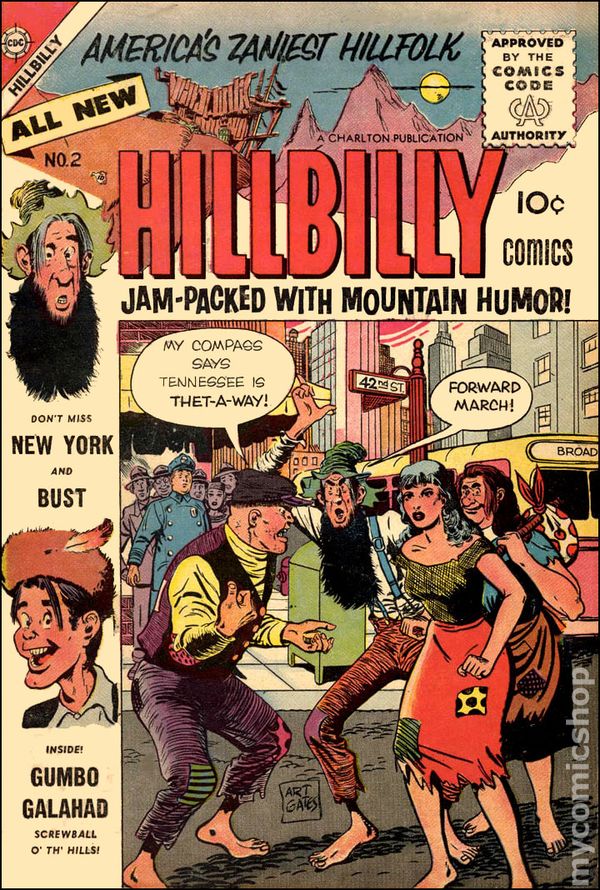 Those of us who see the world first hand, who travel from city to city, comparing Kinshasa, Cairo, Paris, Singapore, Kansas City, New Orleans, Paris, Copenhagen, Hong Kong, Guangzhou, Lima, notice more similarity than differences.... we see the world is melding and growing and culturally merging and mingling. The internet, stoves, and the city traffic have more in common. The music is in a state of free exchange, Soukous has rap lyrics, rap has sampled bluegrass. African, Asian and European visitors to my home in the Ozarks are sometimes a little disappointed how similar it is to Vermont. Having spent all that money on travel, they want to point their cameras at a hillbilly, the same as I was tempted to take snapshots of 'poverty porn' in city scrap markets in Asia, Africa and South America.
Comic books and photos are not substitutes for policy data. Fortunately, there are far more people studying cities and urbanization than there are studying "e-waste". Electronic scrap is an intellectual policy backwater compared to projects like NYU Stern Urbanization Project. Billions of people are consuming and discarding in ways which make Annie's Story of Stuff seem oversimplified to an almost Biblical degree.
NYU SUP has produced 4 short Youtube videos to show the growth of cities, like modern art ink spots bleeding onto a white canvas. Paris, Chicago, Sao Paulo, and Los Angeles... from space, they grow like fungus in the fingerprint of a petri dish. Cities as they would be visible from space.
Cities recycle, and cities finance extraction of metals from rain forests and coral islands. Cities repair and reuse, and cities discard.
I grew up very aware of the "cultural gulf" between USA's urban and rural families, at a time too many of us got our news about the world from comic books. My future wife studied "Snuffy Smith" and "L'il Abner" from her home in Paris (Rosny was considered a kind of ghetto), and I learned about urban life from "The Cross and the Switchblade" comic, and "learned about" Europe from Richard Scarry, and about Africa by reading "Tintin".
Today, you no longer need to go to a college library to find out about what the world is really like. But many of us hold onto our simplified stereotypes the way we hold onto comic books, hoping they'll become vintage collectibles.
The term "lesser developed country" or "LDC" was retired, and "emerging economy" is much more in vogue. The same transition which occured in the richest nation on earth, the USA, is occuring everywhere.
"The world is undergoing a sustained urbanization process that's pulling more people into city centers and turning more places from rural outposts into denser urban organisms. A new report [PDF] from the United Nations projects that the world's urban population – roughly 3.6 billion in 2011 – will grow by about 72 percent between now and 2050, bringing the urban population up to 6.3 billion. That's about the same amount of people on the entire planet in 2002." - Nate Berg, The Atlantic Cities Blog
Those of us who see the world first hand, who travel from city to city, comparing Kinshasa, Cairo, Paris, Singapore, Kansas City, New Orleans, Paris, Copenhagen, Hong Kong, Guangzhou, Lima, notice more similarity than differences.... we see the world is melding and growing and culturally merging and mingling. The internet, stoves, and the city traffic have more in common. The music is in a state of free exchange, Soukous has rap lyrics, rap has sampled bluegrass. African, Asian and European visitors to my home in the Ozarks are sometimes a little disappointed how similar it is to Vermont. Having spent all that money on travel, they want to point their cameras at a hillbilly, the same as I was tempted to take snapshots of 'poverty porn' in city scrap markets in Asia, Africa and South America.Comic books and photos are not substitutes for policy data. Fortunately, there are far more people studying cities and urbanization than there are studying "e-waste". Electronic scrap is an intellectual policy backwater compared to projects like NYU Stern Urbanization Project. Billions of people are consuming and discarding in ways which make Annie's Story of Stuff seem oversimplified to an almost Biblical degree.
NYU SUP has produced 4 short Youtube videos to show the growth of cities, like modern art ink spots bleeding onto a white canvas. Paris, Chicago, Sao Paulo, and Los Angeles... from space, they grow like fungus in the fingerprint of a petri dish. Cities as they would be visible from space.
Cities recycle, and cities finance extraction of metals from rain forests and coral islands. Cities repair and reuse, and cities discard.