Showing posts with label environmental injustice. Show all posts

2010 Flashback to Europe's Decade of Racial Profiling E-Waste

Back in November 2010, I used a cover photo on a blog to convey how Europe was relying on photojournalism to set waste policy. WRONG, WRONG, WRONG was one of my most visited blogs that year - the year Interpol launched "Project Eden", an approach to Africa and Asian geeks that was as cringeworthy as the Eurotrash Art.


E-Missionaries Saving African Recyclers: 9 Stages Of Eyes Adjusting to Dark

Senegal Computer Salesman - 2006
The 2006 picture of white computers shows a Tech Sector importer in his shop in Dakar, Senegal.  The Pentium 3s and 4s were likely 5 years old. They'd be 15 now. The picture itself is 11 years old. Someday, the computers will be Senegal's e-waste, if not already.

Until then, they brought the internet to people who could not afford to buy new.  And Souleymane, the geek in the white shirt, was one of the most interesting people I've met in a decade.  He stayed at my house.  We cooked and broke bread together. I accepted his money, and he accepted those computers from Vermont.

Most of us don't have a personal connection with Africans in photos of exported e-waste.  And most of the photos in the mainstream press do not have any specifics... names, age, date of import, chain of possession, etc.

Contrast the 2006 import shop with the 2016 photo.


Unfortunately, neither photo is typical in news reports on exports of used electronics to Africa.

What do the photos below say to you as an Electronics Recycler?  It depends at what Stage of the Recycling Export Experience you have achieved.  To end racism and environmental injustice, you must first remember a lesson from childhood. Let your eyes adjust to the dark, and it won't frighten you as much as it does at first.

Here are the 9 Stages of Export Denial and Acceptance.

How To Pay For Africa E-Waste Cleanup?

15 years later, let's just ask what he imports
After 2 weeks back in Ghana, the #1 Finding of our research still stands.  E-Waste NGOs made up fictitious numbers about the percentage of imports to Africa that are "waste" and the percentage of waste in places like Agbogbloshie that come from faulty used good imports ("Exaggerations have been made" said Jim P. on our Salzburg panel).  Photojournalists flew to Accra (Agbogbloshie is about 20 minutes from the airport, 9 minutes from Accra's finest hotel), and took close-up photos of Africans in exotic poses.  And EU policymakers got project funding to "save" Africans from e-waste dumping.

Neither the NGOs, nor the journalists, nor the EU Policy funders checked out existing data on Accra stormwater runoff (the water quality at the Odaw Korle lagoon was hideous in the 1970s), the number of households with televisions in Accra 15 years ago, or the number of people employed in the scrap industry generally as compared to the number seen in Old Fadama slum of Accra. They didn't even find it on mapquest, which would show it's at the center of Accra, not a remote fishing village on the outskirts (as should have been suggested by the cab ride from the hotel). They would have found the phrase "Sodom and Gomorrah" appears in a 2002 AMA publication calling for razing the slum to build shopping malls and parking lots.

There was no basic secondary research.  No control group.  No null hypothesis.

Geography Baiting 6: Granular Images of Recycling in Asia

My response to BAN's report "Scam Recycling" is not a criticism of tracking technology as a methodology.  And I'm not a critic of MIT or the Basel Convention.


Basel Action Network, using funding from The Body Shop Foundation, successfully added a lot of granularity to the discussion about exports of used electronics internationally.  The Data is interesting.   A peer review process, using scientific method, could have produced a great report, and could have protected the privacy of unwitting and unwilling test subjects in all the countries involved.  And to the degree that data is released rather than "obscured", it can be assessed by professionals like myself, and academics, and policy can evolve.

And that's happening. Josh Lepawsky of MUN's Geography department has repopulated many of the data points that were obscured on BAN/Monitour (though not all - Foshan is missing, as is EcoPark).

Is BAN playing games with the data?  If so, MIT Ethics office should recognize that its students (remember we have the names of the ones who placed a device in Somerville) are pawns.

I'm a critic of one thing.  Environmental Malpractice.  For a decade, this blog has attempted to offer an "anti-defamation" defense vs. Basel Action Network's game of tokenism, profiling, geography-baiting, race-baiting, and slander.  The people I'm most concerned about today are the Chinese printer technicians who make repair and reuse of laser printers as commonplace in China as automobile repair in the USA.  Or, put another way, as common as repair of laser printers was in the USA in 1995.  Because of the history economy printer cartridges - which cost as much as ball point pens to make, but sell for over $20 - printers are a specialty business which has been under attack since I first visited China's Nanhai/Foshan district in 2002, the year BAN visited Guiyu and Adam Minter arrived in Shanghai.

It's extremely difficult for Fair Trade Recycling to defend a printer economy which is kept in the "informal" sector by forces which defy Americans understanding of reuse economies.  Fifteen years ago, I assumed that anyone paying double the price of scrap for laser printers, but who refuses to buy inkjet printers, knew what they were doing, and had to be in the reuse parts business.  When I visited those markets, I was uneasy. They were very small, dirty shops.  Sometimes the work was outdoors. But you saw clearly that the sandaled brown and yellow people were sorting the printers by size and brand.  I found out that the reuse markets for certain LaserJet 4s had more to do with industrial machine repair (using the same memory cards) than it had to do with Laser printing.  And I found out about EFF.org, and Arizona Cartridge Manufacturers, and Jazz Camera.


I also found out that these markets are virtually untraceable and impossibly unaccountable. If I met a printer scrap buyer in person, and managed to communicate in Chinese, I learned that from his perspective scrap was "liquid". If he found the same printer I sold him closer to him, he felt he'd fulfilled his obligations and what happened to my physical printer was irrelevant.  From his perspective, it was as if I was trying to track the serial numbers on a hundred dollar bill I'd used to transfer money by Paypal.

Save The American Children! Shocking Expose on USA's Car Repair Market

Just sayin'...


The point is obviously that:

1. Abandoned or slow moving "waste" is more persistent and easily photographed
2. Manufactured goods kept for part sales is different from shredding, different business
3. Sometimes business owners die or get in trouble or screw up
4. Outliers in an industry should not be used by photojournalists to racially profile geographies
5. No one knows, really, what's going on without data journalism.

Hopefully Germans don't see this video and decide to boycott car sales to Florida.  Fortunately, there are no brown children close up photos to trigger an NGO fundraising campaign.

Blacksmith Institute Ghana Project: Environmental Injustice or Economics?

Blacksmith Institute's "top ten list" of "most toxic places" put Agbogbloshie, Ghana at the top. (Later it was clarified that it was at the top of the alphabetical list because it began with A).  The Blacksmith press release is now 16 months past.  While I've tried to call Blacksmith out in debate, both with personal calls and emails and with a little blog chiding of Dr. Jack Caravanos' use of disavowed BAN export statistics (bad data), my friends have warned me to be careful.  Blacksmith Institute isn't a Greenpeace or a Basel Action Network.   They'd be a powerful adversary.

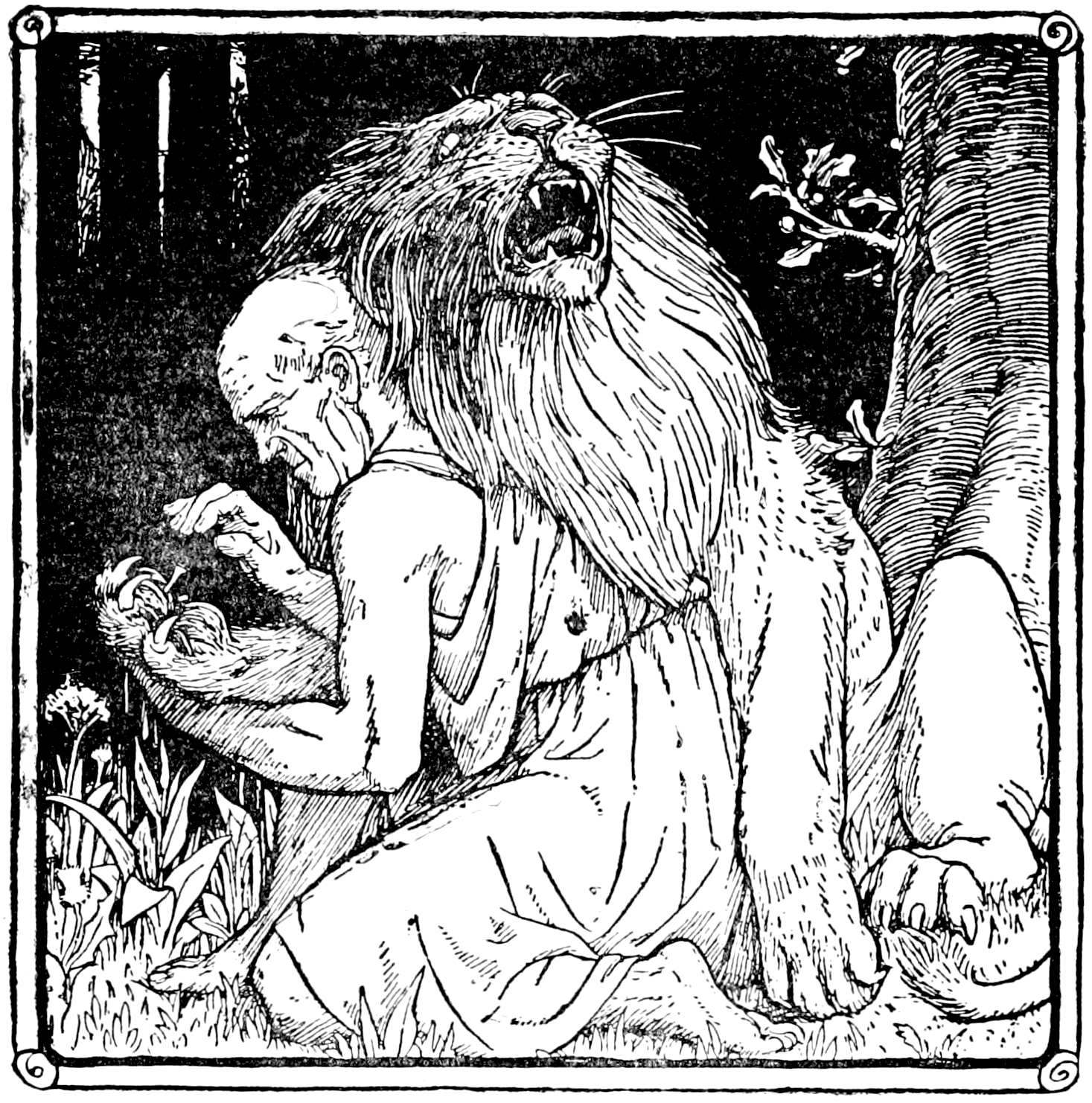
Androcles pulling a thorn from the lion's paw
My response has pretty much been that scientific and academic approaches applaud "peer review", it's part of the Scientific Process.  If I've been wrong all this time, I believe in Socratic method, and like Plato said, would be as happy to have a wrong idea removed from my mind as I would to have a thorn removed from my skin.   If I'm making a mistake, I want the mistake to be corrected.

I trust Blacksmith would see it the same way, if they take the time.


This morning I got an email from Rafa at @RecyHub, cc'ing a subset of interested parties like Josh Lepawsky following #Ewastegate, with a link to a public update on the cleaning up of Agbogbloshie project.


It's about AMP Project, the MIT-CoLab style "appropriate technology" approach to wire burning in the Accra city dump, which has provided the update below.
More on the Blacksmith Institute, what do you think?
http://www.pureearth.org/wp-content/uploads/2014/01/Ghana-Pilot-PCR-2015.pdf
Link to the project completion report for phase 1 of the pilot project. 
I was trying to figure out who to cc in my response, and decided to post it for the world below.

Tragedy 2: The"Non-profit" Sanctimony Source Code

New Orleans non-for-profit public school - Ruby Bridges 1960 - Happy Birthday
Do not mistake "margins" for greed.   Having a margin, or "profit", on a transaction is like insurance.  Someday you will have another transaction... an unintended loss, or a call for help. Your margin allows you to have a positive impact on other peoples lives (employees, creditors, family).  Things don't always go as planned.  There is no place that's more true than Africa.

In the words of an old chum at the University of Arkansas, here's how most of us see wealth.
'I see dollars kind of like I see calories.  When I see a person who doesn't get enough calories, who's skinny and weak, it makes me uncomfortable.  It's unattractive.   When I see someone who's getting more calories then they need, I kind of see it like an obese person.  It's unattractive.   I like to be around healthy people who make enough money.' - Bertrand X?, friend at U of A
But there is an entire group of people who think "profit" is "likely bad".  They are anti-globalist.  And they often seek out a once-obscure federal tax statute to "certify" business partnership.

"Your company is for profit.  I work for a non-profit.  You shouldn't charge me recycling fees."  

I made more money working for non-profits than I have made running a small business, and I have helped more disadvantaged people with my business than I helped working in the not-for-profit sector.  I'll demonstrate that later.   But using a tax code to predict environmental outcomes was a key ingredient in the decade's "e-waste tragedy".  I'm not going to attack non-profits, but the belief that the tax status is necessary or sufficient to predict best behavior will attract wolves in sheeps' clothing.

Why do people attach a moral fetish to a federal corporate income tax filing statute?  What's with the obsession over corporate filings, as an indicator of morality? Why are some people more suspicious when I take my personal savings, buy a truck, drive it for income, and pay taxes on that income?  What makes a federal tax category more "honest" and more "trustworthy" than a small business?

Oxbow Incident: Lord Chris Smith, Interpol and BAN vs "Waste Tourists"

We have met the enemy, and he is us. Walt Kelley's Pogo comic was set in the deep south.

Here on the 50th anniversary of the Freedom Summer protests of Mississippi, a 52 year old from Arkansas is working to free Africans wrongfully accused of being "waste tourists" by a well meaning, but culturally tone-deaf, set of environmentalists.
  • David Higgins of Interpol
  • Lord Chris Smith of the UK Environmental Agency
  • Jim Puckett of Basel Action Network

Higgins had assigned a very young Dutch cop, Emile Lindemulder, to set up a task force to make some arrests of people accused of buying toxic e-waste to be burned by children in African city dumps.  This blog shows some of the history, and chronology, which led to the sentencing of Hurricane Joseph Benson in June 2014, and which fuels the momentum of Project Eden...

Project Eden.  Let's return Africa to its innocence, to a time without e-waste.  Here is the chain of events which led to the seizures and arrests and plant closures, stopping people reprocessing CRTs for Africa (Net Peripheral), repairing computers for African internet cafes (MediCom) or selling televisions which 6.9 million Nigerians were using to watch the World Cup in 2006.

Here's how good white people became involved in a modern Oxbow Incident, accidentally profiling the geeks of color I've been fascinated by since I lived in Cameroon, Africa 1984-1986.  The week I left Ngaondal, the first Cameroon television broadcasts in Adamoua Province showed the miniseries of Alex Haley's "Roots".  My landlord showed it in the adjoining house, his livingroom packed, children leaning against the windows outside his house.  He had purchased the first used CRT television in the town of Ngaoundal, a used RCA.

Sometime between December 1986 and now, I'm sure that TV wore out and created the first "e-waste" in my former village.   Some think that makes the person who sold it to my landlord, Sgt Ndjang, somehow guilty of a wastecrime.  As Graham Pickren pointed out in his doctoral thesis, the guilt of the white person who once owned the RCA seems attached, as if a fetish, to the RCA when it is discarded in Africa 15 years later.  What if we sell something to an African which will eventually become waste, VT ANR staff asked my clients?  By that measure, new product is also banned, and Africa will never gain access to the  tree of knowledge, remaining as "Eden" forever.

Breaking News! UK Sentences Nigerian-born Exporter to Prison!

After a cacophony of alarm bells in 2006, 2007, 2008, and 2009, Basel Action Network and Greenpeace have finally achieved what they wanted.

A TV repair man is going to jail for buying something reuseable which someone else wanted, who could not otherwise afford new.

Hoax 1, Africa 0
There has been one environmental activist who has been trying to keep "illegal exports of e-waste" in the news.  They earn money by certifying Recyclers don't illegally export.  But they've rarely been able to show enforcement, and bemoan our inattention to "ewaste exports".

Yesterday they got their Big News.  OMG.  An African is finally going to UK jail for "e-waste" wastecrime.

Joseph "Joe" Benson (black) of BJ Electronics was accused by Cahal Milmo (white) of #wastecrime. Lord Chris Smith, the UK's Environmental Director, vowed to stop England's illegal dumping on the shores of Nigeria and Ghana.  And they put a TV repairman, with about 90% working product, in prison to make him an example to others willing to trade or donate used goods to Africa.

After 4 years and untold dollars, Joseph Benson said uncle.  He will start a sentence of 16 months.

Who is "Joe Benson"?  In February, this blog was the main source of information about the trial and appeals of "Hurricane" Joseph Benson of BK Electronics.   Benson, a Nigerian-born television repairman, was profiled by UK journalist Cahal Milmo as an "e-waste exporter".  In a sting set up by Greenpeace, covered The Independent's Cahal Milmo, BBC, and The Guardian newspaper, Benson's crew reportedly accepted a sabotaged CRT television in 2010.

Just learned that Benson sentence was reduced from 24 to 16 months in prison today.

So who pointed the finger at Joe Benson?   It started in 2005, with the publication by Basel Action Network of its paper, "The Digital Dump:  Exporting Reuse and Abuse to Africa".   BBC covered the paper in 2006.
In customs documents, the computers are described as being "shipped for re-use."
But Jim Puckett of environmental NGO the Basel Action Network says that in practice, dubious exporters exploit the re-use category to increases their profits and offload their environmental responsibilities. 
"Unscrupulous exporters from the North are intentionally mixing bad with good so that they are able to avoid disposal costs," he says. 
"Usually when you bring a computer to a recycler, you pay a fee. But brokers will take this fee, and instead of recycling will mix in some good equipment and trade it... exporters say it is working equipment to help the poor to bridge the digital divide, but what we've observed is not bridging the digital divide but the creation of a digital dump." 
In fact, it is several dumps, spread around the city. Lagos has no computer recycling facilities itself, and so the waste computers build up in huge piles.
On these dumps children scavenge for the contents - they can earn around US $2 a day by collecting components - but are also putting their health seriously at risk.

New Study: Africa's "E-Waste Hoax" is a Gift that Keeps On Taking

No surprise to regular readers of this blog...

The 5 year old hypothesis that African technicians and entrepreneurs are illegally importing "e-waste" to save money for USA and European Recyclers is still full of @#$*.


Global Circular Economy of Strategic Metals – the Best-of-two-Worlds Approach (Bo2W)
Oeko-Institut Authors Andreas Manhart , Tobias Schleicher, Stefanie Degreif

Here is the full report, view pages 13-14 at a minimum.

EU E-Waste Policy: White Knights Seeking Middle Ground On a Slippery Slope (Part A)

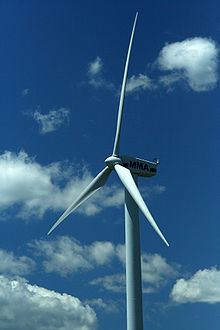
"Solving the E-Waste Problem"  (StEP) is a European association of highly respected professional and academic experts with strong policy pedigrees.   The "Problem Solving" effort is coming into its eight year.  American environmentalists are keen for European environmental leadership.   The electric windmills fanning the landscape are a testament to proactive policy.

StEP represents itself as a "middle ground" organization.  A lot of us have pandered for that position.  BAN labels us as "apologists".

It is natural to seek to leverage the sensational press around "ewaste exports" and the growing tome of facts about international city junkyards.  Agents of conscience naturally seek a middle ground between the Basel Action Network and...  Facts.  Or is it a middle ground between us and "The Other?"   Otherization, or exoticism, the "informal" six out of seven billion people, who have been labelled so likely to poison their children that it warrants a billion dollars in shredding machines and arrests of African traders.  Since BAN has imposed a kind of "original sin" on anyone who has ever purchased an electronic device, replaced one, or sent one for recycling, we begin with a sense of guilt.   "Agents of conscience" once included exporters, a previous generation of ICT and Internet Access "white knights", organized to heal the "digital divide".

These forces have given rise to another EU based organization seeking "middle ground" between internet access and environmental risk of computer waste.  RecyHub has posted an essay on ICTWorks which follows the path into the "middle ground", or "best of two worlds".  RecyHub has asked me, via Twitter, to review it.    ("They asked for it" is an English idiom).

On the one hand, they get the easy A.  A for "Applaud Anything" that moves Europe from the extremely bizarre far-left arrests of African businesspeople, geeks, and technicians.   Any correction from the 2009-2010 "years of breaking CRT glass", is a gift horse.  But since they asked, I have to tell them... they are at a halfway point between alter-globalization (WR3A) and racist slander.
"Electronic components contain toxics and their manipulation without proper tools can easily release them, resulting in environmental damage and health hazards. Up to now electronics have been mainly used in the most industrialized countries and dumped somewhere else when they reached their (perceived) end of life. Although this trade geography is slowly changing, some countries continue to be known e-waste recipients. Ghana, for instance, is trapped between the desire to modernise by acquiring and refurbishing technology and the damaging effects of it when it’s not reusable...
"After all, they don’t have the technology to process that material properly. E-waste exports must therefore end. That’s why a strict ban like the one proposed under the Basel Convention makes sense (taken even further to forbid any e-waste trade), and why the work of countering illegal trade must be supported. 
One thing I've always loved about Europe is the tradition of arguing sophisticated philosophical positions from a historical perspective.  The Europeans often assume Americans don't do that, that we operate in business from some kind of a "lizard brain", seeking efficiency and profit.

OK, Critique of Part A, in pure reason.
  1. Toxics are not "easily released".  Europe had to build shredders, which certainly releases them.  Hand disassembly, harvesting parts and components (down the chips and capacitors and power supplies) is not going to yield toxics.  
  2. Up to now electronics have not "mainly" been dumped somewhere else at the end of their perceived life.  
  3. "Some countries continue to be known e-waste recipients.  Ghana, for instance, is trapped..."  This is absolutely contrary to the study RecyHub refers to, which says Ghana is NOT an "e-waste recipient" but is a 85-91% reuse recipient which generates 90% of its own "e-waste".
  4. "Proper tools"?  A downstroke baler is the most complicated tool we use in Vermont.   The best one we bought used for $2,000.
On the third point, simply visit RecyHub's website, where an entire tab titled "Ghana" offers very scientificky looking "statistics".  It links to a Google Documents Page, with "comment function" enabled, which mostly takes statistics from the E-Waste Assessment (Ghana) study (they should also read the larger Nigeria E-Waste Assessment report).
"9% of the total imports of used equipment is non-repairable and is directly passed on to collectors and recyclers."
The very report they cite disproves most of the allegations.  Nigeria's Assessment was more precise, finding 91% repair and reuse, but we'll accept the 80% estimate from the Ghana study (statistics taken from interviews in the latter case, from actual sea container sorts in the Nigeria study).  In either case, brand new product is as bad or worse.  In either case, the studies explain how Nigeria came to have (World Bank 2007 statistic from 2006 assessment) 6,900,000 households with television.  And cities which have had TVs since Prince Nico Mbarga was on the top 10 are generating junk TVs, just as American and European cities do.

What do developing nations really need?  More development.  And taking away "trade" from the toolkit is exactly what they need least.

Where do "tinkering", "reuse", "recycling", "dumping" etc. fall in Harvard's new Social Progress Index?  If you spend time with people who live in the emerging markets, the developing nations, the cities of the "not yet OECD", their aspirations and measures of progress make Europe and America's obsession with "used electronics dumping" seem obscured by clouds of disinformation.

Useless Lists of Jobs Beneath Wealthy People

Do Wealthy Nations dump on Poor Nations?  
Are e-Waste Exports an Environmental Justice Issue?

By "wealthy", let's keep it simple.  There are seven billion people.
The wealthier half have different jobs than the poorer 3.5 billion.  But environmental justice is about geography, locations, and property value.  Where do the poor people live?  Why do they have different jobs than wealthy people?  Foster the people...

Not all the wealthy live in the OECD... Mathematically, that would be impossible, as the OECD nations combine to form about 1.3 billion people.  But the OECD nations account for even less than 1.3 billion or the "richest half"... because people live in places like this - slums - within the OECD.


Kamagasaki, Japan. A slum in Nishinari-Ku one of 24 wards in Osaka, with a density of 30,000 people in every 2000 meter radius.

Now, it may be a cheap shot to compare the Japanese slum of 30,000 to a slum of 1 million in (non-OECD) India:


Dharavi, India. A slum in Mumbai with approximately 1 million people.


Before you jump to the conclusion that the OECD countries like Japan have fewer ultra poor .. below is an even larger slum than Dharavi, with 4 million residents.  It's in an OECD country (Mexico).

Neza-Chalco-Itza barrio, Mexico. A slum in Mexico city with approximately 4 million people.
Neza-Chalco-Itza barrio, Mexico. A slum in Mexico city with approximately 4 million people


The camera angles get wider as you try to capture bigger slums.  The source of these photos also has the slums of Kenya, Ghana, Columbia, Venezuela, Pakistan, Brazil, and Iraq.   Not only is wealth "pixelized"... poverty is pixelized as well.

But the cities are developing.  The poor come to the slums from the countryside, as if attracted by the lights. They see electricity.  They see wifi.  They taste the internet.  The fruit of knowledge brings them to the barrio.

Wi-Fi will be in 42% of all households worldwide by 2016.
Wi-Fi network use will nearly double in homes around the world come 2016, according to new Strategy Analytics research. Already used in some 439 million households worldwide, equivalent to 25% of all households, Wi-Fi home network penetration will expand to 42%, reaching nearly 800 million by 2016, according to the “Broadband and Wi-Fi Households Global Forecast 2012” report.
According to the International Energy Agency, over 80+% of the people in the world already have access to electricity.
Based on this updated analysis, we estimate that in 2009 the number of people without access to electricity was 1.3 billion or almost 20% of the world’s population. 
Juan takes two LCD TVs, makes one (Lima).
The percentage of individuals with access to internet is lower than the percentage of households with wifi... because poor people have more people per household.  Still, internet access is growing much faster than electricity did.

So if the majority of the 83% of the world which is not OECD has electricity and internet, just where are the photos of primitive, informal recycling taking place?  The slums.  The NGO cameras show, close up, what the satellites keep us safely apart from.

One of the best things you can do to set the table for formal reconciliation is to focus on something you both care about.   I care about children in slums and rural poverty.  At bottom are slides of satellite photos of the largest slums in the world.

Here are my pictures inside.  Closer yet.  Names.  What people are doing. Who they are.  Who we are.