Showing posts with label EPA. Show all posts

2008 R2 Version 1 Is a Public Document. Certify That You Conform To It

The original Responsible Recycler Version 1 was a public document. EPA in Washington DC paid a professional mediator, John Lingelbach, to host a series of meetings with environmental stakeholders and experts (myself included) to get a standard that ANAB and ANSI could ok various professional auditors, such as Orion Registrars or Perry Johnson Registrars to certify.

Here is a link to the original R2 V1 document, which is now very difficult to find online. I had to use the Internet Archive Wayback Machine (and I left them a donation, it's a really cool utility).

Conforming to a public standard is something a small recycling business can do without any legal third party, such as SERI or E-Stewards, taking a financial cut. You cannot claim to be certified BY that third party, and you don't get a certificate with a gold star. But you can pay for the exact same person, the exact same auditor, to come and audit your status as certifyable to your conformance to the 2008 standard. 


The Versioin 2 of the R2 standard arguably made no changes at all to the Version 1 other than make it a non-public, copyrighted standard. And that was more than arguably due to the financial interests of the certification organization that John Lingelbach formed in order to make a living and hire people to "maintain" the standard. And they do "Maintain" it, and ANAB and ANSI may or may not add value that ISO (which you have to also adhere to in order to get R2 certification) doesn't give you anyway.

Environmentalists Must Learn From Misdiagnoses: How CRT TCLP Would Affect Asbestos, Solar

First, by request, here are the photos the blog "Halloween Images of Scary Black People" pointed out a decade ago.  The blog was about language used to flog normal activities, rendering them repulsive - or heroicizing the same image (using Wordsworth's "The Village Blacksmith" to describe metal recycling compared to the way BAN.org described metal recycling at Agbogbloshie).


The BAN NGO was so proud of one photograph - of a man carrying copper and aluminum wiring (from scrap automobile harnesses inside a 1970s Magnavox kitchen tabletop TV case) - that they use it on their website masthead, and in annual fundraisers for "Giving Tuesday".  BAN offers readers who feel sorry for the "primitive" man the chance to donate $25-1000 to their NGO.  How the young man will benefit from your donation isn't exactly clear.

But as we pointed out in 2012, that self-same Magnavox kitchen-table CRT television was very, very, very unlikely to have arrived - as BAN repeatedly claims - "days earlier", or as a result of environmental externalization. Even back in 2012, that 1970s TV was an ebay collector's item selling for over $100. It bore no earthly relation to the TVs BAN or Greenpeace filmed unloaded at African port of Tema in 2009, or Jim Puckett's infamous updated photo of Africa's "primitive" Tech Sector.

Here is a picture of the top selling album in Nigeria in 1978 - by Africa's "Elton John" of the 1970s, the artist crowned as "Prince Nico Mbarga" (whose lilting song "Sweet Mother" from the same album remains Africa's chart-topper to this day).


Soooo, there's no evidence at all that the man in BAN's photo is carrying a TV imported used in 2012, vs. imported new or used in 1977. But BAN's practice of pushing the plastic casing as evidence of environmental injustice is ironically quite bigoted. BAN's unspoken assumption is that if-not-but-for villains like Joe "Hurricane" Benson, Agbogbloshie would be full of swimming and fishing young Michael Ananes, littered only with banana peels and coconut shells.

INTERPOL's (Higgins and Lindemulder) "Project Eden" was cruelly naive about African city waste. 

The Spiraling Economy: Double Regulations of A Circular Economy

Here is the recycler's recurring nightmare...
"We'd love to keep using 1,000 tons per day of your recycled material instead of mining and extracting it from forests and mountains. But EPA says we'd need a Waste Facility Perimit in addition to our clean air and water permits.  If we mine from the mountain, we just need 2 permits, not 3"
No good deed goes unpunished. Regulators of city waste insist on tracking processed recyclables in the industrial mineral market, even when they compete as "furnace ready" feedstocks with materials mined from mountainsides.


The best hard rock mining is worse than the worst recycling. And this week, the Wall Street Journal's reporters Mackenzie Knowles-Coursin and Joe Parkinson show us what some of the worst (gold) mining looks like.

2010 Flashback to Europe's Decade of Racial Profiling E-Waste

Back in November 2010, I used a cover photo on a blog to convey how Europe was relying on photojournalism to set waste policy. WRONG, WRONG, WRONG was one of my most visited blogs that year - the year Interpol launched "Project Eden", an approach to Africa and Asian geeks that was as cringeworthy as the Eurotrash Art.


CRT Glass Resolution: An "Own Goal" In Slow-Mo

The path of least resistance is to trust our environmental regulators, trust the watchdogs, and assume that profit-driven industry is the villain, the fox in the henhouse.

The path of least resistance is to assume that people questioning environmental enforcement are "apologists" who care less about environmental pollution than the enforcement proponents.

Sometimes those assumptions are 100% right.  I'm not a carbon climate causality denier, and I'm proud of my 9 years of service as a Massachusetts recycling regulator.


But as a former regulator, I can attest regulators are not always right.  Regulatory agency lawyers tend to be more risk-averse than private sector attorneys, for example.  Regulators understandably want to hold themselves to "the highest environmental standard".  But when there is doubt and uncertainty - an engineering problem for example - the regulator can become obfuscated and defend his own reputation.  That is to say, when in doubt, the regulator has to act - in doubt.  And saying "yes" or "no" sometimes boils down to the regulator's own insecurities.

And these lead to unintended consequences.  #OwnGoal

Let me again state that what the agencies do, for the most part, is great.  I'm suggesting an environmental police chief should look at community concerns the way any police chief looks at protest.  You can stonewall and deny mistakes, claim 100% effectiveness in your policy.  Or you can learn from a mistake and adjust your policy.

2002 Article In Recycling Today Foreshadows WR3A, IFixIT, E-Stewards

While looking to upload some papers in Academia.edu, I ran across an article published by Recycling Today magazine in 2002 - by yours truly.  "Setting a Higher Standard" explained that boycotting the export market would be a "war on drugs" approach, forcing legit oversees reuse and recycling operations to meet demand via "back alleys".

Here are 3 conclusions about e-waste export policy at the end of the article (edited by Brian Taylor).

Looks sound.

1) Send Quality.  Meet the customers and find out what they want.  Just export that.  Don't throw a piece of junk on the container that you don't know what to do with.  This would become the foundation of WR3A.org and Fair Trade Recycling.

2) Support Reuse and Repair.  This forshadowed Ifixit.org, was influenced by repairfaq.org's Silicon Sam.  I'd used Sam's repair instructions while reviewing Chinese purchase orders, and found the Chinese buyers were giving instructions that would eliminate non-repairable units.  This led to the realization that China was not buying ANY CRT Televisions, only specific 15" and 17" CRTs, which meant the trade was not driven by cost externalization.  California SB20 went off a cliff that year.

3) Support Reputable USA companies.  This forshadowed R2 and E-Stewards.

Basel Action Network attacked me for writing the article, personally, and that is how I met Jim Puckett.  He blasted a response to the article via "Microsoft Outlook" and cc'd dozens of people whom I'd never met, but with whom I'd become acquainted over the years.

The article was sent to some folks at US EPA, who later hired me as a consultant for the 2006 Federal Register CRT Rule, which funded my second trip to Asia - this time bringing Craig Lorch of Total Reclaim and Lin King of UC Davis, to visit some of the "Big Secret Factories" that BAN was racially profiling as "primitive rice paddies".  (If you are researching MIT Senseable City Lab and BAN's Monitour project, there's a chestnut about this at the bottom of this blog).


Regulations: The Purpose of Rules

When there are Guidelines or regulations, there are reasons to follow them and enforce them.

  1. There is a positive environmental effect to the rules (or negative impact from not following the rule).
  2. "Rules are Rules".   If Rules are not enforced, other meaningful (see #1) Rules will also not be enforced.

If it is #1, there should be a science or test to demonstrate and constantly improve on the rules.  If for example there is a different rule (Universal Waste vs. EPA CRT Rule) in Vermont vs. NH, MA, NY (our three border states), enough time has passed to know the pros and cons attributable to the differences.   It's not about the alleged ego clash between 1990s MA DEP David Struhs vs. EPA Region I's John DeVillars.

If it is #2, I can accept that... So long as the Rules are applied evenly and to everyone.  If Vermont has a different rule from NH, MA, NY, and is applying the rule for consistency, you expect to see the same citations to my list of 9 other electronics processors in the state.

State Hate #1: "Secret Science Reform Act" vs. EPA

"Secret Science Reform Act": When Any "State-Hate" Reform Will Do?
I've been writing about my headaches with Vermont Agency of Natural Resources.  All nice people.  I wish they knew the 30 people at GPR were nice people.  It would be nice if they would have visited Good Point Recycling during the past 36 months.   That may have made it easier for them to explain why a Vermont company with a lower bid, 30 employees, R2-certified, no landfilling of CRT glass, and $488,000 less expensive, warranted a change in procurement.
For the record, while the state's selection of Casella is something we object to, competition is not.  We simply want to run an Independent Opt-Out plan, so that if Vermont districts and entities WANT to use Good Point, they can. 
However, Cathy Jamieson and her 2 staff are tilting the playing field AFTER they chose Casella Waste Systems, to make sure the horse (CWST) they bet on wins.  Whether or not the bidder selection was proper, the state is cheating against the Manufacturer Independent Plan.
Among citizens and recycling clients, there's a lot of fatigue with the story.  "I'm e-wasted out", a client told me. Vermonters tend to be strong and well educated environmentalists.  VPIRG is well funded.  The "Green Mountain State" is a Green mountain state.  Most people will attribute an angry regulated business owner to some kind of Republican Fox News related profit-motivated decision to expose the environment to risk.You know, risk perception.  Here's a link:   

In social interactions, the perception of how risky our decisions are depends on how we anticipate other people's behaviors. We used electroencephalography to study the neurobiology of perception of social risk, in subjects playing the role of proposers in an iterated ultimatum game in pairs. Based on statistical modeling, we used the previous behaviors of both players to separate high-risk [HR] offers from low-risk [LR] offers. The HR offers present higher rejection probability and higher entropy (variability of possible outcome) than the LR offers. Rejections of LR offers elicited both a stronger mediofrontal negativity and a higher prefrontal theta activity than rejections of HR offers. Moreover, prior to feedback, HR offers generated a drop in alpha activity in an extended network. Interestingly, trial-by-trial variation in alpha activity in the medial prefrontal, posterior temporal, and inferior pariental cortex was specifically modulated by risk and, together with theta activity in the prefrontal and posterior cingulate cortex, predicted the proposer's subsequent behavior. Our results provide evidence that alpha and theta oscillations are sensitive to social risk and underlie a fine-tuning regulation of social decisions.
(Wow, how's that for a dollup of obfuscation?  If you can't follow it, however, you cannot understand or defuse "state hate")

Risk is a statistic, a perception, something to be weighed in scientific method.  It's also deeply rooted in our hippocampus, mitigated by the reasoning in the cerebral cortex.  How regulators (who tend to be risk averse) interact with entrepreneurs (with the opposite tendencies, relatively speaking) offers a case study for how democracy is breaking down,how libertarians and social conservatives and liberals are getting whipped around in circles.  Here is a national news story (Fox News) on a law proposed by GOP
Republican lawmakers in the House are pushing legislation that would prohibit the Environmental Protection Agency from proposing new regulations based on science that is not transparent or not reproducible.  The Secret Science Reform Act, introduced Thursday by Rep. David Schweikert, R-Ariz., would bar the agency from proposing or finalizing rules without first disclosing all "scientific and technical information" relied on to support its proposed action.

CRT Glass Market Murder Mystery: Killing with Friendly Fire


"I have to say something." 

We have a really, really immature CRT glass recycling industry.  With a couple of exceptions like Dave Dlubak, who knows how to keep quiet after 3 generations of managing scrap glass, we have a lot of people who think that negative campaigning against each other is the way to put themselves ahead.

"There is a time to laugh and a time not to laugh, and this is not one of them."

Our "e-waste" recycling industry, in general, has made a mess out of "investigations" and "diligence" (or dis-lingence) of cullet end markets.  Having put the word "waste" in the title of our commodity, we were off to a bad start.  And it got worse.

We had a very, very low bar to meet, environmentally.  Provide leaded silicate in a way which is safer than virgin lead mining.  100 years of environmental science were behind the "hierarchy" of reuse, recycling and mining-for-disposal.  Stand at a mine like OK Tedi in Papua New Guinea, where cyanide tailings rush out of the rainforest, killing all the coral reefs.   Stand at a lead mine in Peru, or Kabwe Zambia (the most toxic place on earth).  All we had to do was take lead and silica which has already been mined, already been refined, and deliver it to replace the virgin raw material.  The worst recycling beats the best mining.

But greed for competitive advantages between recyclers has gotten in the way, and "inspection costs" are now perceived by the buyers to outweigh the financial and environmental advantages of CRT glass recycling.

2005:  I worked very, very hard in 2005 to open up the Samsung, Klang, Malaysia CRT furnace to secondary cullet.  That means recycled CRT glass.   We worked with one of the largest CRT contract assembly companies on the planet, who purchased $200M in new CRT tubes from Samsung Klang in 2003, to use their purchasing influence to open the door.

2008:  Someone in the USA, I won't say who, but in our industry, was upset that Samsung was taking "unwashed glass".  The Recycler had put in an investment to wash the phosphor. So they told a certain NGO in Washington to contact the Malaysia EPA about Samsung taking in unwashed glass to recycle it.

"Could you give us a statement please?"
"Yes. 'Chocolate makes one very thirsty.'"

Listening Live to the Consumer Electronics + EPA + ISRI Conference Call on CRT Glass

It's slowly coming across.

1)  Is there a risk?  

The concept of "speculative accumulation" was created because, while commodity status can be used to keep waste regulators at bay, there is a risk that the material is bound to become waste.  When it's a very expensive to manage and dispose-of material (say radioactive waste, or highly toxic mercury), there needs to be an avenue for regulators to step in if it's a disaster in the making.

However, what if there is no risk?  Steel and scrap paper are accumulated, copper is accumulated, gold speculation is rampant.   I have a television here in the house I don't watch much... I'm speculating it may be an antique someday and I'd like to keep it.

The TCLP test was misapplied to begin with.  CRT glass has vitrified lead, lead that does not leach out.  It's like the lead in leaded glass cyrstal.  There is no risk to it.

2)  By regulating it as if it's a risk, are we scaring away markets?

Absolutely.   The silicate and lead are positive revenue materials, and there are dozens of smelters which would accept these commodities if they were offered on the basis of their chemical properties.

The mis-application of the CRT Rule has created a false need for assurance.

3) Have we hobbled CRT cullet with rules that mined material doesn't have to follow?

You got it.

European Police Arrest Africans for Environmental Racism

"African On African Externalization Matrix" 
Compounds Harm, Confounding Pollution Watchdogs

Interpol vs. Reuse Matrix
[Lyons, France April 1, 2013]  Multiple European and American Police forces converged on African used computer businesses in Egypt, Nigeria and Ghana today, seizing equipment destined for reuse in the growing cities of Cairo, Accra and Lagos.   The Africans were called part of an extremely organized syndicate which imported used "e-waste" from Europe and the USA, and laundered it for two decades, through a matrix of African "middlemen" at hospitals and internet cafes.  Eventually, the importers planned to turn it in for disposal at African dumps and junkyards, many years later.


The sting on trans-boundary and trans-neighborhood movement of used goods was described by International Police and EPA as a complex system, or "e-waste matrix".  The trans-boundary movement had not been apparent, and therefore hidden.  According to the agencies, African buyers based in the UK, USA, and EU have cleverly avoided used electronics which were obsolete, in order to "bide their time" in a network of African-on-African reuse, planning eventually to burn the computers in a fire.

Acceptable
"The buyers are organized, and therefore we can call them 'organized crime'," said Emile Lundermiller, author of Interpol's 2009 Report on E-Waste Export Crime.   "It's ingenious.   They can apparently hide the computers, monitors, and televisions in plain sight for decades, in living rooms and offices."

Lundemiller continued, "Africans pay for it with African money, and distribute it into the cities before we can even catch it."  He cited the PIOOA statistic, that up to 79.5% percent of Africans are actively involved in the purchase, sale, repair, use, and reuse of electronics which ultimately victimizes Africans.   "It's environmental racism of the worst kind, African against African," said Lundemiller. "Africans routinely externalize waste to other Africans, exploiting each other, using more Africans as the middlemen, in a cross-fire of repurposed gear."

A Matrix of Self-inflicted racism:

As profiled in Lundemiller's 2009 Interpol Report on E-Waste Crime, the initial e-waste transaction is initiated by Africans, based in Europe, who cleverly test equipment prior to export.   By avoiding very old and obviously obsolete equipment, the African buyers make the equipment pass as working and repairable, exempt from European E-Waste shredding laws.  "They cleverly avoided the older, larger TVs.   This would have been difficult to track if their inter-African system of trade hadn't tipped us off," said the enforcement agency's undercover spokesperson, wearing a grass skirt, and carrying a canvas drum.

E-waste repaired to disguise its waste-ness
As documented in studies and audits from the Basel Convention Secretariat, African buyers showed a strong preference for newer-looking, black plastic, major brand name, and working equipment.  Usually the ones rejected had more copper and precious metals, but the patient importers forgo the cash in order to stymie investigators.

Between 85% and 90% of the e-waste the Africans received in Lagos was made to function to such a high level that the e-waste could be passed along, for years, hidden through normal retail channels.  After decades of reuse "laundering", the copper and other raw materials were to be harvested at African scrapyards.

Link to studies:
- USITC Estmates 88% of USA electronics are reused prior to disposal
- Arizona State University study documents 87% reuse prior to disposal
- Basel Secretariat studies (Ghana, Nigeria) find 85-90% of imports repaired or directly reused.
- BAN Kenya study estimates 90% reuse, 10% disposal
You take the red pill, you stay in Wonderland, er, Eden

In the latest break-up of the Egyptian "E-waste Cartel", the Cairo importer paid (according to EPA) $21 per CRT monitor, enough to ensure bad ones were removed and good ones relabelled.  Once the Egyptian government spotted the use of the monitors in internet cafes, prior to the revolution, it reacted by decree. Any CRT, working or not, is defined to be "waste" if it came off an assembly line more than 5 years ago (a time few CRT monitors were being made).

Once the Egyptian government dictated the working equipment to be "#ewaste", and seized them to halt "use", EPA was able launch its arrests of Americans selling working monitors into that market.  (China announced a similar move, labeling books with images of the Dali Llama to be "e-waste like").

Lecturing a room of confused police and detained Africans, Jim Puckett, Executive Director of Basel Action Network in Seattle, Washington, described the Reuse Matrix as a kind of internet "Rabbit Hole". "The African Reuse Matrix is a system. That system is our enemy. But when you're inside, you look around, what do you see?  African Businessmen, teachers, lawyers, carpenters. The very minds of the people we are trying to save. But until we do, these people are still a part of that system, and that makes them our enemy. You have to understand, most of these people are not ready to be unplugged. And many of them are so inured, so hopelessly dependent on the system, that they will fight to protect it."

"Ultimately, we were correct about exports of intact units being dumped and burned," said Jim Puckett.  "It may take decades, but we are now tracking the disposal of televisions purchased by Africans as long ago as 1978.  What hath we wrought??"

EPA Proudly Stops Egyptian Monitor Reuse? Err...

I was aware of the company.  I was aware of the market.  I think the EPA press release, below, is referring to the sentencing of the same St. Louis company "profiled" in the Basel Action Network blog. which I covered in Environmental Malpractice 5.1   The Michigan owned Missouri company was trying to stay in the reuse business... selling used CRT monitors to a hungry bunch of Egyptians.

Michigan Computer Company Owner Sentenced for International Environmental, Counterfeiting Crimes

In the year before the first "Arab Spring" revolt, in Iran, Egyptian dictator Hosni Mubarak was already beginning to feel the heat.   Iran's regime would survive, but Mubarak would be the second to face internet impeachment, after Tunisia and before Libya.  In the years running up to that revolt, Mubarak called used CRT monitors "e-waste" and made it illegal to import them if they were more than 5 years after the date of original manufacture.

Keep in mind that CRTs last 20-25 years, and keep in mind that the "original manufacture date" is typically a year before it's even sold at retail.   That means an American would have to buy the 25-year CRT, use it for three years, and then leave time for a collector to inspect it and send it to Egypt.

Discount Computers (and I know of one other doing this in the USA, and two in other countries), was taking the good CRTs which might be 6, 7, or 8 years old, and putting a new label, in Arabic, which said something like "remade on".   This would allow the Egyptian buyer, sometimes with the help of a bribe, to get the working and repairable CRTs into Alexandria and Cairo, where they were sold in shops like the ones I photographed in the blog about innocent "Hurricane Hamdy" (Environmental Malpractice).

Price of the mislabelled monitors?  The Egyptian importer in this story, according to EPA, paid $21 apiece.  That's Twenty-one US dollars... enough to make the mislabelling worth the trouble.

So why does EPA declare this? "By exporting older CRTs with fraudulent manufacture dates, Mark Jeffrey Glover sent a large quantity of older e-waste overseas which was subjected to improper recycling, increasing the potential for environmental and human exposure to hazardous materials. "


Profiling  Anyone?  Is this what we call  "environmental justice?"


E-Waste Ghost Tonnage: A Vicious (re)Cycle


How Is End-of-Life E-Waste Tonnage Reincarnated in Neighboring States?

In 2009, I wrote a blog about e-waste "Ghost Tonnage" in state mandated CRT and e-Waste Recycling Programs.  A trade publication spotted it and asked to re-run it.   I declined, as the causes and effects were a little confused at that point.  This was not a simple case of Kramer driving New York deposit bottles to Michigan.

Unfortunately, "fraud" is not particularly rare in recycling businesses.  Yesterday's post about the conviction of the Colorado "Executive" company is not the largest.  The Sacramento Bee had a front page story about Arizona recyclers turning TVs into California for "redemption",using CA addresses "freed up" by exporting monitors for reuse against SB20 terms.  A new report by Lauren Roman of Transparent Planet (my company is one of ten sponsors) scratches the surface of ewaste funding conspiracy theories, about stockpiled CRT glass, and market capacity for the glass.  (I only had 48 hours to comment but Lauren has promised it's a "living document". I will make a separate blog to crib the report... it's good in a glasnosty way to start the discussion, but bears the fingerprints of agendas, and some of the people NOT interviewed in the report will need a chance to respond to "stockpiling" accusations).

A recycler who declares an abandoned car ("A-Waste") to be "covered electronics" in a state program (it may have a radio and electronics, after all) certainly gets a lot of pounds in a short time, and can sell those tons to an OEM rather cheaply.  And a recycler who turns a ton of TVs for reimbursement by two different OEM sponsors has doubled not just his profits, but his entire revenue.   Clearly, anyone getting paid twice for the same recycling, or claiming auto scrap as a "covered device", plays mumblety peg with mug shot photographers.

The OEM may appear complicit in accepting cheap tons to meet a state stewardship mandate.  Because the volumes are so high, recyclers are forced to partner with consolidators, takebacks, and haulers - no recycler can get 10 million pounds directly from consumers and residents.   My company cleaned up abandoned TVs from the sides of roads in Rhode Island, "green up" days in Vermont, and abandoned lots in Massachusetts... can we know for sure?

California is a state run program.  But in the Stewardship Programs discussed in Lauren's report (she omits Massachusetts because the law came from executive branch order rather than legislation, even though MA has stockpiled glass) the state has created the obligation for the OEM to pick up a specific number of devices from homeowners in the state - a numbe derived via... some kind of state employee number crunching...  the ouija board tells OEMs how many TVs and computers they need to fetch, or pay fines for.

So the manufacturer in faraway Asia is given a specific number of pounds of electronics they must "get recycled" in Minnesota.  A number that is not even in metrics.  And if they don't pick up that number, they pay a fine.   Which recycler do we expect them to choose - one who is cheap and has "lots" of pounds, or one who is expensive and struggles to avoid the fine?

Environmental Malpractice 5.1: Egypt and USA Crimes

Success is the ability to go from one failure to another with no loss of enthusiasm. 
Winston Churchill

Aggravated against the profiling, arrest, and then defamation of 3 cases of Geeks of Color...   Just as I went to check on BAN.org's coverage of the Joseph Benson (Env Malpractice 7) case, I found this gem about similar USA arrest of "E-waste Criminals".  It's another digression from the Final Environmental Malpractice case study of the Indonesian reuse plant.

Here is the entire discussion between Mike Enberg of BAN and I, using their blog... assuming my comment below isn't "moderated" away.


Memorial Day: Fear and Greed, Part 3


There is a cynical expression in Africa, used in response to "fears of the rich".   Why worry about toxics which may kill me seven years from now, when there are so many things that may kill me today?

Just as there are Useless Lists of Jobs Beneath Wealthy People, there are fears and phobias that the emerging markets don't have on their list of priorities.  That can be an opportunity for exploitation.  Yesterday's post described how EPA's Environmental Justice team came on board to make sure that "a clean local environment" was a right for every American citizen.

I learned today about careers in actuarial science (CNN).  It's about the statistics of risk and benefit, which (those who know me, know) I attribute to most of my life success.  (Taking credit for good luck, others call it).  Wikipedia 2012.05.28
An actuary is a business professional who deals with the financial impact of risk and uncertainty. Actuaries provide expert assessments of financial security systems, with a focus on their complexity, their mathematics, and their mechanisms (Trowbridge 1989, p. 7).
Actuaries mathematically evaluate the likelihood of events and quantify the contingent outcomes in order to minimize losses, both emotional and financial, associated with uncertain undesirable events. Since many events, such as death, cannot be avoided, it is helpful to take measures to minimize their financial impact when they occur.
According to the article, actuaries are one of the most sought-after degree holders, with virtually 0% unemployment.   What I'm curious about is what a professional actuary would say about "recycling" and "reuse" endeavors, with their associated benefits and risks, in a developing nation?  

One of the saddest stories I remember from Peace Corps in Africa was a young woman who spent a year teaching farmers to cultivate fish ponds.  Her favorite and most apt farmer/student lost his 1 year old son, who drowned in the fish pond she helped to dig, and she quit the service and returned to California.  Perhaps an actuary would say that the protein in the diet is worth the risk, if you learn from the lost life and make the fish ponds a little safer.  (Yes, this is similar to the story of the boy I helped bury who drowned in his father's well.  Not digging wells is not an option.  I taught by twins to swim by the time they were two years old).

Unlike the Peace Corps volunteers, the villagers really don't have much of an option to move to San Francisco.  If they try illegal emigration, that has its own risks.  My best friend from Africa married my Peace Corps replacement and they moved to the USA.  He was a muslim who fell into drinking in the USA, lost his family, and has been in and out of prison.

Finding a scapegoat for the things that killed us today is rarely useful.  The amount of fear that we can realistically project onto something that may kill us seven years from now is also practically useless, unless we find a scapegoat to leverage... the answer to that "unless" depends on the wealth of the scapegoat.  The environmental justice and Stewardship philosophies may not be built upon this attraction to leveraged wealth... but they cannot help but be influenced by it.

We can blame ourselves, or government, for the fish ponds.   We can blame corporations for the stewardship of the toxics.  But like actuaries on a battlefield, the entrepreneurs I've met in slums and emerging markets don't wait around for someone to blame.  They find the most value they can, the smartest way that they can.  It's not waiting for a big multinational corporation to pay for a modern shredder.   It's not taking back an exhausted 1980s TV from Lagos for repair.  The best thing they can do is get a laptop which needs the fan cleaned, or a computer with a dead capacitor, and repair it, earning a months wages in forty five minutes.  It may be safer for the white volunteer's shiny conscience to escape that, or say they shouldn't have had to make that choice.   I didn't leave, and don't intend to.

When a risk is a consequence of trade, and the trade is a good or service between someone wealthy and someone poor, it might be about exploitation and it might be about race.   But sometimes a cigar is just a cigar.  The actuarial science of life for the developing world says that Foxconn and contract management and low wages are a better path out of the poorest ditch than the promises of Mao or Al Qaeda.  Having a boss sucks.  But having a fair boss, or a good trading partner, doesn't suck nearly as much.

Found Background (while cleaning my office)


I, too, was a poster child.


Found this "Mass DEP Retirement" poster today, while cleaning my office.  From the Apple Macintosh SE in the background, the photo would have been my first year at DEP, or just before I got the job there.  I think I was still at Earthworm Recycling, but moving to DEP at One Winter Street soon after.

While waiting for my hiring package to go through (a process which took months, and which I personally made an effort to shorten by running my own paperwork for new hires), I was writing a novel.  A short time after my retirement party here, my apartment in East Boston was broken into and someone stole the Macintosh.

It was like having a file cabinet stolen.  The computer was worthless, it was obsolete at that point, as far as resale value.  But I was unable to find the novel in the floppy disk drives, and had since moved to Microsoft.

Started the novel again recently, about 15 years later, from memory.

I got too busy to finish the novel when DEP work got going.   Later, a few months after the party here

This, by the way, is the same desk today.   I originally scavenged that wooden desk out of a dumpster at the JFK Building in Boston - where EPA offices were.  I vividly remember tying up the loading dock while I positioned the paper recycling truck I was driving to where I could leverage the wooden desk out of the dumpster.  I finished my masters using this desk, and then it was my home office desk until about 2002.

Now it is a monitor demanufacturing table.


I wonder how many novels we destroy.  It's the same desk, swear.  EPA - Robin - deman.  If you are retiring from EPA, take a look, it may be yours.  No one ever, ever worked as hard on it as it is worked on today...

The Trouble with "E-Waste" Stewardship: Part II

Part II:   How States Rushed Into Surplus Technology Policy

We've all got our stories about the ten most feared words in the English language:  "I work for the government, and I'm here to help."  I spent the 90s as a regulator, with a bigger budget and more educated staff than I have today.   And I spent the last decade working in a newly regulated field, as a small business entrepreneur.

Despite company problems with state environmental regulators, most in my business agree that regulators are doing an important job.  If they weren't there, it would be cowboys and Indians.  I would be afraid to invest in doing something better, because another company might seize a share of the market by doing things worse (more cheaply).
  • If you don't take environmental justice and regulation seriously, I'm not the source for your policy.
  • If you take environmental regulation too seriously, I'm surely not the source of your policy. 
 "And that's ok."

Improving on an incomplete design:   If there is an existing set of regulations about squares, we can imagine a better and improved policy about squares.  Our "squares regulation" policy may evolve, differentiating between sides, producers of sides, areas, lengths, completion, fill color, right angles... Imagine an entire cradle to grave, complete lifecycle analysis, encompassing regulation of the "square industry".

Along comes a diamond shape.  Then a rectangle.  No problem.  The regulators derive a new policy based on the precedents set by the square policy.  They may just add a "check box" to the form.  The triangle... it's an interesting discussion, draft policies go back and forth.  But it's nothing the regulatory and policy community cannot handle.

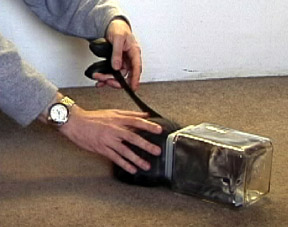
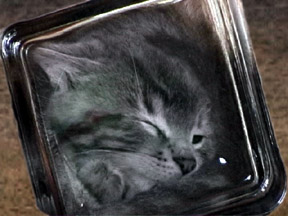
Along comes a kitten.

You can see where this is going.

Working and surplus and repairable surplus electronics have a lot of "moving parts", end markets, lifecycles and ingredients.  But whether they are one man's trash or another man's treasure, the question is when or whether they have been "discarded".  What stewards are trying to do is make it easier to discard without making it harder to donate, sell, or use... and they got in the way of trade between Trash Man and Treasure Man.   This is ultimately about regulation of wealth and value.

EPA's 2007 CRT rule was meant to evolve the existing RCRA definitions for hazardous waste, while admitting that reuse didn't allow them to fit into the previous amendments to govern "universal waste".   The first RCRA solid waste rules had to differentiate for hazardous wastes, and the hazardous rules were too onerous for the product wastes that were generated universally.   The EPA UWR re-simplified hazardous waste so that companies could collect it from millions of small businesses and homeowners (though some states simply allowed "household" to mean non-commercial, and the lamps are dumped with MSW back at RCRA Square One.

The newest version of the CRT Rule tries to take the square, modified for rectangles, and give it a three dimensional shape - a shape to govern not the status of the good (discarded), or the toxicity (TCLP), but adapted for another dimension - time.   Since the reuse CRT might be discarded SOMEDAY by someone else who bought it, in the future, records on the sale needed to be kept, or a loophole could result.


The update to the CRT Rule takes it even another dimension, collecting the same record on the sale of the same device from the broker, the generator, the buyer, etc.  Three sets of records are better than the one set, which EPA never had time to read, ask for, monitor, etc.

The new rules involve not just records of different parties to the transction of goods which will one day (we suppose) be discarded.

Meanwhile, regulators have been using derivatives of the toxic waste risk to take "waste" into new dimensions.  Including the past, or the original cradle of the product.   CRT Rule follows the "future waste" to the country it retires to, and ROHS follows it back to the maternity ward.

What could go wrong?

ROHS (elimination of lead from solder) creates incentives for tin mining operations, once closed in the islands of Indonesia (for environmental reasons) to increase in value and reopen... we mine the coral islands of today to make tomorrow's waste less toxic.

And manufacturers in nations like China and India, where new CRTs are still made, make draconian rules about the used CRTs that will one day become waste, in order to protect brand new manufacturers making CRTs (which will one day become waste).  And the mining companies of lead keep the used CRT cullet from being reused.  Everyone gets into the act.

And Stewardship will solve all of this, we are told, by taking the regulations BACK in time, to the producer, the OEM.   They will set their long time agendas against planned obsolescence aside, and will work in partnership with regulators to protect consumers from ... oh, counterfeit and grey market product, perhaps.

Where is Haliburton?

Ah, yes.  The connection to yesterday's post, about the evolution of landfills to Subtitle C landfills, to incinerators, and flow control.

They are now making shredders to eliminate the labor from hand disassembly.  Those shredders don't sell well in nations which need hand disassembly jobs, or where reuse and repair techs are so talented that they shanzhai used goods into near-new, even counterfeit condition.

What they propose is to put those developing nations into a box.

They will simplify the way we look at the emerging market.

They will just ban the trade, and get us back to Square One.

Back when the perfect shape was the enemy of the good.   There's a Plato Cave somewhere for regulators to find the principles they need to make the policy work.

Which will bring me back to the conclusion of this three part post.

KISS.

Keep It Simple, Stewards.

Don't start your policy around complex electronics made with coltan used for revolutionary internet cafes and surplus property added value planned obsolescence legal software emerging developing toxic market lifecycle jingo kitten problems.

Start with, say LAMPS.

Judge Competent Authority: EPA or Commerce?

Mom decides Moms are the Competent Authority.   If Dad says you can play ball with your friend, Mom says you have to ask your friend's Mom first.  Dad says he already spoke to the friend's Dad, and they agreed that the kids can play ball.

https://www.federalregister.gov/articles/2012/03/15/2012-6276/revision-to-the-export-provisions-of-the-cathode-ray-tube-crt-rule

Environmentalists (Moms) mean well and are often right.  But they are not correct or "competent" by virtue of them being "Mom", at least not more so than "Dad'.   In the event of a dispute, the ruling is by a judge, not simply that Mom says that Moms decide.

Whether a good is a commodity or a waste is not just a matter of opinion.   Chinese Mom has been caught saying that things made in America are "waste" and saying, by definition, that if one person sells something they have "discarded" it and it is now waste.   That's nuts and the USA Trade Office needs to look into just how incredibly nuts it is for EPA to say that the decision is "competent".

I love my mom.  In this context, I am more of a mom than I am a dad.  But Chinese Mom is a crafty little devil.

Recycling scrap is a commodity exactly like mined ore.  If it's allowed for virgin material, it's allowed for scrap. Chinese mom can't say that only boys can play on the international field.  Environmentalists need to stick up for the right to recycle (or repair) the same as Moms and Dads need to stand up for the rights of our daughters to play ball.

EPA drafts new "Reuse Sale" Rules for CRTs

(Late additions in red)


When does "closing a loophole" crossover into "prosecuting the innocent"?  What are the legitimate reuse applications for CRT (Cathode Ray Tube) monitors, and when do concerns over their high disposal cost make it an EPA, rather than Department of Commerce, issue?

These are the questions that EPA's Newly Proposed CRT Export Rules are meant to resolve.

When the EPA CRT Rule was first issued in 2006, after a couple of years of investigation, it rightly allowed for the "determination" of waste to be made by the recycler, followed by EXPORT based on that determination.

At that time, despite false and fabricated claims that 80% of the CRTs exported wound up in primitive recycling operations like Guiyu, the commerce was mostly driven by three factors:

  1. Original CRT Manufacturing Plants (same as warranty repair) were buying back CRT monitors with key functions
  2. These refurbishing factories were selling the SKD CRTs to 3B3K nations - the 3 billion people who are neither richest or poorest, but who were gaining internet access at 10 times the rate of growth of OECD nations.
  3. The only places the factories could get decent, newer CRTs (at the time) were the wealthy countries, which were rapidly turning them over to replace with flat screens.

The ubiquitous photo of the Chinese woman hammering the yoke off with a hammer raised peoples concerns, but in the end EPA allowed export for reuse on two conditions:

A)  One time notification
B)  Maintenance of 3 years of records showing actual reuse.

The problem in implementation was B.  I have kept meticulous records, and can't get anyone at EPA or Region I to show any interest in them.   They aren't getting them from any of my competitors, either.  This is how "reuse" becomes a loophole.

The EPA is now trying to close this loophole by creating an EPA-to-foreignEPA dialogue tracking the CRT to make sure that their sale is recorded and tracked.  They also want the same reports to be generated by everyone in the transaction - buyer, broker, and seller.   Excuse my lack of enthusiasm... but is the solution to never having reviewed the 3 years of records really to demand more records from more people?

The other issue is that EPA appears to be leaving out Department of Commerce and US Trade Offices out of the discussion.   Those entities know that when the Communist Party owns a factory making brand new CRTs, that they have a bias or incentive to ban USA Commerce.   Working CRTs which are sold for refurbishment are USA products, governed by Commerce.  The USA shouldn't set a precedent simply allowing a foreign nation to label our goods as a "waste" if they are not being discarded or speculatively accumulated.


See past post "Red Scare: Competent Authority Decision Trees" 


If China bans import of a computer which could be used to display a photo of the Dalai Lama, does violating that ban really trigger USA EPA enforcement?  These are "color orange" laws... a foreign nation can ban the color orange, but the USA should not draft a law which incorporates that into USA law by simple reference (making it illegal to export orange goods to a country banning the color orange).   There needs to be a clear environmental case against reuse.   Otherwise, another nation may use environmental laws to subterfuge WTO free trade agreements.  


China is already being investigated by WTO for doing this with rare earth metals.  If USA EPA makes it illegal to violate China's "environmental law" on trade in the commodity, then it doesn't matter if China loses the WTO case - you have now violated USA LAW by buying the "environmentally regulated" rare earth metals, which the USA made illegal based on the foreign nation's "competent authority" rule.  Reuse of CRTs is not an environmental crime, and second-hand goods are not "waste"... the Department of Commerce knows the distinction, and needs to be involved in this.  

But is CRT reuse still an important market?   That is a bigger "question mark" today than it was ten years ago.  The biggest difference is that foreign markets can now shrug the USA suppliers off... there are more displays in more places, new and used, than ever before.  If the USA wants to cut off its own nose, off with it, say the long-insulted CRT refurbishing factories.

Why All Good Recyclers are Exporters.

There are many good recyclers, and we are all exporters. 
The purpose of certification is to "out" the liars, not to debate the outliers. 


During the past week (blogs below), I've written several essays concerning marketing themes which are "attacking the category".
Negative campaigning, also known more colloquially as "mudslinging", is trying to win an advantage by referring to negative aspects of an opponent or of a policy rather than emphasizing one's own positive attributes or preferred policies. In the broadest sense, the term covers any rhetoric in which one refers to one's opponent in an ad hominem manner. [ wikipedia 2012.02.08]
Negative imagery of competitors' export practices probably accounts for "80% of advertising" for ewaste recyclers (a statistic I just manufactured... see how easy it is for Americans to make things - up?)

Export policy is important, it does matter.  Below are five distinct export categories, and the niches they serve.   How we manage and certify the first four will help us all to control the 5th (see post "Ewaste Travel in Scrap Metal" 2010).   Mixing CRT glass and mercury bulbs into bales of scrap metal is one dumping problem, but ship captains stranded with cargo refused at port is another cause of the same "export for dumping" problem.   Basically, there are five ways for your "e-waste" to get from Here to There.

FIVE CATEGORIES OF E-WASTE EXPORTS

1.  Export No Intact Unit Category:   Some of us feel safer exporting raw materials only, and market the "no intact unit" standard as an option.  These companies attract business from OEMs concerned with reuse (market cannabalization), counterfeiting, or the "grey markets" somewhere in between.  It's a legitimate recycling category.  These companies represent an excellent choice, for example, for an OEM with faulty parts taken back under warranty that they don't want redistributed.  These recyclers export bales of steel, plastic, copper, aluminum, and circuit boards, sold openly on the commodities market.  (slideshow of China's metal recycling companies, which buy shredded material for hand sorting - The Atlantic Monthly 2008)

2.  Export of Tested Working Category:   Some of us sell to retail markets, such as schools or direct retail shops, which are not in the repair business and are willing to pay more for something "fully functional" and "tested working".  The recyclers who sell to the direct-reuse market tend to wipe hard drives, reinstall MAR licenses, and do other things to ensure their exports are what the buyer ordered.  (Slideshow of Egyptian repair / direct reuse markets, 2008)

3.  Export for Repair and Refurbishing Category:   Within the remote corners (83% of the world), there are mind-blowing repair and remanufacturing companies.  Some of these began as contract manufacturers (e.g. CRT factories) and performed warranty repairs as well as assembly.  Some have turned to full-fledge cores refurbishers, creating thousands of jobs in emerging markets, taking back things like old CRT tubes or smallish LCDs and recutting and re-vamping them.  They make things like monitor-television-DVD combos, which are sold in vast quantities to people earning $3,000 per year, who cannot afford to buy all 3 separately.  They tend to be very picky, but not about things like 120 volt power supplies... whether the power supply works or not, it's getting replaced for sale in a 220 volt country.  It's a very legitimate category.  The fact they buy non-working power supplies as well as working power supplies is evidence that they are the opposite of primitive.  Slides of the factories I've visited are available here.