Showing posts with label rules. Show all posts

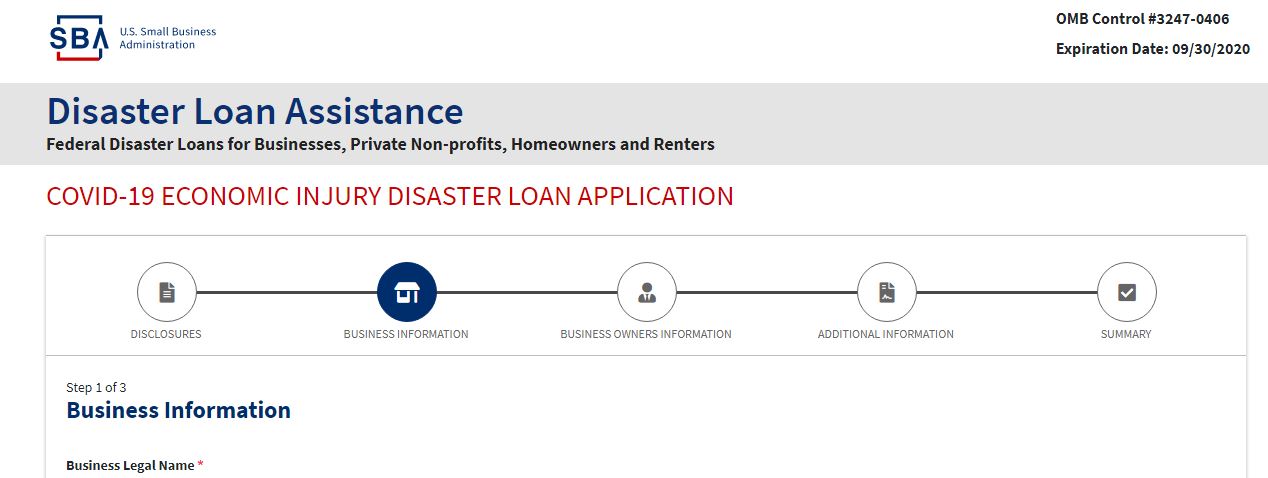
Federal Stimulus: Quick Guide to the Payroll Protection Program


Payroll Protection Program - Here. (always be careful and check the https, there are reportedly already fraudulent websites collecting financial information).

"It's Going To Be A Mess" is the headline at Fortune Magazine.

As a recycler / junkyard operator, I'm in a rare position of having experience (as a regulator of 9 years at MA DEP) reading Federal Register rules, and know that this morning the "FINAL" Rule on the PPP - Payroll Protection Program - is not going to change. We started the application early, and had applications ready for submittal by last Thursday. But we've had to redo the application twice already.

But now it's final.

Here's what makes this blogworthy. My company has 30 employees (positions, some are vacant or seasonal). This program will lend my company money to continue payroll, and the portion of the money actually used / documented to be payroll will be eligible in ~6 months for forgiveness.  Even the portion not forgiven will only be 0.5% Changed to 1% APR to the feds plus whatever the Lending Bank adds.

Here is the link to the loan application.  I have been pursuing it NOT JUST FOR MY OWN COMPANY.  I am making calls to any company we carry an A/R or A/P with, as my future income and future required services requires THOSE companies remain in business as well.


Regulations: The Purpose of Rules

When there are Guidelines or regulations, there are reasons to follow them and enforce them.

  1. There is a positive environmental effect to the rules (or negative impact from not following the rule).
  2. "Rules are Rules".   If Rules are not enforced, other meaningful (see #1) Rules will also not be enforced.

If it is #1, there should be a science or test to demonstrate and constantly improve on the rules.  If for example there is a different rule (Universal Waste vs. EPA CRT Rule) in Vermont vs. NH, MA, NY (our three border states), enough time has passed to know the pros and cons attributable to the differences.   It's not about the alleged ego clash between 1990s MA DEP David Struhs vs. EPA Region I's John DeVillars.

If it is #2, I can accept that... So long as the Rules are applied evenly and to everyone.  If Vermont has a different rule from NH, MA, NY, and is applying the rule for consistency, you expect to see the same citations to my list of 9 other electronics processors in the state.

6 Pieces of Dad Advice for College/University Applicants

Three cheers for college applications.  My wife and I are parents of college-bound twins.  We want them to graduate debt free.  We believe college is a really good investment (my spouse is a prof at a selective college).  But if education cannot be provided without crippling compound interest, it can be DIY (do it yourself).   My great grandfather became an expert in Roman history, among other things, by reading books.

Fill out CommonAp to receive this Paper back
Our twins will be in good colleges for under $10K next year (including living expenses, on average).  They ate almost that much at home, so the effective cost is better yet.  They could work side jobs and earn their way out if they have to.

If I'd been debt free from my own two degrees, and I could have been saving money for my own kids college.  But I'm from the class of 1984.


- President Ronald Reagan turned the Pell Grants into Pell Loans
- Inflation fell to 4%
- Colleges continued to increase tuition by 10-16% per year (!)


My generation was told that debt was rational.  That the interest rates were "lower than inflation" and that that was somehow an equivalent of earning money.  The result was the first generation to think you could actually make a living off of inflation in the housing market... which led to the 2008 mortgage crisis.

As many in my liberal arts college railed against Reagan and the Pell Grant cuts, I could see that we were just drinking straws, from the federal cup into the colleges' mouths.  As long as the government kept filling the punch bowl based on "need" - set by what the colleges charged - it was clear the colleges had little incentive to stop raising fees.

So no big tuition savings for our kids.   Instead, they get plenty of advice.

My parents and grandparents advice, as I recall, was all about money more than love, spirit and friendship... at least that's what if felt like listening to their advice, as an 18 year old.  What I now know is that loved ones will someday call needing help, and you'll wish you had savings.   If you can't help them and wish you could, it's usually due to past decisions about compound interest.

If our kids are the products of our marriage, this is about product stewardship.

6 Pieces of  Fatherly Advice About College

State Hate #1: "Secret Science Reform Act" vs. EPA

"Secret Science Reform Act": When Any "State-Hate" Reform Will Do?
I've been writing about my headaches with Vermont Agency of Natural Resources.  All nice people.  I wish they knew the 30 people at GPR were nice people.  It would be nice if they would have visited Good Point Recycling during the past 36 months.   That may have made it easier for them to explain why a Vermont company with a lower bid, 30 employees, R2-certified, no landfilling of CRT glass, and $488,000 less expensive, warranted a change in procurement.
For the record, while the state's selection of Casella is something we object to, competition is not.  We simply want to run an Independent Opt-Out plan, so that if Vermont districts and entities WANT to use Good Point, they can. 
However, Cathy Jamieson and her 2 staff are tilting the playing field AFTER they chose Casella Waste Systems, to make sure the horse (CWST) they bet on wins.  Whether or not the bidder selection was proper, the state is cheating against the Manufacturer Independent Plan.
Among citizens and recycling clients, there's a lot of fatigue with the story.  "I'm e-wasted out", a client told me. Vermonters tend to be strong and well educated environmentalists.  VPIRG is well funded.  The "Green Mountain State" is a Green mountain state.  Most people will attribute an angry regulated business owner to some kind of Republican Fox News related profit-motivated decision to expose the environment to risk.You know, risk perception.  Here's a link:   

In social interactions, the perception of how risky our decisions are depends on how we anticipate other people's behaviors. We used electroencephalography to study the neurobiology of perception of social risk, in subjects playing the role of proposers in an iterated ultimatum game in pairs. Based on statistical modeling, we used the previous behaviors of both players to separate high-risk [HR] offers from low-risk [LR] offers. The HR offers present higher rejection probability and higher entropy (variability of possible outcome) than the LR offers. Rejections of LR offers elicited both a stronger mediofrontal negativity and a higher prefrontal theta activity than rejections of HR offers. Moreover, prior to feedback, HR offers generated a drop in alpha activity in an extended network. Interestingly, trial-by-trial variation in alpha activity in the medial prefrontal, posterior temporal, and inferior pariental cortex was specifically modulated by risk and, together with theta activity in the prefrontal and posterior cingulate cortex, predicted the proposer's subsequent behavior. Our results provide evidence that alpha and theta oscillations are sensitive to social risk and underlie a fine-tuning regulation of social decisions.
(Wow, how's that for a dollup of obfuscation?  If you can't follow it, however, you cannot understand or defuse "state hate")

Risk is a statistic, a perception, something to be weighed in scientific method.  It's also deeply rooted in our hippocampus, mitigated by the reasoning in the cerebral cortex.  How regulators (who tend to be risk averse) interact with entrepreneurs (with the opposite tendencies, relatively speaking) offers a case study for how democracy is breaking down,how libertarians and social conservatives and liberals are getting whipped around in circles.  Here is a national news story (Fox News) on a law proposed by GOP
Republican lawmakers in the House are pushing legislation that would prohibit the Environmental Protection Agency from proposing new regulations based on science that is not transparent or not reproducible.  The Secret Science Reform Act, introduced Thursday by Rep. David Schweikert, R-Ariz., would bar the agency from proposing or finalizing rules without first disclosing all "scientific and technical information" relied on to support its proposed action.

Facts And Strategy in Recycling Business: Part 1

Time to share some experiences about the export market and used electronics.  I've now spent more than a decade building the Fair Trade Recycling aspect of the business, and growing my companies (American Retroworks, Retroworks de Mexico, and Good Point Recycling) to be healthy and fully functional.  There is not as much strategy and trade secret to the business.

Commodity value of fiber = ?
In this Part I, we can see how electronics recycling is basically just like curbside recycling.  There are three key differences which we will explore in Part II.   Part I starts with simple and factual observations about the recycling business, and then wades into how government can or should involve itself in regulating that "waste" or "raw materials" business.

1.0  Similarities between E-Scrap and Consumer Recyclables:  

Like curbside recycling, the revenue comes from different grades of raw material which must be separated, graded, and cleaned to replace virgin raw material from feldspar mining (glass), smelting (metals), forestry (fibers), and refining (polymers).  Each of these products can be sold, at some stage, for cash, but they have drastically different values, grading, and transport requirements.

1.1  Commodity Value:  Glass is a bane for both curbside and e-scrap recycling, in that it's heavy, easily contaminated, distances to furnaces are enormous, virgin production is fairly simple and raw material - igneous, metamorphic, and sedimentary rocks all have abundant silica for feldspar mining.  Metals are easy to manage (magnets and eddy currents) and easy to sell, and the pollution from metal mining and smelting is colliding worldwide with growing population.  More people, with more money, want more things made of metal, and no one wants the smelters to impact their property values through pollution.  Even in China and India, the incomes and expectations have grown to where people are less and less tolerant of a lead-zinc smelter which spills noxious toxins into the rivers and water supplies.   Fiber is much more or a part of the curbside business, but the difference isn't as great as you'd assume when you look at the declining tonnage of newspapers and the huge volume of wood from console televisions, speakers and stereos which our plants manage.

1.2  Labor:  If all of the materials in a computer, tablet, TV or printer were pre-disassembled, you could run them down the exact same Mayfran sorting belt that you run curbside recyclables through.  Magnets and eddy currents can grab the steel and aluminum, blowers could separate the lighter plastics, shaker trays could get the small light pieces into a different direction than the big pieces.  But in every Materials Recycling Facility (or Material Recovery Facility*), labor is high.  You need humans to pick out and grade different raw materials.   You can add two people and further grade (glossy magazines from newspaper, for example) or one person and send the bales to a paper mill with easier tolerances.   But each laborer adds value.  The problem is when the value added by labor (e.g. sorting plastics by resin, paper by ink and clay content, green from clear and brown glass) produces less than minimum wage.   If you pay a woman $8 per hour to separate two tons of material and only make an additional $5 on the sorted material, you cannot afford her.  This labor-to-value dynamic is just as important in E-Scrap recycling as it is in collection.

1.3  Collection:  The distance between residents in a city and a countryside is a part of the cost of both recycling and waste collection.  The economics and competition between waste and recycling collide.   Since you cannot affordably recycle road kill, dirty sponges, spoiled food, wet tissue, many high heeled shoes and chicken skin (sorry Zero Wasters), you are committed to running the Waste truck.  If you don't, ask Naples Italy and Seattle Washington (recent Waste Management strike) what happens to property values and pest control.  The recycling truck is therefore an "also ran", and has to collect material valuable enough to offset the convenience of running a single waste truck to a single landfill or incinerator.

Fortunately, despite know-it-alls like Penn and Teller saying otherwise, this works for a couple of reasons.  First, like a subway, you don't have to prove that the subway is faster than the cars on the commute.  Going to work by car may be faster, but if you eliminate the subway the people are all in cars and it's no longer faster.  Similarly, if you try shutting down recycling, you find that avoided disposal costs are more than the per ton at the landfill.  When you add the "value added" from income of sale of the commodities, you find a lot of multipliers and higher employment - not just at the sorting line but at the paper mills and refiners as well.

1.4   Markets:   There are "niches" in collection besides rural (high mileage costs) and urban.   Some recovered materials - especially glass (and especially especially CRT glass) have a small number of buyers around the world and face huge transport costs after collection.  This transport cost affects labor - you may decide to pay someone to sort plastic by color because the transport distance to a mixed-color market is higher.

1.5  Government involvement:  Both electronics recycling and curbside recycling involve government, through procurement law (government contracting), labor law, environmental law, transport law, etc.  Every time there is a real problem with waste management - a recycling fire, an abandoned speculatively accumulated pile, a fraud, illegal dumping, alleged malfeasance (usually a claim by a competitor with a different or better process) - we pay for a regulator to enforce rules and public contracts.   Recycling businesses must know the laws (ignorance is no excuse), but also anticipate how regulators are interpreting the laws.