Showing posts with label collateral damage. Show all posts

3 Minute Middlebury College Blog

Yesterday we presented - in Espanol (I'm enrolled in a 7 week Escuela de Espanol) at Middlebury College.

There were four of us. Me, Kennii from Nigeria (and Stanford University), Bob from Brazil, and Jo - all Spanish 1.5 students presenting on environmental subjects to the students of Middlbury's prestigious summer language college (my wife is Director of the School of French).

Here is a link to my 5 minute presentation on "fotos falsas" and collateral damage.  I was joined by Technico Rudy of Queztatenaga Guatemala.

https://docs.google.com/presentation/d/1drREMgKyYxSNks2prc0SutacLbUAAF5l/edit?usp=sharing&ouid=108266863784829595501&rtpof=true&sd=true

It went over very well. 

People can tell the difference between photos taken in professional refurbishing and recycling factories, and poverty porn pictures of random children placed atop of home-generated junk.

Kehinde “Kennii” Ekundayo has become a friend in the class.  Her presentation was about use of art to draw attention to global warming etc.  Bob and Jo also spoke about warming.  

I spoke about NGOs creating an atmosphere to arrest smart technicians in poor countries doing what my grandfather taught me about - fixing a rich person's broken thing.

80% Ewaste Hoax is dead.

https://www.sdsu.edu/news/2024/05/sdsu-international-student-secures-coveted-spot-in-stanfords-art-history-doctoral-program


Plastics Recycling's Burdensome New "Narrative"

A friend from Carleton College, physican, philosopher, professor and author Peter Ubel, nominated me on Facebook to comment on a new Frontline and NPR series:


The headline implies that plastic never would be recycled.  I've seen some other reporting to this effect, harkening back to the Penn and Teller video "Recycling is Bull***t".

How about:

"Some in Big Oil Misled the Public Into Believing More Plastic Would Be Recycled Than Could Be"

The thing is, plastics recycling is not all that complicated to explain, compared to say health care policy. 


"Part of the problem with mixed plastics recycling is insufficient participation. Manufacturers cannot meet % recycled content goals if consumers don't participate. "Another is over-participation. When in doubt, leave it out. Over-eager recyclers contaminate feedstock with mayo. "

Not really that political.

Cross Cultural Training Program for Ewaste Shockumentary Makers 1

This week I spent another several hours in a pre-interview for a German documentary crew from ZDF. They had seen Blame Game or seen the blog, and said that they were reaching out to see if we can get them interviews with Africans in the Tech Sector --- "At Agbogbloshie".

spend more time at the beach guys
They are attending something called the Digital Conference Republica [technovagh blog by
Joseph-Albert Kuuire], a German conference established 2013 on the subject using online information to solve global problems, to be held in Accra for the first time.

Obviously these dudes mean well. But finding a repair tech "At Agbogbloshie" is a bit like finding a mechanic at your local scrap metal yard. They are associating the original stubborn idea that imports arrive directly at Agbogbloshie (thanks to Jim Puckett and Mike Anane) with the message that Africans import what they can repair.

So in my next blog, I'm going to share some of the training and background information which we tried to impart to Alexander Glodsinksi of SDF, in a crash course via Whatsapp, with Emmanuel Nyalete, Evans Quaye, Wahab Odoi, and Olu Orga.  After the "text training", Evans suggested we put it up on a website devoted to Africa's Tech Sector. Let's start here.


Poison Apples Blog: 18 Questions for Research on GPS Tracking of E-Waste

Poison Apples Blog #1 - Labor Day Weekend 2018

It's September, the beginning of a new Academic Year.  Environmental studies and public policy and geography and business majors are arriving on campus, ready to launch hundreds of term papers, thesis, class essays, etc. on lots of topics.

Usually, there are dozens of students researching the topics of the Basel Convention, EPA policy, exports, and externalization of pollution.  And there are quite a few papers that will be written on racial profiling, and environmental justice.

So far, I haven't seen many papers on the thesis that Geeks of Color, the Tech Sector in emerging markets, is being improperly profiled as "primitive", "informal", and "illegal". But if I were to write such a paper, for an A+, I might begin with another paper that had been published that reached a conclusion in its title...

"How does e-waste travel across the world after disposal?" was a hot publication in 2016, and was covered on PBS national evening news broadcast before many of us had a chance to peer-review it. The title of the report asks a question... and has a cover photo at top which clearly shows the plastic casings of CRT televisions.  This raised a question to me... why was there not even a single CRT television tracked among the sample of 205 devices, which MIT's partner claims are a representative sample of "ewaste".

The 30% or so of "stuff" in e-waste collections that does indeed "travel across the world" is the only stuff they tracked. But the paper claims to answers the question "How" without asking the question, "Why"?  And the answer to why would come from the buyers, the black, brown, Asian, African, Latino and Islanders who are never offered a chance to show what they CAN do with your "elective upgraded" so-called "waste"...

Because the NGO knows this, they had to take an extra step. No one is selling spoiled apples in the marketplace, if they tracked the spoiled ones, it would show little export. But if they tracked the statistically good ones, they'd likely find their GPS in a reuse shop (in fact, they did despite efforts to sabotage).

The method, I call "poisoning the Apples"... And its time some people publish some term papers on the obvious errors in scientific method that should have been vetted before PBS was sent the paper.


Nuance Delivery 4: Correcting Our Aim

Having trouble with the video editing software to get Oluu Orga's excellent video-bio on his years in Agbogbloshie up for view.  I had been using Picasa for the previous videos I edited. Alphabet (Google) is kind of the popular boyfriend/girlfriend that only dates you for a couple of years and then loses interest... Love their free products but they wind up dropping support and pulling the plug-ins.


While I keep working on it, I'm also getting ready to receive a bunch of African Fair Trade Recycling members. Wahab "Ghana Tech" is arriving in Boston. Emmanuel Nyaletey arrives tomorrow from Georgia Tech. Evans Quaye of Accra is networking in South Africa.  Web Element is completing their Fair Trade Recycling Waste Offset (re-export) paperwork at Ghana EPA. Our newest Fair Trade Recycling staffer, John Sumani of Wa (far Northwest), a Ph.D in environmental studies, has a good network at Ghana EPA. The Techs of Chendiba Enterprises check in politely now and then. And the "three musketeers of Agbo", Awal, Yaro and Razak, have their Whatsapp credits ready to spend (at all hours of day and night).

Nuance Delivery 2: Awal is BlackboxMedia's Tire Burning Boy

Well, I was working on a different Nuance #2 - the upcoming release of Juan Solera / Palm and Play's documentary "Blame Game" (former working title Clean Hands).

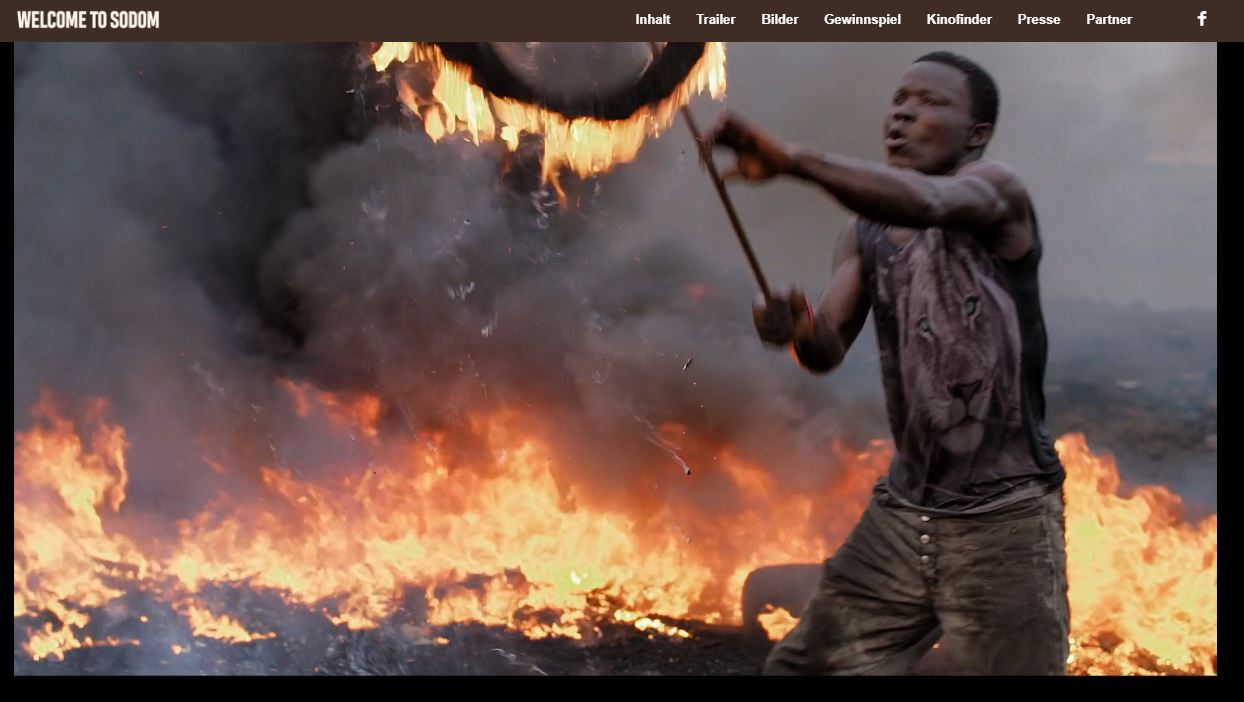
But before I could make an announcement, another German White Savior documentary has just been released!  "Welcome to Sodom" makes Awal Muhammed (and perhaps fellow Musketeers Yaro and Razak? Didn't see them in the trailer) return for another one of his tire-burning-circus acts.

In fairness, I have only been able to see the trailer.  But hey, here's the same theme.  Agbogbloshie in Ghana is presented as "Europe's Ewaste Dump". Shots of girls with water baskets on their heads. Shots of garbage being dumped (not even electronics) through a frame of a 1970 television husk.  But if the trailer and website is any indication, our hero is, once again, Awal Muhammed of Savelugu (north of Tamale) Ghana.

Here he is with his gasoline-filled-tire-burning-act (previously seen on Placebo's MTV video last year).  This is not something they do - use this much fuel to make this big a fire - except when European camerapeople are present. Awal is credited with figuring out that it's the fire that brings the cameras for your close up (a hint for Hollywood Extra Wannabees, perhaps).


2010 Flashback to Europe's Decade of Racial Profiling E-Waste

Back in November 2010, I used a cover photo on a blog to convey how Europe was relying on photojournalism to set waste policy. WRONG, WRONG, WRONG was one of my most visited blogs that year - the year Interpol launched "Project Eden", an approach to Africa and Asian geeks that was as cringeworthy as the Eurotrash Art.


Rumors Update 3: Deauville, Normandy, Film Festival

This is just a sneak peak. Leapfrogs #2 because it's so hot off the press...


The collateral damage to geeks of color over the past 2 decades has left scores of witnesses.


Fifth Week of USA College Students Apprentice Program in Africa Tech Sector

Fair Trade Recycling Update:  How Four USA College Students Will Change The Way You See Africa's E-Waste.
Zacharia is amazing

Fair Trade Recycling has a positive message.  Like the message in Hans Rosling's seminal "chimpanzee test" video - that ignited Gapminder in Sweden - our programs teach more about emerging markets.  The 1960s "Third World" images are, themselves, a form of pollution.

This summer we have 4 USA college interns working across 2 continents - Africa and North America - to create a partnership in parts supply.  Two students (U of Florida and Middlebury College) have been working in an apprentice program for flat screen TV repair in Ghana.  They are not just learning about T-con boards and controllers, or how to spot and replace overheated capacitors.  They are seeing Africa's Tech Sector as equals.

"Karim Zacharia is amazing!!!"

I like getting that message.  These two Americans are not "saving Africans".  They are not introducing a new "less primitive" technique. They are being exposed to Africa's best and brightest, to people who may well have been on scholarship to an engineering program if they'd been born in different circumstances.


Waste Perception Creates Image Problem

Last spring Resource Recycling published an article following WR3A research into leaded silicate mining.  Long before my days as a regulator (Massachusetts DEP 1992-99) I had noticed how recycling happens in cities where property values (NIMBY) made compliance expensive.  Virgin mining and forestry, while far more damaging and polluting, happened farther away from property values, and was thus less regulated.

Here in Ghana, we are looking at lead and zinc mining streams as a way to "piggy back" CRT glass back to secondary primary ore refiners.  Rather than try to construct a "takeback" program aimed at manufacturers (popular because they are extremely costly, charging high fees in a bargain with Planned Obsolescence to squash the secondary market), merely cite the "circular economy" and toss the CRT tubes back into containers bearing Pb Ores.  Africa mines primary leaded silicates for export to refiners in wealthy - and less wealthy (China, India) - nations.  And some of those ores are chemically identical to CRT glass.

And there is no "EPA-EU" "Waste" "speculative accumulation" paperwork or R2 or E-Steward #bs to make it economically unfeasible.  I keep hearing in the west that CRT glass is "impossible" to recycle in Africa, a continent where primary ores are frequently the number one export.  This is a clear case of the EU and USA shooting itself in the foot, and then demanding Africa, Asia, South America follow "equivalent practices" prior to engaging in strategic metals trade.

The difference between recycling and mining is largely an image problem.  It doesn't take much imagination to solve problems like CRT glass recycling markets.  It means being willing to listen to people outside of your "circular economy" box.

Collateral Damage 2: Emerging Markets "Informal" Sector Takes sCrap from Shiny Consciences

Collateral Damage 2. Small scale (Informal) repair and recycling of home generated scrap

Several NGOs made "informal sector" a bad word.  Search "e-waste" and "informal" online, and you find that it's a polite word for a lot of pictures of brown people earning a living the way white boy scouts earn medals - by protecting the environment, adding value, and supporting a circular economy.

Infamous example?  How about the COVER photo from the 2015 UNEP Report.  What exactly do you see here?  A lot of people have been hypnotized to see something nefarious going on.  

This is what I saw happening when I visited Chinese buyers more than a decade ago.  It was informal. But it was also sustainable.  The environmental harm of producing chips from mining, refining, smelting, and manufacturing created small integrated circuits worth more than the gold they held in them.  If it was about the gold, the refiners in Japan and Belgium would have no competition here.  What I saw the Asians doing was memorizing each chip and sorting them, painstakingly, according to their reuse value.  


.

If my children were born in a poor rice paddy village, and they learned to do this, creating thousands of dollars in secondary market value, I'd be proud.  It would remind me of how my Ozark family went from subsistence farming, no running water, no electricity and no paved roads, to OECD status in two generations.  And no thank you, it wasn't from big city charities.

Fixers do "git er done" in every culture, and often become the founders of the world's most successful enterprises.  They see stuff for what it can do, not for what it cannot do.  They find treasure where others saw trash.

The "informal" market in Asia, Africa and South America isn't perfect, but if you want proof of racism look at the cover photo of the UNEP article and ask how something which reduces carbon, creates wealth, and is a less toxic process than European refining gets elevated to poster child.

OEM Sponsorship of Electronics Recycling - Enlightened Self Interest

This could have been a chapter 9 in "Collateral Damage" series started in October. Original Equipment Manufacturers have been at ground zero in the "Ewaste" War.

But Original Equipment Manufacturers aren't really collateral. They are are active players, for better and for worse, in the battle over recycling policy.  Their role has been extended to finance recycling of products at end of life.  Or not at end of life.  Product support, software upgrades that turn "obsolete" into a verb, negotiations over broadcast changes (Telecommunications Act of 1996), VHS or Beta, copyright law...

They are targets, and they are targeters.  They are allies and adversaries.  Interested parties with a stake in the game.

It's just business.


Collateral Damage 3: Sensationalism vs. Science

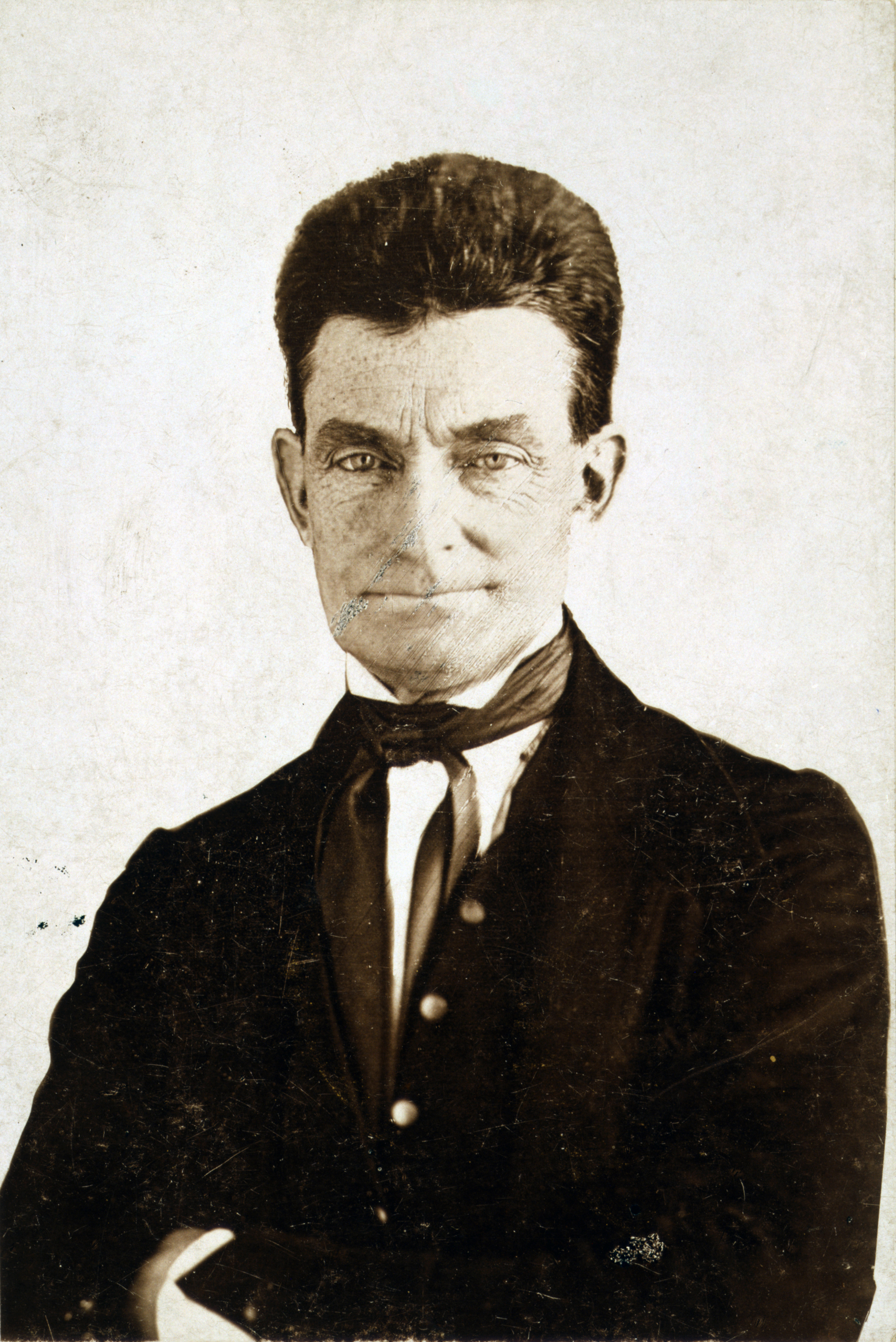
John Brown by Levin Handy, 1890-1910.jpgIn a recent correspondence, the Executive Director of the Seattle NGO made a comment about our long history trying to work with or around each other on the subject of "e-waste" regulation.  He summed it up by saying "We have a disagreement about international law and policy".

Fundamentally, perhaps not really.  We agree on what the Basel Convention says about trade between OECD and non-OECD countries.  We agree on what the Basel Ban AMENDMENT says, which would change the rules in the Convention (which covered disposal) to cover recycling and repair.  We agree the second, the Amendment, has not been ratified.  We agree that his organization has been successful in getting several European countries to substantially adapt rules on scrap recycling, repair and reuse to match the language in the Basel Ban Amendment.  And we agree that we strongly disagree whether that is the right direction for "international law and policy".

Although I'm certainly more comfortable around international law discussions than your average junkyard recycler, I would not attribute the disagreement, at least primarily, to interpretation of international treaties.  Here's my problem.

1) OECD is a bizarre basis for determination of "waste crime".   The Basel Convention uses "OECD" to make a binary distinction, drawing a line between Brazil (non-OECD) and Mexico (OECD) that "waste" shall  not cross.  The line is based on a bizarre "club membership" standard. It is not based on any science, whatsoever.  Rather, its entire basis is a rather quaint 1970's "third world" idea correlation.  Places like Singapore and Hong Kong, have higher average per capita incomes than the USA. They are not OECD, but are clearly in the business of electronics manufacture, warranty returns, refurbishment and recycling.  "OECD-Non-OECD" makes as much sense as dividing people by race, by religion, or as "cowboys and indians".

2) Sensationalism and generalizations about e-waste appeal to implicit racism.  The stories are easy to write, and create wealth for the Seattle NGO, jobs for EU and USA regulators, and trade barrier leverage for "Big Shred" recyclers.  Sensationalism makes cheap, plentiful, disposable articles, creating the collateral damage of Joe Benson, Net Peripheral, and Las Chicas Bravas.

It's really the second - the sensationalism ("poverty porn") of Asian, African, and Latino reuse markets - which drives emotions.  Emotionalizations are attractive to journalists this time of year.  I didn't introduce those to the debate.  At the beginning, my blogs and correspondence with Basel Action Network were an attempt to de-emotionalize the subject of trade, to reduce the use of photos of kids at dumps, and to reduce the prosecution and impugnment of refurbishing factories, even (or especially) those in emerging markets.

"Bad Science in the Headlines" has been a subject of research for some time, and there is nothing in e-Waste coverage to distinguish it.   Sensationalism in journalism is a human health risk.  Racially profiling geeks of color is not only morally toxic, it can produce actual risks to human health.

But if BAN brought emotion-guns to the policy fight, I can't fight with a scalpel.  And so we had little recourse but to focus on the accidental racism, the collateral damage, and false stereotypes which the sensational "e-waste" journalism brought down upon the Geeks of Color.


Collateral Damage TOC: The Preview of Ewastegate

TABLE OF CONTENTS FOR "COLLATERAL DAMAGE" BLOGS

Many, many posts on this blog have been around the theme of "unintended consequences".  Two decades of attacks by Basel Action Network to save the world's poor from the waste of the rich nations have added up to a lot of environmental injustice.

This series of blogs will try to document the case for "intervention" by Basel Action Network's donors and E-Stewards.  The NGO has lost its way, and is expending more of its firepower on agents of conscience and authors of nuance.

These are in order of scale of importance, but if you are skimming, jump to #7.  I got something new, and if it turns out to be proven, BAN's Board of Directors will need to take action before the feds get involved, and before Jim Puckett starts erasing his emails.

Collateral Damage 1. Modern high tech recycling and refurbishing factories

BAN spokespeople have repeatedly called the best and brightest recyclers and refurbishers "a myth" and have attacked those who represent them as "deniers" and "apologists", and sought amendments to the Basel Convention to make trade with those factories illegal.


Collateral Damage 2. Small scale (Informal) repair and recycling of home generated scrap

BAN has made the "informal sector" a bad word, when the smaller refurbishers are actually the most vulnerable.  Forcing African, Asian and Latin American small scale tech-sector to buy from fewer OECD suppliers creates "back alley" recycling, just as most prohibitions and boycotts do.


Collateral Damage 3.  Reporters and journalists

Reporters and journalists are in a tough spot already, forced to be experts on every environmental and economic and political topic.  Calling themselves a "watchdog", the NGO has gotten extremely false and inflammatory statistics ("80-90% exports are dumped") into USA Today, National Geographic, CNN, BBC, Economist, Al Jazeera, Science Daily, NPR, etc. etc.  The poison circulates from journalist to journalist, diverting attention from real environmental problems (like non-ferrous metal mining).

Collateral Damage 4. Environmental movement

Ditto.  Well meaning young environmentalists respond to the photos of children at dumps with a passionate indignation, not knowing that the devices they insist on destruction would have been properly repaired and reused, or even properly recycled, by the "others" portrayed as sub-adults.  This "accidental racism" will create cynicism.  (I've been urged not to use the word "hoax" out of fear fellow environmentalists will wind up as collateral damage).


Collateral Damage 5. Interpol, EPA, and Enforcement

A massive waste of resources, "Project Eden" found no Eden in Africa.  It found statistics from World Bank that showed no more illegality or fraud in trade of used electronics than any other trade - until the crackdown.  (Make straw hats illegal and straw hat crime increases).

Collateral Damage 6. Economy (CA SB20)

California believed BAN's malarky about CRT dumping in Guiyu (never a destination for CRTs) and cut itself off from a billion dollar per year refurbishing factory market, which BAN told SB20 was "illegal" and "a myth".  The "cancellation clause" created huge piles of CRT glass and robbed California taxpayers while doing nothing at all to improve the environment.

Collateral Damage 7. Basel Action Network Board of Directors, employees, and friends

In this post I intend to reveal new information about the MIT GPS methodology, suspicions about methodology asked about in our 14 page letter to Carlo Ratti, some of which are now proven. But ironically, there is a brand new development I would have missed if I hadn't been forced to go back to it by BAN's false attack on my company and its friends.  It has to do with the releasing of information about the GPS trackers to companies who pay BAN a portion of their income.   
During the period the GPS was sent to Middlebury, my company was in the process of shipping several loads of printer scrap to an E-Steward.  The company denied Good Point Recycling dock apointments, which we asked for repeatedly over several days.  If Jim Puckett allegation that the printer "very quickly" went to Chicago, that means he had real-time knowledge of the tracked device.  It now appears that device WOULD have been delivered from my company to the E-Steward if our dock appointments, which we'd already shipped several, had not been cut off while the GPS device was in our factory.  I may reveal the frustration from emails sent by my employees over the E-Steward delivery cancellations, and my pleading with the Chicago area e-Steward to let us deliver the loads which we had been issued purchase orders for.  We can show that resulted in a change to the other R2 Chicago company - the one we had not tried delivering to, but whose audit showed R2 certified downstreams in Hong Kong... and how we sought to relieve that pressure by re-sorting potenially reuseable laser printers for the R2 load.  
 Put this another way:  The ratio in 2015 for loads shipped to the E-Steward to the R2 company (total all materials, not just printers) is 93.3% to 6.7%  The odds that a device would wind up at one of the two companies, rather than the other, is striking.
If is apparently true that MIT undergraduates were instructed how to find a non-public office on the basis that they disclosed my company, and they selected a laser printer which sells used for $349 to drop off there, it was bad enough.   If in addition, BAN knew the location of the device in real time, and the Chicago area e-Stewards recycler cancelled the 5th load already prepared for it because it had information about the GPS device from BAN, then that is potentially criminal. 
Got that?  That would appear to be a violation of SEC rules at best, and potentially a criminal enterprise if the collusion was intended to harm R2 companies that were using the same "approved" downstream as E-Stewards companies (which have agreements to pay BAN $$ a share of their income, which goes in Jim's pocket).  Before I provide the evidence of it, I would suggest that BAN's Board of Directors get in touch with me, so I can provide them and MIT's attorney with information that should not be given to Jim.  I have testimony from E-Stewards that they were aware of the GPS devices before BAN made the public announcement, and in some cases actually helped deploy the devices against competitors. 
I had asked MIT about this possibility in May 2016, and MIT provided my letter to BAN (without cc'ing me or informing me).  It should have been an opportunity for Jim to vet the methodology internally.  If, as it now appears, BAN leaked information selectively to e-Stewards, and some of that was "live" information, someone could actually go to prison.  There may be a legitimate explanation for the cancellation of the printer scrap delivery to the E-Steward company.  But if not, E-Stewards and BAN itself could be the biggest collateral damage of their leaders obsession with Robin Ingenthron and Fair Trade Recycling.

Collateral Damage 8. My personal relationships
Admittedly, I look obsessed, too.  That ain't good.  But its the business relationships I'm building, the memberships in Fair Trade Recycling, that have been collateral damage to BAN's 2 page hit job.  And yeah, I'll write more about that too.  It's the financial damage that would become a part of a defamation or slander lawsuit.  But those are expensive and tie up the legal system.  It is the due diligence of Boards of Directors and MIT Ethics departments which will shake this out when they see that I have a very legitimate case.

Let the due diligence begin.

Geography Baiting 4: BAN Investigates Un-American Recycling Activities

Well, this guy must not be a credible source...

"Just a few days after arrival, the printer left Vermont and travelled to the Chicago area and then onwards to the port of Long Beach, California. It next pinged off of the coast of mainland China before arriving at the port of Hong Kong. Two days later it was in Mr. Lai’s Farm. " - Jim Puckett

He's talking about ME.

Sounds very "Un-American".  Sounds like Evidence that we are exporting 40% of our waste, according to BAN.  Or worse, sounds like companies that PAY the NGO tribute money are a "safe" solution to the Un-American problem, we must be shipping more than 40% just to buck up the average.

Caution:  Wet Taint

Sounds like.  This NGO makes a lot of noise, but the report they issued says in one place that 50%-80% of devices are exported, in another place over 80% are exported, and in the press release says 40% are exported.  In Geography Baiting #3 we showed what the actual MIT data say, and when corrected for the sampling error (not GPS tracking the 60-80% of e-waste that's almost never exported), what they actually have is data that is pretty close to the 7%-15% range of other vetted studies.

But this is about sound.  Jim doesn't want people to listen to me, he wants to discredit the blog.  So he's got a GPS on a device purchased by an R2 Company in Hong Kong, traces it to an R2 Company we sold it to in greater Chicago, and traced that back to us, who was downstream for our client in greater Boston - the one with no public drop off point - who someone told MIT undergrads to deposit the normally reuseable laser printer they were told to sabotage inside.

They did probably expose something we didn't know - that the buyer of our buyer in Hong Kong is using Hong Kong EPD's non-chemical non-hazardous waste classification of printers to outsource those devices on the cheap.  That's information, and we began acting on it last May.


But the "Geography Baiting" is making all Asian recyclers - all "Un-American" recyclers, seem primitive.  Telling readers that what happened to Robin could happen to you.  If a device might be reused, might be repaired, but someday eventually gets disposed, it will impugn you for doing business with someone who does business with someone who does business with someone overseas in the first place.  That is why they name the client in greater Boston, who is 4 transactions away.  

We do allow some printers to be exported.  Not very many.  Less than 6% of the printers that arrive at Good Point Recycling are intended or approved for reuse, and it was one of those BAN tracked to the R2 buyer whose R2 buyer sold it to someone at MLPF. 

Our problem at Good Point is that we believe in, and want to support rather than boycott, the best practices and state-of-art recycling in emerging markets.  We now know that the downstream 2nd tier audit didn't tell us everything, but we'd have no more info about that than if we had used an E-Stewards company, and BAN/MIT have not demonstrated that E-Stewards is superior to R2 in their study.  (But look at how my pal Craig Lorch is portrayed in an inset, compared to me).

Ethical Photojournalism: Out Damned Spot

Ok I'm really honing in on the central theme of the blog.

Our species has evolved to react, individually and as a society, to stimuli.  But for an evolved social network, it goes beyond "greed and fear".
"Human nature is complex. Even if we do have inclinations toward violence, we also have inclination to empathy, to cooperation, to self-control." - Steven Pinker
But if we also are motivated by beauty, by curiosity, and other inspirations (such as "faith" or "loyalty"), that does not mean that the "greed and fear" cease to exist as drivers.

My life goal at 17 was to grow up to be an "Agent of Conscience".  I also wanted to be a philosopher, but professionally to follow Hesse's Siddhartha, a path of hands on experience as a foundation for some revelation.

Not at Nirvana yet, but the meditation and self assessment continues to yield wisdom dividends.

Are we just animals?  Is there no higher power?  Do we just bounce off of each other in reactions to greed and fear?  Does "nurture" for people we don't know just spill over only when our own children are cared for?  Or does the power to nurture give us a justified pride in our self-worth, a self-worth which is tangible and real?

I definitely think it matters whether I'm an ethical and principled actor and agent.  To me it makes a huge difference if I'm given credit for a lie, for someone else's work, etc.  Sacrificing pride, or "spiritual materialism" in part prepares us not to get too "hooked" on the Choir's praise.

What does this have to do with recycling?

1. Recycling is positive energy.  You are avoiding mining more mountains and cutting more forests.  You are conserving energy.  Even if there isn't a good market from year to year, by continuing to recycle we are demonstrating the reliability of the secondary market as a source of supply, and economically rewarding factories which invested in recycled feedstock use.

2. Pride is addicting.  While we can enjoy the positive energy of doing hands on work and saving as much or more of the planet's resource than we consume, we can also fall to "moral licensing".  By using a reuseable shopping bag, we might feel justified in littering, for example.  An economics of credit, liability, and licensing is both evolved and culturally practiced.

3. Saving the World with a Hashtag is "easy".  Like easy money, money we inherit, don't earn, it's great.  If we stumble upon something happening that's bad for the planet, and just hashtag it into a viral movement, we can get all the great feelings with little of the effort.  We have evolved to accept low hanging fruit, literally and spiritually.

4. Honesty, Truth and Accountability is good.  If we make a mistake and "hashtag" the wrong cause and effect, and earn a job "doing what we believe in" but find out what we believed in was wrong... we can be saved by our integrity.  No doubt the Western medicine pioneers who discovered mercury worked as a laxative made a million dollar health care economy out of poisoning people.  But Western medicine saved itself by scientific method and accountability.  We didn't make Hg laxatives "holy" or make them proof of God, so we could fix it and move on.

5. Finding someone who is weaker than we are - morally - can also be used for moral licensing.  We are outraged by KKK racists, as we should be.  But are they really a thing? How many KKK members are out there?  Don't we play up other peoples racism to make ourselves feel better about our own "crossing the street"?  We have evolved to seek out majorities and not stick out, and skin color and culture is a currency with "risk and benefit ratios".  Perhaps whites oppose racism because we see the global numbers?  I don't think so... I think the German immigrants fighting the Irish immigrants and the Navajo or Apache fighting the Hopi are skirmishes which are "diluted out" by more and more mixing of culture.

#Ewastegate: Photographer Moral License to call me"boy'


In the morning after my 2nd trip to Agbogbloshie, I was copying a video (the reaction of the scrap youth to the laptop photos, during the filming by the American photojournalist), and while waiting for the files to open, searched "Agbogbloshie" in twitter search.


http://www.washingtonpost.com/news/in-sight/wp/2015/04/15/the-children-who-make-a-living-in-the-toxic-world-of-discarded-electronics/
"One of the many boys, between 12 and 18 years old, working in the Agbobloshie landfill." (Valentino Bellini)
I was stunned.   This was Rachid, the young man who was sitting immediately to the right of Wahab Odoi the afternoon before,in a video I had copied to youtube that night.  In today's Washington Post.

Collateral Damage?? COLLATERAL DAMAGE??!!


                                                           You guys are a bunch of cowards.


Environmental malpractice does not fit the definition of collateral damage.

BAN.org  the show is over.

Pics of African kids at Agbogbloshie dumps was a hoax.  NOT the largest e-waste dumpsite in the world, NOT the place where imported used electronics go.   It's an Accra city dump, taking scrap from millions of residents in Accra, and there are NO sea containers there, none.  Not just saying its less than 500 containers per month.

Saying NONE.   Zero.   Your story is complete hogwash.

Bullyboys 12: George Wallace and Collateral Damage

How We Rationalize False Arrests and Misused Authority

You might feel better that some of the men hanging from the trees were no angels.   You might take consolation in the bribes and forged dates and mislabeled bill of ladings on some of the 91% reused and repaired equipment.   But there's not much "pollution crime" to see  here.   I have hundreds and hundreds of photos of men and women who were accused, some of whom lost their businesses.

They were arrested thanks to one gnome-like dude in Seattle, who enlisted an exotic photographer, and made up a strange, bizarre, unsupported statistic, framed with words like "ghoulish" and "macabre", "skeletons" and "witches brew".   E-Stewards ran and got the rope, tied affordable internet to a wooden stake, and applauded while dictators lit the match.   It was a witch hunt, charged with racial exoticism, misleading photography, water samples from downstreams of textile mills, rumors and hyperbole.

It's all recorded on my hard drive.  I have a suspicion, they will get me next, somehow.  Three years ago an E-Steward company came and offered virtually every one of my Vermont clients to collect their junk TVs for a penny a pound.   It was predatory pricing, and the sole purpose was to put me out of business.   And they probably justified it to themselves by calling me an "exporter-lover".  I see them circling around a CRT glass recycler who refused to join E-Stewards, refused to pay for "certification".  With the  foreign market now better researched, they will turn on the domestic recyclers, and manufacturers.

To Kill a Mockingbird.  That accuser made the story up.  There were no facts to support the accusations against Tom Robinson.   And there are no facts about Benson, or Semarang, or Penang factories.

The 80% "statistic" is a lie, it's a fabrication.  It comes from a single source, a man so certain of his mission that he calls the very people targeted "collateral damage".   Personally, I don't think that definition works when you declare someone guilty, aim your gun, and shoot them.


Environmental Malpractice: Conclusion Prelude (?)

We covered a lot of ground (somewhat laboriously) during the past 4 weeks, basically making the case for two serious "environmental malpractice" cases.  Do the poorest people in emerging markets have all the tools and safety protections they need to recycle bad CRTs?  No.  That is the point of Fair Trade Recycling.   Use the value of the proven 85% good material to pay for the proper recycling - not just of the 15% accidental breakage and elective upgrade, but also the electronics being thrown out today in those nations.   Fair Trade Recycling depends on the use of the reuse market to finance these improvements.  But we must overcome an effective boycott on trade with poor people.

In the past few posts on Environmental Justice, I've shown current news stories (within the past 6 months) about technicians framed, outed, and defamed for their reuse and repair work in ICT industries.  Here's a synopsis of the first two cases (already posted) and a teaser on Environmental Malpractice 7.  This is not OLD NEWS.  This defamation is in the headlines today.

- Egypt:  The false statements by BAN (cited in EM5) give an excuse to a regime to seize computers more than 5 years after date of manufacture - including CRTs that last 25 years - as "e-waste".  The timing of enforcement, 2007, meant there were virtually no CRTs with assembly line dates of 2003 to be found, and 100% of CRTs were seized by Egyptian customs during the next few years.  This led to a 2011 Report on "E-Waste Disposal Problems" in Egypt, which is cited (temporally wrong) as support for BAN's original claim. But the report dealt exclusively with the "problem" of the pile of working CRTs seized by customs - a completely Ban-made problem.  It culminates with three things:  an end to sales by reputable USA suppliers, an arrest of USA suppliers willing to tape fake dates on the monitors, and the Egypt market finally accepting cheap new units made in China, the end of a decade when names like "IBM" and "HP" and "Dell" meant a quality, affordable, internet experience in Cairo.  A November 2012 Headline on Egypt shows a massive pile of mixed TVs and monitor "ewaste" dumped on the ground.   Egyptian Geeks are out of business.  #Hamdy.

- Nigeria and Ghana:  The false statements by BAN (cited in EM6), especially the "80%-90% of African = primitive" statistic completely made up off the top of someone's head, leads to a ban on exports by European WEEE standards.  Africans try buying, as they did the previous decade, newish and tested CRTs.  Greenpeace and the UK Independent sneak a sabotaged TV into Joseph Benson's container with a GPS, and track it.  Benson is arrested and goods are seized.  But a 2 year research by UNEP finds that 85% of the imports are working, and that a similar percentage of material at the Agbogbloshie and other dumps were trade ins and discards from African cities (which had TV since the 1980s).  December 2012 Headline:  Joseph Benson found guilty of exporting, implied to be a vindication of the 80% primitive African propaganda, and no mention of the UNEP 2011 studies discrediting the original accusation.  West African Geeks are out of business. #Benson.

In the final section, Indonesia (Environmental Malpractice 7, currently editing), we have the absolutely worst example of Environmental Malpractice and Injustice.   In the two cases above, rich corporations protected their new sales from "secondary markets" by funding an NGO who targets up and coming threats in emerging markets (which were growing in internet use at 10X the rate of the USA and Europe).  This week's headline repeats the fake, false, discredited, unsupported, undocumented, predjudiced statistic - in Science Daily, a magazine likely to be cited as a source by future "e-waste" researchers.

BAN's silence is complicit in the high tech lynching of technicians in developing markets.  I will show that decisively with photos of Jim Puckett in Indonesia, falsely describing people who had hundreds of thousands of dollars of goods seized, in Environmental Malpractice #7.   #Chiu