Showing posts with label profiling. Show all posts

10 Years Of Good Point Recycling Blogs: What's Been Learned?

Ten years ago, most of the mainstream press in Europe and the USA had accepted the cartoon thesis that if electronic waste is expensive to recycle, that shipments of used electronics to Asia, Africa and South America were to avoid those expenses. At least, 80% of the time.

We took that on here, before anyone else would touch the controversy with a 10 meter pole. Here's a retrospective on what was, and still is, relevant in the Good Point Recycling Blog.

When poor people are paying for something (including transportation), it is not "because" the rich are willing to ship it.

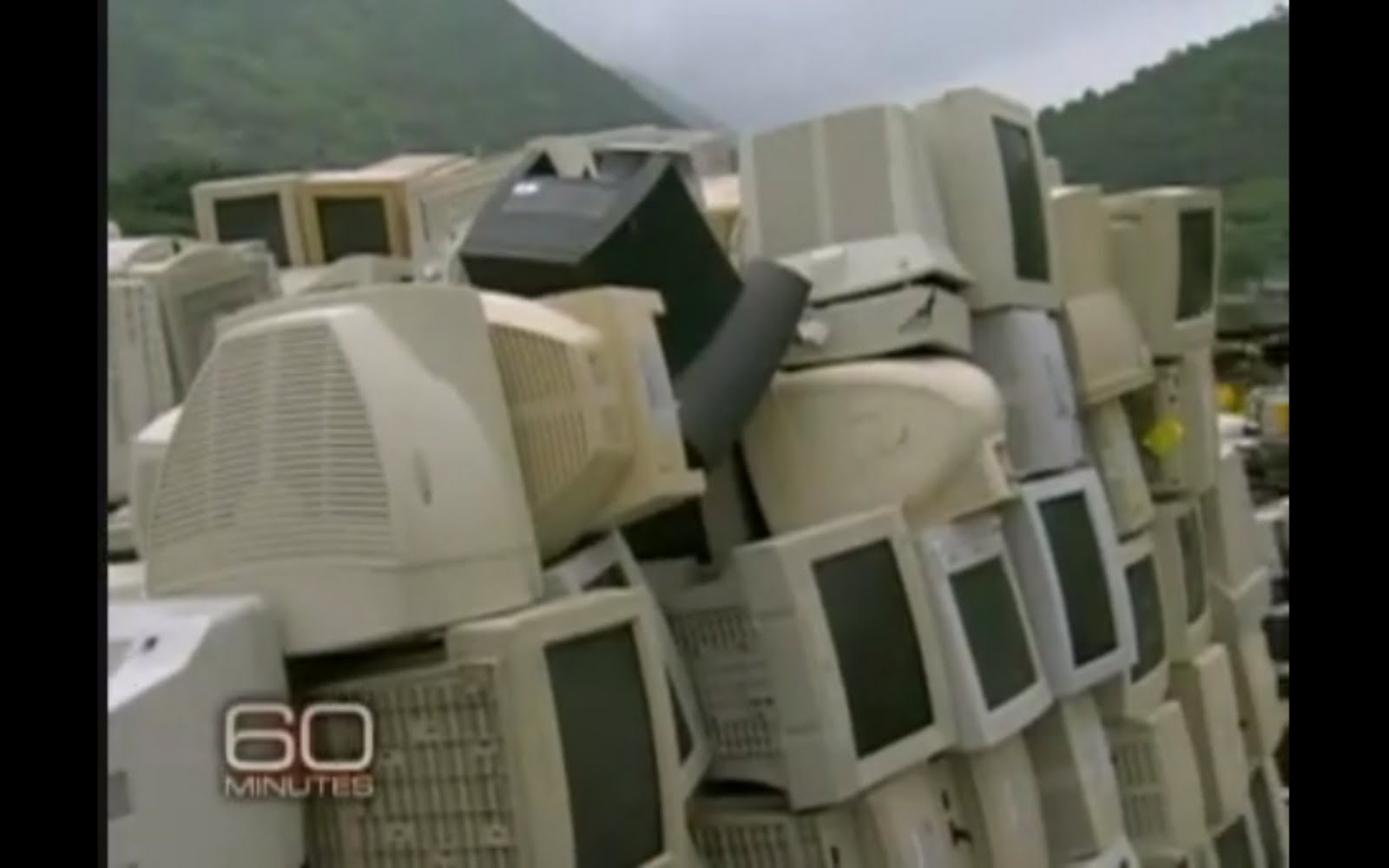
We demonstrated that with the "Big Secret Factories" and 60 Wasted Minutes blogs. The sea containers of CRT monitors headed for Asia were never, ever full of large CRT televisions, even though large CRT TVs had more copper and costed more to recycle. In fact, the purchase orders did even accept Sony Trinitron 17" desktop monitors or screen-burned desktop CRTs or pre-VGA.  When someone is paying you $10 each for something specific, and refusing to accept other similar CRTs even if you pay them, it probably has nothing to do with (ahem) "rice paddies".

Brad Collis [CC BY 2.0]

Breaking: Raid on Thailand's Largest Used Flat Monitor Reuse/Recycling Operation

Hopefully non-Facebook viewers can see the CarmaFi LIVE from Bright TV in Thailand, I am looking for other hosts (Youtube).


This is fascinating because it's very rare to have 60 minutes of live video of an Asian E-waste recycling and refurbishing facility.  I was aware that Thailand has become the largest buyer of desktop LCDs, and as my company expands its own USA flat TV recycling operation, I confess I was worried this would be our competition.

https://www.facebook.com/BrightTV20/videos/2143410722606242/

Wow. I see things that look really bad. I see things that look really good.  I see modern air separation equipment, and I see Asian women sorting things on the table, and men sorting things on the floor. Lots of green circuit boards. I don't see any smoke or acid (promised by BAN).  I see aluminum heat sinks being sorted for reuse. I see downdraft tables where chips are being pulled and sorted from circuit boards for reuse.  I see 50 tubs with 50 different grades of copper.

The dreaded aluminum heat sink sorting table

Basel Action Network has pronounced judgement, of course. And I have to reserve judgement - even BAN isn't wrong all of the time. But they (BAN) sure do make it hard to see people for what they can do, positively, when they introduce them as "primitives" and "polluters".  I am just watching this video for the first time, and hope to learn what these processes are.  My hunch is that it is environmentally safer than mining, refining, and new manufacturing.  But that could be my own bias.

Bias is not all bad. My pre-disposition is largely framed by my knowledge of the complete history of electronic displays, from blinking-lights to tab cards to VGA, SVGA, digital, etc. I learned most of this from a guy who arrived as a child in Tawain during Mao's takeover of PRC, who wore rice sacks as clothes, but went to engineering school in Taipei... where he developed the first-ever display of Chinese characters on a CRT electron gun screen.

Reversing Environmental Racism: Owning Your Stereotypes and Profiles

We are on the verge of turning the page on EuroCentric #CircularEconomy.  Several professionals in the European Union (and UK) have understood that Copernicus and Galileo were right, and the sustainable economy does not "revolve around" the OECD.

Five years after the IERC conference gave an Award to Jim Puckett of BAN for his "pioneering and breathless work to prevent the globalization" of used electronics management, the conference has invited Emmanuel Eric Nyalete - a native Ghanaian, Georgia Tech Coder, and former reuse department head at Good Point Recycling - to address the conference and tell them about Ghana's imports from the Tech Sector's point of view.


How did we get here?  And why did it take ten years (since publication of Greenpeace's report on Agbogbloshie) to get experts like Emmanuel, Grace Akese (of MUN), Jenna Burrell, Josh Lepawsky, and others to the podium?  And is it possible that Europe will actually contribute financially to welcome Africa's Tech Sector back to the table, and partner with them to make the world better for future generations of all races, languages, and creeds?

Identity Environmentalism: The Role of Racial Profiling (Otherization) In Start Up Recycling Tech

Three infamous "high tech" and "formalization" of the recycling sector investment schemes - MaSer, CLRR, and EWSI - have come to mind recently, thanks to an irritating article by Peter Holgate of Ronin8.  Like MaSer and EWSI, Ronin8's spokesperson (who writes about his own company) told us this week that the current system of export for reuse is all wrong, and only high technology can save us.  Perhaps his can.

But falsely impugning the repair sector is not the right way to find your investors.  He should just apologize immediately - for his own sake.  Here's why.


(Article by his truly)


The recycling start-ups that rely on impugning the status quo are historically wobbly at best.  The weaker the fundamentals, the more the start-up evangelist points at Guiyu and Agbogbloshie.  The more we are talking about "hundreds if not thousands" of African children Holgate "eyewitnessed" in Agbogbloshie, the less we are addressing questions yet to be solved with his technology. 

This describes a "tell" on new recycling technology. The more page ink their literature spills on "identity environmentalism" and racially profiling their competition, the less they seem to want to talk about their fundamentals.

It's a good sign when a startup honestly devotes time and space to fundamental questions like "what is the energy input into the magic printed circuit board powderization-to-sonic-washing technique?"

The simple answer will be "less than smelting". But the recovered metals at the process, don't they then have to be smelted? Isn't heating something once (smelter temp) better than heating it less once and then re-heating it to smelter temperature afterwards? If the evangelist burns half their presentation talking about "primitive Chinese" and "childish Africans", we have less time to pursue these important fundamentals, lifecycle analysis, carbon impact, etc.

Collateral Damage 2: Emerging Markets "Informal" Sector Takes sCrap from Shiny Consciences

Collateral Damage 2. Small scale (Informal) repair and recycling of home generated scrap

Several NGOs made "informal sector" a bad word.  Search "e-waste" and "informal" online, and you find that it's a polite word for a lot of pictures of brown people earning a living the way white boy scouts earn medals - by protecting the environment, adding value, and supporting a circular economy.

Infamous example?  How about the COVER photo from the 2015 UNEP Report.  What exactly do you see here?  A lot of people have been hypnotized to see something nefarious going on.  

This is what I saw happening when I visited Chinese buyers more than a decade ago.  It was informal. But it was also sustainable.  The environmental harm of producing chips from mining, refining, smelting, and manufacturing created small integrated circuits worth more than the gold they held in them.  If it was about the gold, the refiners in Japan and Belgium would have no competition here.  What I saw the Asians doing was memorizing each chip and sorting them, painstakingly, according to their reuse value.  


.

If my children were born in a poor rice paddy village, and they learned to do this, creating thousands of dollars in secondary market value, I'd be proud.  It would remind me of how my Ozark family went from subsistence farming, no running water, no electricity and no paved roads, to OECD status in two generations.  And no thank you, it wasn't from big city charities.

Fixers do "git er done" in every culture, and often become the founders of the world's most successful enterprises.  They see stuff for what it can do, not for what it cannot do.  They find treasure where others saw trash.

The "informal" market in Asia, Africa and South America isn't perfect, but if you want proof of racism look at the cover photo of the UNEP article and ask how something which reduces carbon, creates wealth, and is a less toxic process than European refining gets elevated to poster child.

Geography Baiting 5: How Can You Say No?

You are approached by an R2 Certified Chicago Recycler, who has decades of experience in copy machine refurbishing.  You have seen and photographed copy machine refurbishing, overseas, yourself.

The Chicago company has news about a state-of-the-art recycling facility in Hong Kong.  Hong Kong is wealthier, per capita, than the USA.  You know it's near the center of printer parts repurposing, and demand for recycled plastic - the plastic that you know is being lost in big shredding operation.

You check the downstream.  Hong Kong Environmental Department considers printers non-hazardous waste.  The facility identified in Hong Kong is also R2 certified.  You request verification of where the focus materials (circuit boards) go, and track them to Dowa and Umicore...

"You should have refused to ship there".

Really?  Why exactly, given the information above, should we have said "no"?


Deflection Option:  You can say you sent it to Chicago, not overseas.  But the fact is that you knew it could have gone overseas.  You just don't believe what BAN tells us about "primitives" in Hong Kong.

If you were to say no based on the Hong Kong facility, advertised as being state of the art, able to make the highest and best end use of the printers, how would you justify boycotting them?  How can you say no?  On what basis?

I could think of only one reason.  Bigotry. Racial profiling of Hong Kong as a place with "hundreds of junkyards" and "rice paddies".   Fear of the other.

Interpol's Sending Africa "Back to Eden"


INTERPOL targets foreign trade Between Europe, Africa (Lyons, France)

"Extremism in defense of liberty is no vice" - Senator Barry Goldwater
Back-wards To Eden.  
I am well aware that white people using the word "racist" are vulnerable to being ignored.  We just don't get it, my African friends and me.  40 businesses arrested, goods seized.  USA laws proposed to outlaw trade between us.   Study after study shows that the African entrepreneurs have no financial incentive to pay for the import of junk.   Studies show that the "e-waste dumps" filmed by do-gooders from IFIXIT to Pieter Hugo depict mainly African electronics, used by Africans for years, sometimes "traded in" for newer used models, sometimes collected from the streets by scrap dealers (the same as rag pickers and newspaper drives collected recyclables from the alleys of New York, Philadephia, or Boston).

Anyone who has lived in Africa knows that a family without formal education dreams of a handful of jobs for their kids.  Agriculture (e.g., Fair Trade Coffee picked "by hand"), the army, and working for a multinational like Exxon or Nike, those are considered the "good" jobs.

Poaching elephant tusks, gorilla hands, bushmeat hunting, sex tourism, drug smuggling, and using toxic mercury to delve the rivers for gold... those are the jobs I'd want my kids to avoid.

Of all these jobs, of all the resource-curse jobs, the globalist sweat shop jobs, the finite material mining, the pollution, of all these ways for Africans to earn income, David Higgins of Interpol in Lyons, France, has elevated one of them to criminality.

Reuse and repair of used electronics.   That's the bad one.

There's a new idea circulating in Europe for Africa's future.   "Back to Eden".

Here's the thing.

used outfit:  confiscate
I need TWO HANDS to count the number of my friends who have lost 30-60% of their life savings, who have been arrested, or whose goods have been labelled as "toxic", despite the fact that these people cherry pick like all hell, and all of them refuse 90% of the material that comes through our door.

Yet I have never, ever, been questioned on the 90% of junk, toxic, crap, obsolete material that I ship to white people.

So please someone, explain this "Eden" solution to me.  I'm listening.

Anti-Globalisation = Racial Profiling


"Terima kasih atas menggambarkan pekerjaan kami sebagai teknisi. Kami tidak pencemar kecuali seseorang mengirim kita polusi karena kita tidak memiliki pilihan lain pembeli kecuali e-limbah. Kami adalah pintar dan aku bisa memperbaiki hal-hal IT tidak ada masalah."
The quote above was posted from a commenter to the provocatively-titled blog post (one of the BEST series) "Are E-Waste Advocates Racist?"

My company has repeatedly been accused of being "an exporter" by companies which "don't export".  If you don't marry, how could you possibly be guilty of spouse abuse?  This is the logic established by companies like GARB, which posted to our Youtube video over the weekend
"GARB has the solution to the ewaste problem. The closed cycle principle.  A must see." 
As required, I came, I saw it.  Hammermills grinding and chopping computers into little pieces that are then hand sorted by labor on an assembly line.   It's "the solution" if you are looking for two things:  elimination of screwdriver labor, and elimination of reuse.  Yum yum.  I feel so much better about mining lead, silver, and tin for my new Tablet or 80 inch video display.  Having people pick up chopped pieces is SO much better than removing screws and sorting the same metals and parts, with some reuse.

The translation of the opening quote (auto-detected as Indonesian language)
Thank you for describing our work as a technician. We are not polluters pollution unlesssomeone sends us because we have no other choice except e-waste buyers. We are smartand I can fix things IT does not have a problem.

60 Minutes: Wasteland's Wasted "E-Waste" Leads


I've previously written a nerdy piece on the 8 minute CBS 60 Minutes Documentary, "The Wasteland".   There are certain very good things about it, and WR3A members like that it raises the bar on bad "ewaste" recycling practices.


The intent of this post is to point out where CBS did well, but also focus on where they made a major, major blunder.  One they have yet to correct.  I have inserted the "ommissions" and my commentary in pink.


In the opening scenes they show computer collection at a one day event in Denver.  They show people waiting in line and making an effort to do the right thing.


Then, they interview the USA recycler, who actually invokes BAN images of the awful export market, to make people feel good about using his company's services.  This appears to be a gross lack of transparency... the guy is apparently pushing the recyclers overseas under the bus while he himself is shipping containers full of junk.  [update:  He was later convicted of fraud, not of dumping]


My role? CBS News representatives Michael Rey and Nichole Young spent about an hour trying to do due diligence before the story ran.  They didn't disclose what they had filmed in China, but they were calling to make sure they did not accuse a good operation of bad practices.  On the evening of the broadcast, I got to text with the producer, Solly Granatstein.  I had to say that it looked to me like they caught an actual bad guy, and Solly said back "thanks, you've made my day".  [*But I had always told them, the CRT market in China was for reuse and refurbishment - those were never sent to Guiyu, and they would not find many CRTs in Guiyu China.]


CBS showed images of the inside of this guy's containers. He would appear to fully flunk the "CRT Glass Test" (something BAN and I worked on together back in the good times). 

The junk CRT is the most expensive and, as 60 Minutes identifies, the most regulated and toxic component - and they are clearly visible on the back of the guy's container.  


So far, the documentary is doing great, exposing shortcuts and hypocrisy [and apperently, "toxics along for the ride"].


However, I had specifically gone over the economics of shipping junk with CBS News.  Admittedly, the math (like I tried to do in the "Zoo" blog) can make eyes glaze over, and it's hard to see eyes a-glazing on a telephone interview.  But I explained that normally,  there needs to be something good on the container.  It cannot be all "toxics along for the ride".  And I specifically described the SKD factories [and shared photos from "Big Secret Factories"] as being the thing China had which was way more sophisticated than anything in the USA (except for Video Display Corp.)  I have shown CBS images from WR3A visits to Contract Manufacturing facilities, including factories in Guangdong.


It's difficult to spot, but there are some intact white monitors visible in the back of the container.  Possibly, the dude is piggy-backing the bald scrap CRTs on a good CRT shipment.  Hopefully he wasn't paying for the waste with printed circuit boards, a little bit of which can pay for a lot of TAR.


National Resources Defense Council (NRDC)'s Allen Hershkowitz is interviewed about the toxics which are potentially on board in electronics [in Brackets, he will later go on - outrageously - to denounce one of the best refurbishing factories in the world, in Indonesia, as a "primitive, wire burning" operation].  I would try to agree with NRDC, though it's also important to discuss the full lifecycle - to balance the toxics employed in mining processes (cyanide and arsenic), in production processes, in recycling processes (aqua regia), and entombed in the "ewaste" product itself (cadmium in1960s CRTs, mercury in batteries).


Then it's off to Hong Kong.  What I find interesting is that CBS reporter Scott Pelley is standing in one of the most sophisticated, large, high-tech, wired, and wealthy cities in the world, but makes no transition from the high tech monorail ride to the plinky-sounding bikes in Guiyu.  Here is where something starts to smell.  CBS is just miles away from Foxconn, a factory campus with 279 thousand employees, which produces iPhones and laptops and virtually everything the story is about.  


In Hong Kong, CBS's Pelley rides a helicopter with Jim Puckett of BAN, and they circle thousands of CRT computer monitors.  At this point, Jim Puckett knows, or should know,  that no CRTs go to Guiyu.  At this time, CBS has been informed about where these monitors go.


Do they not connect the dots?  Did BAN intentionally withhold information?


Hong Kong is actually a huge generator of CRT monitors in its own right, so whether these were even imported or not is a little questionable.  But Hong Kong has traditionally been a huge importer of CRT computer monitors, so that's not too important.


The question is, where are these monitors going?


It is NOT to GUIYU.  No dagnab way.


In an open letter to BAN, I have explicitly defended the "Big Secret Factories". Equating these with Guiyu is like equating Barack Obama or Colin Powell to a Chicago gang member. [Same race, different "profile".] They are much larger and more important than the little "wire burning" villages, create good jobs, and are actually better than any recycling operation which exists in the USA today.  Yes, they are owned by someone of a different nationality.  Get over it!!!  


Companies like Proview, BenQ, Foxconn, Wistron and Viewsonic were the manufacturers of CRT computer monitors, as contract assembly operations for IBM, HP, DELL, GATEWAY etc. throughout the 1990s.  I told CBS producers that I had personally visited huge CRT assembly plants in Guangdong province, and I used to ship there 5 years ago (that's how I got invited, I wanted to visit).   


THIS SLIDE SHOW SHOWS WHO BUYS THE MONITORS IN HONG KONG.  IT INCLUDES SLIDES FROM CHINA, INDONESIA, MALAYSIA AND THAILAND.  [It was shared with CBS 60 Minutes producers, and with Basel Action Network]


The old CRT monitor assembly factories survive today mainly by refurbishing older monitors.  I provided some of this film to CBS.  The original post, Big Secret Factories, appeared 18 months ago, and BAN has still not responded to the reminder letter posted last April.  These factories probably won't be doing CRT refurbishing many years longer, and are trying to get into LCDs contract manufacturing already, but there is lots of competition in northern China for that manufacturing base.  So for now, they do what they do well, but cheaply - they buy CRTs and rebuild them for resale into the "good enough" market.


The factories like those in these photos import tens of thousands of computer monitors per DAY and professionally refurbish them in the same factories that originally made the computer monitors for Dell, HP, IBM, Gateway, etc.


Returning to CBS 60 Minutes, Scott Pelley says, in the infamous quote, "We followed the trail..."


The trail of monitors in Hong Kong?  The trail of Executive Recycling's containers? The trail of WHAT? 

To Guiyu, a circuit board and wire burning village?   Gee, of the tens of thousands of monitors you circled in Hong Kong, about how many CRTs did you see in Guiyu, China?  Were they in that van up ahead (that's what's on screen when he says "followed the trail").


Here is where reporter Scott Pelley demonstrates he is on thin ice.  He picks up a plastic monitor stand, and says that obviously they are demanufacturing monitors here as well.  Jim Puckett is in the shot, but does not appear to correct him, or inform him about the CRT SKD factories we quarrel so vigorously over in the Basel Convention Annex IX  section B1110 debate.


Pelley's trip through Guiyu turns up a lot of sad and ugly stuff, and when I show the super sophisticated contract manufacturing factories, I have sometimes been accused of trying to "cover Guiyu up".  They are both there, just like you have all kinds of people doing all kinds of things in America.  I admit, I must be careful with whom I share a church pew.  So I'll be sure to show some of the ugly stuff here as well.


Melting solder off of boards to harvest (reuseable) chips and capacitors (these get shredded in the USA and go out with the fluff to a landfill... we need to invest in a compromise)... Not an acceptable electronics recycling practice.


Here, according to CBS, is a mideval process for precious metal recovery.   I presume it's aqua regia, which I've written about extensively.  WR3A has a zero tolerance for circuit board recycling in primitive operations.  


The Gold Test or Printed Circuit Board Test is a do not pass go, do not collect $200 issue for WR3A recycler memberships.  I've written about some of the things driving it - women's rights to own land.  I'll just leave here that it's not only polluting and dangerous and ugly, but its not even good recycling - they throw away a lot of the gold and silver and all of the precious rare earths like rhodium.  It's a disaster.  There were no PCs or computer circuit boards visible on the sea container from Colorado... but it would not take very many of them to pay for a lot of TAR, which is why WR3A agrees with BAN so very strongly on this practice.


The practice at left, harvesting capacitors and chips and ringy-dingies off of heated circuit boards, is again somewhat complex.  If you did a thorough lifecycle analysis, arguably fewer people are poisoned, and less poison is produced, by reusing electronics components in this method than shredding them in the USA and mining and refining and producing new ones from scratch.  And it's kind of sophisticated too, to see people trained to identify unique small parts for reuse. [New:  Independent reporter documents that pay in these jobs is good, typically higher than Ph.Ds earn. The job is to make it safe]


My position is that, seeing the children sorting them... it's heartbreaking. In the interests of transparency you have to be totally honest if this is what you are doing... and I'm not willing to defend it at this stage.  My company does not send boards to places like this (we use Colt or Sims, and send monitors for demanufacturing to audited markets as well).


Below is the photo that kind of says it all.
Scott Pelley stands in a garage sized tinker-toy operation, and describes it as the "tidy little facility", the example of high tech recycling which the Chinese officials "want us to see".   


Having been within a train stop of Shenzhen and Foxconn, which is already doing high end recycling for HP, he is either willing to stick a fabricated storyline to close the deal, or he may just be a dufus.  [In retrospect I regret saying this, it was an ad hominem attack expressed in frustration.  Many good people were misled by the Basel Action Network.  But, in my defense, I wrote this after trying to get responses for over a year, and AFTER one of the SKD factories was described as "primitive"].


Some of my friends vote for doofus, some offer pinhead, one says full-fledged retard. [Sorry, Scott et. al.  Just establishing that I've tried really hard to get you to back off of the Geeks of Color.] I think it is more of a used car salesman thing, based on his picking up the monitor base to cover his tracks on the "follow the trail" charade.  Sarah Westervelt of BAN told me that this segment of the "tidy facility" was said "tongue in cheek" and it was meant to show bad operations as well.  Watch the video.  Nothin' in Scott's cheek here.  This is the piece of film which tapes over half of the China story and all of the economics of the e-waste exporting story.  The Big Secret Factories remain a Big Secret, and Scott Pelley gets to claim he tried to cover both sides of the issue.  Maybe he's both a car salesman and a pinhead as well.   Sorry, I'm probably undermining my case here, but since 60 Minutes won't return any of my messages, I'm try chumming for the sharks at Fox News network.  Let him explain it to John Stossel or Geraldo or Bill O'Reilly.

What made the story worth Scott's willingness to "close one eye"?  My dad, Bill Ingenthron, is a retired journalism professor from the University of Arkansas, who got his degree from Columbia Missouri (top notch J school). He always said that the biggest risk to good journalism was the by-line, which despite the transparency it offers (reporters being accountable), is too tempting to journalists.  


If the reporter becomes "a part of the story", the facts and the ego become saturated and entwined.  Le Monde does not have bylines. 


CBS likes the story of its reporters risking their necks.


At the end, CBS's Scott Pelley nearly redeems himself, in a face to face with Jim Puckett.  


Scott Pelley explains that the Chinese he interviewed here did not want to lose their jobs, and that they need their jobs.  


Jim makes the remark I devoted a blog to in 2009, titled "We shouldn't have to make that Choice".  Jim says the Chinese should not have to choose between "poverty and pollution", in a double alliteration that Pelley provides as punctuation.

The jobs we are fighting over are not the jobs in Guiyu.  They are the jobs at the monitor manufacturing factories, which make "ewaste" recycling affordable for Americans, and make display devices affordable for the developing world, which is starving for internet and cannot afford a $100 LCD monitor.  

Did 60 Minutes have time to show the good side of the refurbishing business?   Did they have time to show the factories where the monitors really go?  60 Minutes had time to film the clownish "tidy" facility in that spot, and they had time to show TWICE the reporter's heroin - the cameraman being attacked for exposing a story.  As a result of this story, and as a result of BAN's silence, e-waste recycling is more exponsive in America, there is more mining done in Africa and Asia, and Egyptian medical schools cannot afford monitors for their students.

A crime has indeed been committed.  But in order to expose the environmental crime, CBS and BAN have allowed racial slander and stereotyping to stand, and it has been almost two years without a correction.  Did Pelley really care about the jobs and the poverty?

The danger of letting the reporter get "sexy", as Pelley does in the "take our cameras away" segment provided in two places in the documentary, is that they miss a small turn in the story and don't want to return and get it right at the risk of losing their Polk Award.


How do we steer this thing back to Fair Trade Recycling practices?  How can we get electronics to the people who can do it best, adding the highest value through reuse and repair, creating sustainable and green jobs in countries that need them?  How can we eliminate "toxics along for the ride", without throwing in the towel to mining extraction?   I don't want a bouquet of I-told-you-sos.  I want good people at NRDC and good people at BAN to sit down again with John Lingelbach of R2 and EPA, and the United Nations.  Get Tom Friedman, who would understand what I've been explaining in an instant... he's pals with Kennedy at NRDC.  Get Joshua Mailman, funder of BAN, and the OEMs together.  Asia has outgrown CRTs anyway, we can move the entire SKD factory to Mexico if BAN will support that.

[ed. For more details on the ignored market, see 2011 Motherboard.tv Article].


I have been making these entreaties since 2001.  I only get any attention by telling the truth publicly.  I can't seem to get financing to do Fair Trade Recycling the way I want to, despite support from EPA and Investors Circle and Forbes, NPR and PBS, and a come-here-gettaway tease from EPA Border2012.  I am trying to hold out for a financing partner who "gets it", who won't put a gag in and sign a no-export pledge, and who won't play the high profitability game of Toxics Along for the Ride.  [Patient Capital is hanging out with the Tooth Fairy and Santa Claus]


This is an appeal for help.  As John Adams sang in 1776, "Is anybody there?  Does anybody care?"  As John Adams sings, I've crossed the Rubicon.

Enhanced by Zemanta