Showing posts with label slavery. Show all posts

War and Peace and the Global South

 This early morning blog is inspired by a couple of Fareed Zakaria analogies posted on X.

Spoiler: It's the Females and Youths, Stupid.

This one with General David Petraeus explains why Israel's Generals are splitting with Netanyahu.  If you don't know where you are going, any road will take you there. Fareed and Petraeus describe America's success in uniting Sunnis and Shia Muslims in Iraq to counter the tribalist ISIS fear and threat-based war on "western civilization" / imposed democracy.

What America represents, at its best, is an alternative to tribalism. Melting iron and zinc together makes a stronger metal (steel) than either iron or zinc. The America "Melting Pot" analogy of the strength of immigration may well be over-plugged and can certainly be criticized for historical injustices, but it's not "wrong". The resentments of European tribes lasted far longer in Europe than their immigrants to the USA posted "Help Wanted: No Irish Need Apply". 

As this 2015 NYT article explains, in a review of classified ads from 1855 (ten years before the US Civil War, and during Bleeding Kansas), the employment discrimination was not just ethnic, but was also religious.  "Catholic" was interchangeable with "Irish" in job discrimination.  

Where the "Global South" has succeeded, an element of voluntary melting pot has been necessary, and where the north has waged economy-ruining wars - like Russia v. Ukraine - involuntary efforts to end tribes has been bad for everybody.

What brings hope is a future generation of 15 to 25 year olds who can envision post-tribal, post-lingual, post-religious, post-melanin (skin pigmentation) melting. And I am optimistic that the number of interracial, interreligious, intersectual, interlinguist, intertribal marriages are increasing the number of future 25 year olds able to see the potential wealth in places like Brazil and Nigeria.


Preceding "Fair Trade", For Profit Efforts to Correct Injustice

While spending some Saturday time researching on Ancestry.com today, I became really curious about the Freelands (my great-great grandparents, and my middle name) who came to Kansas with New England roots, in the mid 1800s.

Kansas, in the mid-1800s, was "Bleeding Kansas".

Basically the Mason-Dixon line of slavery was broken by democratic vote in "slave-owning" Missouri, which was above the line, breaking the precedent.  Kansas-Nebraska Act followed, and Kansas was to decide slavery based on the popular vote.


Collateral Damage 3: Sensationalism vs. Science

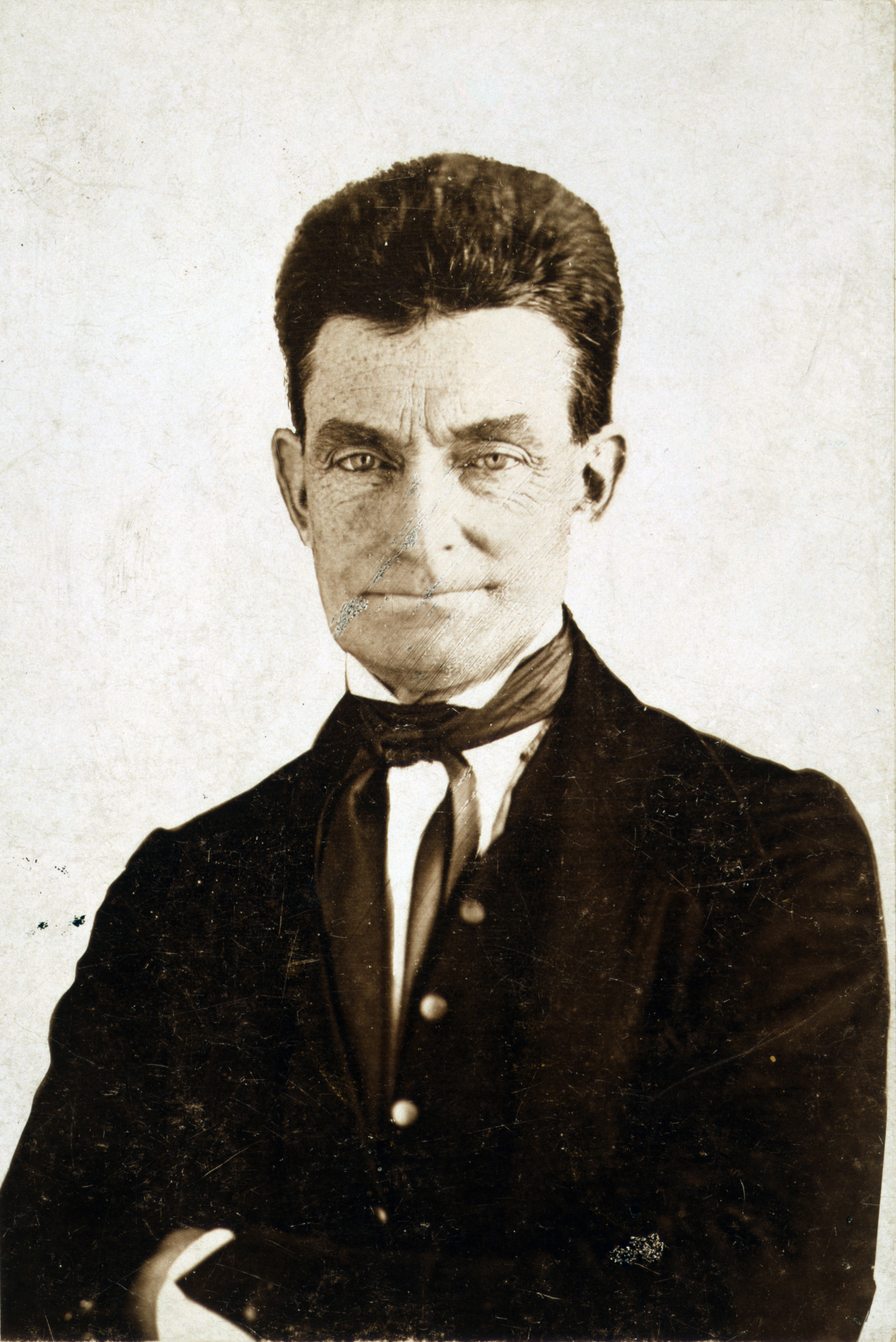
John Brown by Levin Handy, 1890-1910.jpgIn a recent correspondence, the Executive Director of the Seattle NGO made a comment about our long history trying to work with or around each other on the subject of "e-waste" regulation.  He summed it up by saying "We have a disagreement about international law and policy".

Fundamentally, perhaps not really.  We agree on what the Basel Convention says about trade between OECD and non-OECD countries.  We agree on what the Basel Ban AMENDMENT says, which would change the rules in the Convention (which covered disposal) to cover recycling and repair.  We agree the second, the Amendment, has not been ratified.  We agree that his organization has been successful in getting several European countries to substantially adapt rules on scrap recycling, repair and reuse to match the language in the Basel Ban Amendment.  And we agree that we strongly disagree whether that is the right direction for "international law and policy".

Although I'm certainly more comfortable around international law discussions than your average junkyard recycler, I would not attribute the disagreement, at least primarily, to interpretation of international treaties.  Here's my problem.

1) OECD is a bizarre basis for determination of "waste crime".   The Basel Convention uses "OECD" to make a binary distinction, drawing a line between Brazil (non-OECD) and Mexico (OECD) that "waste" shall  not cross.  The line is based on a bizarre "club membership" standard. It is not based on any science, whatsoever.  Rather, its entire basis is a rather quaint 1970's "third world" idea correlation.  Places like Singapore and Hong Kong, have higher average per capita incomes than the USA. They are not OECD, but are clearly in the business of electronics manufacture, warranty returns, refurbishment and recycling.  "OECD-Non-OECD" makes as much sense as dividing people by race, by religion, or as "cowboys and indians".

2) Sensationalism and generalizations about e-waste appeal to implicit racism.  The stories are easy to write, and create wealth for the Seattle NGO, jobs for EU and USA regulators, and trade barrier leverage for "Big Shred" recyclers.  Sensationalism makes cheap, plentiful, disposable articles, creating the collateral damage of Joe Benson, Net Peripheral, and Las Chicas Bravas.

It's really the second - the sensationalism ("poverty porn") of Asian, African, and Latino reuse markets - which drives emotions.  Emotionalizations are attractive to journalists this time of year.  I didn't introduce those to the debate.  At the beginning, my blogs and correspondence with Basel Action Network were an attempt to de-emotionalize the subject of trade, to reduce the use of photos of kids at dumps, and to reduce the prosecution and impugnment of refurbishing factories, even (or especially) those in emerging markets.

"Bad Science in the Headlines" has been a subject of research for some time, and there is nothing in e-Waste coverage to distinguish it.   Sensationalism in journalism is a human health risk.  Racially profiling geeks of color is not only morally toxic, it can produce actual risks to human health.

But if BAN brought emotion-guns to the policy fight, I can't fight with a scalpel.  And so we had little recourse but to focus on the accidental racism, the collateral damage, and false stereotypes which the sensational "e-waste" journalism brought down upon the Geeks of Color.