Showing posts with label OECD. Show all posts

Fishing for Swordfish at E-Waste World: The Negro Leagues of Electronics Recycling

The Curse of the Bambino and the Basel Convention

The Blessing of Big Papi: Why Basel Needs Jackie Robinson

What Jim Puckett Can Learn from the Red Sox
(Three alternate titles)

The 2026 E-Waste World Conference in Frankfurt, Germany, had free attendance. That was a major draw for members of the World Reuse, Repair and Recycling Association (WR3A), which had at least 4 attendees.  Of course, we originally had 3 attendees coming to rival E-Waste conference ICM in Valencia, Spain in January 2026.  I even bought my plane ticket to that much older conference, because it had initially accepted my proposal - Let Jim Puckett of Basel Action Network debate live on stage with two African Tech Sector geeks...

In this sports analogy blog, as we discuss Major League Baseball's integration of the "Negro League", and WSJ points out 25% of the USA FIFA Soccer Team are immigrants, we take a look at when the old oveweight player has to give up his seat on the team bench. Jim Puckett's opening statement, in his curious role as "Expert on E-Waste in Africa", was to state on the record that "First and foremost, Africa is the same as it was 20 years ago. Nothing has changed."

🤢🤐🙄

So, ICM initially invited Jim to speak alongside just one of those Geeks, Nana Yaw Konodu, a German who came from Ghana about 40 years ago, but who 5 years ago opened a remanufacturing factory in Accra, Ghana. (We introduced him to Recycling International editors at the E-Waste World Conference in 2025, and he made their list of Top 100 important recyclers that year). But Nana got disinvited on very short notice....

Why is Jim's opening statement so ... weird?  Twenty years ago, he and I were quoted in Charles Schmidt's NIH article on Africa's importation of used electronics, and I was already wrong (way behind) then - but was farther ahead than Jim was. Charles Schmidt needed to interview an African who is there right now, not parse between Jim who's 20 years behind, and me who's at least ten behind.

Here's the thing: For the Basel Convention to remain in force, OECD has to be kept in a separate league from Non-OECD.  About 35% of the World's industrial economies have to be kept separate from the other 65%.  It's about protecting the job of the overweight aging baseball or football player, already sitting on the bench. if Jackie Robinson, Bob Gibson, Willie Mays, and Lou Brock are allowed to play. It's white ownership of white teams arguing about how to integrate the two leagues.

So it was "Mysteriously" that Nana Yaw Konadu was "de-invited" to ICM conference at the last possible minute (I have preserved emails). Afterwards, Nana and I canceled our trips rather than pay a thousand plus Euros to sit in the audience and listen to "Expert" Jim Puckett tell us about Africa.  Afterwards, with a little maneuvering, E-Waste World Conference in Frankfurt made hay out of that, jumping on the invitation to invite Jim Puckett, Nana Yaw Konadu and Emmanuel Nyaletey (BridgeSolarPower.com, who helped WR3A with the 2015 tours of Agbogbloshie and the 2015 Clean Hands Teaser - Hurricane Benson interview minidocumentary).

Sorry for "weaving" here. But there's a point. Conferences deciding on speakers, League owners deciding on players, International Conventions deciding upon leagues... People are setting rules, and setting them out of sight of the players and the spectators enjoying the game. ICM, E-Waste World, SERI, E-Stewards, and Basel Convention are deciding who can speak against each other, who can play against each other, and who can trade between each other. But none of the "rules" are obvious to anyone outside of their smoke-filled rooms.

This morning's Wall Street Journal Opinion Page (my comment spun into this post) is titled "America's Immigrant Soccer Team", and centers on how much of its success owes to 25% of the roster being "birthright" citizens. It's about rules set for who can play on teams based on their "nationalities", and how nationality rules are being decided by courts or Executive Orders. Like ICM and E-Waste World choosing "African Expert" Speakers, or MLB deciding who can play in each league, a "conference of parties" at Basel Secretariat are defering to OECD how to divide economies, and entire conferences are planned based on those rather random decisions.

The comment section I waded into divides MAGA Trump Support commenters from Free Market business owners (who benefit from talent in any labor situation). And as my comment calls it, the line is over what should be "legal" immigration.  Calling balls and strikes, where is that line? And how does it compare to these lines we've drawn in the past?

  • Immigration and talent in sports.
  • Baseball integration and the Negro Leagues.
  • OECD/non-OECD segregation in the Basel Convention debate.
  • 360 Degree Racism: The Privileged Wage Collateral Damage on Emerging "E-Waste" Markets


    Do rich people have more leverage and 'unfair' advantage in a marketplace?  Absolutely.  No one denies that in a used car transaction that the wealthy owner of the car doesn't have the same need to make the sale, and the poor person - who needs an affordable car to get to work - has more to lose if the sale doesn't happen.  The wealthy have the power and privilege.

    That said, the stupidest and most ignorant conclusion is that poor people should be put in a different marketplace than rich people.  That they shouldn't trade together.  Years ago, an NGO leader told me that poor people should repair poor peoples stuff, and rich people should repair rich peoples stuff... that identity should define the legality of the transactions.

    It is a kind of stupid that could only occur in a marketplace contaminated by "identity politics".  Instead of talking about the transaction, and what's in the best interest of the free market participants, we are defining them as representatives of social groups.  In a market where some collective guilt or social liability has been whipped into a froth such that the rich person feels liability or exposure to the idea that they have exploited the poor person in a transaction, and therefore choose to shred the car rather than allow anyone to say they sold it in a transaction, to a poor person, in a marketplace where they held the upper hand.

    #360DegreeRacism is the spawn of identity politics.


    Used Chevy in Poorest Rural Mexico

    How To Pay For Africa E-Waste Cleanup?

    15 years later, let's just ask what he imports
    After 2 weeks back in Ghana, the #1 Finding of our research still stands.  E-Waste NGOs made up fictitious numbers about the percentage of imports to Africa that are "waste" and the percentage of waste in places like Agbogbloshie that come from faulty used good imports ("Exaggerations have been made" said Jim P. on our Salzburg panel).  Photojournalists flew to Accra (Agbogbloshie is about 20 minutes from the airport, 9 minutes from Accra's finest hotel), and took close-up photos of Africans in exotic poses.  And EU policymakers got project funding to "save" Africans from e-waste dumping.

    Neither the NGOs, nor the journalists, nor the EU Policy funders checked out existing data on Accra stormwater runoff (the water quality at the Odaw Korle lagoon was hideous in the 1970s), the number of households with televisions in Accra 15 years ago, or the number of people employed in the scrap industry generally as compared to the number seen in Old Fadama slum of Accra. They didn't even find it on mapquest, which would show it's at the center of Accra, not a remote fishing village on the outskirts (as should have been suggested by the cab ride from the hotel). They would have found the phrase "Sodom and Gomorrah" appears in a 2002 AMA publication calling for razing the slum to build shopping malls and parking lots.

    There was no basic secondary research.  No control group.  No null hypothesis.

    What Does The Term "Third World" Mean Today?


    My suggestion is that we just stop using the term "Third World" and "Lesser Developed Country" altogether.

    There are certainly places with incredible poverty.   Like, say, the poverty I knew about in the Ozarks as a kid.  Not that I suffered it, or even that many people I know suffered it.  But it was in our rear view mirror, through our parents and grandparents, who lived in the Ozarks during the Depression and before electricity, running water, and hospitals were commonplace.

    I've posted a few times about my mom's father, Clarence E. Fisher, pictured above. This was a photo I took as a teenager.  He had a tractor, but had gone back to his mule ("Jenny") for old times sake and found that he really liked ploughing that way.  He was a subsistence farmer and an excellent carpenter and painter.   And someone who convinced me it was going to be really important to me the rest of my life to know how everything worked, and how to fix stuff.

    Collateral Damage 3: Sensationalism vs. Science

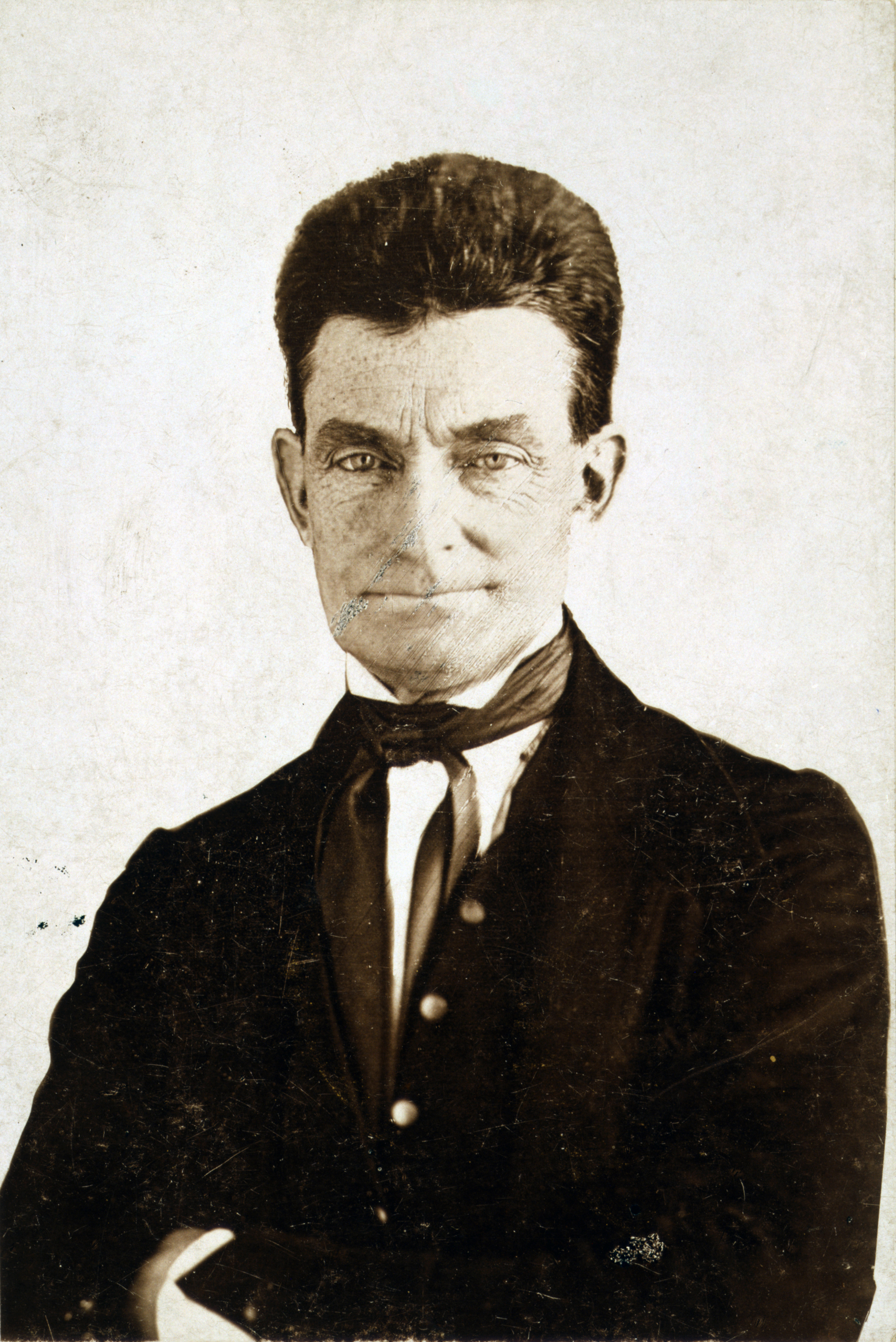
    John Brown by Levin Handy, 1890-1910.jpgIn a recent correspondence, the Executive Director of the Seattle NGO made a comment about our long history trying to work with or around each other on the subject of "e-waste" regulation.  He summed it up by saying "We have a disagreement about international law and policy".

    Fundamentally, perhaps not really.  We agree on what the Basel Convention says about trade between OECD and non-OECD countries.  We agree on what the Basel Ban AMENDMENT says, which would change the rules in the Convention (which covered disposal) to cover recycling and repair.  We agree the second, the Amendment, has not been ratified.  We agree that his organization has been successful in getting several European countries to substantially adapt rules on scrap recycling, repair and reuse to match the language in the Basel Ban Amendment.  And we agree that we strongly disagree whether that is the right direction for "international law and policy".

    Although I'm certainly more comfortable around international law discussions than your average junkyard recycler, I would not attribute the disagreement, at least primarily, to interpretation of international treaties.  Here's my problem.

    1) OECD is a bizarre basis for determination of "waste crime".   The Basel Convention uses "OECD" to make a binary distinction, drawing a line between Brazil (non-OECD) and Mexico (OECD) that "waste" shall  not cross.  The line is based on a bizarre "club membership" standard. It is not based on any science, whatsoever.  Rather, its entire basis is a rather quaint 1970's "third world" idea correlation.  Places like Singapore and Hong Kong, have higher average per capita incomes than the USA. They are not OECD, but are clearly in the business of electronics manufacture, warranty returns, refurbishment and recycling.  "OECD-Non-OECD" makes as much sense as dividing people by race, by religion, or as "cowboys and indians".

    2) Sensationalism and generalizations about e-waste appeal to implicit racism.  The stories are easy to write, and create wealth for the Seattle NGO, jobs for EU and USA regulators, and trade barrier leverage for "Big Shred" recyclers.  Sensationalism makes cheap, plentiful, disposable articles, creating the collateral damage of Joe Benson, Net Peripheral, and Las Chicas Bravas.

    It's really the second - the sensationalism ("poverty porn") of Asian, African, and Latino reuse markets - which drives emotions.  Emotionalizations are attractive to journalists this time of year.  I didn't introduce those to the debate.  At the beginning, my blogs and correspondence with Basel Action Network were an attempt to de-emotionalize the subject of trade, to reduce the use of photos of kids at dumps, and to reduce the prosecution and impugnment of refurbishing factories, even (or especially) those in emerging markets.

    "Bad Science in the Headlines" has been a subject of research for some time, and there is nothing in e-Waste coverage to distinguish it.   Sensationalism in journalism is a human health risk.  Racially profiling geeks of color is not only morally toxic, it can produce actual risks to human health.

    But if BAN brought emotion-guns to the policy fight, I can't fight with a scalpel.  And so we had little recourse but to focus on the accidental racism, the collateral damage, and false stereotypes which the sensational "e-waste" journalism brought down upon the Geeks of Color.


    UK's African #eWaste Witch Hunt 5: Environmental Munchausen Syndrome?

    While travelling to visit family members for Christmas holiday, I listened to an NPR story on "Munchausen Syndrome by Internet", which interviewed bloggist Taryn Harper, keeper of the #WarriorEliHoax blog.

    Munchausen Syndrome is basically an addiction to getting attention by malingering or outright faking danger or illness.  It has reached the popular media in cases of "Munchausen by Proxy" - cases where a parent (usually a mom) endangers or imperils her children to "earn" sympathy and attention. The NPR study was about "Munchausen by Internet".  In MbI, sympathy whores (to coin an ugly phrase) create multiple fake online personas and histories which pose heartbreaking problems for public "Hashtag" sympathy.  The hashtag is the attention getting device on twitter, the heart wrenching or guilt-inducing story is the honeypot.

    Per NHS.UK:
    "Munchausen's syndrome is a psychological and behavioural condition where someone pretends to be ill or induces symptoms of illness in themselves. It is also sometimes known as factitious disorder.  People with the condition intentionally produce or pretend to have physical or psychological symptoms of illness.  Their main intention is to assume the "sick role" to have people care for them and be the centre of attention."
    The Africans with roles in the #ewastehoax of Agbogbloshie aren't throwing the pity party.  But when they find themselves profiled by Western media, or as an NGO's "A Place Called Away," they have something... attention.  Ozark natives invested in New York City's fascination with poverty through Barney Google, Snuffy Smith, Little Abner, and Hollywood's fixation on Beverley Hillbillies and Green Acres;  So too, Africans can't help but try to turn the sour story into lemonade.

    Injury Box Blog: Pics Parasites Poverty

    Last week I "kinda severely" injured my left hamstring in two winter-home-weatherization related incidents.  What has been frustrating has been to be home-bound but unable to sit still, upright in a chair for long.  Makes for halting, sporadic blogging.

    Last weekend's post "Missing Poverty: Poverty Comedy" was messy, but I'm kind of excited by something that turned up from inside it.   The parallels between 1960s Ozarks and 2010s West Africa is not exactly uncanny, we've even been there before.  But the Hans Rosling videos I've been engrossed by this winter helped me generalize my subjective insights.


    In 2009, South Korea became the first former recipient of OECD economic assistance to join the assistance giving committee.   South Korea was admitted to the OECD in 1996, 25 years after OECD was defined.  The 1961 original OECD membership list was whites - only (not even Japan was considered "developed").  Kids in college today are getting a message about "developing world" from people who considered South Korea a charity case, and they are getting the message on Samsung handheld devices (which they use to shop for Hyundais and Subarus in another tab).

    You can track affluence and progress through lifecycle of appliances.  Koreans bought used products from affluent 1970s Japan.  Selling a first used car to a teenager is not necessarily "exploiting" the teenager.  Selling a starter home to a young family is not making them poor.  The guilt-by-association with poverty dogs the used goods market, and photographic snapshots of poverty should not become a modern soul snatching juju.

    It's a fallacy that invokes instincts of nurture and instincts of aversion, and it sways crowds of people who self identify as "Agents of Conscience".   The key is to understand spiritual materialism (the desire to be a good soul) and history of development.  Rosling has shown how the majority of humans, like my Ozark cousins, have emerged from poverty within generational memory.  We need to explain to the Royals that fixing and recycling stuff isn't suffering.

    Many places have been wealthy for so many generations that they do not have any institutional recollection of the end of poverty.  But for those of us who can remember, boycotting the poor is not how affluence went down.

    India Rag Recycling: Not so Shoddy

    Taking a break from Africa trip, I reminded myself to USE TWITTER for its intended purpose.

    Twitter isn't for writing, and reading every person you follow is about as edifying as reading a library card catalog. Booleans and keyword searches have long replaced the Dewey Decimal System.

    Twitter is about the SEARCH box.   So for a break, I typed in "Recycling India".

    BAM. BINGO.   A textile recycling city.  Tip of the hat to Tweeter Tim Mitchell of the UK.

    http://www.timmitchell.co.uk/index.php?/projects/clothing-recycled/

    APOLOGIES - I must redirect you to this site, still strongly recommended.
    In place of the India photos I originally posted, I have put in several 60 year old Wikimedia photos of rag-pickers from Western cities.  Do visit Tim Mitchell.

    I completely understand that an artist saying "yes" to one person can lose control of the images as they are found by other bloggers.   Fortunately, through Wikimedia Commons, I have managed to find practically the same photos (in black and white) as the activity shown in India, mostly taken in Britain in the 1940s.

    Wikimedia commons - "Old rags into new cloth Britain"


    At the thrift shop I managed for two years, we sold a lot of bales of used clothing, and found the market dominated by Indians, Pakistanis, and Africans.   My long lost chum Yadji told me about his family making treks to Lagos to buy bales of used clothing to bring back to his Cameroon village of Yenwa.

    The Tim Mitchell link shows 28 photos taken at an Indian rag and clothing trade village, which I say defies the labels of "formal" and "informal" sector, terms made up by Western academics and then applied by the Chinese Communist Party to crack down on Taiwanese competitors with CCP owned factories.


    The mall photo or Mitchell's (#10) reminds me of the Cairo used Technology Malls.   The 28 photos show several links to different niches and segments.  One is actually the business of buying used India Saris, washing them up, and exporting them to the "hippy markets" in Western countries.

    Rich and Poor, Effort and Inequality

    John Oliver's new show is doing well.


    Robin Ingenthron I agree. But I also observe that many of the poorest are descending down - with no one else to blame - just as hard as the 1% is striving up. I know this by the number of poor who excel (moderately gaining, or treading water). Grouping poor A to poor B without acknowledging effort (blaming the rich) is an obvious fallacy. If richest 1% C in a decade balloons in weath, leaving Poor A and Poor B in relative dust, that should not negate the essential difference in effort between poor A and B. What distinguishes Poor B from Poor A (effort, desire, ingenuity) also distinguishes Rich Persons C and D (the rich eroding and falling, vs. gaining).1 min · Like

    First hand experience:  Some poor people truly suck.  Some poor people, especially through the lens of our underdog-nurture evolution, are heroic.  In the same way poor are numerous, they are diverse... much more so than the 1%.  My kids in the Cameroon classroom were all equally negated by John Oilver's assessment, but they were not equal.  Some were smarter and better and harder working students, and measuring them all next to Donald Trump unfairly negates their merit.

    My concern with rich people attacking rich people (BAN vs. OECD, John Oliver vs. USA's 1%) is that they attribute more attention to themselves than they do to the relative merits (efforts, study, ingenuity) which the working class all enjoy or suffer.  Oops.

    Once Upon a Time in the North: Certification = Barrier to Entry?

    Quicksilver X Man Duct Tape, for all your needs
    After two decades of study of the recycling and reuse of electronics, it is increasingly clear that "barrier to entry" and monopolization of services is the biggest economic driver.

    The USA Supreme Court is considering an important case this summer, to consider whether licensing rules are truly established to reduce risks, or whether (nudge nudge) they are simply anticompetitive.

    GPS' Fareed Zakaria program spotlighted the challenge to Federal Trade Commission's successful defense of public mall "teeth whitening" services, which were banned as "unlicensed dentistry" by NC's State Board of Dental Examiners.   The Board of DE's, staffed completely by dentists, ruled that you have to have a dentist license to practice teeth whitening.

    Why we should care about teeth whitening - Zakaria Blog

    2013 Good Point Recycling End Markets: 6 Percent Reuse

    Good Point Recycling of Middlebury Vermont is now preparing our 1st Quarter Report and Annual 2013 Report for the Vermont Agency of Natural Resources.   Having just had these numbers audited under our R2 Solutions annual surveillance in March, we have more than enough data to demonstrate what kind of a company we are.


    The most obvious change over the past 4 years was our decision to bring demanufacturing jobs in house, doing the television and monitor teardown here in Addison County.  Our payroll hit $26,000 per week, much of it in time-and-a-half (OT), and we hired more experienced people to do it.  So Red "CRT whole unit outsource" went down, and blue "Bare CRT tube glass", and associated plastic, went way up.

    Something that surprises people is how little we export, and the reasons it has declined.  Good Point never exported more than 30% of the material, I think the peak (28%) was in during the years (2006-8) when we were buying and selling monitors from other companies, for refurbishing in Malaysia and redistribution in Egypt.

    Why the decline?  Was it stricter EPA enforcement?  
    Responsible Recyclers standards?  
    Pressure from Basel Action Network?   
    Strict Vermont E-Cycles Program standards?

    No, none of these explains the fall from 28% export to 6%.  It's the marketplace.  And there's nothing ghoulish, witches brewy, noxious, or radioactive going on.  There's no Batman villian in the "e-waste" trade.  When the reuse market finds another source, no one wants to import it any more. It's scrap.  Metal and Plastic.  Recycling.  Boring.  Laundrymat scale boring.


    Boycotting the Third World? My Thought Crime About That

    This weekend, USA Today and Burlington Free Press are were supposedly running two stories about my company, and about the Fair Trade Recycling summit.  Both stories were to feature interviews and quotes from Jim Puckett, who might say that my company is doing something wrong, even illegal.

    A normal delay?  Did my blog signal someone to say something to someone?  What are the ethics (and smarts) of pre-defending yourself in a blog for a story yet to be published?  


    I don't ship to these places any more.  I wish I could.

    My company only exported 8 percent of goods intact last year.  That's 92 percent domestic USA processing.  And most of the 8 percent intact units went to Mexico, an OECD country, where the manual disassembly is a decent job compared to local mining jobs.   What we are actually doing that bothers people is defending people overseas, representing them to be not evil.  "Apologists" was Puckett's word.  I haven't seen the article yet, but I've seen what Basel Action Network has said about me and my company in print before, and heard him say I was promoting illegal acts to my face last week.

    That's not an attack on what Good Point Recycling does.  That's an attack on our belief in other people.  Most of the intact units exported come from other recyclers out of state, material I buy tested working (including some e-stewards) and broker.  We do 2 shipments a year to Africa, and I brag about them, but they are less than a half of a percent of our 13 million pounds.

    Still, I'm awake at 4 am wondering what the effect of a BAN accusation will be on my company and its employees.   Jim Puckett's quote is that I'm doing something illegal because the Basel Convention is going (in the future) to be amended to make export for repair or recycling illegal in the future.  His claim is false on its face value.  But when it runs in a headline, my company and employees will certainly be injured and be held to more scrutiny.

    My belief that something should remain legal in the present doesn't mean I do it now, or will do it if it's illegal in the future.   If his quote runs, where is the line being drawn?   I don't ship to the factories in the photos above because Vermont doesn't want me to.  But it sucks, they are good companies, and the glass is just winding up in glutted piles.  But that's my OPINION, my belief.    Jim has said it's illegal.  My opinion is a transboundary movement.

    Lines On Maps: Where the OECD was Hatched

    Simple, Jim P. of BAN told me.   Follow international law.   He said he agreed with 95% of what Oscar A. Orta's presentation on "Fair Trade Recycling" said.  He applauds the Chicas Bravas.   But he said the Basel Convention Ban Amendment is simple.

    That's a mouthful.   The Declaration of Independence Declaration of Independence Amendment (proposed, not passed) is what to follow.   Not the actual Basel Convention, Annex IX, B1110, which allows export for metal recycling and export for repair and reuse, which says nothing about "functional".

    Definition of 'Organization for Economic Cooperation and Development - OECD'

    A group of 30 member countries that discuss and develop economic and social policy. OECD countries are democratic countries that support free market economies. [Investopedia.com]
    See the video at the bottom for the 1000 years history in Europe that culminated in the OECD.


    Headline Says where E-Waste Is Born: No USA Birth Certificate

    Back in 2010, before the blog's "Bullyboys" Series, before the "Firehose" Series, and before "Environmental Malpractice", or the E-Stork blogs, The UN released a report.  It said that if all the rich nations completely stop all (hypothetical, mythological, or actual) #ewaste exports from the OECD to developing nations - stopped 100% - tomorrow - you'd do nothing to stop the posterchild photos.

    UNICEF poster circa 1985
    UNICEF photographers share the $$
    India has never been a significant destination for E-Waste, its ports are very tightly controlled.   The images of Techdogs and Nerddogs (to differentiate from "slumdogs", for those of you who don't yet get it) fixing stuff in Dharvi and Mumbai slums has nothing, nothing to do with Basel Convention or Basel Ban Amendment or CAER's export ban.

    In fact, if you erased every international border crossing tomorrow, poor people would still be trying to get stuff from rich people in their own countries, from people on the other side of the tracks.  Rich people buy new stuff and poor people fix good-enough-for-them stuff.  It's like that in the USA used car and thrift shop market... jeez its so obvious I want to shoot myself for writing it again.

    But at the E-Scrap Conference in Orlando, I still met lots and lots of people who think the Green-Thompson E-Waste Bill is a solution to primitive wire burning.  Big Shred will save the brown children.  And Lagos, with 6.9M households with television as of 2007, will... um... uh.

    Yeah.   About that.  Here's the press release from 2010, the year that the Bullyboy Crackdown started, the year Greenpeace told UK journalists BAN's story about how the dumps in Africa were filled with material from the UK.   The year Joe Benson was targeted, a year before the Ghana E-Waste Assessment, and two years before the Nigerian E-Waste assessment studies found Benson and similar exporters sent 91% reuse - better than brand new product.
    Urgent Need to Prepare Developing Countries for Surge in E-Wastes
    Rocketing sales of cell phones, gadgets, appliances in China, India, elsewhere forecastProper e-waste collection, recycling key to recovering valuable materials, protecting health, building new green economyBali, 22 February 2010 - Sales of electronic products in countries like China and India and across continents such as Africa and Latin America are set to rise sharply in the next 10 years.
    And, unless action is stepped up to properly collect and recycle materials, many developing countries face the spectre of hazardous e-waste mountains with serious consequences for the environment and public health, according to UN experts in a landmark report released today by UNEP.
    Issued at a meeting of Basel Convention and other world chemical authorities prior to UNEP's Governing Council meeting in Bali, Indonesia, the report, "Recycling - from E-Waste to Resources," used data from 11 representative developing countries to estimate current and future e-waste generation - which includes old and dilapidated desk and laptop computers, printers, mobile phones, pagers, digital photo and music devices, refrigerators, toys and televisions.
    In South Africa and China for example, the report predicts that by 2020 e-waste from old computers will have jumped by 200 to 400 percent from 2007 levels, and by 500% in India
    By that same year in China, e-waste from discarded mobile phones will be about 7 times higher than 2007 levels and, in India, 18 times higher.
    By 2020, e-waste from televisions will be 1.5 to 2 times higher in China and India while in India e-waste from discarded refrigerators will double or triple. (continued)

    Europe: Comfortable With OECD and Nation Lines on Maps


    Late, late cocktails on the fjords of western Denmark can generate some great conversations.   I said to my hosts last week, "You know, in 100 years, I don't think 'nations' and 'nationality' will mean much to people.  Nations will probably be obsolete."

    shooting lines were different
    We had been talking about World War II, and I was headed for "Catalan France".   It seemed at the time to be harmless enough discussion, and I've said it many times before.  I think my grandchildren will have more "loyalty" to their dot-com address than they will to their "passport".   But in Europe, where I normally expect high falluting philosophical speculation to achieve flight, the idea of non-nationality fell with ze thud.

    The lips of our Dane and Norwegian friends drew downward.   They explained the frown:  the idea of "the end of nations" meant "end of democracy".
    That idea never occurred to me, an American who votes in state and national elections.  Losing a label does not mean surrendering a freedom.

    Well before the end of nations and nationalities, I said that there would be universal democracy, as we are seeing now in the green revolution.  Democracy tends to support peace, not war, and nationalism is most strengthened by threat of war.  The way it would happen would be that cities would vote for mayors, and it would increasingly become meaningless whether a neighboring city - like Barcelona to Perpignan, or Boston to Montreal, or Kansas City MO - Kansas City KS, was inside some other hand drawn line or not.

    If City A is a democracy, and City B is a democracy, and both cities have vibrant free trade economies, how are future children to keep up with the lines?

    City A is EU, City B is non-EU?
    City A is OECD, City B is non-OECD?
    City A speaks X, City B speaks Y?
    City A is Sunni, City B is Shia?
    City A is Catholic, City B is Protestant?
    City A ratified the Omega Treaty, City B signed but did not ratify the Omega Treaty?
    City A is in WTO, City B is not in WTO?
    City A uses Linux, City B uses Microsoft?
    City A watches analog TV on PAL, City B watches analog TV on NTSC?

    If I was better at math at 9 AM, I could tell you how many different-different, same/different permutations there are of the 9 silly "alpha-beta" tests above. Same-Same-Different-Same-Different-Same-Different-Different-Same squared?


    The past century has largely celebrated erasing of lines.   Women vote.  Our children are taught to ignore race.  In northern Europe, that's both easy (they are very liberal) and difficult (they don't have many dark skinned people to practice not noticing). But they are very comfortable crossing language barriers.  My friends are a Norwegian and Dane, raising 3 kids in Bergen, but vacationing chez granny in Jutland.


    They scribble through conversations in Danish, Norwegian, and English with easy, not really conscious of which language they are thinking in.   That's really difficult for most Americans to imagine.  We spoke Franglais to keep up.

    Peace Through Trade Between Recycling Tribes

    "How can there be peace without people understanding each other; and how can this be if they don't know each other?"   -  Nobel Peace Prize laureate Lester B. Pearson

    How can there be fair trade without people trading with each other, and how can this happen if they don't know each other?

    I make many arguments about the wisdom of prohibitions, and the unintended consequences of isolationism in the name of anti-exploitation.   Drawing the blinds on Africa won't make the poor children go away.  

    But I also know that the e-waste being generated by the "other billions of people" in the non-OECD is piling up, just as it is here.  Exporting used equipment may not be the direct cause of those piles, but it  will not by itself solve those piles.   Fair Trade Recycling is intended to attach conditions to the sale of used equipment which seed the collection and proper recycling of that equipment in the nations generating it.

    When IT buyers from Africa come over to inspect equipment they may buy, they are exposed to a facility which is properly dismantling the equipment they don't want.   They don't see a big heavy shredder that they could never hope to afford.  Instead, they see hand disassembly, people doing jobs they can imagine their family or tribe members doing.

    (Yes, I used the word tribe.   It's cool, trust me.)

    Fair trade recycling is about getting to know each other.  Even if no price is agreed to and no sale takes place, simply agreeing to meet an African, Chinese, or South American buyer, to shake their hands, and to listen carefully to learn what it is they want to buy, that is getting to know the e-waste trade.

    Creating laws and corporate policies which ban the trade preserves ignorance. 

    I hung out with a couple of very nice people at the ISRI recycling trade show this week.  Excellent people.  They were talking about people who stack and pack old televisions, like the ones that make up 60% of our collections.  I said I'd never met such a person.  I think that maybe if they relax their policies against exporting used equipment, they will hear out more of the buyers, and get to know them.

    Whether or not they make money, they'll learn how make a little more rare the stereotype that never actually exists.  Most of the information that has been provided online and through the press about used electronics trade and recycling has been concocted by people who don't know what they are talking about, and are making it up as the go along.   That's the same problem with people who criticize alternative marriages, or want to choose neighborhoods or co-workers based on race or color.  

    The more we isolate ourselves, the more we don't learn good.


    Memo from Rich: Mine it, Don't Reuse It.

    M E M O

    3 / 6 / 2013

    To:      Third World
    From:  Management


    Subj:   Reusing "waste" materials from OECD Bosses


    Dear Third World:

    Your relationship is very important to us.  Please take note of the following memo to reduce need for escalation of conflict resolution in reuse, repair and recycling chains.

    It has come to our attention that you are recycling raw materials sourced, as "waste", from our rich nations.  This was acceptable in the past, but we have new management directives for you, based on recent status updates.

    Evidently, some nations importing raw materials are salvaging manufactured goods and repairing them for direct reuse and resale.  This began with Japan Victrola Corporation (JVC) ninety years ago, and led to JVC's reuse of victrola systems from RCA, which eventually led to full scale development of the nation of Japan, and eventually, an increased sense of Japanese self-autonomy, descending into World War II.

    While we greatly value the mining and refined content of the new products we sell, and accept recycled content as a "green" innovation, we must draw the line at reuse and refurbishment of our product.

    Based on past precedents, reuse and repair of products made in first world countries has sometimes led to reduced purchases of our goods in "good enough" markets.  Self sufficiency, through repair and reuse, will break the chain of our relationships with mining and resource rich nations in the third world.

    In order to preserve the important relationships rich countries have engendered with consumer nations, we have taken unilateral steps to seize used goods purchased by Africans and other emerging markets, shipped from ports in the European Union and other OECD nations.

    Please, respect the relationships we have developed.   The role of the developed nations is to brand and resell to your nations at an added value which allows us to source raw materials from your mines.  Self sufficiency, through reuse and repair, sets a dangerous example which will threaten the growth of our super rich original equipment manufacturing (who outsource assembly to you as well) corporations.

    Sincerely,


    First World Management

    Term Paper II: "e-Waste" Export, Geography of Environmental Justice


    Yesterday's thesis about the relationship between land value, environmental enforcement, and pollution, used a map from http://scorecard.goodguide.com/env-releases/land/,  showing toxic release sites on a map of the USA, and a chart from the same website showing the relative amount of toxics generated in specific localities.  When the releases are charted as "an occurance" and each release is given a single data point, the map shows the "superfund sites" to be concentrated in urban areas.

    The sites, when weighted by actual tons of pollutions, are 83.75% in the top 20 / 100 sites (suggesting the 80/20 rule or Paretto Principle may apply).  The top 10 sites are in Alaska, Nevada, Arizona, Utah, Nevada, Arizona, Nevada, Idaho, Missouri (Doe Run area), and Orange Florida.  Each of these sites has a "drilldown" function for data at Scorecard.Goodguide.com  Orange County Florida, the one non-western, non-mining area on the top ten list, has a NASA, USA Department of Defense, WR Grace, Dupont, Department of Energy, Chevron industry, etc. on its list of "potentially responsible parties" for lagoon pollution.  The nine sites above it are raw material extraction industry sites, none of which, my thesis states, could function economically inside a high-property value area.

    1.NORTHWEST ARCTIC, AK481,382,100
    2.HUMBOLDT, NV350,591,683
    3.PINAL, AZ248,792,746
    4.SALT LAKE, UT138,824,328
    5.ELKO, NV83,494,740
    6.GILA, AZ57,220,938
    7.EUREKA, NV43,572,135
    8.OWYHEE, ID28,887,324
    9.REYNOLDS, MO27,313,480
    10.ORANGE, FL24,032,977


    The enforcement and likelihood that a site is identified as a threat is proportionate to its proximity to a landholder complaining about it.  For this reason, the "superfund" target sites on the USA map above are concentrated around cities and population centers.  This "NIMBY" or "Not In My Back Yard" dynamic is part of a normal democracy.  The spotlight on "environmental justice" in the USA focused on the difference the likelihood of enforcement correlated to race of neighborhoods;  that's an overlyer, according to my thesis, for economics and property values.  As I pointed out in one of the Slums Blogs last spring, 5th Avenue in Manhattan had auto repair shops a hundred years ago... but these relocated to Queens because it's easier to do repair work on an area with lower property value.

    The Diagram Below generalizes the relationship between property value, wealth, and awareness of pollution. People live in rural villages, forests, and plains, but their population density is lower, and enforcement of all types is less likely in these areas.


    The difficulty or unlikelihood of an enforcement paradigm outside of a population center is why emerging market city-states like Hong Kong and Singapore are more likely to achieve OECD-like status sooner than an emerging market like Malaysia or Indonesia or Brazil... the most recent nations admitted entry into OECD have been small.   Large nations admitted to OECD tend to have gained entrance early on, because of their econmic power (like the USA).  The USA was admitted into OECD while the pollution in Orange County was occuring, but as one of the "founders" of the OECD, the USA benefitted from a simpler formula - wealthy and white.  Not even Japan was not on the first OECD list.

    Term Paper on "e-Waste" Export and Geography of Environmental Justice

    Thesis:   Woke up, got out of bed, dragged a comb across my head... And wrote a thesis chapter in one sitting.

    Regulatory burdens are primarily driven by property value.   People are mobile, but their investment in property is a non-liquid asset, and they will pay a lot to keep it from being polluted.  If it's federal land out west, or a jungle island like Borneo - not so much.    Borneo has more species and more "environment" to spoil, but the property values there make it easier to mine than a richer vein of ore on Long Island.

    As wealthy neighborhoods have resources to worry about smaller and smaller cognitive risks, compliance with risk (e.g. toxics in air or wipe tests, employee safety standards) become more expensive in wealthy jurisdictions.  This provides incentives for markets to outsource, or purchase from, areas with lower property values and less regulatory oversight.

    This phenomenon has been examined through a lens of "environmental justice" for two decades.  Groups of people who tend to live in less affluent neighborhoods tend to be less critical of local employers who tolerate these risks.  Whether the "disproportionate enforcement" of standards is based on race, income, or real estate value, it coincides with the opinions of neighbors.

    In environmental risk, the "worst neighbors" are the industries with the highest toxics and workplace hazards. These are know to be metal mining.  Virgin ore extraction is strongly correlated with releases of mercury and lead.   The number one source of mercury in the USA is gold mining;  number two is silver mining.  The more valuable an end product, the higher the tolerance for pollution, but the farther the activity occurs from high property values.

    During the past 50 years, this dynamic has led to the "most polluted places on earth" being located in the least accessible, lowest property values on earth.  Property value is known to be correlated with demand for the property, and remote property has less demand.

    Kabwe Zambia has been named the most polluted place on earth (Time Magazine).

    La Oroya, Peru is definitely in the running. (NY Times)

    Even within the confines of the USA, the most toxic industries are found in the most remote places, usually on federally owned land (a private landowner is less likely to tolerate pollution than the public landowner).  Of the top ten most areas with the most toxic releases, the first eight are in remote areas.. and (according to Scorecard.goodguide.com TRI reports), the states with the most land covered by the General Mining Act of 1872 have the most toxic releases.

    1.NORTHWEST ARCTIC, AK481,382,100
    2.HUMBOLDT, NV350,591,683
    3.PINAL, AZ248,792,746
    4.SALT LAKE, UT138,824,328
    5.ELKO, NV83,494,740
    6.GILA, AZ57,220,938
    7.EUREKA, NV43,572,135
    8.OWYHEE, ID28,887,324
    9.REYNOLDS, MO27,313,480
    10.ORANGE, FL24,032,977


    Calculated as a percent, the Pareto Principle (80/20 Rule) appears to apply.  The top twenty sites on the list of 100 are 83.75% of the total toxics:  The top 4 sites of the top 20 represent 73% of toxics.


    Total Toxics Emitted (Top 10) 1,484,112,451

    All Top 100 1,991,863,954
    Top 10 of 100 74.51%
    Top 4 of Top 20 73.11%
    Top 20 of 100 83.75%


    Yet spending on "Superfund Enforcement" is not correlated with the toxics... it's correlated to property value and population.  One has to wonder how many sites on federal lands haven't even been sampled... if a pound of mercury drops in the forest, and no regulator is there to detect it, it still makes pollution.


    This data is USA only, but the trend (in my thesis) is that the more environmentally damaging or toxic a process (e.g. gold or silver mining), the further the extraction will be placed from property values and populations.   Property value correlates with population up to a certain point (Manhattan Apartment) and then declines (ghettos and slums) because the more income people have, the more personal space they can afford.

    Fast income growth would be associated with increasing property values.

    In this thesis, the "good enough market" will be a rapidly emerging city, with electricity and potential wifi (like 1990s Guangzhou and Lima Peru, Cairo and Jakarta in the 2000s).  There is a labor force here, but the percentage of that labor force engaged in scrap wouldn't account for the fact that nothing "e-waste" is being shipped to rural areas even lower on the evolutionary scale;  for that matter, the presence of e-waste in concentrations at Guiyu or Agbogbloshie (with proximity to Shenzhen or Accra, cities growing at a faster than average pace for their continents), and the absence of a proportionally similar concentration of E-waste in even poorer cities like Mogadishu or Port-au-Prince, would be best explained by the growth and value added and not by the economics of externalization of pollution.

    Haiti is closer and poorer than Accra or Kuala Lumpur, but the prices offered for e-scrap are much higher in cities (see Alibaba or Recycle.net) which are growing.

    This establishes a reverse normal curve.  The demand for "used goods" and "cheap displays" like CRT monitors is very low in Manhattan, rises in middle income markets earning $3000 per year, and then drops precipitously again in very poor cities.    Mining, in comparison, grows in direct proportion to poverty, the lower the income level and property values, the greater the potential investments in raw material extraction.  You find coltan mining and gold mining investments in jungles.  A single mine like the OK Tedi Copper Mine, in a single day, dwarfs the toxics created by all the aqua regia and wire burning in all the cities of the world for a year.  If you want to find cataclysmic environmental damage, look in the opposite direction of recycling and repair.

    According to my thesis, it is therefore the perception of "waste" formed by rich cities in areas with high environmental enforcement (driven by property value) which has been projected onto middle income cities which are actually buying used goods for "good enough" purposes.  It is true that the middle income cities have lower wage and environmental standards than the rich cities, but the correlation is exaggerated if you can't replicate the business in an even poorer city.  This is an example of "cognitive risk" which is marketed to by corporate interests in planned obsolescence, anti-gray markets, and competition from contract manufacturers scaling into good enough market economies.

    It is the relative inexperience in rich nations with extreme forms of poverty which cause us to conflate "good enough markets" with images of suffering.   We create artificial groupings like "non-OECD" which basically mean "not as rich as us".   It's like creating a term "not forest" to describe everything that is not a forest, grouping deserts, meadows, swamps, and tundra together into a single term.

    There are many types of snow.

    End of Part 1.


    The OECD Legacy: Recycle Black, Recycle Proud

    Here's the fundamental truth.  The biggest predictor of waste is wealth.

    The wealthier a nation is, the more wasteful it is.