Showing posts with label guilt. Show all posts

Pharmaceutical Recycling 2: Rich Liability vs. Poor World Shortages


George Washington Carver Is Not Liable For Peanut Butter Allergies (he didn't even invent it)

In Part 1, I introduced this topic after opening a piece of mail telling us that a $500-something dollar epipen we own had reached its expiration date.  It made me curious whether the "obsolescence" of the pharmaceuticals equated to actual risk, and made me think about the different financial implications for wealthy, poor, stockholders, etc. And how the psychology of "greed and fear" is used as a persuader to advance the interests of those parties.  From Part 1:
In the case of an epi-pen, "less effective" is certainly a concern if you can afford a new one.  But if my kid starts to suffer a life-threatening peanut allergy reaction, I'm not going to check the date on his epi-pen.

What about "elective upgrade"? Can I sell my expired epi-pen, and buy a new one to satisfy my risk averse kin?  That reduces MY liability (to my son), but is my liability somehow "externalized" to poor people?
Hint:  No

But let's see how the Policy On Pharma Storage or Disposal (not recycling) is covering the exits.

(Digression - Why Would What "e-Waste" Gets Exported Evolve?)

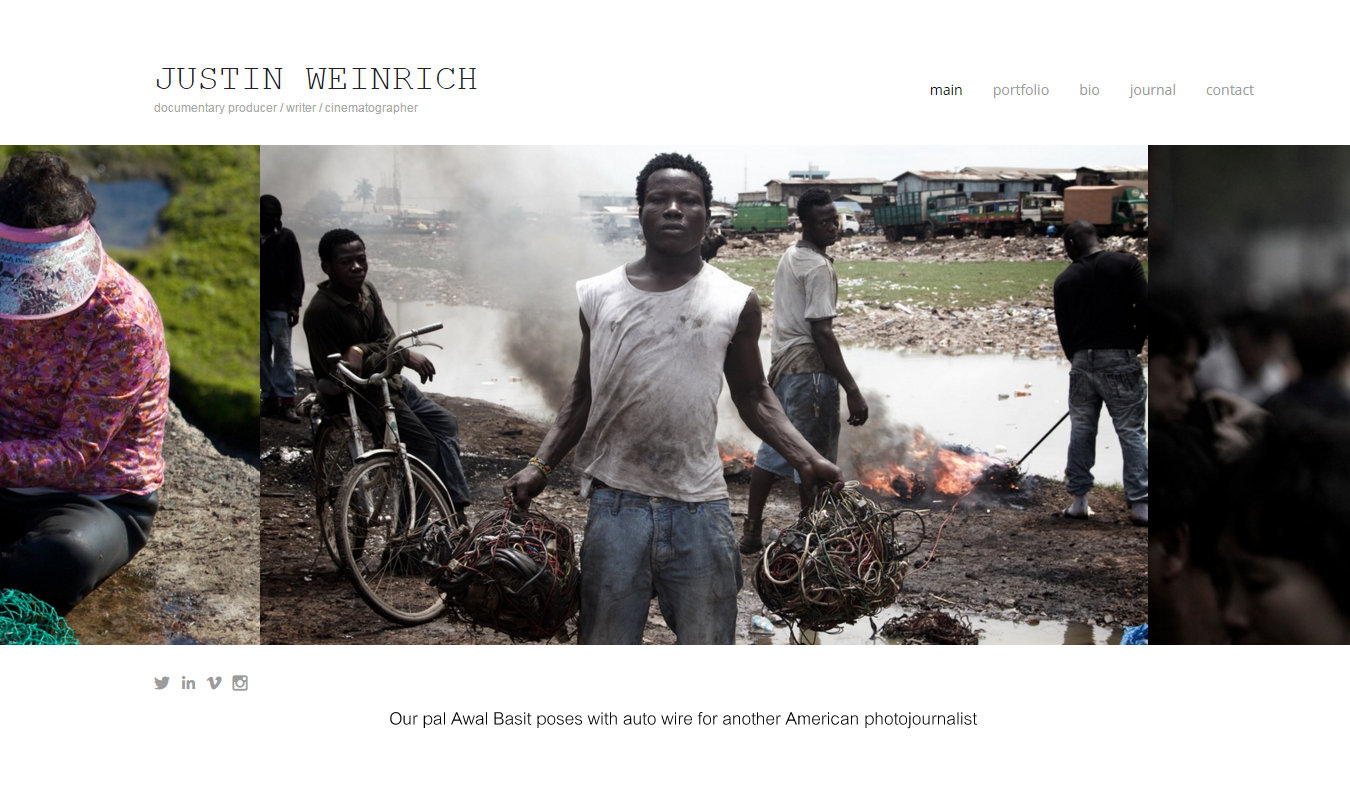
In March 2015, a group of Ghana customs agents, Ghana Tech Sector importers, and three USA journalists accompanied WR3A from the scorched waterside where copper and aluminum wires - wires from cars, appliances, and computers - were being torched in tires.  We'd walked about the fires, dodging the black smoke, as WR3A's Dagbani translator (and Tech Sector Geek, first introduced on this blog (May 2011) translated for a group of young men led by Muhammed Awal.

(Note: I've kind of deliberately avoided really nice photos here, just to kind of capture the ordinariness of it all)

The photographers (myself included) had all snapped some great and alarming shots of young men, dirt, poverty, pollution, and smoke.  The ENGO's halloween language would be hard to resist.  But we now moved the the larger Agbogbloshie yard, where by hammer and screwdriver and axe, metals were being separated from each other and from the plastic skins and wire nerves that bound their bodies.

The first electronic or "e-Waste" device we photographed was a VHS or VCR player.  It was, no doubt, originally imported used.  The Italian photographers got their lenses up close, accepting the premise that this represented and "obsolete"  import.

Joe Benson's container exports were itemized, not just by count of appliance, but by brand and model.  In 100 pages of documents I reviewed, there was no VCR.  Wahab, the Ghana Tech who made our tour possible, would never have imported one.

But back in the day, when I lived in West Africa in the 1980s, VCRs were a hot commodity.  An entire industry of "duplicate" movies existed in Nigeria.  Knock off copies of "Rocky" and "Rambo" and "Bob Marley Concerts" were in every marketplace, from Yaounde to Ngaoundal.  Cameroon was still in the business of erecting TV towers, but the "critical mass of users" who made those investments promising had obtained used CRT televisions - every one of which demanded a VHS player as much as it did electricity.

When I looked down and saw the young men pounding, I saw a flashback of scrap appliance from Africa's past decades.  I wondered, did the young Italian documentary makers (in their 20s) have any idea what a VHS player was, and could they imagine a Joe Benson or Wahab buying one from an "e-waste" collector and paying thousands of dollars to ship it here?

Jujitsu Lesson: Toxic Culture of Victim Identity

Over the decades, this poverty identity has grown from subconscious awareness to thematic.

A few weeks ago, Awal Basit [E-waste Scrapper, Dying for Attention, 1/16], one of the leaders of the "Scrap Men" (rather than "scrap boys", cred to Lalouschek/Wondergem) was calling my cell phone a ridiculous number of times per day.  I try to keep relationships with people I spent weeks with in Ghana.  Drive by saviorism isn't sustainability.

The technicians - Kamaldeen, whose dad made me the fairtraderecycling,com bracelet, Elvis, Yussif, Kamal and his wife, etc [all from Chendiba Enterprises]- might call occasionally, and we chat by Facebook Messenger or WhatsApp at least a few times per week.


How's it going?  How's the family?  Hey, it's national service day.  yeah? what's that?  You know, it's good to stay acquainted.

Awal and the scrappers are the Ghanaians of the north who never went to school.  He struggles even with Pidgin English.  Awal's text messages, outside of a few platitudes, are a mystery.  He's from the other side of Tamale's tracks.

The young men burning wires in Agbogbloshie typically don't have the parenting or resources of Chendiba dudes.  Geeks of color are typically valedictorians. Awal and his crew are not just "out of Africa", they are out of an unpenned Soukous Hilife William Faulkner novel.  They all live in a poor country, they all come from the same tribe and language and region.  But the Chendiba Techs are using downloaded schematics to fix TV tunerboards. They feel somewhat awkward around the guys who took the bus to the big city and live in a lean-to on Agbogbloshie's skid row.

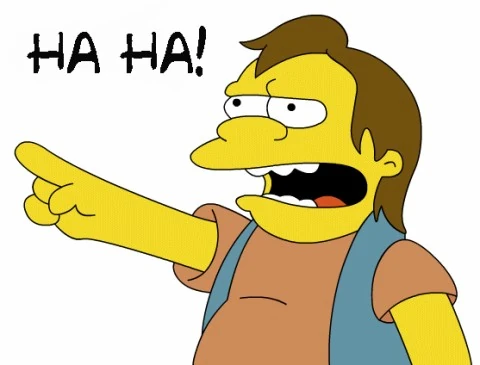
In the Simpsons, the Chendiba techs are Lisa, and Awal is ("ha-ha") Nelson.  Awal is on the streets and he has to show he's tough.  He calls me whenever he feels like, having evolved far afield of pleasantry and shyness.  When I get perturbed and stop taking his calls (usually when I've forgotten to turn on airplane mode and my phone goes off at 3AM with the whispering distinctive ring I've applied), he starts sending photos on whatsapp.  Photos of burning wire.

"Your guilt gives me leverage!"
As I said before, he wants attention.  He's alone.  He sees an opportunity but doesn't understand what to do with it  Like the proverbial dog who caught the bus, Awal has a personal relationship with someone he may imagine to be as rich as Donald.  And what got him that attention, and the interviews with Justin Weinrich and other photojournalists, is burning wires.

When someone begins to feel that their disadvantage is their attraction, it can become toxic in a whole new sense.  As in toxic employee, toxic manager.  I'm important because of my gripe.  My victimhood, my lack of privilege, is the only currency I have.  Your guilt gives me leverage.

UK's African #eWaste Witch Hunt 5: Environmental Munchausen Syndrome?

While travelling to visit family members for Christmas holiday, I listened to an NPR story on "Munchausen Syndrome by Internet", which interviewed bloggist Taryn Harper, keeper of the #WarriorEliHoax blog.

Munchausen Syndrome is basically an addiction to getting attention by malingering or outright faking danger or illness.  It has reached the popular media in cases of "Munchausen by Proxy" - cases where a parent (usually a mom) endangers or imperils her children to "earn" sympathy and attention. The NPR study was about "Munchausen by Internet".  In MbI, sympathy whores (to coin an ugly phrase) create multiple fake online personas and histories which pose heartbreaking problems for public "Hashtag" sympathy.  The hashtag is the attention getting device on twitter, the heart wrenching or guilt-inducing story is the honeypot.

Per NHS.UK:
"Munchausen's syndrome is a psychological and behavioural condition where someone pretends to be ill or induces symptoms of illness in themselves. It is also sometimes known as factitious disorder.  People with the condition intentionally produce or pretend to have physical or psychological symptoms of illness.  Their main intention is to assume the "sick role" to have people care for them and be the centre of attention."
The Africans with roles in the #ewastehoax of Agbogbloshie aren't throwing the pity party.  But when they find themselves profiled by Western media, or as an NGO's "A Place Called Away," they have something... attention.  Ozark natives invested in New York City's fascination with poverty through Barney Google, Snuffy Smith, Little Abner, and Hollywood's fixation on Beverley Hillbillies and Green Acres;  So too, Africans can't help but try to turn the sour story into lemonade.

Gods of Emotional Appeal: The Archer's Prayer

Tibetan Archer 1938 wikimedia
Growing up in Western Christian culture, I'm very familiar with the incentives and disincentives offered by the Gods of Emotional Appeal.  You will feel "joy" if you are righteous, or at least "satisfaction".  We are promised sorrow and pain if we sin, or the sins are depicted surrounded with imagery of sadness in the Christian media.

I'm a silent Believer.  I remain religious, or spiritual, since the "born again" experience I had in Arkansas as a pot-smoking teenager.  But from the beginning, it was not an "us vs. them" experience... I was also changed positively (enlightened) by the Bhagavad Gita, the Tao, and refined my beliefs Buddhism.   Buddhist writers described "spiritual materialism" to describe the economy of emotions.  But the quiet, non-evangelical Believer, accomplishes much.  It is the deeds, the karma of her life, which measure the Christian Sage above the greedy, the exploiting, or spiritually wretched.

Ethics.  This blog is about Ethical Environmentalism.  What the truth is, is important.  But Ethics without a belief are as useless as Ethics with wrong "knowledge".  Our time on earth is about choosing aims, aiming, and meeting those aims.  We can't aim and shoot a bow without both gravity and light.  Faith and truth.

Yin, Yang, or Omm Part 2: White Man Ju-ju vs. 3-Point Shot

In Part I we took a close up of an actual problem - the past decade of managing Cathode Ray Tube televisions and monitors, after briefly introducing the concept that guilt and liability - positive ethical systems - can be twisted into bad law via fear, greed, and envy.  


What's the "green scare?"  
Same as the red scare.  Export Sympathizer is today's "Commie"

The Responsible Electronics Recycling Act (RERA), HR2791, was the focus.  The bill acknowledges overseas refurbishing and recycling operations if and only if the name-brand company (e.g. Dell of Texas) is shipping there (warranty repair, takeback).  That's "responsible".  The contract factories overseas are NOT owned by the name brand, there are no Dell employees at the computer display factory.  If Hurricane Fung, Hurricane Hamdy, Hurricane Benson, or Hurricane Chiu were OEM employees taking back used goods for repair and refurbishment, they'd be "Stewards".  Instead they are "primitive waste criminals".

The Guardian covered Dell for coming out against a geeks of color boycott, and I vigorously applaud Dell for that.   But RERA language creates a "members only" export system.

As the blog got longer, I've cut it into three or four parts.  Poor editing, or de Tocquevillian insight?  Mostly lack of time to edit, I'm running a business after all.  The digression into psychology and ethics is the readers choice, I figure.   Just don't hit the "print" key.

LIABILITY JUJU

4 Key E-Waste Tactics: Inference, Allegation, Indictment, Guilt?

Why should exports of used electronics be outlawed?  Let's look at the case Basel Action Network makes in its campaign to stop the used electronics trade.

The "watchdog" campaign to end USA's used electronics exports relies on inferences, allegations, indictments, and even proven guilt.  Which is which, and how concerned should environmentalists be?

1) Inference:  Poor children are found amid piles of e-scrap, and pollution is found amid piles of e-scrap.  The inference is that the e-scrap was imported, and that the pollution, the poverty, and associated risk to children will be reduced through prohibition.

- First, the water pollution in Guiyu comes largely from the textile mills in the area.  But some of the burning of copper and boards is certainly going to add to the pollution in the short term.  Did the material come directly off of a boat laden with imports?

Or was it material imported years ago?  Or was it recently imported, but a percentage of residue (e.g. 15%) of otherwise clean scrap or reuse product?  Or.. just perhaps.. does the fact China generates more "e-waste" than the USA have something to do with it?

And are the children helped more by prohibition or by investing in safer processes?  Is the problem manual disassembly, or fire?  I say fire is the problem and e-scrap can be recycled without fire, just as cotton can be picked without slaves.

BAN is good, really good, at inference.


Subjugation vs. Exploitation: Fear and Guilt

A black slave in South Carolina stands up and talks to the other slaves about learning to read.

A woman in puritan New England demonstrates cunning.

A woman in Saudi Arabia wants to tuck back her veil and drive a car.

A labor contract manufacturer begins to make their own brand on a third shift from reused parts.

An Indian woman elopes to marry outside her caste, erasing the dowry negotiations of her parents.

sub·ju·ga·tion

  [suhb-juh-gey-shuhn] noun
the act, fact, or process of subjugating,  or bringing under control; enslavement: The subjugation of the American Indians happened across the country.
- - - -

This is about the cultural cognition of risk, leveraged by a combination of quasi-religious faith and societal leveraging of a zero-sum concept of "exploitation", to subjugate groups for financial reasons.