Showing posts with label history. Show all posts

Coda Possessions: Is Hoarding Objects a Fear of Death

Our mortality means recycling of our thoughts and ideas.

Most of cerebrum will go back to raw material. Perspectives lost, discarded, unmined.


Other ideas leave a coda or viral influence. But future changes, pride and persona are brittle, and it's best we are forced let go.

Interview with Ghana TV Repair Veteran, and Black Elk Speaks by John G. Neihardt

A Great Gift - The Ability to Interview Elders

Why do some of us become very attached to our grandparents, and others of us secretly dread the holiday base-touch?  Why do some of us spend thousands of dollars per year flying back and forth to visit elderly relatives, and others don't bother to make a ten minute drive, more than once a year?

The gift of boredom.  It's something perhaps lost on the current generation of non-fisher, non-hunter (I'm neither, either), non baseball-watcher generation.  The ever-ready internet is at our fingertips. The cell phone has balmed our boredom so thickly that even minutes lead to fidgets.

Will this reduce book reading?  Great books have made me better than who I am. Could I have finished reading them if I'd had internet in the 1960s, 1970s, or 1980s?  I appreciate many people who know history and still read books (many far more often than I do). But in wondering at my own weakness for distraction, I fear that great books will not die in fire... but in ice.

Master Baba of Tamale Ghana, retired Tech Sector, on the history of West Africa Television


Why No Place's Industrialization Looks Like Any Other Place


Corporate conquests, raw materials, industrialization and economic development... I'm beginning to think that African classrooms should be receiving USA 1970s high school history textbooks.

Histories differ, context differs, trade relationships differ, languages differ, currency differs.  The development of Western Guangdong Province looks nothing like the development of coastal Shenzhen. The WSJ reported last week that Viet Nam would not instantly replace China as an outsource.  In Harvard Business Review this month, author Ndubuisi Ekekwe of the African Institution of Technology and Fasmicro Group published an essay with the headline "Why Africa's Industrialization Won't Look Like China's".

It's not a bad short essay, but it could have been even shorter. If the western edge of one Chinese Province looks nothing like the eastern edge, why on earth would we expect a whole continent to develop by the pattern of eastern Shenzhen?

Apple of California or Taipei iPod Contractors? "Birth of iPhone" is "Game of Thrones" Saga

In the Game of Thrones (which am watching for the first time, binging Seasons 1, 2, and 3 during an Xfinity free-access trial).  It's about the rightful sons and daughters, or "bastard" sons of Kings, and their rights and claims to Kingdoms and Thrones.

In our world, the Patent or Copyright or Claim of invention is the coveted throne of the modern "Rightful Heir".  And the stakes - for Titans like Apple, Samsung, Sony, or Foxconn - represent a far more wealth than the "Iron Throne" at King's Landing.


Game of Thrones keeps our interest, in part, by slowly revealing more dimension in characters introduced in a previous season (before killing them off and replacing them, perhaps with a new actor less willing to negotiate better salary.. another contract manufacturing angle).  For those of us who study planned obsolescence and contract manufacturing, the history of Android (especially Samsung) vs. Apple smartphones is just as fascinating.  (There's even a 'bit player' I know personally, a kind of Hong Kong Tyrion, that I know pesonally.  Proview's Rowell Yang of the four fingers received a check from Apple for $60M five years ago. He had trademarked the name "iPhone" while I was a consulting with Proview).

In last weekend's WSJ.com, there's a fascinating chapter to the claims that Steve Jobs is the rightful King. father of the smartphone.

Term Paper II: "e-Waste" Export, Geography of Environmental Justice


Yesterday's thesis about the relationship between land value, environmental enforcement, and pollution, used a map from http://scorecard.goodguide.com/env-releases/land/,  showing toxic release sites on a map of the USA, and a chart from the same website showing the relative amount of toxics generated in specific localities.  When the releases are charted as "an occurance" and each release is given a single data point, the map shows the "superfund sites" to be concentrated in urban areas.

The sites, when weighted by actual tons of pollutions, are 83.75% in the top 20 / 100 sites (suggesting the 80/20 rule or Paretto Principle may apply).  The top 10 sites are in Alaska, Nevada, Arizona, Utah, Nevada, Arizona, Nevada, Idaho, Missouri (Doe Run area), and Orange Florida.  Each of these sites has a "drilldown" function for data at Scorecard.Goodguide.com  Orange County Florida, the one non-western, non-mining area on the top ten list, has a NASA, USA Department of Defense, WR Grace, Dupont, Department of Energy, Chevron industry, etc. on its list of "potentially responsible parties" for lagoon pollution.  The nine sites above it are raw material extraction industry sites, none of which, my thesis states, could function economically inside a high-property value area.

1.NORTHWEST ARCTIC, AK481,382,100
2.HUMBOLDT, NV350,591,683
3.PINAL, AZ248,792,746
4.SALT LAKE, UT138,824,328
5.ELKO, NV83,494,740
6.GILA, AZ57,220,938
7.EUREKA, NV43,572,135
8.OWYHEE, ID28,887,324
9.REYNOLDS, MO27,313,480
10.ORANGE, FL24,032,977


The enforcement and likelihood that a site is identified as a threat is proportionate to its proximity to a landholder complaining about it.  For this reason, the "superfund" target sites on the USA map above are concentrated around cities and population centers.  This "NIMBY" or "Not In My Back Yard" dynamic is part of a normal democracy.  The spotlight on "environmental justice" in the USA focused on the difference the likelihood of enforcement correlated to race of neighborhoods;  that's an overlyer, according to my thesis, for economics and property values.  As I pointed out in one of the Slums Blogs last spring, 5th Avenue in Manhattan had auto repair shops a hundred years ago... but these relocated to Queens because it's easier to do repair work on an area with lower property value.

The Diagram Below generalizes the relationship between property value, wealth, and awareness of pollution. People live in rural villages, forests, and plains, but their population density is lower, and enforcement of all types is less likely in these areas.


The difficulty or unlikelihood of an enforcement paradigm outside of a population center is why emerging market city-states like Hong Kong and Singapore are more likely to achieve OECD-like status sooner than an emerging market like Malaysia or Indonesia or Brazil... the most recent nations admitted entry into OECD have been small.   Large nations admitted to OECD tend to have gained entrance early on, because of their econmic power (like the USA).  The USA was admitted into OECD while the pollution in Orange County was occuring, but as one of the "founders" of the OECD, the USA benefitted from a simpler formula - wealthy and white.  Not even Japan was not on the first OECD list.

Term Paper on "e-Waste" Export and Geography of Environmental Justice

Thesis:   Woke up, got out of bed, dragged a comb across my head... And wrote a thesis chapter in one sitting.

Regulatory burdens are primarily driven by property value.   People are mobile, but their investment in property is a non-liquid asset, and they will pay a lot to keep it from being polluted.  If it's federal land out west, or a jungle island like Borneo - not so much.    Borneo has more species and more "environment" to spoil, but the property values there make it easier to mine than a richer vein of ore on Long Island.

As wealthy neighborhoods have resources to worry about smaller and smaller cognitive risks, compliance with risk (e.g. toxics in air or wipe tests, employee safety standards) become more expensive in wealthy jurisdictions.  This provides incentives for markets to outsource, or purchase from, areas with lower property values and less regulatory oversight.

This phenomenon has been examined through a lens of "environmental justice" for two decades.  Groups of people who tend to live in less affluent neighborhoods tend to be less critical of local employers who tolerate these risks.  Whether the "disproportionate enforcement" of standards is based on race, income, or real estate value, it coincides with the opinions of neighbors.

In environmental risk, the "worst neighbors" are the industries with the highest toxics and workplace hazards. These are know to be metal mining.  Virgin ore extraction is strongly correlated with releases of mercury and lead.   The number one source of mercury in the USA is gold mining;  number two is silver mining.  The more valuable an end product, the higher the tolerance for pollution, but the farther the activity occurs from high property values.

During the past 50 years, this dynamic has led to the "most polluted places on earth" being located in the least accessible, lowest property values on earth.  Property value is known to be correlated with demand for the property, and remote property has less demand.

Kabwe Zambia has been named the most polluted place on earth (Time Magazine).

La Oroya, Peru is definitely in the running. (NY Times)

Even within the confines of the USA, the most toxic industries are found in the most remote places, usually on federally owned land (a private landowner is less likely to tolerate pollution than the public landowner).  Of the top ten most areas with the most toxic releases, the first eight are in remote areas.. and (according to Scorecard.goodguide.com TRI reports), the states with the most land covered by the General Mining Act of 1872 have the most toxic releases.

1.NORTHWEST ARCTIC, AK481,382,100
2.HUMBOLDT, NV350,591,683
3.PINAL, AZ248,792,746
4.SALT LAKE, UT138,824,328
5.ELKO, NV83,494,740
6.GILA, AZ57,220,938
7.EUREKA, NV43,572,135
8.OWYHEE, ID28,887,324
9.REYNOLDS, MO27,313,480
10.ORANGE, FL24,032,977


Calculated as a percent, the Pareto Principle (80/20 Rule) appears to apply.  The top twenty sites on the list of 100 are 83.75% of the total toxics:  The top 4 sites of the top 20 represent 73% of toxics.


Total Toxics Emitted (Top 10) 1,484,112,451

All Top 100 1,991,863,954
Top 10 of 100 74.51%
Top 4 of Top 20 73.11%
Top 20 of 100 83.75%


Yet spending on "Superfund Enforcement" is not correlated with the toxics... it's correlated to property value and population.  One has to wonder how many sites on federal lands haven't even been sampled... if a pound of mercury drops in the forest, and no regulator is there to detect it, it still makes pollution.


This data is USA only, but the trend (in my thesis) is that the more environmentally damaging or toxic a process (e.g. gold or silver mining), the further the extraction will be placed from property values and populations.   Property value correlates with population up to a certain point (Manhattan Apartment) and then declines (ghettos and slums) because the more income people have, the more personal space they can afford.

Fast income growth would be associated with increasing property values.

In this thesis, the "good enough market" will be a rapidly emerging city, with electricity and potential wifi (like 1990s Guangzhou and Lima Peru, Cairo and Jakarta in the 2000s).  There is a labor force here, but the percentage of that labor force engaged in scrap wouldn't account for the fact that nothing "e-waste" is being shipped to rural areas even lower on the evolutionary scale;  for that matter, the presence of e-waste in concentrations at Guiyu or Agbogbloshie (with proximity to Shenzhen or Accra, cities growing at a faster than average pace for their continents), and the absence of a proportionally similar concentration of E-waste in even poorer cities like Mogadishu or Port-au-Prince, would be best explained by the growth and value added and not by the economics of externalization of pollution.

Haiti is closer and poorer than Accra or Kuala Lumpur, but the prices offered for e-scrap are much higher in cities (see Alibaba or Recycle.net) which are growing.

This establishes a reverse normal curve.  The demand for "used goods" and "cheap displays" like CRT monitors is very low in Manhattan, rises in middle income markets earning $3000 per year, and then drops precipitously again in very poor cities.    Mining, in comparison, grows in direct proportion to poverty, the lower the income level and property values, the greater the potential investments in raw material extraction.  You find coltan mining and gold mining investments in jungles.  A single mine like the OK Tedi Copper Mine, in a single day, dwarfs the toxics created by all the aqua regia and wire burning in all the cities of the world for a year.  If you want to find cataclysmic environmental damage, look in the opposite direction of recycling and repair.

According to my thesis, it is therefore the perception of "waste" formed by rich cities in areas with high environmental enforcement (driven by property value) which has been projected onto middle income cities which are actually buying used goods for "good enough" purposes.  It is true that the middle income cities have lower wage and environmental standards than the rich cities, but the correlation is exaggerated if you can't replicate the business in an even poorer city.  This is an example of "cognitive risk" which is marketed to by corporate interests in planned obsolescence, anti-gray markets, and competition from contract manufacturers scaling into good enough market economies.

It is the relative inexperience in rich nations with extreme forms of poverty which cause us to conflate "good enough markets" with images of suffering.   We create artificial groupings like "non-OECD" which basically mean "not as rich as us".   It's like creating a term "not forest" to describe everything that is not a forest, grouping deserts, meadows, swamps, and tundra together into a single term.

There are many types of snow.

End of Part 1.


"E-Waste" Policy: NGOs Living in an RCA World

"A broken calendar is not as good as a broken clock." - Robin Ingenthron
RCA Emblem - Nipper ponders Obsoete Victrola Waste Stream
Catching up with electronics trade publication reading.  In Slashdot, I saw this article about the possible deathbed watch for Sharp Electronics.  Sharp is still a big producer in the display device field.   From ComputerWorld:
"Japan's Sharp, a major supplier of LCD displays to Apple and other manufacturers, has warned that it may not survive if it can't turn around its business, an admission that caught few off guard.
"The Osaka-based manufacture said there is "material doubt" about its ability to continue operating in its earnings report filed Thursday. Sharp added, however, that it still believes it can cut costs and secure enough credit to survive. Its IGZO technology for mobile displays is likely to be a key element of its business strategy.
"Companies with credit trouble must warn about possible concerns over their survival as part of their disclosure requirements."
Intelligent observers generalize on the decline of Japanese "Big E" - Sony, LG, Sharp, Panasonic, etc., and the rise of Samsung and Korea.  Korea is feeling its oats, in car production and electronics and music.  But how significant is this?  Time for a history lesson on Japanese and American transistor manufacturing.

History and Future: Reuse of Chips Without Fire

Readers may recall that a journalist confirmed one of my theses about Guiyu, China.  There had to be something else going on besides "aqua regia" (using acid to recover gold), or it would not be financially viable for Guiyu to import PCs.  Sure enough, similar to the cell phone chip reuse documented at TechTravels, there was chip harvesting and reuse going on.  That's a huge savings compared to mining.

The river in Guiyu is polluted from textile dying mills in the area, but we don't want to understate the pollution coming from circuit board residuals.   It can be pretty nasty.

You could almost make the case that Guiyu is internalizing the pollution that is being diverted from the mining communities, i.e. make the case for Chinese altruism. But can fair trade recycling find a way to incentivize Guiyu to maintain chip harvesting and reuse without shouldering the pollution of the residuals?

Circuits that come apart in water may allow the chips to be reused more safely.
The National Physical Laboratory (NPL), along with partners In2Tec Ltd (UK) and Gwent Electronic Materials Ltd, have developed a printed circuit board (PCB) whose components can be easily separated by immersion in hot water. The work was part of the ReUSE project, funded by the UK government's Technology Strategy Board.

Recyclable electronics: just add hot water

The National Physical Laboratory (NPL), along with partners In2Tec Ltd (UK) and Gwent Electronic Materials Ltd, have developed a printed circuit board (PCB) whose components can be easily separated by immersion in hot water. The work was part of the ReUSE project, funded by the UK government's Technology Strategy Board.

Recycling this printed circuit board is as easy as making a cup of tea - simply add hot water, and the bonding material dissolves away leaving you with 90% of your components to re-use as you wish
Recycling this printed circuit board is as easy as
making a cup of tea - simply add hot water, and
the bonding material dissolves away leaving you
with 90% of your components to re-use as you wish

The Challenge

The electronics industry has a waste problem - currently over 100 million electronic units are discarded annually in the UK alone, making it one of the fastest growing waste streams.
It was estimated in a DTI-funded report, that around 85% of all PCB scrap board waste goes to landfill. Around 70% of this being of non-metallic content with little opportunity for recycling. This amounts to around 1 million tonnes in the UK annually equivalent to 81 x HMS Belfasts.

The Solution

The aim of the ReUSE (Reuseable, Unzippable, Sustainable Electronics) project was to increase the recyclability of electronic assemblies, in order to avoid an ever-growing volume of waste.
The project partners designed, developed and tested a series of unzippable polymeric layers which, while withstanding prolonged thermal cycling and damp heat stressing, allow the assemblies to be easily separated at end-of-life into their constituent parts, after immersion in hot water.

Time Out: Big Picture Environmentalism

I'm on my way to vacation, followed by a trip to our fair trade recycling plant in Sonora, Mexico, then a presentation at the CES in Las Vegas.    I'll probably write more than ever on the road.  But even my haiku is too long.

If there were an Abstract for prospective readers of this blog, it might be:
The author [Robin Ingenthron] is a former environmental regulator with a degree in international relations, and experience in "third world" and "second world" development programs.  Using MBA skills and a business as a background, he writes about how environmentalism can make more efficient choices, trimming policies which do not benefit the earth ecology, with particular emphasis on environmental protocals which have been "hijacked" or influenced by greed.   

History: Epic Everyday Waste

Watching History Channel's "Epic History of Everyday Things".   Coffee, canning, razors, mirrors, beer, etc.   And "Nightsoil" - the history of managing poop during the Industrial Revolution.

The Epic History program recalls the importance of things, the controversy of things, now taken for granted.  How Venetians kept all the glass makers on a small island (Murano), populated with assassins, to keep anyone from learning the trade secrets around glass.  Similarly, how coffee beans and seedlings were smuggled away from kings and holy men intent to keep the coffee a secret... and the pilferers built stone castle walls around the transplanted coffee bushes in South America.   How a $40k reward offered by Napoleon led to the invention of canning food, and how that made moving troops - and colonization - possible.

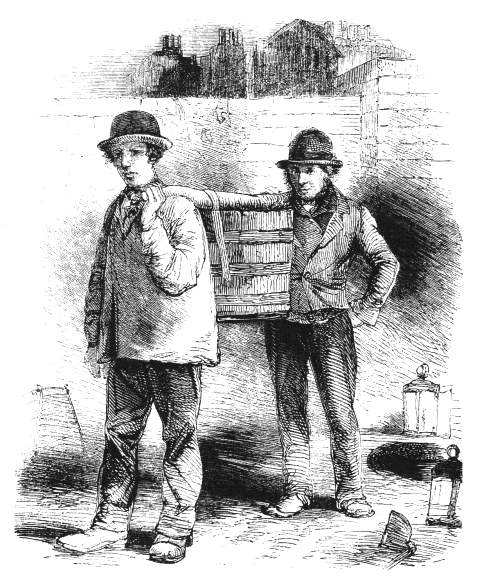
Cesspool-sewermenThe segment on the epic history of the flush toilet hit home.  The "Great Stink of London" occurred from rapid deployment of a new technology.

It begins with the old system of "night soil" workers, who had to climb into sewage pits (cesspits) at night to empty people's sewage by bucket and rope.   The nightsoil workers were paid 4 times the average wage - a "good job" if your definition is pay.  Then, there were "Toshers" who were unpaid, but had the rights to run their hands through the sewage for the profit of finding lost rings, coins, metals, and other valuables.

Then the flush toilet came to the upper classes in 1815.  There was no sewage system designed for the amount of water these used, so they were flushed into the same cesspits, which quickly overflowed into the rainwater runoff system.   Since it was just a few people who had the systems installed, no one made much of the fact that the toilets flushed into the Thames River, the same source of water they were withdrawing.  But within 7 years, the Thames River of London became so polluted, as the toilet access expanded, that cholera epidemics broke out over the next several decades.  The same epidemics occurred in the USA - H.L. Menken described the City of Baltimore as smelling "like a billion polecats" in the 1880s.

T. Crapper, Flush Toilet Inventor
The "Great Stink of London" made papers for river pollution and nastiness, but the connection between the poor sewage and cholera wasn't understood until all the nightsoil workers and toshers were well out of business.  The flush toilets made the job of harvesting nightsoil impossible.  But like modern shredders, they looked much better than the system they replaced, and displacing nasty tosher children was a the primary benefit to the snobby class - before all dysentery hell broke loose.

I'm not sure I have the writing stamina tonight to weave the historical connections between "e-waste" and human waste... but my recent series on river pollution (E-Stork 1-4) and tracing causes upstream, and the way industrial revolution volumes of waste (textile, e-, or human) deluged the workers' systems which had been working, they all fit here.

Them Apples: Boum Boum CRTs

Below is what Americans were watching on their TVs when Cathode Ray Tube display devices were first being MASS introduced in the mid 1950s.  Technically, the first distribution was in the 1930s (boum, boum, below) - but there was an interruption (World War II, boum boum) during which sales of TVs in the USA and Europe stopped.  The TV mass market sales resumed in the late 1940s.   When in 1951 the "CBS Columbia" TV was priced at $499.95, people thought it controversial that white Italian American Frank Sinatra was singing a duet with black Ella Fitzgerald (Moolight In Vermont).

(the video of Moonlight in Vermont was removed by youtube... I liked the showing of interacial singing... but maybe this replacement 1951 video will stand in)...


If today the developed nations are saying that Africa and Asia is not as far advanced as the USA was in the 1930s, 40s, and 1950s... boum boum,  I beg to **** differ.  

If the developed nations are saying that, in hindsight, TVs and CRTs should not have been introduced into our nations, and we are trying to save Africa from our fate, then we need a single, simple, logical example of a TV "e-waste" disaster here in the USA.   Who was poisoned by the television?  Who died?  What is the USA equivalent of the "most toxic place on earth"?  And did the pollution generated by TVs in the 1950s outweigh the image of Ella singing with Frank on TV?  That would be the case for sacrificing internet in Africa to stop "digital dumps".

The entire case against reuse rests on false data - that 80% of the exports are NOT reused or repaired, but are primitively burned in witches brews and caldrons by black and yellow children.   Residue, yes... but 80%??   This is complete and utter malarky.    One would imagine a dump in the USA somewhere has resulted in someone in America being harmed since 1938.  The only Boum, Boum was in the sound system.