Showing posts with label tosh. Show all posts

Deliberate Falsehood About "Ewaste" and Basel

E-Stewards Abandons Morality
Basel Action Network released a newsletter today heralding what they hope is imminent passage of the "Ban Amendment" to the Basel Convention.   At least this DOES acknowledge that the Basel Convention does NOT currently require "tested working" or fully functional, and does allow repair and refurbishment... and therefore they hope to amend it in three years and close those options.

Aside from the acknowledgement of the current legality of these exports under the Basel Convention, what is their case for amending it and banning repair and reuse in the future?

According to BAN E-Stewards, it is because refurbishers (geeks of color) "often produce hazardous waste, which is responsible for inflicting tremendous harm on the citizens and environments in these nations."  It's because reuse and repair poisons people and pollutes the environment.
"Only recyclers meeting the requirements of the e-Stewards Standard are in conformity with the Ban Amendment, which stipulates that no hazardous waste, including e-waste, can be sent from developed to developing countries. This includes untested and/or non-working equipment exported for refurbishment or reuse, some of which is currently allowed under the R2 Standard. Refurbishment often produces hazardous waste, which is responsible for inflicting tremendous harm on the citizens and environments of these nations."
Logically, if it were true that the refurbishing and repair industries "inflict tremendous harm on citizens and the environment", then banning import/export from rich nations is not enough.  They should also be banned from repair and refurbishing of product in their own country.  And in America, reuse and refurbishment should also, logically, be banned.

Show us "tremendous harm" in Indonesia.  Show us the hazardous waste "often" produced by refurbishment.   Show us how the Basel Convention, as passed, needs to be amended due to a single actual case of poison.   There is absolutely not one shred of evidence that one iota of toxic release came from refurbishing, repair, and elective upgrade.   No such factory was found at Guiyu, and no material at Guiyu came from such a factory.  This is why the Convention (the international law currently passed) does indeed allow export for reuse.

The Worlds Most Polluted Places (TIME) are metal mines, not recycling yards.

History: Epic Everyday Waste

Watching History Channel's "Epic History of Everyday Things".   Coffee, canning, razors, mirrors, beer, etc.   And "Nightsoil" - the history of managing poop during the Industrial Revolution.

The Epic History program recalls the importance of things, the controversy of things, now taken for granted.  How Venetians kept all the glass makers on a small island (Murano), populated with assassins, to keep anyone from learning the trade secrets around glass.  Similarly, how coffee beans and seedlings were smuggled away from kings and holy men intent to keep the coffee a secret... and the pilferers built stone castle walls around the transplanted coffee bushes in South America.   How a $40k reward offered by Napoleon led to the invention of canning food, and how that made moving troops - and colonization - possible.

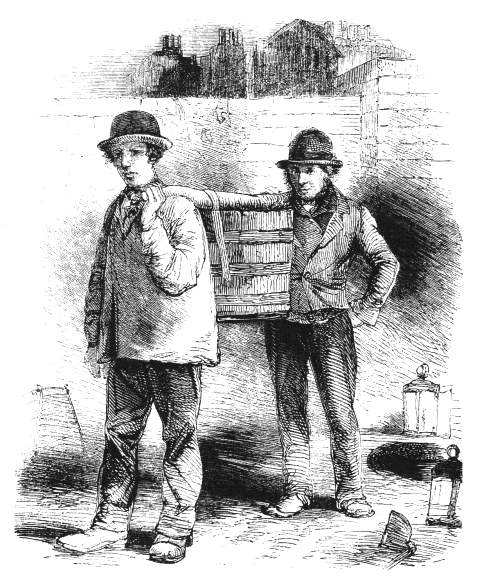
Cesspool-sewermenThe segment on the epic history of the flush toilet hit home.  The "Great Stink of London" occurred from rapid deployment of a new technology.

It begins with the old system of "night soil" workers, who had to climb into sewage pits (cesspits) at night to empty people's sewage by bucket and rope.   The nightsoil workers were paid 4 times the average wage - a "good job" if your definition is pay.  Then, there were "Toshers" who were unpaid, but had the rights to run their hands through the sewage for the profit of finding lost rings, coins, metals, and other valuables.

Then the flush toilet came to the upper classes in 1815.  There was no sewage system designed for the amount of water these used, so they were flushed into the same cesspits, which quickly overflowed into the rainwater runoff system.   Since it was just a few people who had the systems installed, no one made much of the fact that the toilets flushed into the Thames River, the same source of water they were withdrawing.  But within 7 years, the Thames River of London became so polluted, as the toilet access expanded, that cholera epidemics broke out over the next several decades.  The same epidemics occurred in the USA - H.L. Menken described the City of Baltimore as smelling "like a billion polecats" in the 1880s.

T. Crapper, Flush Toilet Inventor
The "Great Stink of London" made papers for river pollution and nastiness, but the connection between the poor sewage and cholera wasn't understood until all the nightsoil workers and toshers were well out of business.  The flush toilets made the job of harvesting nightsoil impossible.  But like modern shredders, they looked much better than the system they replaced, and displacing nasty tosher children was a the primary benefit to the snobby class - before all dysentery hell broke loose.

I'm not sure I have the writing stamina tonight to weave the historical connections between "e-waste" and human waste... but my recent series on river pollution (E-Stork 1-4) and tracing causes upstream, and the way industrial revolution volumes of waste (textile, e-, or human) deluged the workers' systems which had been working, they all fit here.