Showing posts with label regulator. Show all posts

Hand In Glove - Externalization and Regulation

Former Regulator Hat On.

Environmental Enforcement Dollars come disproportionately FROM the wealthy. The wealthy are concerned, above all else, about their property value, and their backyards. So you have the most environmental enforcement and regulations - even to the extent of NIMBY vs Solar fields - in wealthy counties. And wealthy countries.

The dirtiest, most polluting industry in the world - gold mining - occurs primarily in the most remote places in the world. That is not because there are no gold deposits in the Hamptons or Westchester County. The gold is in the earth. But gold is expensive because you have to dig up massive amounts of earth to get gold. Moving massive amounts of earth, and treating that earth with cyanide and mercury to concentrate the gold ore, is "best done elsewhere".

Years ago, I blogged about auto repair shops in Manhattan which migrated to Queens because of the land value, and subsequent externalization of repair. In the big picture (like the current election) this creates resentment of the regulator - the property value enforcement negotiator - by the regulated. And this has been flipped as "environmental injustice" by the new home to the dirty repair shop, and as "externalization" when it crosses national boundaries.

Both the "environmental injustice" of motor oil changing repair shops in Queens and the "externalization" of gold mining to the Amazon river basin and Congo rain forest are real, and appealing to liberals and intellectuals. At the same time, the increasing regulation of the Queens auto shop, as property values and regulation extend beyond Manhattan, creates a Trumpy backlash among working class, proud-to-self-describe "grease monkey" culture. Liberals herald Repair, but don't associate with them, culturally. Because repair is something poor people do better, and "elective upgrade" is something associated with wealth. Whether the "property" is real estate, or a flip phone, the trade sends value south, and regulation - north.

Through years of blogging, casting for intellectual swordfish rather than perch, I hope I've created an awareness that our white-guilt is being used, corruptly, to make the environmental enforcement disproportionately affect the man-in-the-middle repair and refurbishing industry. The WORST activity humans do - gold mining, e.g. - is the farthest out of sight, never talked about, never see it described on CBS 60 Minutes. But set up a shop in Guiyu, China, to repurpose gold-bearing chips, sold in competition to Intel or Cisco new chips made with mined gold, and you'll be labelled primitive, polluting, externalized, illegal, and counterfeit.

Money doesn't just "talk", it silences.

Orchestrated Environmental Malpractice. Intellectuals need to wrestle back our demonization and collateral damage, and do it quickly. The world needs Environmentalism 3.0 Personal property value (NIMBY) enforcement is 1.0, decrying the reuse practices of the poor, witnessed white-ly as externalization or fetishization of your guilty elective upgrade is 2.0, we need a global view. Carbon trading is a window, a potential breath of fresh air, but expect it to be controlled by the interests of the wealthy and privileged. Ocean plastic comes from countries poor enough to struggle to collect litter, but with the highest rates of product (gold bearing expecially) reuse and repair. White intellectual, you are being tricked into shredding and destroying a device which Africa's Tech Sector will reuse 3 times longer than you did before your upgrade.

Your guilt has been diagnosed as an "opportunity" by Planned Obsolescence OEMs and Big Shred. "Our Circular Economy" (keep metal in Europe) advocates have created a very, very, very evil charity(if un-self-aware) industrial complex (Basel Action Network, run by Jim Puckett), which is doing nothing good, only harming the poor and the net environment.

A big "racketeering" industry (Certification, R2 or E-Stewards) is privatizing the regulatory functions I'm writing about, and de-democratizing them. All the certifications are "pay to play", there is never an Asian or African tech sector on the Advisory Committees in these groups. They change the "problem" when the 1.0 or 2.0 solutions are exposed as fraudulent ("80% of exported - imported - secondhand product was NEVER waste, and CBS producer Solly Granatstein won't account for his unwitting Koolaid).

They are going to try to make it about "counterfeit" (reused and repurposed expensive equipment) and "data breach" (NO, breached data does NOT come from ANY 5 year old obsolete device, it's an insane conspiracy theory that your 2001 Dell or HP desktop is being "harvested" for data by Geeks in Ghana). It's going to create resentment not of the wealthy interests, who greenwash, but of the regulators, resulting in anti-government votes for executive branch "leaders" who make environmentalists the enemy.


Blog reads are declining, maybe I'm repeating myself. From time to time, I want to know if anyone is aware, does anybody care, does anybody see what I see? (1776 Musical, John Adams, who was "obnoxious and disliked")

The Trouble with "E-Waste" Stewardship: Part II

Part II:   How States Rushed Into Surplus Technology Policy

We've all got our stories about the ten most feared words in the English language:  "I work for the government, and I'm here to help."  I spent the 90s as a regulator, with a bigger budget and more educated staff than I have today.   And I spent the last decade working in a newly regulated field, as a small business entrepreneur.

Despite company problems with state environmental regulators, most in my business agree that regulators are doing an important job.  If they weren't there, it would be cowboys and Indians.  I would be afraid to invest in doing something better, because another company might seize a share of the market by doing things worse (more cheaply).
  • If you don't take environmental justice and regulation seriously, I'm not the source for your policy.
  • If you take environmental regulation too seriously, I'm surely not the source of your policy. 
 "And that's ok."

Improving on an incomplete design:   If there is an existing set of regulations about squares, we can imagine a better and improved policy about squares.  Our "squares regulation" policy may evolve, differentiating between sides, producers of sides, areas, lengths, completion, fill color, right angles... Imagine an entire cradle to grave, complete lifecycle analysis, encompassing regulation of the "square industry".

Along comes a diamond shape.  Then a rectangle.  No problem.  The regulators derive a new policy based on the precedents set by the square policy.  They may just add a "check box" to the form.  The triangle... it's an interesting discussion, draft policies go back and forth.  But it's nothing the regulatory and policy community cannot handle.

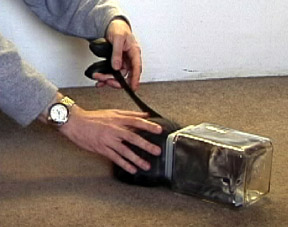
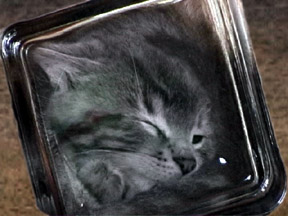
Along comes a kitten.

You can see where this is going.

Working and surplus and repairable surplus electronics have a lot of "moving parts", end markets, lifecycles and ingredients.  But whether they are one man's trash or another man's treasure, the question is when or whether they have been "discarded".  What stewards are trying to do is make it easier to discard without making it harder to donate, sell, or use... and they got in the way of trade between Trash Man and Treasure Man.   This is ultimately about regulation of wealth and value.

EPA's 2007 CRT rule was meant to evolve the existing RCRA definitions for hazardous waste, while admitting that reuse didn't allow them to fit into the previous amendments to govern "universal waste".   The first RCRA solid waste rules had to differentiate for hazardous wastes, and the hazardous rules were too onerous for the product wastes that were generated universally.   The EPA UWR re-simplified hazardous waste so that companies could collect it from millions of small businesses and homeowners (though some states simply allowed "household" to mean non-commercial, and the lamps are dumped with MSW back at RCRA Square One.

The newest version of the CRT Rule tries to take the square, modified for rectangles, and give it a three dimensional shape - a shape to govern not the status of the good (discarded), or the toxicity (TCLP), but adapted for another dimension - time.   Since the reuse CRT might be discarded SOMEDAY by someone else who bought it, in the future, records on the sale needed to be kept, or a loophole could result.


The update to the CRT Rule takes it even another dimension, collecting the same record on the sale of the same device from the broker, the generator, the buyer, etc.  Three sets of records are better than the one set, which EPA never had time to read, ask for, monitor, etc.

The new rules involve not just records of different parties to the transction of goods which will one day (we suppose) be discarded.

Meanwhile, regulators have been using derivatives of the toxic waste risk to take "waste" into new dimensions.  Including the past, or the original cradle of the product.   CRT Rule follows the "future waste" to the country it retires to, and ROHS follows it back to the maternity ward.

What could go wrong?

ROHS (elimination of lead from solder) creates incentives for tin mining operations, once closed in the islands of Indonesia (for environmental reasons) to increase in value and reopen... we mine the coral islands of today to make tomorrow's waste less toxic.

And manufacturers in nations like China and India, where new CRTs are still made, make draconian rules about the used CRTs that will one day become waste, in order to protect brand new manufacturers making CRTs (which will one day become waste).  And the mining companies of lead keep the used CRT cullet from being reused.  Everyone gets into the act.

And Stewardship will solve all of this, we are told, by taking the regulations BACK in time, to the producer, the OEM.   They will set their long time agendas against planned obsolescence aside, and will work in partnership with regulators to protect consumers from ... oh, counterfeit and grey market product, perhaps.

Where is Haliburton?

Ah, yes.  The connection to yesterday's post, about the evolution of landfills to Subtitle C landfills, to incinerators, and flow control.

They are now making shredders to eliminate the labor from hand disassembly.  Those shredders don't sell well in nations which need hand disassembly jobs, or where reuse and repair techs are so talented that they shanzhai used goods into near-new, even counterfeit condition.

What they propose is to put those developing nations into a box.

They will simplify the way we look at the emerging market.

They will just ban the trade, and get us back to Square One.

Back when the perfect shape was the enemy of the good.   There's a Plato Cave somewhere for regulators to find the principles they need to make the policy work.

Which will bring me back to the conclusion of this three part post.

KISS.

Keep It Simple, Stewards.

Don't start your policy around complex electronics made with coltan used for revolutionary internet cafes and surplus property added value planned obsolescence legal software emerging developing toxic market lifecycle jingo kitten problems.

Start with, say LAMPS.

Recycling Slag: True Environmental Law

Slag is a partially vitreous by-product of smelting ore to separate the metal fraction from the unwanted fraction. It can usually be considered to be a mixture of metal oxides and silicon dioxide. However, slags can contain metal sulfides (see also matte) and metal atoms in the elemental form. While slags are generally used as a waste removal mechanism in metal smelting, they can also serve other purposes, such as assisting in the temperature control of the smelting; and also minimizing any re-oxidation of the final liquid metal product before the molten metal is removed from the furnace and used to make solid metal. [wikipedia 2012.02.28]
This definition of slag is similar to CRT cullet from recycling operations.  There's a big difference, however, in how the two are regulated.  Where you would like to think that regulation promotes recycling over mining of virgin mountains, the opposite is true.

Mining and smelting has defended the practice of piling up used slag from foundries in massive piles all over the Western USA, Canada and Mexico.    It was debated whether these piles had to be disposed, in landfills, or whether they were really doing no harm in the desert and (as the capitalist model goes), that smelters would come back for it to mine it again when:

A) the veins of lead in mountains (second to silica, the most abundant element in slag) became more expensive to mine, and the slag would become more attractive, and/or

B) technology which already worked in the lab would be economical enough to turn the slag into a commodity.

The mines get bigger and bigger and the slag piles got bigger and bigger.    How does the regulation of recycled "slag", or by-product, compare?