Showing posts with label stewardship. Show all posts

Ethical Gravity 2: Producer Responsibility Demandside

In the 1970s Environmentalists all knew that the least sustainable human activity was mining and refining, extracting petroleum and mineral ores and trees from the forests, coral reefs, and mountains. Conservationist knew that to conserve endangered species, we had to conserve habitat. The human activity that digs deepest into the remotest habitats is raw material extraction.

Why are the natural resources in such remote places? Well... they aren't.

No matter how rich in copper ore Mount St. Elizabeth of Vermont might be, the pollution that would occur from the hard rock mining would be unacceptable to neighbors.  The population density in New England had led to more environmental regulation.

Property value is at risk when ore is blasted from veins of ore, smashed with 100 ton tractors, and leached with cyanide in the open air. You cannot obstruct the view of a Martha's vineyard cottage with an oil deck. However rich the vein of gold, you cannot open a Carlin Trend, or Witwatersrand Basin dredge in Central Park.  It is easier to make paper by cutting down 100 small pulp trees in northern Canada, to truck them 200 miles to a hydropulper, than to chop a single rich softwood from the Arnold Arboretum in Boston and pulp it at the James River Paper Mill in the same city.
"Recycling one ton of paper saves 17 trees."
Ok, granted, those are not majestic Sequoia trees. These are low income housing for owls. But the fact is that trees appreciate if they are left to grow longer, and the Forest Industry knows that pulp demand needs both recycled and virgin sources.

Indonesia forests being replaced for pulpwood or palm oil


Right Wrong 2: African Ambiance at MIT Senseable City Lab

I'm looking for time to edit down the long post I've written for "what the NGO's and MIT got right, what the NGO's and MIT got wrong" piece.  That's a problem for me, finding time to edit stuff.

The 14 months that have now passed since March-April trip to Ghana in 2015 have been in large part the editing or digesting of the experience there.  I'm still re-editing things I wrote at the time, I'm still reviewing interviews we filmed.  And new information keeps coming, even as the situation is evolving.

Wahab - our business partner in Ghana - has been back and forth four times to see his cousin Kamal, CEO of Chendiba Enterprises.  And I continue to take calls every week from young men I met there.   Kamaldeen has now finally graduated the engineering school program (he had been working at Chendiba Enterprises to help pay for his studies).  And Awal, the "lead guy" of the wire burning men at Agbogbloshie, still calls several times a week.  When Wahab's here, it's easier, because my pidgin English is really rusty.  Wahab and I help ground each other's wires;  my compassion for Awal keeps Wahab from spanking his ass for calling and shilling, and Wahab's grown up expectations of the men (and Awal is definitely a man, not a "child labor orphan") who will twist a guilty knife is welcome intervention in the role-play.  I've had good and bad experiences intervening in Africa, and having time and partners from the area give needed perspective.

What I need to say about Jim Puckett, Kevin McElvaney, and the MIT team, PBS and @Earthfixmedia is important, but I do owe it to them to take the time to edit.  They deserve the same compassion and patience we show Awal and the company at Agbogbloshie.  And this extends of course to Dr. Jack Caravanos and PureEarth, and the StEP team, and everyone in the business of "saving Africa".  I need to edit, and to demonstrate the dignity these researchers and journalists deserve.

It takes time.  Primum non nocere. Don't rush to judgement. Listen to your human subjects.  Basics.


#1 Finding of Agbogbloshie Report


A look at Old Fadama / Agbogbloshie 3 months before the mass razing (across river)

As I finalize our 100 page report from 2015's investigation of Agbogbloshie, there is one overwhelming finding which is simple and brutal and efficient to explain.  The most obvious candidates a year ago were things like "this is not remote wetlands outside the city".   Or "this is automobile scrap wire, not electronics".  Or even, "there are not thousands of children here, there are 25 guys ages 14-34".  The tonnage estimate alone seemed like the obvious finding... it's in pounds per day, not thousands of tons per day.

But #1 Lesson?

No, the number one finding is that NGOs and journalists and photojournalists did not even pretend to do any data research.  The number one finding is that data (number of households with electricity, TV, phones, internet) about consumption and generation in Ghana and other West Africa locations has been available for decades.  World Bank and IMF have done major studies to support infrastructure and power grid needs in greater Accra, Kumasi, Tamale, Tema and other cities.

There was absolutely no need to travel to Ghana to predict what we'd see there.  

The UNU and other NGO reports had no baseline data for Africa electronics ownership. 

And yet they had it in spades for EU electronics ownership, so they clearly understood it.  The charts showing "flows" of used WEEE and scrap around the world are calculated from generation by EU businesses and households, based on ownership in previous 2 decades.   But they didn't get the same data for AFRICAN businesses and households ownership over same 2 decades!

No baseline data.   As in "this paper gets an F".  An NGO cannot possibly determine that 80% of imports are waste or "too quickly disposed" by looking at a dump.  It's like making health care recommendations based on a trip to the cemetery.  You can photograph a westerner getting a haircut in a foreign city, but that doesn't mean the hair outside the barbershop came from illegal OECD waste.  Even if you purposefully sabotage a device and sneak it to a foreign refurbisher - or send a European Rapunzel with exceedingly long hair to the African barber shop - that demonstration does not prove anything.  If I say "80% of the apples sold in Ghana had razor blades hidden in them" and then I hide a razor blade in an apple and send it to Ghana and say "see"?  That does nothing to support the 80%.  But cutting a wire in a TV and selling it to Joe Benson has been presented as a "smoking gun" that most of the trade is sham recycling, supported by photos of a fairly innocuous mount of city generated waste.  Neither of these is quantitative, and neither shows causality.

So the methodology sucked, but unlike the hair cutting analogy, there is actual data on Ghana business and household ownership... We know how much hair is there to be cut, how much must be generated with 0 tourist hair.

Fair Trade Recycling has been trying to make this point for over a decade, but too many editors and journalists told us "but I've seen the pictures".   Of children, of wide white eyes on sad black faces with a familiar looking junk VCR in the background.

Photojournalism trumped datajournalism.

So for our report, we flew in, we visited the required places, we filmed interviews both in English and local languages.  But the fact is that you could have known this was a hoax just by asking "how would a metropolis of 4 million people who have had 20 TV stations for 20 years manage to:

  1. acquire enough TVs to explain the level of consumer ownership documented in the city 20 years ago, and 
  2. dispose of the eventual electronic scrap the city generated?
If C is waste photographed at Agbogbloshie, and D is appliances in productive use by Africans, C + D = A (bad shipments )+ B (good shipments).   If you find C, you haven't yet determined that A is 80% of imports.  But what you can do is say that 215,000 tons per year is the total of A + B.  If 80% of that is bad, then how do we arrive at D - households with devices in use - which is publicly available data?

In the absence of a control group (arguably, like India and China which ban import of second hand goods but still generate scrap), baseline data is "Go" in the Monopoly Game of Agbogbloshie.

It turns out that using NGOs own figures, without ever flying to Accra, you know they are incompetent or lying, because you cannot reach (D) the number of devices in use, or the teledensity, without a higher percentage of B (good shipments).  And if you have D for a decade ago, you cannot have had D without producing C (waste at Agbogbloshie) because even EU generates more C per D than that.

Oh, and guess what?  By doing actual research before and after our investigation, we found out that the Asian electronics manufacturers all have this data for the purpose of replacing second hand goods sales with a) brand new appliances, or b) refurbished (to new in box standards) appliances, the SKDs they made for decades for the Asian market.

Banana peels in the bottom of a monkey cage do not prove that people are illegally dumping banana peels at the Zoo.  If you suspect that 80% of the banana peels at the zoo were dumped by OECD recyclers seeking to avoid composting costs, you don't just go directly to the News Outlets and announce it as "fact", and if you do, editors need to make sure it isn't repeated as fact.

Fiddling with Product Stewardship (as E-Waste Burns)

Product Takeback/ Stewardship advocates and laws have manufactured a System for recycling  which requires maintenance and stewardship.  The ship of Product Stewardship is seaworthy, but it's headed for an iceberg if the advocates are just focused on the next legal product and don't take responsibility for the takeback laws they already created.

Check the List, Below, of TV recycling company closures and failures.

The "Product Stewardship" movement needs maintenance... or at least some fiddling with.

When devices go obsolete Stewardship advocates make manufacturers "fix the problem".  But what's good for the goose, is good for the gander, right?

Something is broken in E-Waste Stewardship.

As I testified and wrote 5 years ago, electronics reuse markets are so complicated (compared to mattresses, paint, and alkalines) that "e-waste" was probably NOT the best product for wiser Product Stewardship Advocates to start off with.   Now, the list of problems in the electronics recycling infrastructure in "ewaste stewardship" states is growing bigger.   Primum non nocere - "first do no harm" - needs attention.

But that's water under the bridge.  We have these state "takeback" laws now, and a command and control system of accounting for residential TV recycling.

Take a look out the window, my friends.

Here is a brief (and incomplete) list of CRT Recycling Companies which have left the residential TV and computer recycling markets in the Northeast, some permanently. The squeeze of NOT reusing (liabilities in contracts banning exports), and subsequent glutting of CRT glass end-markets (prices better for buyers), has driven up costs, but there's no way to send a Price Revision.  Meanwhile, in NY, NJ and PA in particular, some OEMs reportedly met their "obligations" and left these recyclers, and others, to "pound sand".

My company is still around in part because of our good fortune losing our largest contract - Oyster Bay in NY Long Island, which we lost in 2012.   The OEMs had said they met their goals, and we thank our lucky stars that a competitor talked Oyster Bay into dropping us as a vendor (that competitor is now on the "casualty list" below - focusing on commercial electronics and out of the residential stewardship game).

Others were not so lucky... The Northeast Product Stewardship map has some big holes to fill...

  • 2TRG - Ohio Recycler that was part of EWSI Roll up.  EWSI failed to fulfill its financing obligations to Good Point Recycling after GPR invested significant accounting.
  • Creative Recycling* - Major service provider on East Coast (including NY, CT, NJ, PA), one of our biggest competitors in NY.
  • CRT Recycling (CRTR)* Brockton MA - was one of our largest competitors in MA and NH.
  • Eco International NY/PA* - This site was one of the oldest and most respected CRT glass processors in the Northeast.  They reportedly left the largest (12k tons) pile of CRT glass during their bankruptcy.
  • Ewaste Recyclers, LLC of Jaffrey, NH closed without finishing the recycling of CRTs they had accepted.
  • EWSI Geneva NY -  See 2TRG.  They affected us not only by being a competitor without a sustainable economic plan, but triggered enforcement in NY raising the costs of recycling.
  • MPC PA/MN* - One of our backup companies when we ran out of manufacturer obligation in NY, discovered with 2,500 tons unprocessed CRT glass in Philadelphia area.
  • North Coast and Kuusakoski did not go out of the residential TV recycling business, but gave up even trying to pay for CRT glass recycling, creating a huge controversy with dumping CRT glass on municipal landfills as "daily wind cover".
  • Sims Metal Recycling NY/NJ/Canada - Closed largest e-waste plants this year after $115M annual "write offs" for e-waste.
  • StoneCastle - Not a Northeast player, but contacted Good Point to ship dozens of trailers of CRT glass in 2012, 2013 (to Retroworks de Mexico).  We did not execute the PO based on our credit review, but this would have taken us down with them.
  • Waste Management Inc. closed its CRT dismantling facility in Springfield, Massachusetts, three years ago.
  • WeRecycle* CT/NY - The company went through a brief bankruptcy (shortly after taking over VT one-day events), was purchased by Hugo Neu Recycling, and then withdrew from residential recycling contracts.  Had been one of the largest CED recyclers in CT, NY, MA, RI.


This is probably over 50% of New England CRT capacity, down in flames (figuratively or literally), since the passage of Product Stewardship Legislation in the Northeast.

Some of this is the scrap metal and plastic market - not anyone's fault.  But the largest recyclers in the list failed while scrap prices were at an all time high...

For the past 12 months, we've lost $250,000 just on scrap prices.  The "high" is over.

True, the Product Stewardship laws did create a booming supply, and brought expansion and investment to the industry.  But now, prices for scrap have crashed, and there appears to be little way for large, single-payer contracts like Vermont's to make adjustments.


And it's not just circuit/wiring board.  Steel scrap prices have crashed.  Copper scrap prices have crashed.  Plastic scrap prices have crashed. The price of circuit boards has gone through the floor, following the lowest gold prices since the recession.  As the USA dollar gets stronger, even reuse markets are shrinking.

Good Point continues to meet all of its obligations, paying what is necessary to recycle the CRT glass, at smelters and new CRT furnaces.  But we can't love a business that doesn't love us back.  The cost of Certification (mandatory in Vermont) keeps going up, and the state keeps increasing its insurance requirements.  We need to keep paying our staff a living wage, and that wage should be changing as the unemployment rates fall.

Time for some leadership.

Letter to Vermont Legislators: Montpelier, we have a problem

3/26/2014 UPDATE:  For whatever reason ; )   since this was originally published, the Agency decided to issue the rebid.  I'd specifically asked the previous week.    The original post here has been re-edited to reflect the Agency's decision to rebid, though we noted the agency has inserted language to protect it from appeals.

There continues to be a lack of independent review of the Agency's bid process.  Hopefully they will have representation this time from the cities and towns and schools who actually receive the services.  When I was at Massachusetts DEP, the DPGS (procurement office) reviewed our bidding procedures, and appeals were considered part of the "checks and balances".  It remains to be seen how Vermont deals with the prospect of scandal.

After restating our request as a "FOIA", we got the state costs paid under the new contract for the first quarter.


Wait what?  Let's zoom in..


Cost per pound under the new state contract:  $0.42 (if you leave in the 10 days of the injunction, when Good Point charged 28 cents per pound).   Recall that ANR staff testified, under oath, in court, that the difference in cost was negligible, less than a penny per pound.

Attached is an open letter to the Vermont Legislators who are considering the 22 pages of red tape aimed a the Independent Plan, which would become statute (law) rather than a negotiated settlement once ratified.

USA Today Recognizes Fair Trade Recycling!

Breaking news!   Banning Exports is a Bad Idea

PLEASE take the time to read the excerpts below, and if you agree with them, post a comment at the USA Today web site.  41 African traders have been arrested for "e-waste" dumping in the past 13 months, based on hyperbole.  A major United Nations Environmental Programme research team spent 2 years examining seized sea containers and found 91% reuse - higher than brand new product sold in Africa.   The World Bank found 6.9 million households in Lagos had TV, and the ones burning at dumps were mostly generated by cities like Lagos, NOT imported.   BAN has reviewed the UNEP study and applauded it (though they still say 80% of it is burned as junk in this article!)

Please also support and join fairtraderecycling.org  Exports aren't perfect, but shredding working equipment and forcing Africans to buy in back alleys is not making them better.  Legal and safe reuse and recycling is our goal.


"Two years ago, Ingenthron launched a movement he calls Fair Trade Recycling to influence public opinion on e-waste. Fair Trade Recycling is based on the same Fair Trade principles Green Mountain Coffee Roasters has used so effectively with coffee, working to ensure growers the Waterbury company buys from in Central America and around the world receive a fair price for their beans and are able to steadily improve their living and working conditions."

"Katharina Kummer Peiry served as executive secretary of the Basel Convention for five years, from 2007 to 2012. Peiry, a Swiss attorney and specialist in international environmental law, helped to create the Basil Convention when she joined the United Nations Environmental Program in 1988. She believes public opinion is lagging behind the facts on the question of whether e-waste is being dumped.

"My perception is this issue was a significant issue 10 years ago but the situation has now changed in that the material price has gone up," Peiry said. "New technologies not available at that time make this material quite valuable. It doesn't make sense to dump it."

"Peiry says Basil Action Network has a "very strong stamp of credibility" built up over time and has been able to seize the high moral ground in the public discussion of e-waste. That concerns her for the same reason Ingenthron is concerned. She's afraid the legitimate and productive trade in recycled electronics will fall victim to concerns about dumping.

"There's a strong perception in the United States that the Basel Convention prohibits exports," Peiry said. "That's not the case. At this point there is relatively little awareness in my perception that discarded electronics are not always a problem, but can be useful."

"Josh Lepawsky, a professor of cultural, economic and political geography at Memorial University of Newfoundland in St. John's, is hoping to shed some light on the dumping debate with a $469,000 grant from the Social Sciences and Humanities Research Council in Ottawa. Ingenthron is a collaborator on the grant.

"Lepawsky and several of his graduate students have already done field work in Dhaka, the capitol of Bangaladesh, and reached conclusions similar to those drawn by Katharina Kummer Peiry.

"When we surveyed the people in this trade most of their imports were coming from elsewhere in Asia, principally China," Lepawsky said. "There are shipments that come from the United States to Bangladesh, but in terms of sheer number, they're in the middle to low end."

"Lepawsky and his students also found that most of the so-called e-waste shipped to Dhaka was being repaired, recycled or refurbished in some way, a business that presumably will disappear if a ban on exporting electronics is put in place.

"If the dangers of in-ground smelting need further study, Lepawsky is less reluctant to give his opinion of the consequences of banning e-waste exports.

"Bans are going to do something along the lines of the following," Lepawsky said. "They will harm people's livelihoods who are already at the margins in terms of economic survival. On that account, they may not be the best thing to do."

USA TODAY - Dan D'Ambrosio 9/27/2013

Rumor Mongering: Is Jim Puckett Ousted at BAN?

For the past year, independent studies have piled up overwhelmingly demonstrating what this blog has maintained since 2007.  Basel Action Network does not know what it's talking about, and is making it up as they go along.  Whether they are told politely, or humorously, or angrily that their fiction is hurting the environment and developing nations, they ignore it.

E-Waste Watchdog "Basel Action" Re-Publishes Discredited Data

Or so far they have.   But rumors this month suggest that the Basel Action Network's Board of Directors may finally be listening.   Bad statistics are disappearing from the website.   And in their latest press release, Jim Puckett's name and phone number is missing (Mike Enberg and Sarah Westervelt are listed as the contacts).

Is Puckett just taking a leisurely break following the latest COP (Conference of Parties) at the annual Basel Convention get-together?  Or has the BAN.org board of directors finally started to listen to environmentalists and development professionals who told them their poster child campaign has gone too far?


My Contribution to EPA CRT Cullet Discussion

This was my comment to the organizers and regulators in the meeting about CRT Cullet Markets (see agenda at bottom):
We were involved in the sale of CRT cullet from an alleged "pile" in the southwest which was widely speculated to be non-moving.

Cullet from the pile was sold (not through us but using our smelter's same trucking company) to a lead smelter in Mexico, which paid 7 cents per pound.

After the 2010 SEMARNAT border controls on the CRT cullet, the Mexico lead smelter said the material was a "headache".  They changed in 2012 to charging 7 cents per pound instead of paying 7 cents for the exact same material.  That is a change of 14 cents per pound based on nothing but "diligence" which equated (to the mining/primary smelting company) as "risk".

This discussion is inadvertently creating justification for companies which speculate on whole tubes, avoiding the cutting and washing.   EPA needs to clearly distinguish between diligence on whole unprocessed material and companies which have turned that material into saleable commodity.

A shredded toaster (steel pieces) should not carry a label of "toaster waste".  It's ferrous metal.  The CRT glass which has been processed should be treated as leaded silicate, and governed by MSDS and DOT etc. according to its properties, not as a "waste".
When we exaggerate the risks of "waste" (attributing more weight to the risk of human-generated secondary material) compared to the risks of identical or higher-risk "virgin" material, we set up bad regulation.  The regulations we have established for "Cathode Ray Tube" glass penalize a smelter if they try it as a feedstock.

The culprit, ironically, may be the word "Stewardship".

lead mining of yore
When we mine gold, copper, tin, iron, tantalum, silver, etc. from mountainsides and Indonesian coral islands, we do massive damage on several scales.  Endangered species are exposed by access roads.  Children mine coltan to fund warloards.   And the number one and number two sources of mercury in the USA are not mercury mining - they are gold and silver mining.   The mountainsides release radioactive uranium, leaded dust, mercury, etc.   Fourteen of the fifteen largest Superfund Sites in the USA have been hard rock metal mines.   But the mountain is not a "Steward".

We still govern mining based on the General Mining Act of 1872.   How can recycling compete with standards of yore?

Constructive Fair Trade Recycling Breakthrough

So where do we go from here?
"Loyalty to the country always. Loyalty to the government when it deserves it."
-- Mark Twain
"Loyalty to the environment always.  Loyalty to the environmentalists when they deserve it."  ---- Robin Ingenthron 
Below is a letter which I'd like to say I just received from the Basel Action Network and Electronic Takeback Campaign.

_____________________________________________________________________________
Dear Robin, 
Our organization is very unhappy with your characterization of us, in your blog and public addresses.   Basel Action Network is driven by a mission of protecting the world's poor from externalization of toxics and toxic processes.   If a recycling process is going to permanently poison the groundwater, or pose risk to young mothers and children, BAN will not be intimidated.  The Basel Convention is an international treaty which recognizes the risks faced by the poor when the cost of toxics disposal rises, and we have been one of the sole organizations which holds the USA accountable for that standard. 
With that said, we have studied the allegations which you have made, and we are determined to behave as morally and as accurately as possible.    The three specific cases you have raised - of the arrest of Joseph Benson in England, of the seizure of goods from Medi-com of Egypt, and the unfair and defamatory characterization of shipments from Gordon Chiu's company to Semarang, Indonesia, appear to be something our organization should listen to and learn more about.  If it is true that these traders were unfairly profiled, or treated unfairly, based on BAN's characterization of the export market, we want to learn from their experiences, reassess our roles, and grow from it.
Just as your statements have been hurtful to our staff and volunteers, we recognize that statistics BAN has used, irregardless of our intentions, may have created collateral damage or been hurtful to genuine reuse and repair businesses in emerging markets.  We don't know that to be true, but we take the allegation seriously.  If our organization has said anything which has led to the arrest or seizure of goods from a legitimate business in the developing world, our organization will investigate, learn, and if appropriate, make amends. 
The studies you have cited about reuse, and the percentage of waste we filmed which was not imported but generated in these developing countries, raise genuine questions we were not able to consider when we began this campaign.  We are dedicated to the truth, and agree that effective policy must be  supported by facts.  With our combined expertise, we believe that Basel Action Network and Fair Trade Recycling can achieve a better outcome than if we continue with the he-said, she-said dialectic.   Let's improve on the quality of goods shipped, legally and ethically, without either obfuscating or apologizing for genuine pollution, nor mis-characterizing the efforts of entrepreneurs in these developing countries. 
Sincerely,
_______________________________________________________________________________
 This would deserve my loyalty:

Yes, this would be a really great letter to receive... it would deserve my loyalty, it would make them genuine environmentalists.   I've been hurt for standing up for innocent friends.  I nearly lost lynchpins in my $3M business.  I've had to defend myself from the assumption that anyone against BAN must be in favor of poisoning children.  The defamation was not just to my friends, it was to my business and its employees.

No.  But in the same vein, BAN, by being in favor of HR2284 and other conservative anti-trade policies, is not "in favor" of racial profiling, or Interpol arresting people who have purchased 90% working equipment.

If BAN could feel secure enough in their position to publicly address the allegations, and to actually consider the possibility that Joseph Benson, Gordon Chiu, and Hamdy Moussa, were innocent... If they would at least take down the "trophies" of press coverage when these men were hanged in a court of environmental tweetery... I could lay down my pen.

I invite them to write a letter from me.  We could each sign one another's letter, and it would be a huge success at the Vermont Fair Trade Recycling Summit.  They would steal the show.

We have to air the debate publicly try to arrive at a truer mark than "80% of e-waste is exported".  When you get a celebrity journalist to endorse your statistic, it's not totally your fault.  But when you see the stat run like a virus from celeb to celeb, at some point the victory must seem cold if the lives of innocents are trampled.

Such a letter would allow me to respond in kind by recognizing BAN's intentions with the E-Stewards program, without feeling that I was selling out people I genuinely think are innocent of most of the charges attributed to them.   I would see hope that the Watchdogs are willing to admit to the possibility of "collateral damage", to entertain the idea that they've made reckless accusations, and I would be invested in helping them understand this world trade better than they have.

I think Mike Enberg might have the guts to do this, and he'd find why Jim Puckett found me such a  friend 7-8 years ago.  At FTR, we don't know who calls the shots on the West Coast.  We know what keeps them from looking closely at collatoral damage.  If my writing has hurt someone somewhere in the world, I'd want to know the possibility.

Meriam-Webster on "Stewardship":   The conducting, supervising, or managing of something;especially : the careful and responsible management of something entrusted to one's care <stewardship of natural resources>

Second New "bad recycling" Practice: Plastic Recycling?

Recycling plastic by hand?
We know there are groups which would ban or prohibit a practice done well by 85% of people but abused by 15%.   Marijuana, alcohol, electronics exports...  And so we know that it's very risky to publish information about a recycling practice we all do which is 85% nasty.


The second "Bad Boy" trick, practiced by everyone, is a mind-bender ... plastics recycling.  Selling the plastic back to China to be remelted and remolded is classified by Stewards, R2, and free-market exporters alike as a "commodity".  Both Alan Hershkowitz of NRDC and a speaker at ElectronicsRecyclingExpo made the same point - it's different to take an ink cartridge and recycle the plastic than it is to refill it for reuse.


Now, inside our recycling industry, everyone knows that "the perfect should not be the enemy of the good".  We know that the worst shipbreaking and recycling is better than the best mining, pound per pound, of the same material.  We don't like to see ships sunk into the ocean as "reefs" when we know that somewhere else in the world, someone is investing in ocean floor mining (gee, I'm sure that will go splendidly for the environment)....
removing sticky labels BY HAND

They both made the point that the reuse and refilling is done by a brown person.  This seemed enough to imply that the shredding of the ink cartridge (ink is non-toxic in the OEM MSDS)... The problems with this logic are both obvious and subtle.  The subtle one - the problem with plastics recycling - is something that deserves its own post, in Part 2.

I've heard from very reliable sources that plastic recycling in China is the recycling industry which most needs to be cleaned up.   The question is, do we clean it up by boycotting China?  Or if most of the plastic recycled in China anyway comes from within China, are rich nations the only possible source of material for the best Chinese companies who must otherwise compete at pennies per pound with lower common denominator competitors?

The solution is to find the top 10% of best plastics recyclers in China and demand less money from them, to encourage other plastic recyclers to improve.  Banning exports of plastic to be recycled in China is NOT the solution.  This "plastic recycling" export is something all e-waste companies are doing, Steward and R2 and Free market, so perhaps it's the "new big issue", and perhaps Fair Trade Recycling can be the leader.

Trouble with Stewardship III


Regulatory Progress?  Or Regulatory Digression?

...And I'm here to help.
Were "E-Waste" Stewardship laws, as passed in over 20 states, an improvement over the Massachusetts Waste Ban approach?

The diversion rates don't say so. (Disclosure - the 1999 MA DEP regulation was my contribution - the first state with a CRT recycling law, always omitted from the list of states by NCER and other Stewardship advocates).  Did anyone actually follow to see whether the Massachusetts' treatment was bad for the patient?   Keep It Simple, Stewards?

If the movement for Product Stewardship is legit, and mature, it won't take these questions as an "attack".  It's important for technocrats to distinguish themselves from watchdogs.  They are not the same thing.

The new Stewardship laws are more complex, perhaps more sophisticated.   Regulators calculate what "shares" of electronics recycling responsibility to assign to different manufacturers.  They invent "diversion targets" that the manufacturers must either meet, or pay a penalty.

The Trouble with "E-Waste" Stewardship: Part II

Part II:   How States Rushed Into Surplus Technology Policy

We've all got our stories about the ten most feared words in the English language:  "I work for the government, and I'm here to help."  I spent the 90s as a regulator, with a bigger budget and more educated staff than I have today.   And I spent the last decade working in a newly regulated field, as a small business entrepreneur.

Despite company problems with state environmental regulators, most in my business agree that regulators are doing an important job.  If they weren't there, it would be cowboys and Indians.  I would be afraid to invest in doing something better, because another company might seize a share of the market by doing things worse (more cheaply).
  • If you don't take environmental justice and regulation seriously, I'm not the source for your policy.
  • If you take environmental regulation too seriously, I'm surely not the source of your policy. 
 "And that's ok."

Improving on an incomplete design:   If there is an existing set of regulations about squares, we can imagine a better and improved policy about squares.  Our "squares regulation" policy may evolve, differentiating between sides, producers of sides, areas, lengths, completion, fill color, right angles... Imagine an entire cradle to grave, complete lifecycle analysis, encompassing regulation of the "square industry".

Along comes a diamond shape.  Then a rectangle.  No problem.  The regulators derive a new policy based on the precedents set by the square policy.  They may just add a "check box" to the form.  The triangle... it's an interesting discussion, draft policies go back and forth.  But it's nothing the regulatory and policy community cannot handle.

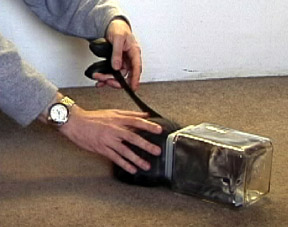
Along comes a kitten.

You can see where this is going.

Working and surplus and repairable surplus electronics have a lot of "moving parts", end markets, lifecycles and ingredients.  But whether they are one man's trash or another man's treasure, the question is when or whether they have been "discarded".  What stewards are trying to do is make it easier to discard without making it harder to donate, sell, or use... and they got in the way of trade between Trash Man and Treasure Man.   This is ultimately about regulation of wealth and value.

EPA's 2007 CRT rule was meant to evolve the existing RCRA definitions for hazardous waste, while admitting that reuse didn't allow them to fit into the previous amendments to govern "universal waste".   The first RCRA solid waste rules had to differentiate for hazardous wastes, and the hazardous rules were too onerous for the product wastes that were generated universally.   The EPA UWR re-simplified hazardous waste so that companies could collect it from millions of small businesses and homeowners (though some states simply allowed "household" to mean non-commercial, and the lamps are dumped with MSW back at RCRA Square One.

The newest version of the CRT Rule tries to take the square, modified for rectangles, and give it a three dimensional shape - a shape to govern not the status of the good (discarded), or the toxicity (TCLP), but adapted for another dimension - time.   Since the reuse CRT might be discarded SOMEDAY by someone else who bought it, in the future, records on the sale needed to be kept, or a loophole could result.


The update to the CRT Rule takes it even another dimension, collecting the same record on the sale of the same device from the broker, the generator, the buyer, etc.  Three sets of records are better than the one set, which EPA never had time to read, ask for, monitor, etc.

The new rules involve not just records of different parties to the transction of goods which will one day (we suppose) be discarded.

Meanwhile, regulators have been using derivatives of the toxic waste risk to take "waste" into new dimensions.  Including the past, or the original cradle of the product.   CRT Rule follows the "future waste" to the country it retires to, and ROHS follows it back to the maternity ward.

What could go wrong?

ROHS (elimination of lead from solder) creates incentives for tin mining operations, once closed in the islands of Indonesia (for environmental reasons) to increase in value and reopen... we mine the coral islands of today to make tomorrow's waste less toxic.

And manufacturers in nations like China and India, where new CRTs are still made, make draconian rules about the used CRTs that will one day become waste, in order to protect brand new manufacturers making CRTs (which will one day become waste).  And the mining companies of lead keep the used CRT cullet from being reused.  Everyone gets into the act.

And Stewardship will solve all of this, we are told, by taking the regulations BACK in time, to the producer, the OEM.   They will set their long time agendas against planned obsolescence aside, and will work in partnership with regulators to protect consumers from ... oh, counterfeit and grey market product, perhaps.

Where is Haliburton?

Ah, yes.  The connection to yesterday's post, about the evolution of landfills to Subtitle C landfills, to incinerators, and flow control.

They are now making shredders to eliminate the labor from hand disassembly.  Those shredders don't sell well in nations which need hand disassembly jobs, or where reuse and repair techs are so talented that they shanzhai used goods into near-new, even counterfeit condition.

What they propose is to put those developing nations into a box.

They will simplify the way we look at the emerging market.

They will just ban the trade, and get us back to Square One.

Back when the perfect shape was the enemy of the good.   There's a Plato Cave somewhere for regulators to find the principles they need to make the policy work.

Which will bring me back to the conclusion of this three part post.

KISS.

Keep It Simple, Stewards.

Don't start your policy around complex electronics made with coltan used for revolutionary internet cafes and surplus property added value planned obsolescence legal software emerging developing toxic market lifecycle jingo kitten problems.

Start with, say LAMPS.

The Trouble with "E-Waste" Stewardship: Part I

I'm not against Product Stewardship.  


keys to the city

The problem is, in their very first foray into command and control of "waste" and "markets", they chose something poorly defined and extremely complicated.  By applying a vocabulary change, and an invented word "e-Waste", they made surplus electronics policy and RCRA look a whole lot simpler than it is.

Looking back, I can see how we created some Myths about "E-Waste" [Top 10: Greenwala], and got ourselves into a world of ghost tonnage, capacitor recalls, conspicuous consumption,  planned obsolescence, local taxes, patent extension, non-tariff trade barriers, mineral policy, Egyptian revolutions and social engineering in the developing world.   So many things, it turns out, that running a successful paper recycling business, with a CDL from Boston, had qualified me, and others like me, to put ourselves in charge of.

One reason I went into electronics recycling was that it's rich and complicated field.  Compared to paper recycling (where I cut my teeth at a self-sustaining NGO Earthworm Inc. in Boston), computer recycling was dynamic.  Used PCs were extremely complex, with software issues (growth of software, not bad design, doomed the 486, Pentium I, etc.), repair and upgrade, counterfeiting, planned obsolescence, and international trade.  The analog signal auctions planned in 1996 to replace analog rabbit-ear TVs, the hard rock copper mining, the Superfund bankruptcy, mercury and toxics, and digital divide... It was like I'd moved from the farming communities of the Ozarks to live in a Recycling Policy Metropolis.

Having worked for 8 years in state government, I can tell you that state and county employees got excited by this too.   My years at DEP were a thrill and an honor, as I was able to recruit or hire some of the best and brightest staff in my lifetime.   We had a half a floor of environmentalists with policy and engineering degrees, many from prestigious schools in Boston.  And we had a track record - we had created curbside recycling, in the shoes of the officials who made bottle bill returns the law before us.  We had taken two laws, the bottle bill and RCRA, designed to promote solid waste, and had done things like create recycled paper content in federal purchases, saving trees and baby owls, and making it incredibly easy for our neighbors across the street to do so.  We made some mistakes (fodder for another blog), but on the balance, our market interference created certainty of recycling raw material supply, which had been the main problem for paper mills who were more confident about supply from a forest they owned than a fickly Earth Day hippie do-gooder marketplace.

So after a couple of decades of recycling successes, state recycling departments were flush.

We'd tackle "toxics next".  As I said to the staff in my last years at DEP (going strategically to take oversight of another department, perhaps), landfills weren't closing because they were too heavy.  The issue with unlined landfill closure was toxics.  We had to position ourselves to assess the quality of the waste we were diverting.

It was my own private mission creep, but as I grew my own department, others in the business of state government grew their agendas as well.

Tomorrow Part II:   How States Rushed In to Surplus Technology Policy

War on Reuse 2012

Vermont:   Our exports in 2010 and 2009 were 22% (both years).  Last year was 15%... the second half of the year saw reuse rates fall through the floor... as predicted in our testimony for S.77 to Vermont's legislature two years ago.

Part of the cause is the apparent declining demand (price) of reuse product, which I've described recently.  It's actually a steady demand, but a supply imbalance from rapidly emerging markets who are now switching from CRTs to LCDs themselves (seeing used Chinese CRT TVs in South America, omg)...

As the price of reuse commodities fall, resources to defend or maintain our markets are limited. Competition from Steward-Shredders in the USA, and competition from Chinese used supply, makes this seem like a losing battle.

Vermont's legislature defined "local reuse" to be restricted (to keep OEMs from having to pay for the same TV, over and over again).  But then ANR defined "local" as "USA" (Honolulu is local to Middlebury, by Vermont statute).  Ok, we then removed any reuse from the program to make sure it wasn't charged and was outside the program.  As of now, ANR has said even that is NOT ok, and material that we didn't charge to the program is sitting in a legal limbo, collecting in boxes in the plant... or more often we just recycle it and tear it down.  We buy product for the reuse markets out of state - the 16% includes material brokered from other states into export-for-reuse markets.

Economically, it's rather short-witted for Americans to take a billion dollars of assets and ban them from reuse.  It makes recycling more expensive, makes for a criminal's "sellers market" for the remaining reuse, forces export markets to buy loads which are of lesser quality, or to source their loads from Shanghai, Seoul, and Kuala Lumpur.

Basel Action Network Awarded Title, Cash, Prizes

soviet russia[Seattle, WA: April 1, 2012]  A hero's welcome was unveiled for an environmental watchdog group, to recap 10 years of efforts to reduce toxics, enforce international law, and close loopholes for dumping of used surplus electronics, or "e-waste".   The award recognized efforts of a USA NGO to represent unsuspecting victims in Africa, Asia, and Latin America. Basel Action Network, of Seattle Washington, dedicated its award to struggling Africans in emerging markets.  These small African businesspeople, who spend hundreds of millions of African dollars on used computers, find out many years later that the goods they imported and use are actually "e-waste".

The "Environmental Revolutionary Steward" award was presented by Iranian President, Mahmoud Ahmadinejad. Basel Action Network's leader James Puckett arrived by helicopter from his private first class Paul Gaughin Cruise Ship onto a red carpet at a military ceremony at CenturyLink Field.

Puckett approached the podium to a standing ovation by military rulers from a dozen nations.  He accepted the award as well as a check for 1% of the proceeds of customs fees seized for every container of used computers stopped at the ports in Tripoli, Alexandria, and other "developing world" ports.

Only Outlaws Will Export Computers
President Ahmadinejad held the E-Waste trophy high over his shoulders.  He called the BAN organization the "Real heroes" of the "Pledge of True Green Revolution", and the "Stewards of Stability".   This is the first time Ahmadinejad has used the term "green revolution", a term previously banned from use in Tehran.

Each of the generals and dignitaries joined Puckett to decry the pollution and toxic risks from the use of sites like Twitter, Facebook, Reddit, Google+, Orkut, Stumbledupon, etc.

"Ok, Revolution 2.0 is over.  Revolution 3.0 has now returned things 180 degrees, prior to all of this Kaleed Said nonesense," said Saadi Gaddafi Qaddafy Kwadafee, the billionaire football star and playboy son of deposed Colonel Omar Quadafi of Libya.

soviet russia
Prepared for used cell phone fixer lab raids
"We will not have our children exposed to computer viruses, or poisoned by toxic fumes from affordable computers," said Bashar al-Assad, leader of Syria.  "Used PCs pollute our young brains with pornographic images of democracy."

The "E-Steward Award" recognizes the efforts of European, American, South Korean, or Japanese recyclers who shred the highest percentage of used electronics, or close the doors of affordable "white box" refurbishing factories.

"Good enough technology is not good enough for Africa," said Husni Mubarek, via a Skype call covered on the stadium megastream.  A chant of "Good enough is not good enough" ensued from the green-uniformed military battalion at center stage.


"Appropriate technology is completely inappropriate," said deposed Tunisian president-for-second-life Zine al-Abadine Ben Ali.


Egypt's Revolution Profiled - Wolman, Stewardship miss 'ewaste' role

DAVID WOLMAN - David Wolman is a contributing editor at Wired, a former Fulbright journalism fellow and a winner of the 2011 Oregon Arts Commission individual artists fellowship. His third book is The End of Money.  (The Atlantic, May 4, 2011)


Wolman's new book, The Instigators, follows how Revolution 2.0 came to a head, and how online and Wired activists were able to communicate and sell the democracy on the Arab street.


I have sent a note to Wolman (though these never seem to get anywhere) suggesting that he go back a little further in his timeline.   As I've said many times, the revolution did not happen on Ipads and Android phones.   Vermont had a role in exporting about 30,000 affordable used computers to Egypt between 2002 and 2008.  In 2008, the Egyptian customs seized $80,000 worth of P4s in three sea containers, and our direct trade was broken.


Two years later, Jim Puckett of BAN was applauding the Egyptians classification of any computer manufactured more than 3 years earlier (i.e., costing less than half your annual salary) was illegal "e-waste", working or not.  The CRT display devices, which are good for 20 years, were banned.


But Mubarak could not put the Genie back in the bottle.  (photos below)  The efforts to "profile" geeks of color as polluters, as terrorists, as primitives, went down in the 9th round.

EWaste Entrepreneur Mad Man Meets Primitive Wire-Burning Robots

i for one welcome primitive robot recycling overlords
Here is an excellent article on OpenForum.com on the Five Essential Characteristics of the Entrepreneural Mind.

1.  Creativity
2.  Suspicion of Predictors
3.  Comfort with Uncertainty
4.  Openness to Experimentation
5.  Functional Humility

Some of these come more naturally to me than others.   But the article helps explain our success with Fair Trade Recycling [FTR].

Making connections is how I bind my Creativity to the rudder of reality.   Seeing people (Geeks of Color) for what they can do rather than for what they cannot do is the Key to numbers #2,- 3, -4.   Number 5 is the most challenging.  For humility... how long will this FTR opportunity last before there's more "new escrap" coming out of China than we can supply from here... and how long will personal computers even be "a thing??

The "Essential Characteristics" is a good paradigm.  This is about creatively solving an "e-waste" problem through more and better trade, seeing a market opportunity, connecting solutions (quality, accountability) with the "ewaste" events in developing world, and having fun.   The other suggested viewing for this post is the Mad Men Series episode "The Fog".  The opportunities, predictors, uncertainty, and experimentation were all around fifty years ago... except the "emerging market" wasn't overseas.  It was women and minorities, markets ignored and impugned right here in our own country, back in 1962.

Suspicion of Predictors:  Look at how self-assigned Watchdogs have characterized the six billion people in converging markets.   They have successfully gotten the Mainstream Press to buy into their Predictor - sell a device to an African or Chinese and beware the "toxic consequences".

Look at how the non-OECD "Geeks" are depicted.  Now remember past marketing campaigns, which tried to marginalize other groups, like women (50% of the world).  Imagine running a "femine trade" marketing campaign in the 1950s.   As an entrepreneur, you might get beat up. But when previously excluded women become accepted decision makers in the market - as Africans and Chinese are bound to be - money which competitors spent on denigrating campaigns will become a liability.  By being open to partnerships with "excluded class" members, you may get an inside track.

Ratio of OECD to non-OECD


Comfort with Uncertainty, Openness to Experimentation:   You must experiment with these markets - sell to them - in order to get admitted into their factories where you can know them, and then you reduce Uncertainty load by load, trade by trade.  How can an entrepreneur stay comfortable going against the "E-Steward" current, ignoring dire predictors of primitive, wire burning, incapable buyers?


The "excluded market" of non-OECD is huge.  Big, like "women" in the 1960s.  The better-off half of non-OECD, about 3 billion people, is getting online at 10 times the rate of growth of OECD nations... but they earn $3,500 per year, one tenth of OECD per capita income.  Like women who were getting increasing purchasing influence in the 1950s, but were yet to be treated as equals, its a market opportunity in the rough.   It seems crazy and rebellious (to your clients, lenders and sponors) to treat Geeks of Color as equals.  But FTR won't have these sneering Madison Avenue Mad Men Ads to be ashamed of  as this market opens up with blistering, lightning speed.  Douala Cameroun became high speed bandwidth this month.   Open the bottle, the genie is knocking...

Veolia, EPSI... Mercury Export Consequences


Product Stewardship Policy Question:  Which is worse, Mercury Recycling (required) or TV export for Repair (proposed to be prohibited)?

John Fialka's WSJ seminal reporting (2006) on the "mercury recycling" trade revealed that not all environmental laws result in environmental justice.   There are some things that shouldn't be recycled.    If recycling mercury from lamps and thermostats recovers mercury, and mercury has been eliminated as an ingredient in new products, here's what to expect:
A) mercury sales to primitive, toxic, conflict gold-mining operations in Congo
B) billions of dollars of 
mercury recycling costs in the USA  
Description of where the mercury is sold, and how it is used:
While most of the gold is produced by major corporations, tens of thousands of people work independently in smaller, artisan operations, in some cases illegal. In Ghana, for instance, the galamseys are estimated to number 20,000 to 50,000.[7] In neighboring francophone countries, such workers are called orpailleurs. In Brazil, such workers are called garimpeiros.
The high risk of such ventures was seen in the collapse of an illegal mine at DompoaseAshanti Region, Ghana, on 12 November 2009, when 18 workers were killed, including 13 women. Many women work at such mines as porters. It was the worst mining disaster in Ghanaian history.[7]
In order to maximize gold extraction, mercury is often used to amalgamate with the metal. The gold is produced by boiling away the mercury from the amalgam, a hazardous process due to toxicity of mercury vapour. Mercury is effective in extracting very small gold particles, but should be reclaimed, instead, in an effective and safe process.   (wikipedia 2010.12.09)
The EU and USA responded by banning export of hg mercury as a commodity.  The USA ban on exports begins in 2013.  This is an export ban I really like, and Basel Secretariat should focus on this "recycling export" WAY more than it should focus on electively upgraded parts during used computer repair.


Alluvial mining is basically the ONLY market demand for the mercury.  When it is banned... expect mercury recycling companies in the USA and Europe (like Veolia) to have a tough year.

Non-Toxic Stewardship: E-Waste's Consequences

Just a reminder...  Be careful what you wish for (or mandate).

Indonesia Komodo:   source of ROHS
When you replace toxics, such as lead solder, with non-toxic alternatives, such as tin-silver solder you might reduce the toxics going into lined landfills.  Hurray.

But you replace those (recycled content) toxics by mining tin from Indonesian and Malaysian coral islands, and by mining silver.  Silver mining is the number 2 source of mercury effluent into the environment (after #1, gold mining).

The point is that environmentalists have a moral and environmental responsibility to do their homework before implementing laws which do more harm than good.

My ecological friends have an inconvenient truth assumption, which is that if it's more expensive, it must be better.  Recycling is generally less expensive than mining, because it uses less oil (read:  less carbon) and produces less waste.

But if you tie that recycling up in red tape while managing metal mining under the easy rules of the General Mining Act of 1872, and then mandate use of a low-recycled-content feedstock (tin and silver), you just might be no better than the industrialists.

"Gee, you spoil all our conscientious fun."

E-Stork I: Where Poisoned e-Waste Babies Come From

Part I:   Just returned from a Middlebury College Environmental Studies Event... Zbignew Brzinski headlined a presentation on Fresh Water Shortages in China; Christine E. Boyle, a Fulbright Scholar from NC, presented on China's water policy.

China needs to get very serious about water.  The easiest way to conserve water is to charge what it costs to consume - or costs to DESPOIL it.  Whether to tax water at industry or to tax it at households...

Clean water policy has an important history in the USA.  The Blackstone River laws passed in Massachusetts in 1912 were a turning point for the industrial revolution.  The Clean Water Act of 1972 became important to the recycling industy, because it gave more value to recycled office paper  - because it was pre-bleached.  When the mills had to pay more to bleach fibers, office paper became more valuable.

E-Waste Watchdogs say a significant source of Chinese water pollution comes from primitive computer recycling.  At least, that's what we are told despoiled the river in Guiyu.  The allegation that most of that dumping came from imports from the USA has been largely discredited - Beijing alone generates 8 million pieces of "ewaste" per year, according to China Daily.

Irregardless whether the junk computers in Guiyu come from Chinese collectors, or from American non-e-steward recycling companies, polluting fresh water is unsustainable. As a former environmental regulator, I know there is one important step in investigating river pollution.

Arsenic in a water sample... it's normal to look upstream.

When high levels of arsenic were found in the West Bengal rivers in India and Bangladesh, it became one of the most researched rivers in the world.  The Louhajang River was  investigated upstream.   They found this textile manufacturing center was dumping dye, flame retardant, and bleach straight into the bloody river.