
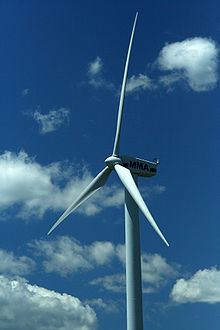
"Solving the E-Waste Problem" (StEP) is a European association of highly respected professional and academic experts with strong policy pedigrees. The "Problem Solving" effort is coming into its eight year. American environmentalists are keen for European environmental leadership. The electric windmills fanning the landscape are a testament to proactive policy.
 StEP represents itself as a "middle ground" organization. A lot of us have pandered for that position. BAN labels us as "apologists".
It is natural to seek to leverage the sensational press around "ewaste exports" and the growing tome of facts about international city junkyards. Agents of conscience naturally seek a middle ground between the Basel Action Network and... Facts. Or is it a middle ground between us and "The Other?" Otherization, or exoticism, the "informal" six out of seven billion people, who have been labelled so likely to poison their children that it warrants a billion dollars in shredding machines and arrests of African traders. Since BAN has imposed a kind of "original sin" on anyone who has ever purchased an electronic device, replaced one, or sent one for recycling, we begin with a sense of guilt. "Agents of conscience" once included exporters, a previous generation of ICT and Internet Access "white knights", organized to heal the "digital divide".
These forces have given rise to another EU based organization seeking "middle ground" between internet access and environmental risk of computer waste. RecyHub has posted an essay on ICTWorks which follows the path into the "middle ground", or "best of two worlds". RecyHub has asked me, via Twitter, to review it. ("They asked for it" is an English idiom).
On the one hand, they get the easy A. A for "Applaud Anything" that moves Europe from the extremely bizarre far-left arrests of African businesspeople, geeks, and technicians. Any correction from the 2009-2010 "years of breaking CRT glass", is a gift horse. But since they asked, I have to tell them... they are at a halfway point between alter-globalization (WR3A) and racist slander.
OK, Critique of Part A, in pure reason.
 StEP represents itself as a "middle ground" organization. A lot of us have pandered for that position. BAN labels us as "apologists".
It is natural to seek to leverage the sensational press around "ewaste exports" and the growing tome of facts about international city junkyards. Agents of conscience naturally seek a middle ground between the Basel Action Network and... Facts. Or is it a middle ground between us and "The Other?" Otherization, or exoticism, the "informal" six out of seven billion people, who have been labelled so likely to poison their children that it warrants a billion dollars in shredding machines and arrests of African traders. Since BAN has imposed a kind of "original sin" on anyone who has ever purchased an electronic device, replaced one, or sent one for recycling, we begin with a sense of guilt. "Agents of conscience" once included exporters, a previous generation of ICT and Internet Access "white knights", organized to heal the "digital divide".
These forces have given rise to another EU based organization seeking "middle ground" between internet access and environmental risk of computer waste. RecyHub has posted an essay on ICTWorks which follows the path into the "middle ground", or "best of two worlds". RecyHub has asked me, via Twitter, to review it. ("They asked for it" is an English idiom).
On the one hand, they get the easy A. A for "Applaud Anything" that moves Europe from the extremely bizarre far-left arrests of African businesspeople, geeks, and technicians. Any correction from the 2009-2010 "years of breaking CRT glass", is a gift horse. But since they asked, I have to tell them... they are at a halfway point between alter-globalization (WR3A) and racist slander.
"Electronic components contain toxics and their manipulation without proper tools can easily release them, resulting in environmental damage and health hazards. Up to now electronics have been mainly used in the most industrialized countries and dumped somewhere else when they reached their (perceived) end of life. Although this trade geography is slowly changing, some countries continue to be known e-waste recipients. Ghana, for instance, is trapped between the desire to modernise by acquiring and refurbishing technology and the damaging effects of it when it’s not reusable...
"After all, they don’t have the technology to process that material properly. E-waste exports must therefore end. That’s why a strict ban like the one proposed under the Basel Convention makes sense (taken even further to forbid any e-waste trade), and why the work of countering illegal trade must be supported.One thing I've always loved about Europe is the tradition of arguing sophisticated philosophical positions from a historical perspective. The Europeans often assume Americans don't do that, that we operate in business from some kind of a "lizard brain", seeking efficiency and profit.
OK, Critique of Part A, in pure reason.
- Toxics are not "easily released". Europe had to build shredders, which certainly releases them. Hand disassembly, harvesting parts and components (down the chips and capacitors and power supplies) is not going to yield toxics.
- Up to now electronics have not "mainly" been dumped somewhere else at the end of their perceived life.
- "Some countries continue to be known e-waste recipients. Ghana, for instance, is trapped..." This is absolutely contrary to the study RecyHub refers to, which says Ghana is NOT an "e-waste recipient" but is a 85-91% reuse recipient which generates 90% of its own "e-waste".
- "Proper tools"? A downstroke baler is the most complicated tool we use in Vermont. The best one we bought used for $2,000.
On the third point, simply visit RecyHub's website, where an entire tab titled "Ghana" offers very scientificky looking "statistics". It links to a Google Documents Page, with "comment function" enabled, which mostly takes statistics from the E-Waste Assessment (Ghana) study (they should also read the larger Nigeria E-Waste Assessment report).
"9% of the total imports of used equipment is non-repairable and is directly passed on to collectors and recyclers."
The very report they cite disproves most of the allegations. Nigeria's Assessment was more precise, finding 91% repair and reuse, but we'll accept the 80% estimate from the Ghana study (statistics taken from interviews in the latter case, from actual sea container sorts in the Nigeria study). In either case, brand new product is as bad or worse. In either case, the studies explain how Nigeria came to have (World Bank 2007 statistic from 2006 assessment) 6,900,000 households with television. And cities which have had TVs since Prince Nico Mbarga was on the top 10 are generating junk TVs, just as American and European cities do.
What do developing nations really need? More development. And taking away "trade" from the toolkit is exactly what they need least.
Where do "tinkering", "reuse", "recycling", "dumping" etc. fall in Harvard's new Social Progress Index? If you spend time with people who live in the emerging markets, the developing nations, the cities of the "not yet OECD", their aspirations and measures of progress make Europe and America's obsession with "used electronics dumping" seem obscured by clouds of disinformation.
What do developing nations really need? More development. And taking away "trade" from the toolkit is exactly what they need least.
Where do "tinkering", "reuse", "recycling", "dumping" etc. fall in Harvard's new Social Progress Index? If you spend time with people who live in the emerging markets, the developing nations, the cities of the "not yet OECD", their aspirations and measures of progress make Europe and America's obsession with "used electronics dumping" seem obscured by clouds of disinformation.

