Showing posts with label litter. Show all posts

Extended Producer Responsibility. Part 1: Define the Problem / Benign Neglect?


2009 The Watchmen

Adrian Veidt:
It doesn't take a genius to see that the world has problems.
Edward Blake:
No, but it takes a room full of morons to think they're small enough for you to handle.

"It doesn't take a genius to see the world has problems."

"It takes a roomful of morons to think they're small enough for you to handle."

So let's discuss EPR, or "Extended Producer Responsibility".  It's the most talked about recycling topic, other than "Plastic", at almost every recycling conference.

This blog is deliberately agnostic about EPR. Here is my critique.

1. Define the problem to be solved. Then don't neglect it.

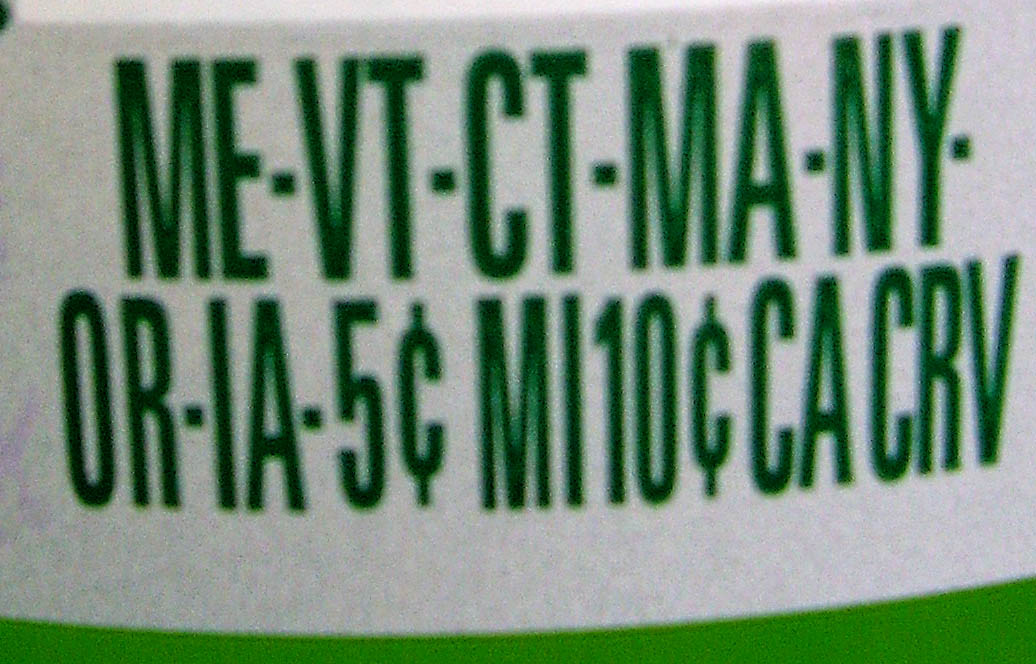
The first ever bottle bill, in Vermont in the late 1950s, was passed at a time when "disposable" beverages was new. Most soda and beer at the time was sold in refillable bottles. Vermonters collecting litter saw that the new one-use containers constituted most of the litter, and the problem was "non-deposit container litter".

In the 1980s, when bottle deposit laws were proposed in several other states (including Massachusetts, which my division administered at DEP), there was a huge shift to single-use containers, and both rewarding refillables and recycling single use were part of the plan. The advocates conceded on putting the deposit only on carbonated beverages because bottled water wasn't common and the Cranberry Juice lobby in Massachusetts argued that (highly sugared) fruit juice was healthy. 

The Privilege of Recycling Righteousness

 Waste Hierarchy vs. Litter.  Keep Atlantic Beautiful.

There is a privileged disconnect between weathy nations' obsession with recycling rate of plastic, when the emergency is ocean-bound litter in emerging markets. I don't care if it's recycled, I want to see litter collected before monsoons send it to sea.

Visit WasteAid.org 
Over the past two decades, I've been delighted to see hunger decline globally, disease vaccination rates gain, mass communications tech spread across the poorest nations, and, quite significantly, the income per capita in so-called "third world" nations triple. Most scholars now refer to developing countries as "Emerging Markets" based on double-digit annual per income growth and spending.

Still, they have a ways to go. And environmentally speaking, many African, Asian and South American Communities are at the awkward stage of environmental regulation the USA saw in the 1950s and 1960s, when cars were dumped in American Rivers, and bottle bills were driven by LITTER, not by a heartfelt need to recycle.


There is a reverse normal curve when it comes to recycling and growth of income. Very poor nations recycle the most, because the value of the material is a high wage, they cannot afford to throw it away. In places like Kumasi, Ghana, the metals from cars are segregated into far more categories than an American recycler would ever bother to. 

But when the income of a nation doubles or triples, from very poor to modestly lower class, you start to see disposables being consumed - bottled water in Africa (or plastic bagged) - but not collected. The awkward period when - like my grandparents farm in the 1960s - garbage is being produced by higher and higher levels of packaging, but at best being burned in barrels, and at worst, dumped on roadsides.

And that's what is going on in Emerging Cities, many of which are on the coast, or along one of 7 rivers that dump into the 5 oceans.

Fair Trade Recycling "EWaste Offset" Program: 8 Steps Forward, 3 Steps Back, 4 Marching in Place

We launched the FTR E-Waste Offset Program from Ghana, Africa, through this blog in 2017.  Time for an update on how the program evolved.


Briefly, here are highlights of our progress.

1) We initially had a firm quote from Camacho in Spain to take back full loads of CRT televisions, ones that had been imported in the 1970s, 1980s, and 1990s, at an extremely competitive cost... under $5k including shipping. This would have been very easy to finance with the discounts on sale of current reuse shipments.

2) Camacho needed a letter from the Ghana EPA allowing the "waste" TVs to be shipped to Spain... a demand from the Spain EPA. Turns out that was foreshadowing friction with Spain EPA that would lead to Camacho closing their purchase orders not only for Africa, but for USA as well.

3) WR3A hired an intern from Antioch University in NH, John Sumani of Wa, north Ghana. Sumani was getting his Ph.D and had previously worked at Ghana EPA. It took him about 3 months to get the requested letter (working with WebElement, a formal sector recycler in Ghana). But by the time they got the letter, Camacho's offer had vanished.

continued...

Ethical Gravity 1: NPR Throughline, History of the Ethics of Litter (and Vermont's Historical Role)

This is really worth a listen. It's a brief history of Keep America Beautiful, the history of ethical concerns over litter, and how voters are sent "grasping at straws", or recycling, rather than focus on the environmental legacy of extraction.

NPR's series Throughline takes a swing at how voters are influenced through guilt, and how that guilt can be diluted, harnessed, or its trajectory influenced by PR.


https://www.npr.org/2019/09/04/757539617/the-litter-myth?utm_campaign=storyshare&utm_source=twitter.com&utm_medium=social&t=1568103603057


The broadcast starts early on with my state of Vermont, which passed the first anti-single-use law to prevent litter. That led to the Keep America Beautiful industrial organization, which leveraged white guilt  through TV PSAs... but also acts as a "gatekeeper" or authority over what voters are told to keep in mind when they feel the gravitational pull of their liability or responsibility.  (I'd previously started a draft blog a month ago on the Crying Indian, but this program does better than I can).

Industry creates environmental awareness around litter because it's closer to more people's personal responsibility and "ethical gravity".

As I shared in a retweet of MIT's Jeremy Gregory's link to the NPR story, this keeps us away from extraction, mining reform, externalization of forestry and oil drilling.
The environmental impact is mostly at a point of extraction & creation. The focus on end of life is fetishism - similar to the way we spend 9/10 health care dollars on the last year of life. Probably [Steven Pinker] @sapinker could explain fear of / obsessions with "end points in plain sight".
Will have more to write about this, and explain what I mean by "ethical gravity" and personal sense of liability for a piece of litter, as opposed to the environmental costs of the mining or forestry or carbon or energy behind the production of that litter.  In fact, the whole plastics packaging debate completely ignores how much more efficient plastic packaging is at protecting - and extending the lifescycle - of food products (compared to selling food and drink in glass or cans or cardboard).

Systems Founded in Byproduct Management: Ingenuity 101

Lucid Energy, Stormwater X, Toilet 3.0, and Africa's Tech Sector and Scrap Sector might solve 4 problems with byproduct management.

If you are an agent of conscience, and choose to either be perfect, or become someone guided by perfect intent, you need maintenance. Like a regular teeth-cleaning or oil change, you need to regularly evaluate your interior motives, your pridefulness, your righteous indignation, and cognitive biases.  Preemium primum non nocere.

Like a machine that has been well maintained, you will, through the cumulative exposure and effort towards the improvements you've devoted yourselves to, be in the right place when the right time for an insight, inspiration, or opportunity occurs. If, for example, you care about people living in slums in emerging markets, you might spend years doing Mother Theresa one-on-several assistance, and begin to be inured to the scale of the problem. Keep your ego in check, and your eyes open, because someone else may have a good idea and never have your insight into an application that would "save the world", or your piece of it.

Where is this going? Downhill to the problem, whose byproduct is opportunity


Massachusetts Bottle Bill - Redemption Centers

A brief history of how government programs to collect deposit containers failed to keep up with the times, and what it means for e-waste and health care.


See Boston Globe on Struggling Redemption Centers...

I don't understand how people failed to grasp this when I was at Massachusetts DEP, and still don't seem to grasp it.

The bottle bill was an anti-litter campaign before it was a recycling campaign.  It somewhat arbitrarily went after "carbonated" beverages and not juice, and failed to anticipate bottled water.

Most of the bottles and cans returned for deposit are single-serve.  Most of those are consumed away from home, at the office or in the car.

Most of those are collected by janitors, custodians, and pickers, and brought to redemption centers (not to retail stores).   The redemption centers, in 1996, were 2% of the locations but handled 40+%  of the total volume.  They haven't had a handling fee increase since the 1980s and some of the distributors stopped collecting from them, making them drive out of state to deliver the containers for no additional fee.

Janitors and park-pickers need the redemption centers.  No one wants people with 600 cans and bottles inside the retail supermarkets.  And curbside programs don't do office buildings and parks (though that could change with my Tomra recommendation below).

So here are some recommendations....  15 years later