Showing posts with label deposit. Show all posts

Extended Producer Responsibility. Part 1: Define the Problem / Benign Neglect?


2009 The Watchmen

Adrian Veidt:
It doesn't take a genius to see that the world has problems.
Edward Blake:
No, but it takes a room full of morons to think they're small enough for you to handle.

"It doesn't take a genius to see the world has problems."

"It takes a roomful of morons to think they're small enough for you to handle."

So let's discuss EPR, or "Extended Producer Responsibility".  It's the most talked about recycling topic, other than "Plastic", at almost every recycling conference.

This blog is deliberately agnostic about EPR. Here is my critique.

1. Define the problem to be solved. Then don't neglect it.

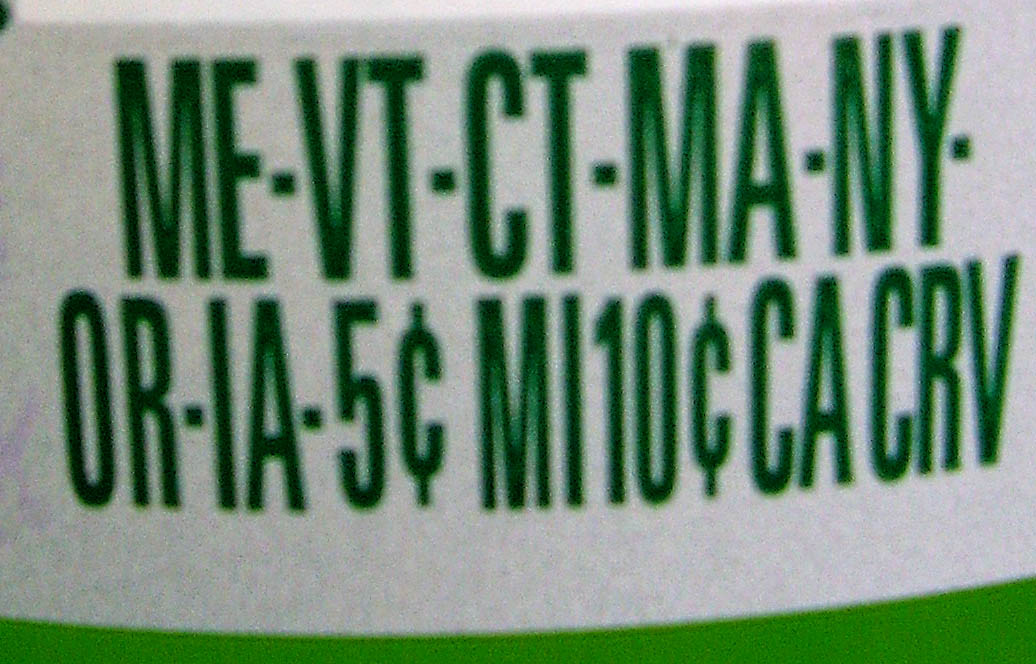
The first ever bottle bill, in Vermont in the late 1950s, was passed at a time when "disposable" beverages was new. Most soda and beer at the time was sold in refillable bottles. Vermonters collecting litter saw that the new one-use containers constituted most of the litter, and the problem was "non-deposit container litter".

In the 1980s, when bottle deposit laws were proposed in several other states (including Massachusetts, which my division administered at DEP), there was a huge shift to single-use containers, and both rewarding refillables and recycling single use were part of the plan. The advocates conceded on putting the deposit only on carbonated beverages because bottled water wasn't common and the Cranberry Juice lobby in Massachusetts argued that (highly sugared) fruit juice was healthy. 

The Ptolemy-Liability Trap: Simplified Recycling Lifecycle Narratives Tend to Revolve Around You

The Vermont free-mail, coupon-funded newspaper "Hometown" is published and mailed by the Burlington Free Press - which, with its Headliner newspaper, follows the opposite, paywall approach, online. So I'm in a bit of a quandary in presenting the snapshot, below, of the opening paragraphs of the article. Well, it's a fair use claim, and also it's common practice for newspapers to show the "lede" (opening paragraphs), so here's what catches my attention this morning.

Burlington Free Press Thanksgiving Edition
Burlington Free Press Thanksgiving "Hometown" Edition


Joel Banner Baird
of Burlington Free Press may well have started a "recycling" story for the same reason that @AdamMinter told me those stories normally appear around holidays.... they are easy to write, require little more than a google page one of research, and seem to appeal to everyone. They are not time sensitive, so a reporter can write it a week ahead, and get home for the holidays faster. But at least in the opening paragraphs, Baird bluntly avoids the normal "gotcha" narratives common in holiday journalism (someone made millions of dollars recycling trash was the go-to in the 1980s, your recyclables didn't really get recycled in the 1990s, lather-rinse-repeat for every buyers-market, sellers-market cycle). It leads, but does not bleed.

The opening interview with Michael Noel (nice holiday namesake) of TOMRA, the master-redemption center recycling provider and owner of most supermarket reverse-vendor container machines, avoids falsely choosing between either "It was the best of times."  

...Or, "It was the worst of times".

Which is the most environmentally sustainable Container for my holiday beer?

Michael Noel tells Joel Banner Baird "The short answer is, it's complicated". That is an honest answer to the decades of environmentalists (spoilt brat) privileged demands to "choose" the "best" beer container, vs. the equally misguided alt-right "recycling is Bulls**t" waste-makers. Both camps are uber-susceptible to cognitive dissonance (or perhaps vice versa, those prone to cognitive dissonance probably lean toward extreme positions). The more they choose one answer (only use this one vs. nothing matters, environmentalists are wrong), the louder they both get. Outrage is not Expertise.

[more]

Massachusetts Bottle Bill - Redemption Centers

A brief history of how government programs to collect deposit containers failed to keep up with the times, and what it means for e-waste and health care.


See Boston Globe on Struggling Redemption Centers...

I don't understand how people failed to grasp this when I was at Massachusetts DEP, and still don't seem to grasp it.

The bottle bill was an anti-litter campaign before it was a recycling campaign.  It somewhat arbitrarily went after "carbonated" beverages and not juice, and failed to anticipate bottled water.

Most of the bottles and cans returned for deposit are single-serve.  Most of those are consumed away from home, at the office or in the car.

Most of those are collected by janitors, custodians, and pickers, and brought to redemption centers (not to retail stores).   The redemption centers, in 1996, were 2% of the locations but handled 40+%  of the total volume.  They haven't had a handling fee increase since the 1980s and some of the distributors stopped collecting from them, making them drive out of state to deliver the containers for no additional fee.

Janitors and park-pickers need the redemption centers.  No one wants people with 600 cans and bottles inside the retail supermarkets.  And curbside programs don't do office buildings and parks (though that could change with my Tomra recommendation below).

So here are some recommendations....  15 years later