As multiple reporters recited from the press releases from MIT Senseable City and Basel Action Network this year, we heard descriptions of Hong Kong's New Territories, Yuen Long, and Tin Shui Wai in particular, which were familiar to people who went to high school 2-3 decades ago.

WEEETRF stands for "Waste Electrical and Electronic Equipment Treatment and Recycling Facility"
MIT's central claim is that the GPS Tracking Devices revealed "Previously Unknown" things about the used electronics trade. And they found "mistakes made" by R2 and E-Steward certified companies.
But the biggest "previously unknown" is still unreported.
Two years ago, the Hong Kong Environmental Protection Department (EPA) launched a "moon shot." And Basel Action Network didn't just miss it. THEY HID IT. #brownwashing

 But they had to say something about it... something in small print. Actually this just describes the $45M of the investment, they didn't actually mention the $550M WEEETRF next door.
 How is this NOT THE PBS HEADLINE? NGO went to huge lengths to hide perhaps the largest e-waste recycling facility on the planet, led everyone to a puny junkyard as "representative of hundreds of similar dumps" (really?) in Hong Kong ... a statement they have to make because there's no significant truck traffic, nothing approximating the volumes BAN says are going there (the Agbogbloshie problem). But they track stuff to the WEEETRF and to end users of repaired devices in Tin Shui Wai, and when I call them out... they attack ME?
Previously Unknown, or Continuously Unknown?
ED NOTE: THIS IS NOT A DEVICE GOOD POINT RECYCLING OF VERMONT TOUCHED, EXPORTED, HAD ANYTHING TO DO WITH. We obtained the data from a third party. BAN made a false statement that we are representing this as some kind of an "alibi" for a device that Vermont had something to do with. We didn't export anything at all, and the device shown above was managed on the West Coast.
"Rice Paddy". "Primitive". "Child Labor."But they missed the largest, most modern E-Waste processing facility ever seen on earth. This is an example of "brownwashing", the equal and opposite of "greenwashing".

WEEETRF stands for "Waste Electrical and Electronic Equipment Treatment and Recycling Facility"
MIT's central claim is that the GPS Tracking Devices revealed "Previously Unknown" things about the used electronics trade. And they found "mistakes made" by R2 and E-Steward certified companies.
But the biggest "previously unknown" is still unreported.
Two years ago, the Hong Kong Environmental Protection Department (EPA) launched a "moon shot." And Basel Action Network didn't just miss it. THEY HID IT. #brownwashing
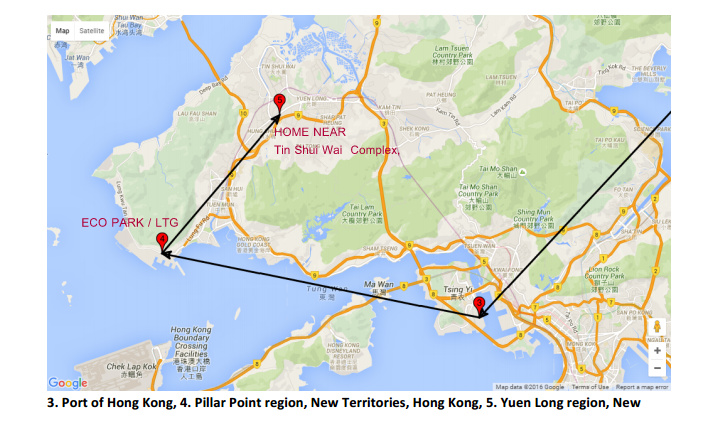
 But they had to say something about it... something in small print. Actually this just describes the $45M of the investment, they didn't actually mention the $550M WEEETRF next door.
 How is this NOT THE PBS HEADLINE? NGO went to huge lengths to hide perhaps the largest e-waste recycling facility on the planet, led everyone to a puny junkyard as "representative of hundreds of similar dumps" (really?) in Hong Kong ... a statement they have to make because there's no significant truck traffic, nothing approximating the volumes BAN says are going there (the Agbogbloshie problem). But they track stuff to the WEEETRF and to end users of repaired devices in Tin Shui Wai, and when I call them out... they attack ME?
Previously Unknown, or Continuously Unknown?
ED NOTE: THIS IS NOT A DEVICE GOOD POINT RECYCLING OF VERMONT TOUCHED, EXPORTED, HAD ANYTHING TO DO WITH. We obtained the data from a third party. BAN made a false statement that we are representing this as some kind of an "alibi" for a device that Vermont had something to do with. We didn't export anything at all, and the device shown above was managed on the West Coast.