Showing posts with label MTV. Show all posts

What $20,000 Means: Blog to Sasha Rainbow, Brian Molko, Stefan Olsdal, @PlaceboWorld


Dear Directors, Producers, and Stars of the Music Video "Life Is What You Make It",

About two weeks ago, I ran across the release of your new Placebo music video through my organization, Fair Trade Recycling / WR3A, which researches public posts on Agbogbloshie.  Despite recognizing some of Placebo's hits from the past two decades, I admit I was not at all acquainted with the artists.  Over the course of 2 weeks, I've developed a much greater appreciation for not just the art, but the social justice that Brian and others with the band strive for.


I know a lot more about African recycling than I know about music.  I've been to Abgogbloshie and Old Fadama several times with our members from Tamale, Ghana.  We have translated for or been interviewed by several documentary and print journalism investigations on so-called e-waste dumping in Africa.  Here are 4 good articles and films on the topic of export.

3Sat
Aljazeera
Smithsonian
SciDev

But let me explain how we can work together to create clean and sustainable recycling jobs for the "workers of Agbogbloshie".  There's a win-win here, and there are plenty of other people besides me you can go through if I've tarnished the relationship by introducing the subject.  ("Alright then, I'll go to hell," often starts here).

Euro Agbo Photo Journos 4: Update Placebo Video (Sasha Rainbow) in Agbogbloshie

UPDATE: Life Is What You Make It (Placebo cover)

The 1990's European rock group Placebo has launched a new hits album featuring a haunting cover version of "Life is What You Make It". The Music Video used to launch the release was filmed in June 2016 at Agbogbloshie, a slum near the center of Accra, Ghana.  The rockers declared to fans on Facebook that Agbogbloshie is The Largest E-Waste Dump In The World. The slickly filmed and haunting video is "dedicated to the workers of Agbogbloshie", and ends with three austere warnings urging fans not to allow their cell phones and computers to fall into African hands.


Most recent academic research (Memorial U, USC, PCUP, MIT), has revealed the amount of e-waste in Agbogbloshie to be globally inconsequential, and many headlines to be wildly exaggerated. Agbogbloshie is not populated with thousands of orphans "pawing" through 500 sea containers of European e-waste per month. Nor is the site a remote wetland - its status as a heavily polluted urban river was established decades before personal computers were sold in the USA.  The modest sized scrap yard (mostly auto scrap) in a city of 3-4M does receive E-Scrap in scrap metal by pickup truck and wheelbarrow carters in an informal cash economy based on copper and aluminum - and reuse - value. Baseline World Bank data show millions of Ghana households had televisions in the 1990s. UNEP and UNU data show the site accounts for far less than 1% of the e-waste traffic in the world, and probably generates most of that on its own.

To get a professional assessment of the site, in 2015 The Smithsonian and Sci.Net each sent reporters who were experienced with scrapyards. Both experienced reporters found mainstream press coverage to have been grossly exaggerated and prejudicial. The NGO which had originally named Agbogbloshie to be a significant electronic waste dumping ground now claims otherwise, now from a defensive position of having "racially profiled" the Ghana Tech Sector who successfully reuse and resell 90% of the imported goods (a record superior to brand new product sales).

Placebo SashaRainbow Filmtaker Alasdair Mitchell with Awal, Razak, Abdullah, and unknown


PLACEBO Twitter Spat: UK Band Fans White Privilege in Agbogbloshie

"The Band is absolutely dedicated to its workers.  Our policy is to give a living wage to any employee, crew person, or extra, irregardless of their race or nationality.  We'll investigate Awal Basit's concerns, and if there's any validity to his claim, we'll make this right."
 - Nobody so far.  Robin Ingenthron made this quote up to be helpful.

That's is how Robin Ingenthron would have answered the question.  So far, no one from RiseRecords or PlaceboWorld, or any band mate, has summoned the courage to address Agbogbloshie scrap worker Awal Muhammed Basit's concerns. Awal says neither he nor the two other Scrap Workers the video is "dedicated to" were paid, or signed waivers.

It would have deftly anticipated the questions over white PRIVILEGE which infuse discussions over filming slums, teledensity, liability laws, and the prison sentence for African TV repairman Joseph Benson.

Like a lot of slum dwellers, Awal is nearly illiterate and struggles with English. Fortunately, I had Wahab, our Ghana Tech Sector partner here in Vermont to translate, and felt like we could get to the bottom of this quickly.  Maybe Sasha Rainbow, the video director, mistook Awal's enthusiasm for giddiness over being featured in a PLACEBO video.  Maybe he signed a waiver he hadn't understood.

Going directly to the band, via twitter, was I know a little likely to ruffle feathers.  But we were polite in the beginning, and my concern about the days of silence have to do with the narrowing opportunity to translate directly - while Wahab is here - for the band.

IPAD: I Want My, I Want My QWERTY

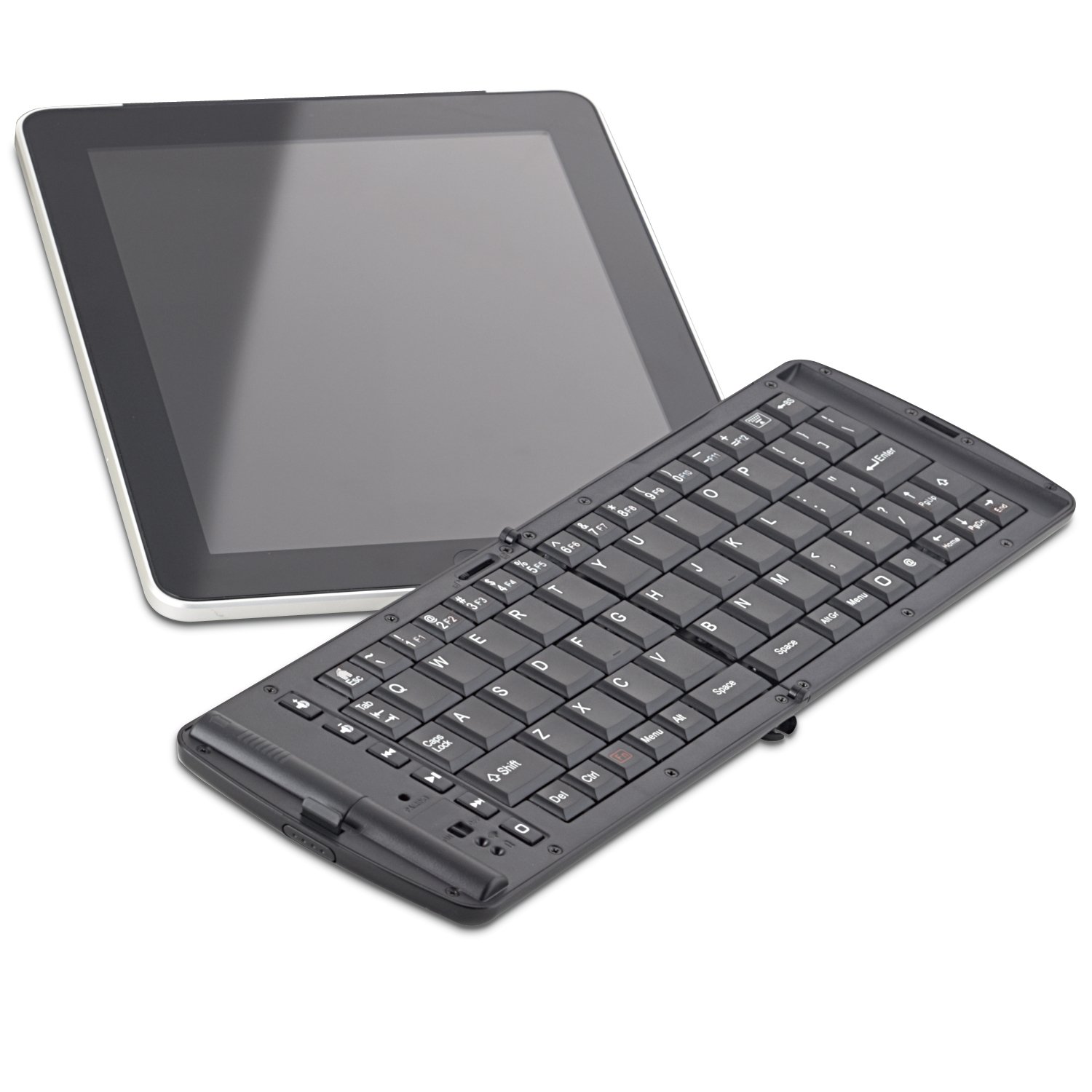
Money for Nothing Keyboard
The Day After Black Saturday:  Family discussing whether they want an IPad.  Or similar tablet, Galaxy, HTC, etc.

Millions of obsolete and junk products arrive here at our "e-waste" morgue, so opinion may pass as insight.

The laptop is a display device combined with a very flat computer (motherboard-powersupply-drive-etc).  They fold together with a keyboard input device sandwiched in between.  Three old technologies designed to fit snuggly.  In my warehouse we are surrounded by Input (keyboards, cameras and microphones) Output (display devices, speakers and printers), and the storage and processing (hard drives, processors) which bent time and distance to connect us to each other at exponential speed and convenience.

A smartphone eliminates the keyboard, in favor of a combination of software and touchscreen replacements... that is speed and convenience because of its portability (cell phone tower).   We generally don't use the smartphone to compose reports, blogs, or letters once we are at home or in the office.

Nevertheless, there have been enormous gains in touchscreen technology and software, as well as in voice recognition.  The smartphone market has unleashed a lot of software codewriting energy.

I want my, I want my, I want my QWERTY....

Where Apple really takes advantage is the opportunity to sell software or apps in this rapidly developing no-keyboard touchscreen market.   Two decades of Microsoft commanding the ALT-DEL keyboard market left other software makers too far behind to leapfrog Microsoft.  The growth of that market, and the level playing field, gives Apple a big reason to bring the touch display into the home and office.

Buying a PC, you were buying a software support environment based on a keyboard input device.  Apple had successes (notably with Adobe), but if you bought a PC you were buying a much larger stable of software code  With the Pad (touch pad) technology, Microsoft does not have a big bench.  The rules are being changed for input devices, and keyboard is no longer king.

So the question I ask my family is, how much do you hate your keyboard?   Enough to spend $1000 to get rid of it?  And will you buy a peripheral for $58.99 to replace it?

I want my, I want my, I want my QWERTY....

For me, so far, touch screen software - while it has made great gains - is still a limitation I put up with as a compromise... driving, cell phone towers, and battery life make it an advantage to laptops.   

When I see people buy keyboard-attachments for their IPads, I really think they should take another look at the sub-$500 laptop and netbook markets.

The big change however will be how non-English software takes advantage of the curve in the software road for Input Devices.   When I see Guangdong Geeks bent over the QWERTY device (infamously designed to slow input so mechanical typewriter keys don't jam), I wonder...


  • Are Chinese programmers enslaved by left-to-right keyboards reprogrammed for modern Chinese?  (Chinese and Arabs write right-to-left)

  • Or do they mainly sit passively and read from the display device, and not input (compose) as frequently?

  • Or are they going to use the leveling of the playing field for new touchscreen software applications to do, as Apple hopes to do, and leapfrog Microsoft?

  • Or... is this IPad tablet an I-fad, because really we will miss and should like our keyboards?  We keep them despite the QWERTY origins because they fit the speed at which we think most productively?
There are signs that my younger generations think more quickly than I remember thinking.   Younger staff, my kids, they are very fast conclusion-formers... They TXT LOL.  Hemingway, Dickens and Twain they are not (though all those writers thrived by incorporating less formal speech into their characters).

For the near term, Adobe, Google and Sun Java have as much of a level playing field to enjoy from keyboard-free input devices as does Apple or China.  Palm might have, but the sale to ink-cartridge-maker HP was hitching to a pretty old racehorse.

So for the IPad... I'm making room for them in the warehouse.  Personally, I always try to buy things I can repair or have a reasonable warranty (or sell-for-repair market, as my HTC Evo proved to have), and which have a reasonably mature software market.  We still have a very large Toshiba CRT Television (HD) in my living room, one discarded from an audio-visual company which paid top dollar for it, as part of a conference-call room.  A pre-skype conference call room.

I want my, I want my, I want my QWERTY....

And as anyone reading this knows, my input devices are as important to me as my display devices.  Touchscreen inputs, to me, are like sign language.  I respect it, and thank God for Helen Keller.  But I don't see it as a primary vehicle to compose a work of literature.

I'm not photogenic enough to rely on video, and the bandwidth constraints of video broadcast in emerging markets are unfriendly.  Video is like a subway, it can get you to lots of places with lots of people.  But typing is like walking, I'm not giving it up for the subway.

(Someone soon will release the first ever Text TXT novel, and it will be crap... Opera via telegraph)

I want my, I want my, I want my QWERTY....