|
| Money for Nothing Keyboard |
The Day After Black Saturday: Family discussing whether they want an IPad. Or similar tablet, Galaxy, HTC, etc.
Millions of obsolete and junk products arrive here at our "e-waste" morgue, so opinion may pass as insight.
The laptop is a display device combined with a very flat computer (motherboard-powersupply-drive-etc). They fold together with a keyboard input device sandwiched in between. Three old technologies designed to fit snuggly. In my warehouse we are surrounded by Input (keyboards, cameras and microphones) Output (display devices, speakers and printers), and the storage and processing (hard drives, processors) which bent time and distance to connect us to each other at exponential speed and convenience.
A smartphone eliminates the keyboard, in favor of a combination of software and touchscreen replacements... that is speed and convenience because of its portability (cell phone tower). We generally don't use the smartphone to compose reports, blogs, or letters once we are at home or in the office.
Nevertheless, there have been enormous gains in touchscreen technology and software, as well as in voice recognition. The smartphone market has unleashed a lot of software codewriting energy.
I want my, I want my, I want my QWERTY....
Where Apple really takes advantage is the opportunity to sell software or apps in this rapidly developing no-keyboard touchscreen market. Two decades of Microsoft commanding the ALT-DEL keyboard market left other software makers too far behind to leapfrog Microsoft. The growth of that market, and the level playing field, gives Apple a big reason to bring the touch display into the home and office.
Buying a PC, you were buying a software support environment based on a keyboard input device. Apple had successes (notably with Adobe), but if you bought a PC you were buying a much larger stable of software code With the Pad (touch pad) technology, Microsoft does not have a big bench. The rules are being changed for input devices, and keyboard is no longer king.

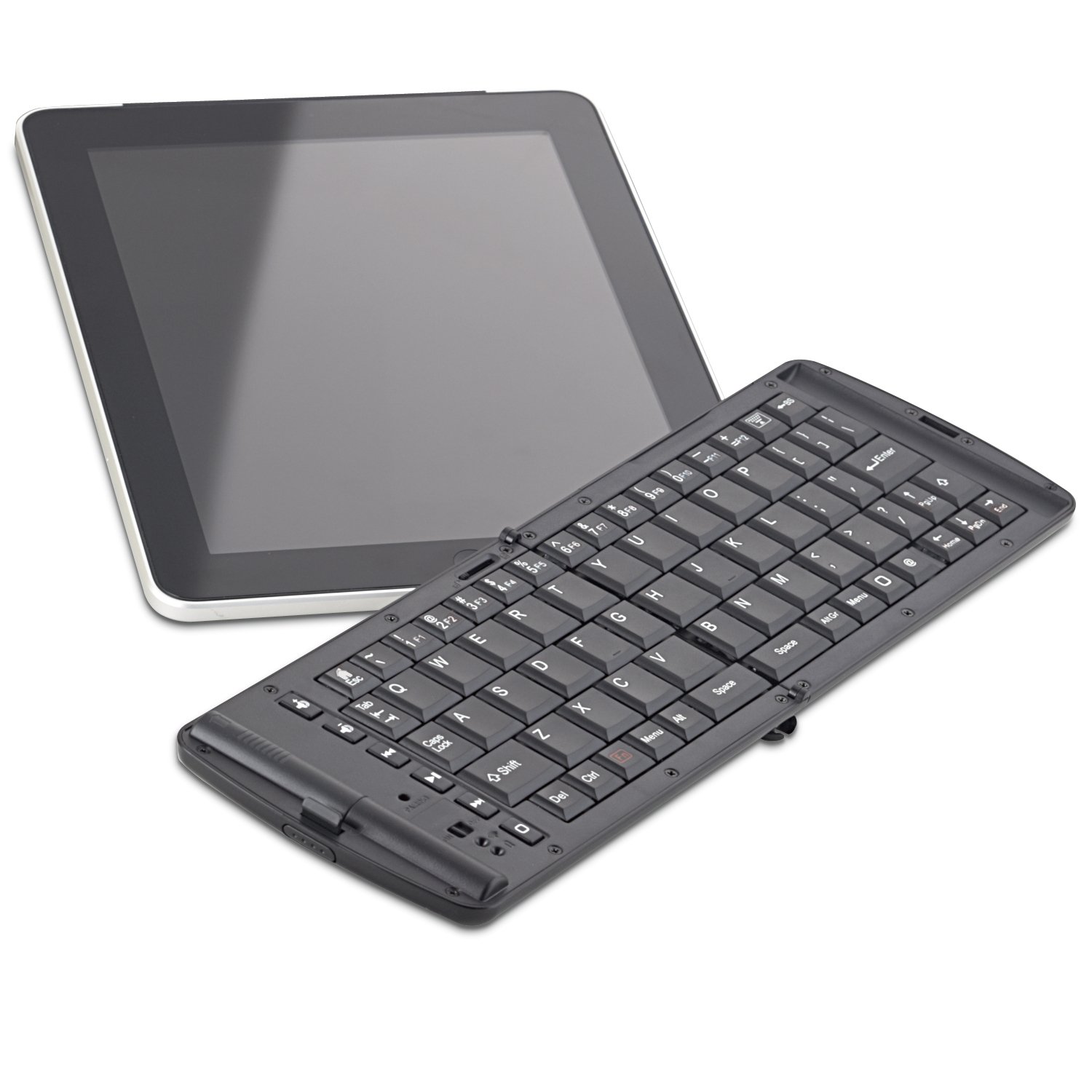
So the question I ask my family is, how much do you hate your keyboard? Enough to spend $1000 to get rid of it? And will you buy a peripheral for $58.99 to replace it?
I want my, I want my, I want my QWERTY....
For me, so far, touch screen software - while it has made great gains - is still a limitation I put up with as a compromise... driving, cell phone towers, and battery life make it an advantage to laptops.
When I see people buy keyboard-attachments for their IPads, I really think they should take another look at the sub-$500 laptop and netbook markets.
The big change however will be how non-English software takes advantage of the curve in the software road for Input Devices. When I see Guangdong Geeks bent over the QWERTY device (infamously designed to slow input so mechanical typewriter keys don't jam), I wonder...
- Are Chinese programmers enslaved by left-to-right keyboards reprogrammed for modern Chinese? (Chinese and Arabs write right-to-left)
- Or do they mainly sit passively and read from the display device, and not input (compose) as frequently?
- Or are they going to use the leveling of the playing field for new touchscreen software applications to do, as Apple hopes to do, and leapfrog Microsoft?
- Or... is this IPad tablet an I-fad, because really we will miss and should like our keyboards? We keep them despite the QWERTY origins because they fit the speed at which we think most productively?
There are signs that my younger generations think more quickly than I remember thinking. Younger staff, my kids, they are very fast conclusion-formers... They TXT LOL. Hemingway, Dickens and Twain they are not (though all those writers thrived by incorporating less formal speech into their characters).
For the near term, Adobe, Google and Sun Java have as much of a level playing field to enjoy from keyboard-free input devices as does Apple or China. Palm might have, but the sale to ink-cartridge-maker HP was hitching to a pretty old racehorse.

So for the IPad... I'm making room for them in the warehouse. Personally, I always try to buy things I can repair or have a reasonable warranty (or sell-for-repair market, as my HTC Evo proved to have), and which have a reasonably mature software market. We still have a very large Toshiba CRT Television (HD) in my living room, one discarded from an audio-visual company which paid top dollar for it, as part of a conference-call room. A pre-skype conference call room.
I want my, I want my, I want my QWERTY....
And as anyone reading this knows, my input devices are as important to me as my display devices. Touchscreen inputs, to me, are like sign language. I respect it, and thank God for Helen Keller. But I don't see it as a primary vehicle to compose a work of literature.
I'm not photogenic enough to rely on video, and the bandwidth constraints of video broadcast in emerging markets are unfriendly. Video is like a subway, it can get you to lots of places with lots of people. But typing is like walking, I'm not giving it up for the subway.
(Someone soon will release the first ever Text TXT novel, and it will be crap... Opera via telegraph)
I want my, I want my, I want my QWERTY....