Breaking News: As HK WEEETRF, So Follows Accra's "Ewaste" Moon Shot?

Another logical conclusion to all the research into NGO's proposed bans on E-Waste Exprot Trade.

"Hey, we can do it right.  We can repair and recycle better than you can"

As goes Hong Kong, so goes Agbogbloshie, Accra, Ghana.  A $30M State of the Art E-Scrap Recycling Plant is breaking ground in Ghana.   In January, I'll be there.
The Ministry of Environment, Science, Technology and Innovation in partnership with the Environmental Protection Agency are set to commission the construction of a recycling facility at Agbogbloshie in the Greater Accra Region. 
Estimated at $30 million for the first phase, the facility is expected to recycle all waste electrical and electronic equipment to final products in an environmentally sound manner, relieving the people of Accra and its environs, specifically Agbogbloshie community of toxic pollutants generated from the burning of e-waste. - See more at: http://citifmonline.com/2016/11/23/govt-to-construct-30m-e-waste-facility-at-agbogbloshie/#sthash.EpjnrmbK.dpuf
Once again, the solution to "sweatshops" is found to be "air conditioners".  Given the choice between moving business back to "Big Shred" in Europe and the USA, the Tech Sector in Emerging Markets says "Thanks but we like managing this, and by the way we're really, really good at it".


Finally the End of Ewastegate?

Collateral Damage 3: Sensationalism vs. Science

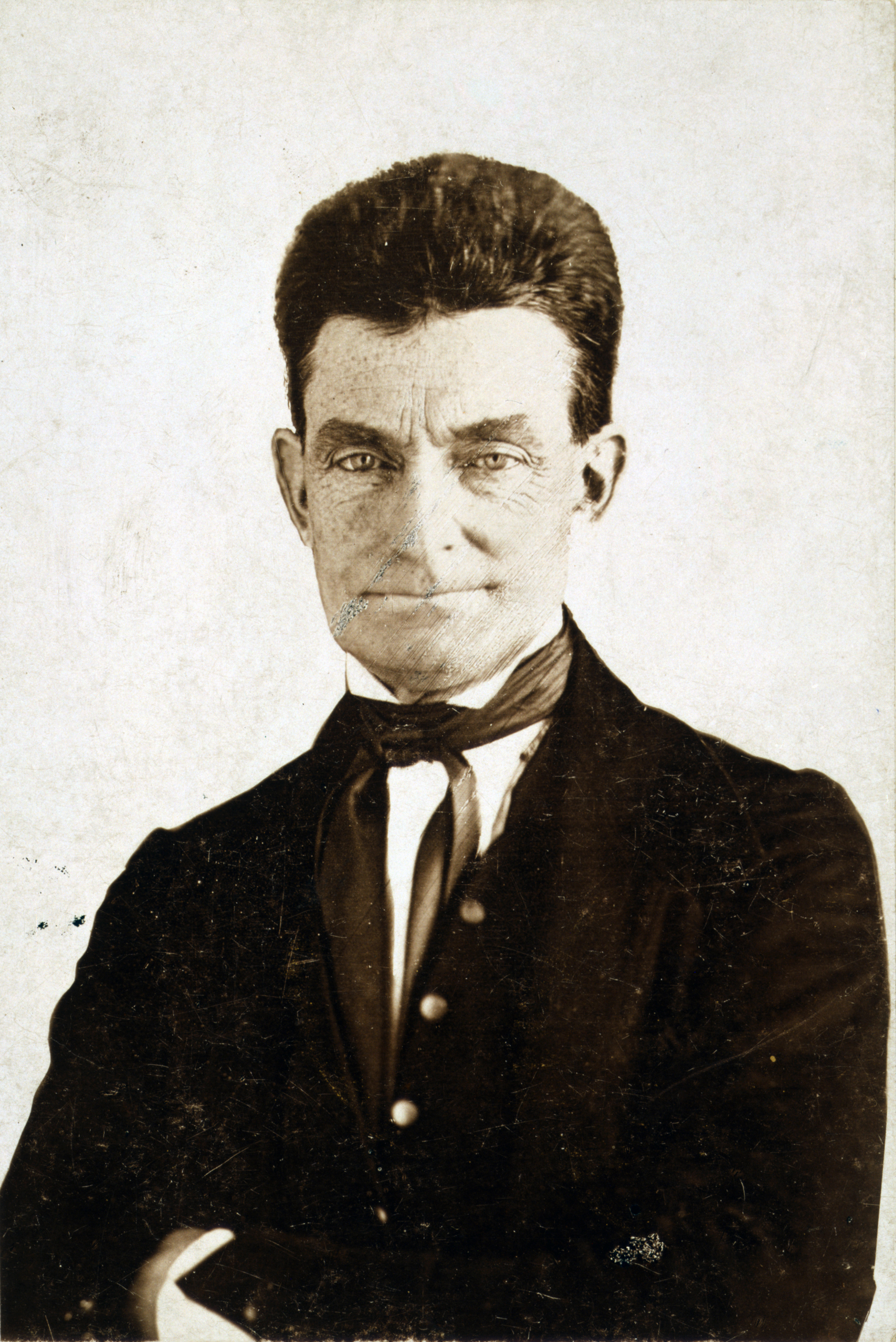
John Brown by Levin Handy, 1890-1910.jpgIn a recent correspondence, the Executive Director of the Seattle NGO made a comment about our long history trying to work with or around each other on the subject of "e-waste" regulation.  He summed it up by saying "We have a disagreement about international law and policy".

Fundamentally, perhaps not really.  We agree on what the Basel Convention says about trade between OECD and non-OECD countries.  We agree on what the Basel Ban AMENDMENT says, which would change the rules in the Convention (which covered disposal) to cover recycling and repair.  We agree the second, the Amendment, has not been ratified.  We agree that his organization has been successful in getting several European countries to substantially adapt rules on scrap recycling, repair and reuse to match the language in the Basel Ban Amendment.  And we agree that we strongly disagree whether that is the right direction for "international law and policy".

Although I'm certainly more comfortable around international law discussions than your average junkyard recycler, I would not attribute the disagreement, at least primarily, to interpretation of international treaties.  Here's my problem.

1) OECD is a bizarre basis for determination of "waste crime".   The Basel Convention uses "OECD" to make a binary distinction, drawing a line between Brazil (non-OECD) and Mexico (OECD) that "waste" shall  not cross.  The line is based on a bizarre "club membership" standard. It is not based on any science, whatsoever.  Rather, its entire basis is a rather quaint 1970's "third world" idea correlation.  Places like Singapore and Hong Kong, have higher average per capita incomes than the USA. They are not OECD, but are clearly in the business of electronics manufacture, warranty returns, refurbishment and recycling.  "OECD-Non-OECD" makes as much sense as dividing people by race, by religion, or as "cowboys and indians".

2) Sensationalism and generalizations about e-waste appeal to implicit racism.  The stories are easy to write, and create wealth for the Seattle NGO, jobs for EU and USA regulators, and trade barrier leverage for "Big Shred" recyclers.  Sensationalism makes cheap, plentiful, disposable articles, creating the collateral damage of Joe Benson, Net Peripheral, and Las Chicas Bravas.

It's really the second - the sensationalism ("poverty porn") of Asian, African, and Latino reuse markets - which drives emotions.  Emotionalizations are attractive to journalists this time of year.  I didn't introduce those to the debate.  At the beginning, my blogs and correspondence with Basel Action Network were an attempt to de-emotionalize the subject of trade, to reduce the use of photos of kids at dumps, and to reduce the prosecution and impugnment of refurbishing factories, even (or especially) those in emerging markets.

"Bad Science in the Headlines" has been a subject of research for some time, and there is nothing in e-Waste coverage to distinguish it.   Sensationalism in journalism is a human health risk.  Racially profiling geeks of color is not only morally toxic, it can produce actual risks to human health.

But if BAN brought emotion-guns to the policy fight, I can't fight with a scalpel.  And so we had little recourse but to focus on the accidental racism, the collateral damage, and false stereotypes which the sensational "e-waste" journalism brought down upon the Geeks of Color.


2016 - Particularly Hoppy Bourne Brew of Ewaste Blogs

This year, the average readership per blog has doubled.  That's no doubt thanks to the interest in #ewaste generated by the Basel Action Networks claims, and academic links to MIT Senseable City Lab.  I thought perhaps the links to Hong Kong (specific geographies, like Tin Shui Wai) may have had something to do with the readership, but actually the hits were greater in the Pakistan Faisalabad blog (which tracked the 3 CRT monitors that BAN said were exported, 2 of which wound up at a TV remanufacturing operation a few blocks from a major urban university - a far more interesting story than the dystopia described by BAN).


Or is it something else entirely that attracts readers?  Jim Puckett, the speakers on TED about #ewaste, EU policy makers, publish-or-perish researchers, the regulators, and myself, are all looking for the right background for the movie we are making in our heads, about ourselves, and our role in discarded items generated by consumers.  We all perceive ourselves in a defensive position.  EU folks I interviewed seem absolutely dumbfounded that the African Tech Sector I work with saw them in a completely "offensive" light.

Pictures of kids at dumps, and Halloween ghoulish rice-paddy language, make our jobs - and our blogs - seem more exciting, more worthy of a Moby Soundtrack (bottom).  Activists perceive ourselves as heroes, academics as judges or historians, and commercial interests are in some ways the most honest - getting food on the table for families by providing what the marketplace asks for.

USA Election: Proposing a Free Market Solution to Electoral College Dilemma

Free market solution to Electoral College dilemma.
Corporations and their shareholders should make major investments in the counties (Maine and Nebraska) whose Electoral College representatives are allowed to vote outside their state "winner take all" system. Like a "magnet school", these counties economic benefits would create incentives for other states to slowly loosen the "winner take all" system which is responsible - twice in 2 decades - for promoting a candidate with fewer popular votes to Chief Executive. Detroit should be the first. Had Michigan allowed the City of Detroit to cast its own proportionate electoral votes, investors would be saving the city and politicians wouldn't appeal solely to the Michigan rural majority. Whichever Michigan governor pulled it off would be credited with healing the city, which has become the very thing that "white" Michigan cities (Howell etc) fear in its current state.
I'm constantly asked to explain the USA's Electoral College whenever the topic of a USA election comes up. It's a civics lesson about a rational decision by smaller state actors. Here's how I explain it to Europeans.
Imagine if Europe were to try to elect a President of EU. Its "United States of Europe" constitution would require the buy-in, or joining, of individual member states with their own cultures and languages. Those states would, in a completely free market, face the same market forces as urbanization. Money is more efficiently concentrated in one place. Smaller nation-states would fear being lost in the shuffle.
Why build a bridge or an airport or a stadium in a small state, like Vermont or Belgium or Denmark, if the marketplace and political (voter) economics reward spending that infrastructure money in a big city like London, Paris, Milan, etc? If you were a President, you could always win more votes by spending every federal dollar in the cities and states with the most votes. If you were an EU state like Belgium, you'd be about the population of Michigan in the USA (in proportion to USA/EU population). That fear created the "winner take all" electoral college, and Luxembourg would as likely want "all its votes" cast on one candidate, to ensure candidates don't just passively take 45% of their votes and move on.

Collateral Damage TOC: The Preview of Ewastegate

TABLE OF CONTENTS FOR "COLLATERAL DAMAGE" BLOGS

Many, many posts on this blog have been around the theme of "unintended consequences".  Two decades of attacks by Basel Action Network to save the world's poor from the waste of the rich nations have added up to a lot of environmental injustice.

This series of blogs will try to document the case for "intervention" by Basel Action Network's donors and E-Stewards.  The NGO has lost its way, and is expending more of its firepower on agents of conscience and authors of nuance.

These are in order of scale of importance, but if you are skimming, jump to #7.  I got something new, and if it turns out to be proven, BAN's Board of Directors will need to take action before the feds get involved, and before Jim Puckett starts erasing his emails.

Collateral Damage 1. Modern high tech recycling and refurbishing factories

BAN spokespeople have repeatedly called the best and brightest recyclers and refurbishers "a myth" and have attacked those who represent them as "deniers" and "apologists", and sought amendments to the Basel Convention to make trade with those factories illegal.


Collateral Damage 2. Small scale (Informal) repair and recycling of home generated scrap

BAN has made the "informal sector" a bad word, when the smaller refurbishers are actually the most vulnerable.  Forcing African, Asian and Latin American small scale tech-sector to buy from fewer OECD suppliers creates "back alley" recycling, just as most prohibitions and boycotts do.


Collateral Damage 3.  Reporters and journalists

Reporters and journalists are in a tough spot already, forced to be experts on every environmental and economic and political topic.  Calling themselves a "watchdog", the NGO has gotten extremely false and inflammatory statistics ("80-90% exports are dumped") into USA Today, National Geographic, CNN, BBC, Economist, Al Jazeera, Science Daily, NPR, etc. etc.  The poison circulates from journalist to journalist, diverting attention from real environmental problems (like non-ferrous metal mining).

Collateral Damage 4. Environmental movement

Ditto.  Well meaning young environmentalists respond to the photos of children at dumps with a passionate indignation, not knowing that the devices they insist on destruction would have been properly repaired and reused, or even properly recycled, by the "others" portrayed as sub-adults.  This "accidental racism" will create cynicism.  (I've been urged not to use the word "hoax" out of fear fellow environmentalists will wind up as collateral damage).


Collateral Damage 5. Interpol, EPA, and Enforcement

A massive waste of resources, "Project Eden" found no Eden in Africa.  It found statistics from World Bank that showed no more illegality or fraud in trade of used electronics than any other trade - until the crackdown.  (Make straw hats illegal and straw hat crime increases).

Collateral Damage 6. Economy (CA SB20)

California believed BAN's malarky about CRT dumping in Guiyu (never a destination for CRTs) and cut itself off from a billion dollar per year refurbishing factory market, which BAN told SB20 was "illegal" and "a myth".  The "cancellation clause" created huge piles of CRT glass and robbed California taxpayers while doing nothing at all to improve the environment.

Collateral Damage 7. Basel Action Network Board of Directors, employees, and friends

In this post I intend to reveal new information about the MIT GPS methodology, suspicions about methodology asked about in our 14 page letter to Carlo Ratti, some of which are now proven. But ironically, there is a brand new development I would have missed if I hadn't been forced to go back to it by BAN's false attack on my company and its friends.  It has to do with the releasing of information about the GPS trackers to companies who pay BAN a portion of their income.   
During the period the GPS was sent to Middlebury, my company was in the process of shipping several loads of printer scrap to an E-Steward.  The company denied Good Point Recycling dock apointments, which we asked for repeatedly over several days.  If Jim Puckett allegation that the printer "very quickly" went to Chicago, that means he had real-time knowledge of the tracked device.  It now appears that device WOULD have been delivered from my company to the E-Steward if our dock appointments, which we'd already shipped several, had not been cut off while the GPS device was in our factory.  I may reveal the frustration from emails sent by my employees over the E-Steward delivery cancellations, and my pleading with the Chicago area e-Steward to let us deliver the loads which we had been issued purchase orders for.  We can show that resulted in a change to the other R2 Chicago company - the one we had not tried delivering to, but whose audit showed R2 certified downstreams in Hong Kong... and how we sought to relieve that pressure by re-sorting potenially reuseable laser printers for the R2 load.  
 Put this another way:  The ratio in 2015 for loads shipped to the E-Steward to the R2 company (total all materials, not just printers) is 93.3% to 6.7%  The odds that a device would wind up at one of the two companies, rather than the other, is striking.
If is apparently true that MIT undergraduates were instructed how to find a non-public office on the basis that they disclosed my company, and they selected a laser printer which sells used for $349 to drop off there, it was bad enough.   If in addition, BAN knew the location of the device in real time, and the Chicago area e-Stewards recycler cancelled the 5th load already prepared for it because it had information about the GPS device from BAN, then that is potentially criminal. 
Got that?  That would appear to be a violation of SEC rules at best, and potentially a criminal enterprise if the collusion was intended to harm R2 companies that were using the same "approved" downstream as E-Stewards companies (which have agreements to pay BAN $$ a share of their income, which goes in Jim's pocket).  Before I provide the evidence of it, I would suggest that BAN's Board of Directors get in touch with me, so I can provide them and MIT's attorney with information that should not be given to Jim.  I have testimony from E-Stewards that they were aware of the GPS devices before BAN made the public announcement, and in some cases actually helped deploy the devices against competitors. 
I had asked MIT about this possibility in May 2016, and MIT provided my letter to BAN (without cc'ing me or informing me).  It should have been an opportunity for Jim to vet the methodology internally.  If, as it now appears, BAN leaked information selectively to e-Stewards, and some of that was "live" information, someone could actually go to prison.  There may be a legitimate explanation for the cancellation of the printer scrap delivery to the E-Steward company.  But if not, E-Stewards and BAN itself could be the biggest collateral damage of their leaders obsession with Robin Ingenthron and Fair Trade Recycling.

Collateral Damage 8. My personal relationships
Admittedly, I look obsessed, too.  That ain't good.  But its the business relationships I'm building, the memberships in Fair Trade Recycling, that have been collateral damage to BAN's 2 page hit job.  And yeah, I'll write more about that too.  It's the financial damage that would become a part of a defamation or slander lawsuit.  But those are expensive and tie up the legal system.  It is the due diligence of Boards of Directors and MIT Ethics departments which will shake this out when they see that I have a very legitimate case.

Let the due diligence begin.