Showing posts with label Kamande. Show all posts

Monkey Zoo Math: Reprint of Basel Action Network Fingerprints

In July of 2010, I wrote the post with the most reads to date.  Some have suggested that it was too long and buried the lead, but the people I met after writing it encouraged me to write more, and not to be afraid to write longer.

Below (more:) is the bottom third of the blog "Monkeys Running the Environmental Zoo".  The math has now been corroborated by USITC, by MIT, by World Bank, by the ASU Williams/Kahhat study, the Nigeria and Ghana E-Waste Assessment (studies of 279 actual containers, seized at ports in Lagos, based on reporter Cahal Milmo's and Greenpeace's "investigation" of naughty, naughty African television repairmen).

I will re-link all of those studies this week.   But as a reminder, Basel Action Network knew this in 2006, when they provided guidance to Kenyan researchers Kiaka and Kamande.
PRELIMINARY STUDY ON THE IMPORTED SECOND HAND COMPUTERS IN KENYA - THE CASE OF NAIROBI by Richard Kiaka and Rachel Kamande (2007) "with guidance from Puckett James, Basel Action Network"
The 2010 math has been completely borne out.  All you had to do was listen to the African, Latin American, and Taiwanese refurbishers, and take a pen and the back of an envelope.  It has always been obvious. Toxics are a problem, pollution is serious business... but Racial profiling doesn't look good dressed in green.   There are real victims of Environmental Malpractice, and the time has come to clean our "stewardship" programs of the vestiges of accidental racism and poverty porn.

Whose fingerprints are on the "e-waste" monitors at Agbogbloshie?   African cities.  The "80% export" figure was not just a mistake... it was mathematically impossible, and disproven by BAN's own 2007 study.  

From 2010 Blog:

Q:  How do bad monitors get overseas? 

Earth Week Academia: Reading Fair Trade Recycling Summit

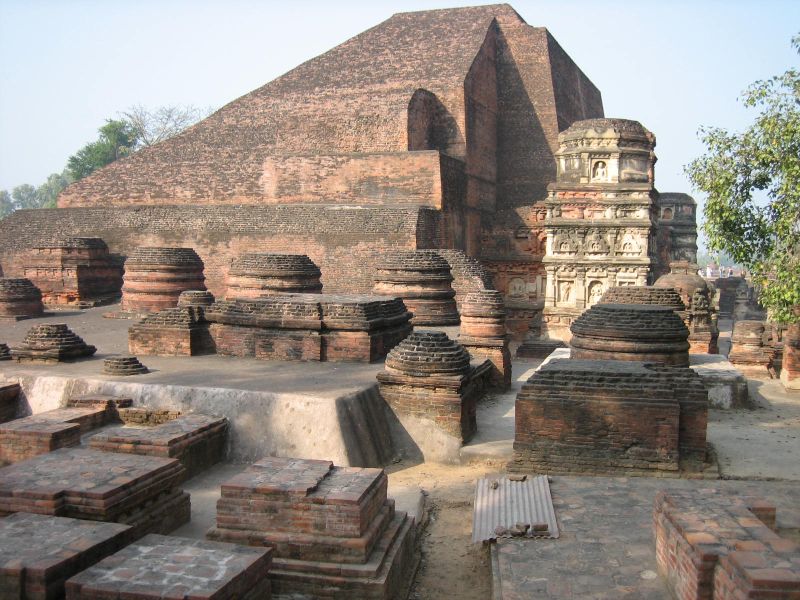
File:Nalanda University India ruins.jpg

Nalanda University India ruins:  A-Waste?

The Fair Trade Recycling Association has been asked by professors at Memorial University and Middlebury College to suggest a "reading list" for students preparing to attend the Fair Trade Recycling Summit.  The Summit will be streamed online from Middlebury College on April 16, 2013.

Colleges and universities outside of Middlebury are watching, from classrooms in the faraway reaches of Africa, South America, and California.  I thought I'd post the readings which have been discussed and may be assigned to the classes at Middlebury College.  It's a great bibliography for a serious term paper in environmental studies or international economics or political science.

Big Works are from 1960.  Environmental Studies they should be aware of them and we can recommend a chapter of each.

"Silent Spring" by Rachael Carlson, created awareness/knowledge of an "invisible toxic enemy".

"The Waste Makers" by Vance Packard, is about the corporate bias against reuse and repair, and the extent to which "planned obsolescence" will grow.  Republished featuring an introduction by Bill McKibben of Middlebury College.

The question is whether the "Waste Makers" are using cognitive risk marketing (from Silent Spring) to make environmentalists exaggerate fear of "e-waste" recycling.

Specific, Shorter, Background Reading on "E-waste":


Banning the Exportation of Ladders


We would be heartless to ignore the images.   Poor child workers, huddled over fires, stoked with the coals of yesterday's technology.   As westerners spend more and more lavishly on shiny smart phones, flat screens, and tablets, with the world's wiki-media at our fingertips, it seems apt to pause and think about the impact of the wealthy's consumption on the planet's resources, and of the worlds poor, left seemingly farther and farther below us, inside a muddy pit of toxic fumes.

Photographers like Pieter Hugo capture the wet irritation in the eyes of the black teenager.  Filmmakers like David Fedele slowly let the reel turn and record the images of kids trying to make a living off of the scraps of electronics once imported into their cities.

Cairo, Lagos, and Accra, the megalopoleis of urban growth, stream with cell towers and internet today.  But the poor just outside those cities, at their unlined, unregulated, unspoken dumps, seem to stretch their arms out of a moat.  Their slow effort to climb out of poverty, through urban mining, makes Europeans and Americans feel guilty, ashamed of our wealth.  Reminded of these "poster child" recycling workers, seemingly without even boots to lift as they climb, we want to check a box.  We want to say we are certified.  We want to pass a law, a ban, to address the unfamiliar black faces hauling too familiar CRT televisions, VCRs, and refrigerators.  To say we have done our part for Africa and change the topic.  Turn the page, please, make the images go away.

There are indeed many important topics in the so-called "third world".
  • Endangered species poaching.
  • Sex trade.
  • Toxic alleuvial gold mining.
  • Blood minerals.
  • Crime.
  • Despotism.
  • Child soldiers.
How much of our time should we devote to "e-waste"?  Where does it belong on this list?