"Dead Reckoning": Cross Cultural Risk Part II


Second of 3 holiday blogs on Cross Cultural Risk Comparison, Assessment. 


 Peter Stackpole, 1955
These Thanksgiving posts on "Dead Reckoning" Risk Assessment were originally part of the "Broken Arrow" series.  I decided to split them out, in part because it remains dicey to name the names and actions that led the State of Vermont to engage in a battle of friendly fire on its own recycling infrastructure.

It is Sunday, November 30.  A few minutes ago I went to the kitchen, where I had to make an "executive decision" on holiday leftovers.   My wife and I have a system, I cook turkey dinner and we invite 2-3 friends over for Thanksgiving.  It's a 14-15 lb. free range Vermont turkey (leaner and tastier, well worth the $10 extra), and generates a lot of leftovers.  After the meal, as I was taught in the Ozarks by my hillbilly parents and grandparents, I salvage.  That means stripping the turkey of all the meat and putting the carcass in a pressure cooker to get out the remaining nutrients.   We have an open house pot-luck on Friday where many more friends come over and are encouraged to bring their leftovers, and I make a "second edition gravy" from the pressure cooker...

Unfortunately, I just had to throw away about a pound of turkey meat.  We had left it out (room in the fridge issues) all day Saturday.  This morning, I opened it and caught a slightly spoiled whiff.   Definitely something I would have still eaten in college, after rinsing and washing the pieces, which I started to do.   But definitely something my wife would not keep if she had opened it first.   I started the process of re-cooking it, hillbilly style... Then I reconsidered.  Rather than debate the risk/benefit analysis of food-borne-illnesses, I decided then to throw it away.

What are the ethics of serving, or disposing of, leftover food?  Here and now?  And how can the weighing of risks of these decisions be analyzed to provide insight to environmental policy today?

"Dead Reckoning": Cross Cultural Risk Part I


3 holiday blogs on Cross Cultural Risk Comparison, Assessment.  


File:Rubberbandball.jpgRisk Comparison and Assessment.  Sometimes society gets it right.  Sometimes, though, we miscalculate risk, and misdiagnose.  Environmental regulations are the response to environmental risks, which may or may not be a direct risk to human health.  If our subjective responses to direct risk to our own lives vary, by demographic, how good is our derivative judgement of the more indirect risk to the environment?  And to the indirect risk to an environment physically distant?

Our opinions on world risk are like an army of rubber bands.  When enough of them are used together, they can create energy, a movement, or an obstacle.

"Risk" generates aversion, and aversion is energy to be harvested, either by capitalists, or by command-and-control economies.  Risk aversion, and the externalized risk aversion (which arises genetically from the impulse to nurture), are winds we can direct towards or away from our windmills and sails by conjure.   The force which conjures these winds is journalism, or wiki-editing, or other social media.

Now that I've lost nearly everybody (a Thanksgiving long-bomb hail Mary blog tradition), let's use e-waste policy, again, as a lens to measure how media plays on society's cognitive risk (personal threat avoidance, or nurture to protect "others", or true ecosystem challenges) to stir policies worth billions of dollars.


In our families, our religions, our work, and our lives we must weigh different derivatives of risk and benefit.  But our actions and decisions and votes seem like rubberbands.  They are capable of holding small things together, or inflicting a snap of pain.  But the rubber band cannot hold back a landslide.  We direct the energy and elasticity we have to the things we can cognitively manage.   That image is a way of introducing my theory of how we care about the pictures of little kids in Africa and Asia.


Broken Arrow 2: The "mean" of all opinions (Why We Are Trolls)

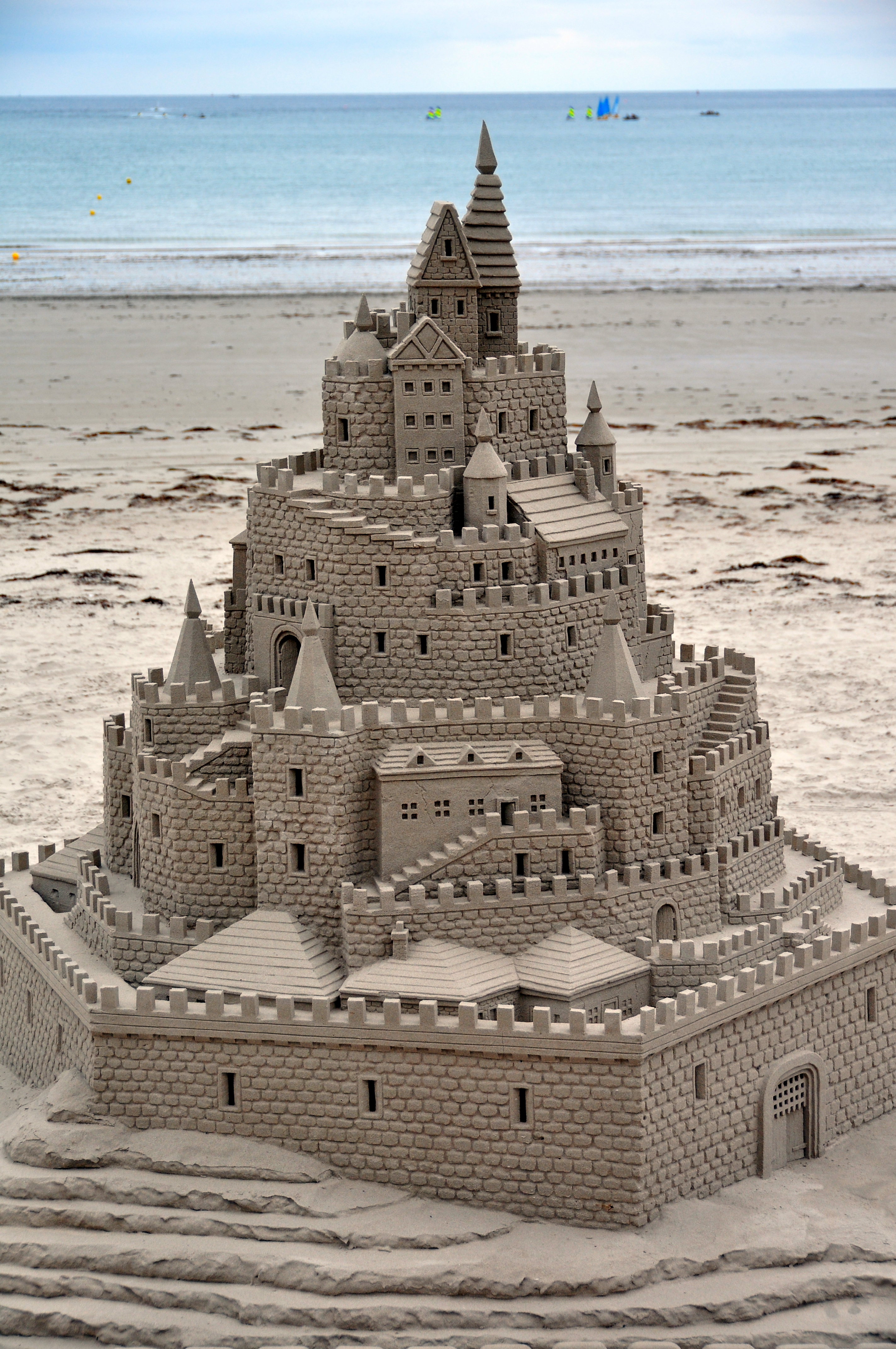
Before I set out on the posts "Broken Arrow", about how my company has to make some deals under the onslaught of so-called E-Stewards and BAN-friendly state regulators, I have to find some zen.  The "ugly sandcastle" blog last weekend (post-titled "Broken Arrow 1") is an apt analogy.  Shutting down our exports to Egypt or Malaysia or Peru or Africa isn't that big a deal.   It's not the beauty or necessity of the sandcastle, it's the value of the experience building it together with people you care about.

And that's something intensely personal, something I'm prone to feel too passionately about.   And people mistake that for caring about the sandcastle.

I want the right to build sandcastles with my kids, and the right to trade with "geeks of color", even when the sandcastles fall and the repaired and working units eventually become waste.

I don't like the fact that expensive "new" sandcastles, mined from Congo conflict metals, are sold to people with fewer choices, who can't afford them.   Those "new" and "fully functional" units crumble just as much as sustainable used refurbished sandcastles do.  I don't like planned obsolescence, or laws banning the "right to repair", even if all technology, and all companies, are like sandcastles.

But time should give us a prospective that protects us from lashing out and "trolling the internet" with vitriolic comments.  Blogs included.

(AT least check out the photo below, it's a treasure of obsolescence)

Broken Arrow 1: Like Protecting an Ugly Sandcastle From a Rising Tide

One of the best things a father can do is really enjoy building a decent sandcastle on the beach with his three kids.  Get into it.  My wife, Armelle, often sits under a hat or a parasol and reads or works crossword puzzles, while I motivate the kids for the sandcastle project.

Getting totally into it... that's the secret to sand castles.  If you are doing it by rote, as some kind of obligation, without passion or inspiration, the kids will pick up on that and you are finished within an hour.   My best sandcastles got all 3 kids involved, and kept them involved.  The castles meant something to me, and to the kids, even though I knew what happens to sandcastles.

One or two times I remember pretty vividly.   Nine or ten years ago, the kids were probably four and eight (times two), or three and seven.  As every summer, it took place in Le Barcares France, where my wife's parents (French Catalans) purchased a condo.

http://upload.wikimedia.org/wikipedia/commons/2/2a/Ultimate_Sand_Castle.jpg
from wikipedia commons, mail order
One of the special sandcastles was a first "history lesson" for the kids.   I started by making a tiny compound and told them, "this is how people lived about three thousand years ago".  There was a garden, and some huts, and a well.   Then I told about how someone takes charge and organizes, motivates, leads... I don't really believe people in villages simultaneously decide to build a wall to protect their garden, or a silo for their grain.  I suspect it takes a person with a vision, someone to convince people to work a little harder, save a little more, defer gratification.

The sand grain silo became a tower, and the walls became a fortess, as people realize that deferring and saving makes a tasty target for theft and raids.   I talked about feudal systems with the kids, and "land lords".  The ones who built the castles offered protection in a raid, and a fortress silo was like a bank.

We built moats, and trenches, and roads.  The history of Europe sandcastle continued to grow for 3-4 hours, and my kids were into it.  They felt some kind of history or ownership, like they had know the castle for generations, for a thousand years.

Labor Saving Devices Advertise Jobs In USA

There are older versions of this song on youtube, and versions I like better.


This is a song about jobs, it romaniticizes hand labor.

Shredding machines have been given a much lighter job than rail setting machines.  They don't repair, they don't even set aside repairable items.

And in fact they don't finish the job.

The specifications you see advertised on electronics shredders are real.  They really do produce the copper, aluminum, and plastics streams they show.  But the trick is this.  They produce 80% of the sort in the first 20% of the time and energy they run.

In 20% of the time, the machine owner gets 80% of the benefit.  The owner of the machine has to continue to grind, grind, grind, running the shredder 5 times longer, to get the cleanest stream advertised in the shredding magazine.

It's called "diminishing returns".

Adam Minter's book (Junkyard Planet) shows the lines at the back end of the shredders, the people who hand-sort material that has been shredded not-quite-to-spec.  As he documents, it's appropriate at some point, when the labor has run into it's own Paretto Principle, when there are diminishing returns for the labor.  My company sends a percentage of cleaned e-scrap off to shredders, we are not hand-disassembly "purists".

But even the material we send for shredding doesn't "end of life" there.  Most profitable USA shredding companies turn the machines off before 50%, sending the remaining pieces overseas to be hand-sorted.  They never run the machines 100%, due to "diminishing returns".  It takes as much energy to clean the last 20% of material as it took to clean the first 80%.  Sorters do a better job, by hand, in China, and just as much labor is exported as was displaced in the USA.

The irony is that shredding companies advertise themselves as creators of jobs in the USA.  That's really not true.   The shredders who advertise "USA jobs" are using mechanical means to eliminate labor in the USA, and to eliminate repair and remanufacturing jobs which simultaneously create more employment in both the exporting and importing country.