Showing posts with label #plasticwaste. Show all posts

Halloween Statistics: Greenpeace Quit Saving the Whales, Now We Must Save the DataJournalists


Happy Halloween!  This year, I'm going as a very scary statistic.

What do we do when someone with a reputation for caring about the poor, caring about endangered species, etc., uses their reputation to convince the Mainstream Press of a false math account? When they create mainstream story that exaggerates the actual problems - many of which are real - they create what #KirstenLinnenkoper labels "The Plastic Boogeyman" in this month's Recycling International.

Somewhere, deep in our amygdala, English Majors are afraid of math. English majors are more likely to become journalists - or "photojournalists" - than they are to be #datajournalists.  And we are seeing this routine over and over again, as a #CharityIndustrialComplex makes up numbers to scare reporters, who seem at a loss over how to fact-check.

Michal Manas, Baled PETE in Czech Republic, Wikimedia Commons


This year, the #fakestat is "Nine Percent".  Greenpeace snuck their own executive summary onto an otherwise sound piece of plastic recycling research.  And they get mainstream press to report that of all single serve plastic containers sold, only 9% of plastic containers are recycled. The conclusion they allow some reporters to leave with is that only 9% of the plastic in this photo above really gets recycled. At least, I heard reporters say that, and so far, Greenpeace and BAN have yet to correct it.

Nine percent sounds really bad. If you are a city, why even bother to pay for collecting those containers? If you are a resident, why bother putting PETE or HDPE into the blue bin? On NPR's "It's Been A Minute" a few months ago, the panel glibly announced SPECIFICALLY that of what you put into a recycling blue bin, only 9% really gets recycled.

Compare that to Aluminum containers. Putting aside that these stats themselves suffer from "Formal Sector" bias (many aluminum cans get recycled in China and Africa and India, where there is no formal "spreadsheet" to track it), the 9% Greenpeace statistic is awful compared to Aluminum Cans.

"Notably, while the Aluminum Association has reported a 45.2% consumer recycling rate for aluminum cans, the RRS analysis uses 38% as the national baseline to reflect the percentage of aluminum that actually makes it to remelting facilities, after material losses that occur during collection and sorting." 2022 Press Release, Ball Systems and RRS

So they divide recycled aluminum cans by all aluminum cans.


collected in the numerator

divided by cans manufactured in the denominator


The numerator of the Aluminum Statistic are tons of aluminum single serve containers documented to be recycled. (formal sector numbers).  Now, look at the Plastic report calculation, covered in Science.org in 2017... TITLE? 

Production, use, and fate of all plastics ever made

"As of 2015, approximately 6300 Mt of plastic waste had been generated, around 9% of which had been recycled, 12% was incinerated, and 79% was accumulated in landfills or the natural environment."  https://lnkd.in/e_wN-t5j
See that? The numerator is plastic recycling - mostly single serve PETE and HDPE containers, though LDPE Film is also legitimately recovered.  All are reclaimed at higher than 9% rates - if we measure it the way aluminum cans are measured.  But if you follow the link to the study, the DENOMINATOR is all plastic ever produced.  Greenpeace divides the captured recycling containers and divides them by bottles PLUS child car seats, underground PVC pipe, auto bumpers, etc.


Recycled bottles in the numerator, divided by ALL PLASTIC EVER PRODUCED


+  + 
 + 


In 2005, a year before I started this Blog, retired Greenpeace Founder Patrick Moore published this in the Miami Herald - the same time BAN and Greenpeace started press releases about "ewaste exports"
http://greenspiritstrategies.com/the-environmental-movement-greens-have-lost-their-way/

Special to the Miami Herald

January 28, 2005

Scare tactics, disinformation go too far

I  am often asked why I broke ranks with Greenpeace after 15 years as a founder and full-time environmental activist. I had my personal reasons, but it was on issues of policy that I found it necessary to move on.

By the mid-1980s, the environmental movement had abandoned science and logic in favor of emotion and sensationalism. I became aware of the emerging concept of sustainable development: balancing environmental, social and economic priorities. Converted to the idea that win-win solutions could be found by bringing all interests together, I made the move from confrontation to consensus.

Since then, I have worked under the banner of Greenspirit to develop an environmental policy platform based on science, logic and the recognition that more than six billion people need to survive and prosper every day of the year. The environmental movement has lost its way, favoring political correctness over factual accuracy, stooping to scare tactics to garner support.

We’re faced with environmental policies that ignore science and result in increased risk to human health and ecology. To borrow from the vernacular, how sick is that?


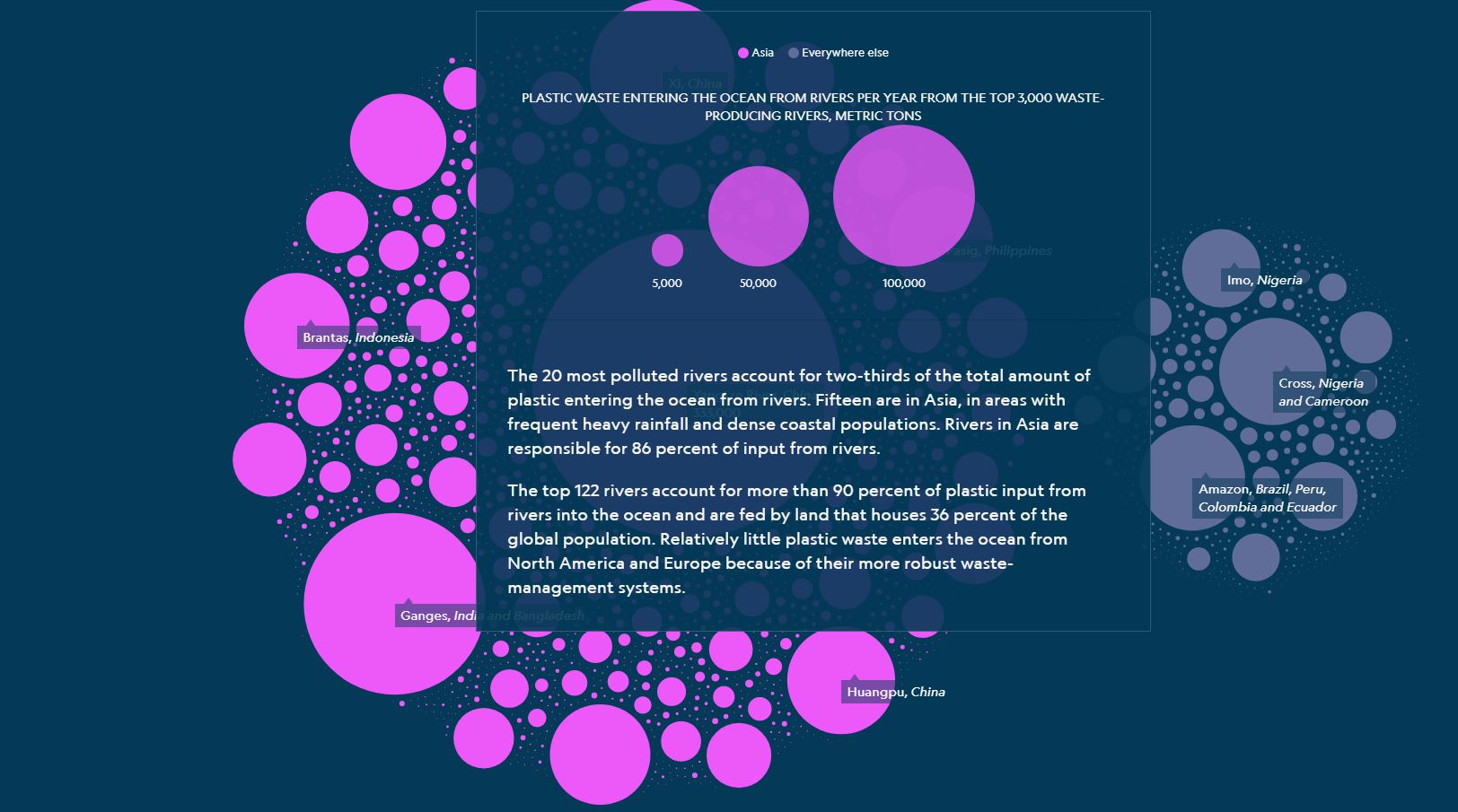
Plastic Waste Is A Biproduct - of Growing World Consumer Affluence (and Petrol Refinement)

Based on Twitter, Quora, Facebook and LinkedIn, as well as a growing number of press releases issued by Basel Action Network (the worst run NGO on the planet, manufacturing disinformation and reckless ad hominem and warrantless accusations and collateral damage for 2 decades), the plastic straw in the turtle's nose continues to churn affluent (#wguilt) attention.

This National Geographic Ocean Plastic Graphic is the best graphic presentation of an environmental problem since EWaste Republic.

The problem of ocean plastics is real.  It is so serious that we cannot afford to waste time on false causalities.  There is a cognitive dissonance growing in the environmentally activist community.  We don't want our heart surgeons to be displaying emotional breakdowns. Virtually ZERO of the Ocean Plastics Waste can be attributed to Western recycling programs, and virtually NOTHING can be accomplished by ceasing production of plastic at the source.

1) Plastic is itself, by and large, a recycled byproduct of gasoline refining.  When petroleum is pumped from the ground and refined to produce diesel or petrol or kerosene, a fatty polymer rich byproduct is produced. Plastic was a great invention to reduce the need to burn or dump that byproduct.

2) If Plastic was eliminated, it might give us a warm feeling that won't last long (like peeing our own pants). The energy needed to transport waste from food spoilage or metals and glass manufactured to replace it, and the weight of the new packaging, would create greater demand for fuel derived from petroleum.  The more cheese you make, the more whey you produce, the more milk you make, the more butter fat you produce, the more gasoline you make, the more polymers you produce. Banning whey won't spare any heifers. 

3) Ocean Plastic waste is, according to the very interesting internet presentation by National Geographic, produced by nations which are growing the most quickly in per capita income. As Africans and Asians have eliminated starvation, disease, and poverty over the past 50 years, they can afford the same stuff (gasoline engines and packaged water and packaged food) that "wealthy" countries have been buying.