Recycling My Morning Morale

I woke up this AM feeling a strong need for stronger coffee.

My morale was a little down from a disappointing investment offer on my business.  It may be a fair offer, I think a third party has to look at it, but it's disappointing.  Good Point Recycling has grown used to enormous growth and positive rewards from the risks we've taken, and I believe in our business model of "fair trade" recycling.

Now we have huge opportunities in New York, Connecticut, Massachusetts and Rhode Island, and a need to store nuts for winter - we expect a lot of Vermont material to dry up in the months before "free recycling" begins.  All in all, it looks like a promising investment...

We have a purchase order for the largest smelter in North America, which wants to use our CRT glass.

We have positive coverage of our fair trade operations in Mexico by major media.

We had a wonderful write up on our investment opporutnity by a major Forbes columnist.

We were selected as a showcase company at Investors Circle.

But there are a lot of dings and scratches.  Our EBIDTA doesn't show which recent investments are going to pay off in the near future.  And an announced and expected $85k EPA grant has been taken away, and we need to hire lawyers in Mexico to find out why our permit renewal is taking 8 months.  We have a great lead on trailers for a new program in another state.  We need to buy $20k in additional pollution insurance for an expansion of our coupon program.

I put down $230k on this 50,000 s.f. building in Vermont, and now I can't seem to raise money for a new tractor trailer.  We are not distressed by our bills, but it's distressing to let go of the opportunities we are missing.   Figuring out which bills to pay without sacrificing opportunities is a full time job.  

At times, I feel like we are harvesting tomorrow as an organ donor for yesterday.

That seems to be the American Way.   We tax young people to pay for health care for old people.  We tax new ipods to pay for recycling of wood console televisions.   We tax recycling to pay for old mining cleanups.  We pollute tomorrow's gulf to get cheaper gasoline yesterday.  We send our kids to colleges and tell them they should feel normal that they have a $50k bank loan.

In my 20s, I had high hopes about saving the world.  I wanted to save coral reefs and new species, I felt I can make a difference.  I still believe that, but now I see myself as more of a corps captain on a larger battlefield, and my main task is to avoid friendly fire.   I'm trying to keep fellow environmentalists from doing more harm than good, and trying to do it without OPM (other peoples money), and now I need a stronger cup of coffee.

This morning I'm going to put my steel toed dress shoes on and come in ready for battle.  I'm going to feel good about myself and good about our recycling enterprise, and we are going to survive another week, despite the heart-breaking EPA grant retraction.  There may be a right partner out there who can see the difference between a slower rate of growth in a green field investment and a company under such duress that it sells itself for credit card relief, and so I'll dress well for a trip to the bank.

My great grandfather, William Freeland, was a contemporary of John Niehardt (author of Black Elk Speaks) who worked with the Bureau of Indian Affairs (BIA) for decades, trying to bring sustainable development to the Sioux, Navajo and Hopi nations.  He came back at my age, having spent his pre-middle age in public service, and started a newspaper and became a congressman.  His family had come to Kansas from New England to vote it as a free state (following the Missouri compromise), and it was natural for him to work in the native American community.

On the other side of the family is equally stubborn ornery intelligence.   Grandpa Fisher was a subsistence farmer who never took money from the state (except for social security), learned to paint signs when his leg was crippled in an accident, and by fixing everything and making do, he saved up more money than I have saved with an MBA and a large business.

The Youngbloods, Ingenthrons, Freelands and Fishers passed down too way too much spit and crackle for this boy to phone it in today.  I wake up every day, thinking how I'm going to turn this deflect another stupid environmentalist blow, and to avoid another self-inflicted wound to sustainability.  I see momentum swinging Chinese investments away from their natural reuse and recycling talents, towards more virgin mining.  I see product stewardship legislation, with anti-reuse language, as the latest soul-sell to planned obsolescence markets, a million dollar solution to a fifty thousand dollar problem.  I'm going to try to make a difference today on both fronts, and if I can't put the financing together, then I'm going to cockroach my way, or Pete Seeger my way, or Bruce Willis my way into the next decade.  I have to do this without mortgaging my kids farm for living standard consumption, and must remain able to look employees and creditors in the eye.

Today, we are going to recycle in a way we can be proud of, and this decade is going to wind up an improvement on the last.  The walking wounded of the recycling industry may not get a memorial day parade, or a purple heart medal, but we will tell our kids that when other people were mowing down rain forests, or mining tin from Indonesian coral reefs, or collecting mercury to sell into the Amazon mining towns, we had a measurable effect against insanity and opened doors of partnership between America and the best and brightest technicians in the world.

Ok, yikes, maybe two cups of strong coffee was a bit much.  But I'm psyched up and ready to go to work, and it's only 6:22AM.    Yippee kay yay.

Regulating Paradinha Kicks

My family, who spent a year in Paris, is big time into soccer.   My son Morgan (13) knows all the player names from Real Madrid, Manchester United, Lyon etc.   So I took time to read an article last March in Wall Street Journal about the controversy over a soccer penalty kick maneuver from Brazil, called the paradinha (think parade=step, in=little, ha=stop, pronounced par-a-JEEN-ya).

Not as noisy a controversy as the droning, vuvuzelas in South African football, but a this is a rules-issue that affects scores.


In 1997, an official soccer rule was changed to improve goalies chances of blocking the soccer penalty kicks.   FIFA removed the restriction against the goalie moving laterally before the kick.   This was supposed to increase the chance that a goal would be blocked, adding a little excitement to the (ahem) unique resolution mechanism of tied soccer games.

So it was intended to give the goalkeeper a slight head start.  But what happened was an unintended consequence.  Since 1997, the WSJ writes, penalty kickers have increasingly turned to an old Brazilian Didi and Pele's kicking technique.  They recycled the paradinha (stutter or little stop) kick, which fakes the kick and uses the goalkeepers head start against them.

They make a big run as if they are going to whale on the ball, but stutter the move, throwing the goalie at the fake direction.  The result is that the goals are now more imbalanced in favor of the kickers than they were in 1997.  In the spring, FIFA was debating how to enforce a rule about just how much you can stutter your run before a penalty kick.

Here in the 2010 World Cup, it has been outlawed.  We'll see if the goalies now have the edge, and if the scores fall too too far for TV ratings, what the next rule change will be.

The foremost authority on world cup soccer, vuvuzelas, paradinhas, and California computer monitor destruction is now Richard Athony of CRRA and GRRN.  I met with him in San Diego at ISRI and we had a terrific breakfast burrito on the beach, discussing ways to pay cash strapped CA not to smash working equipment.   But now Rick's in Johannesburg South Africa, enjoying the World Cup live. 

The parallel to California SB20 paying to break good monitors in order to reduce junk exports?  CA creates a shortage, and exporters in other states can mix more junk monitors into loads than they did before.  Now I am trying to buy good monitors in CA - or perhaps just from areas where they ship the junk monitors into CA for the subsidy, ie buy good monitors from AZ and NV and close one eye if the recycler is shipping the bad ones into CA to break at CA's expense.

I hope Rick Anthony remembered his earplugs, they seem to be in shortage.   I think there must be a glut of earplugs in California, I think I run into them everywhere. Maybe they can export some to South Africa (after poking little holes in them so they won't work).

"E-waste" Quiz: Is it legal?

Here is a quiz about what's legal in the used and second-hand electronics export business.

The largest factory pictured below produced 5,000 brand new monitors per day in 1998, as a subcontractor to big name OEMs.  In 2006, it continued to produce 5,000 monitors per day, having switched to using refurbished CRT monitor tubes from surplus repairable and working CRTs.


  1. Was it legal for the factory to import brand new CRTs and assemble them in Indonesia in 1998?
  2. Is it legal for the factory to recycle (glass to glass) breakage from that assembly line (est. at 2% per day x 5000 = 100 CRTs per day)
  3. Is it legal for the factory to take back and refurbish CRTs sent back under warranty for diagnosis, repair or recycling from the USA
  4. Is it legal for the factory to take back and refurbish CRTs it did not originally assemble, on behalf of the same OEMs it subcontracted assembly for, under the OEM's warranty?
  5. Is it legal for the factory to take back and repair CRT monitors whose warranty has expired for repair and refurbishment from within Indonesia?
  6. Is it legal for the factory to recycle the monitors sent back for warranty repairs which were not repairable?
  7. Is it legal for the factory to unilaterally extend its limited warranty to "lifetime takeback"?
  8. Is it legal for the factory to accept monitors for repair and refurbishment which it did not manufacture, but which are newer and better than the ones they did manufacture?
  9. Is it legal for the factory to take back monitors from within Indonesia and repair or recycle them?
  10. Is it legal for the factory to take back monitors from within Indonesia and set them on fire and dump the material in a landfill?
  11. Is it legal for the factory to take monitors from the USA and set them on fire and dump the material?

Under international law, only #11 is illegal.  Never practiced by this company, completely a myth that it's a significant number of exports, almost no monitors go to Guiyu ...  but we do concede that while it never happens at this place, that if it did happen, that it would be illegal.  But why was the factory above wrongly accused of being a primitive wire burning operation in a BAN / NRDC press release in the first place?  I continue to ask BAN and NRDC to withdraw the tone-deaf and insulting depiction of this end market.   We may differ which of the above are legal, but we can do it in a civilized manner which does not "willie horton" the contract manufacturing sector that brings sustainable wealth and development and affordable computers to countries which cannot otherwise afford them.

BAN led 60 Minutes to Guiyu and said the monitors go there.  The monitors never go there.  It is a lie and I'm going to keep writing about it and someday history will tell a completely different story than the one circulating.

Why do I keep harping on this?  Go back and take the quiz again, then read SB20 (California law).  R2 (Responsible Recycler) Standards leave the door open for factories like these to invest in better and better repair and refurbishing operations, and cleaner technologies, growing capacity not just for CRTs from America, but capacity for the junk electronics which is actually generated within these rapidly developing countries.  They can become R2 Certified. The E-Stewards standard pretends these factories don't exist, and if they don't exist, then BAN can solicit money from people who refuse to sell to them.  Both R2 and BAN E-Stewards cost a lot of money, but the main difference is how much of the money goes into the pockets of the people who insult the best and brightest people in the developing world.  With R2, more of your money can go to growing sustainable operations that solve the problem, instead of into propaganda films that ignore these talented people.

When I give a presentation at Cornell University to several hundred grad students, 20 young people from a half dozen countries line up to shake my hand.  Brown faces, brown eyes, black hair...
"Thank you Mr. Ingenthron.  We are so tired of seeing depictions of primitive operations from our country.  My (cousin / sister / dad / friend ) works in one of those factories.  Thank you for telling the truth about my home country."
And then they give me their names and ask me to come to their countries and set up Las Chicas Bravas operations in the "informal sectors" and clean the places up.

How articulate.  It's a storybook, man.

What would you do?  I think if you are reading this far, whatever your position, it's because you'd do the same as me.  I love smart good people no matter what their country, and geeks and techies in Egypt and Senegal and Peru and Malaysia and India are the same as enviros in those countries, they speak the same language and the brilliant skill and intelligence screams from their fingers and faces like a supernova of truth.  The world is hot, flat, and crowded, but there are smart techies sprinkled all over the place, like stars in the night.  Mariano Huchim Campos of Mexico, Souleymane Sao or Senegal, Hamdy Moussa of Egypt, Ow Young Su Fung of Malaysia, Jinexx Mindeval of Peru... They could be immigrants in New York City who fix your cell phone when you drop it.  But they are home, working in their own countries, bringing sustainable environmental jobs to the front line.

Atlas isn't shrugging, he's wincing.


BAN and NRDC, I beg you to stop insulting foreign repair factories.  We can disagree on Basel Convention Annex IX without racist and bigoted descriptions of the technicians.  I eat, sleep, live and work with these people, and it breaks my heart to see how many Americans think they work like orangutans in the forest.   They made the monitor on your desk, for heaven's sake.  Please, take the time to say something nice about some of the people who are being arrested and shut down for importing things they can fix and sell or donate to feed their children.  R2 is better because it sees people for what they can do, not for what they cannot do.  If your paid Certification requires you to denigrate good people, look in the mirror and ask yourselves, is the money worth it?  Is the money from the shredding companies (you know, I know) really worth it?   Are you selling Mariano down the river for coin?

Electronics Recycling Legislation Evolves

There has been (as David Thompson of Panansonic warned in a meeting in 1998 with David B. Struhs at Mass DEP) a "patchwork quilt" of different legislative solutions to the electronics waste recycling opportunity.  Many different states have made many different tweaks.  The latest version is New York's, which calls on the manufacturers to set up systems faster and to pay more.

The "producer responsibility" model is winning more ground, compared to Massachusetts first in the nation waste ban and California's second in the nation advanced recycling fee (kind of a deposit system).  

West Coast kills reuse.  East Coast reinserts reuse.   Vermont and New York have deliberately written reuse back into the allowed system for recycling, as we have reminded people that no one knows put in California's "cancellation" (destroy prior to export) rule and no one seems to defend it.

I would have preferred a brand new clean sheet of paper, to have drafted a law which shares financial responsibility with media (OS producers, cell phone airwave auctions) and reform of the General Mining Act of 1872.  I couldn't stop the hardware producer responsibility train.   Will the future cassette player manufacturer now anticipate the arrival of the CD and change their production?  Hardly.  But the OEMs did not see what was happening to them... they were becoming like a cigarette tax and alcohol tax and gasoline tax, something which mainly serves to increase the local government revenue base.

But we will take as consolation that reuse is still allowed in the east.  Refilling ink cartridges is ok.   Legal monitor refurbishing is ok.  TV repair is ok.  The amount of money from reuse is as important as the money from OEMs who opposed reuse (and most did not, just a few are hard core about it).

What should alarm the OEMs most is the trend to mandate more and more tonnage and to impose more and more penalties.  The state ewaste legislation advocates make up a number... three pounds per resident, five pounds per resident, seven pounds per resident... New York is 8.  It keep going up.  Then they charge the OEM a penalty - again, increasing each version - for every pound they come up short.

I have a response for the OEMs on this one.  I'm reminded that in 1998 I told them that a waste ban was not painful (white goods and tires and auto batteries were already doing it) and was a cheap trade for the removal of CRTs from Universal and Hazardous Waste rules (which we did through reuse precedents).  Some of them could not see that.

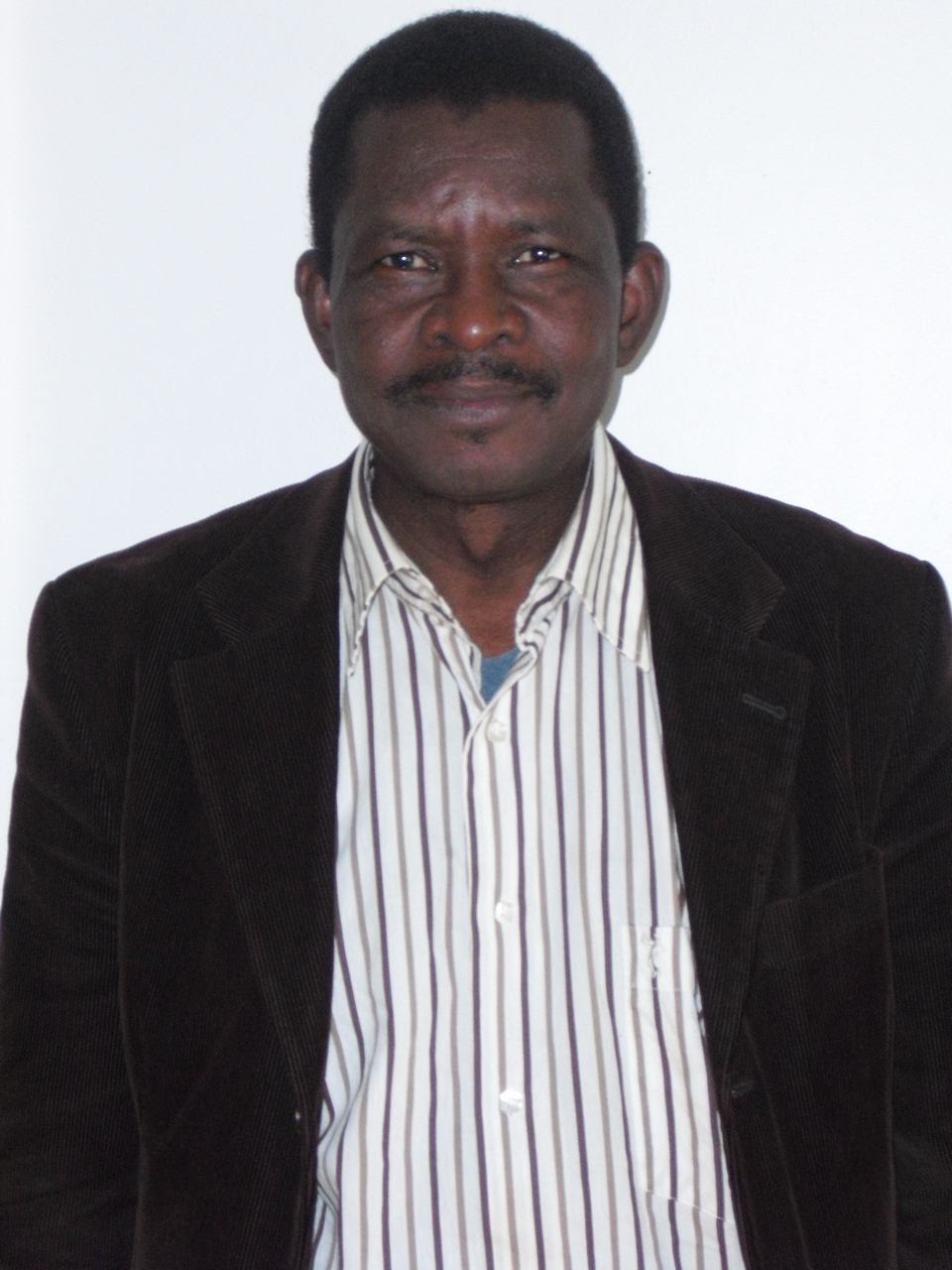
Guest Blog from Fred Somda of Africa, WR3A Intern


Just a few days ago, I posted a blog reminiscing about one of our favorite WR3A Interns, Fred Somda of Burkina Faso.  In response, Fred has just sent a "guest blog" below (in French).   He describes the legal work he did researching the Basel Convention, and his opinions of a "fair trade" approach to used electronics exports. 

Mon stage de recyclage à Good Point Recycling, une expérience inédite!

Avant juin 2007, je n’avais qu’une vague idée du sort réservé aux matériels électroniques qui étaient en fin de vie ou inutilisables. Habituellement, ces biens usagés comme beaucoup d’autres, sont jetés dans des décharges publiques ou débarras, ce qui constitue toujours à terme, un problème environnemental auquel sont confrontés les êtres qui vivront à proximité.

De juin à novembre 2007, j’ai suivi le stage de recyclage de matériels électroniques, particulièrement des ordinateurs, au sein de la société de recyclage « Good Point Recycling » à Middlebury, dans l’Ètat du Vermont, aux États-Unis d’Amérique. Mon stage a été supervisé par le fondateur et directeur de cette société, Monsieur Robin F. Ingenthron. Ce stage bien planifié, a été structuré en plusieurs étapes qui sont :

  • La présentation de l’organisation générale de l’entreprise
  • La collecte des matériels auprès des services, institutions et familles
  • Le tri et le classement des matériels selon leur état
  • Le démontage pièce par pièce des matériels non fonctionnels
  • L’identification des composantes de ces matériels qui sont nocifs à la santé ou à l’environnement.
  • L’organisation des relations de partenariat à l’intérieur des États-Unis d’Amérique et hors des États-Unis d’Amérique .
  • La mise en conformité de ces activités de recyclage avec la Convention de Bâle sur le Contrôle des Mouvements Transfrontalières des Déchets Dangereux et de leur Élimination, du 22 mars 1989.

Ce stage m’a permis de comprendre la portée et l’importance du recyclage de ces matériels dont la production augmente considérablement alors même que ceux dont on se débarrasse pour des raisons de compétitivité sont souvent en très bon état de fonctionnement.

J’ai pu me rendre compte que les États industrialisés tels que les États-Unis d’Amérique ont construit des usines de recyclage qui font de la récupération de certaines composantes des matériels électroniques qui sont réutilisées. Les autres composantes nocives sont détruites ou mis en lieu sûr par enfouissement.
 
Les matériels qui sont classés bons après avoir été testés par Good point Recycling sont vendus à des partenaires étrangers qui en expriment le besoin tels que la Malaisie,  l’Égypte, Sénégal etc.…

Les pays en développement ont un besoin crucial en matériels électroniques, particulièrement les ordinateurs, pour les universités, les établissements secondaires et primaires, les hôpitaux mais n’ont pas les moyens d’acheter les matériels de pointe, ils peuvent accéder aux matériels de seconde main en bon état à des prix intéressants.

Pour ce faire, ces États, de concert avec ceux industrialisés doivent négocier des partenariats gagnants-gagnants qui favoriseraient dans un premier temps la formation de personnels des pays défavorisés aux techniques de recyclage et dans un deuxième temps, la construction d’unités de recyclage dans ces dits pays, mais à terme le transfert de technologie sera nécessaire pour réduire les disparités si l’on tient à préserver l’environnement dans son ensemble.
Les projets et programmes de recyclage doivent être vulgarisés au niveau des producteurs et surtout des consommateurs. Leur financement devra être assuré par les gouvernements, les institutions et les organismes de défense de l’Environnement.

Pour éviter que les États en développement ne soient des dépotoirs des matériels usagés des États développés, l’observation des dispositions de la Convention de Bâle que la quasi-totalité de ces États ont signée et ratifiée, s’avère indispensable. Le recyclage doit être le maître mot des gouvernements et acteurs des transactions commerciales au niveau planétaire.

Ce stage m’a également permis de me frotter au sympathique personnel de la société et à d’autres stagiaires tels que Tito, Oscar, Mariano, Dolores et Lidia.

Mon souhait est de mener cette activité en Afrique, à commencer par le Ghana.

Je remercie le personnel de Good Point Recycling pour sa très bonne collaboration.

Mes sincères remerciements à Robin pour m’avoir permis de suivre ce stage qui sera à jamais gravé dans ma mémoire.

Fred.
Jean Frederic Somda is a former Attorney General for the African nation of Burkina Faso.  He has since gained status as a political asylum refugee in Quebec, Canada.  He is a lawyer and former seminary student who has been the head of a military and police training academy.  His dream, as expressed in this blog, is to open his own "fair trade recycling" company in Ghana, following the example of the Retroworks de Mexico ("Las Chicas Bravas") reuse, repair and recycling endeavor in Sonora, Mexico.