Showing posts with label ewastehoax. Show all posts

Reversing Environmental Racism #2


This Good Point Ideas Blog has a dandelion in the background.  The wind is blowing the seeds. The image isn't random.

Some people consider the dandelion to be flower. Some consider it a salad green. But many consider it a weed.  Some of my earliest memories of "ethics" were my parents and great aunt's explanations of why I should be careful about blowing on mature dandelions, the "controversy" or "ethics" of spreading the seeds of a flower that will blow onto other peoples' lawns. My parents told me they don't mind dandelions on their own lawn, but others felt differently.  The issue, my dad said, was whose property the dandelion seeds landed upon.

On the first year anniversary of the passing of my dad, William J. Ingenthron, professor of Mass Communications and Journalism at the University of Arkansas (and Fresno State), I find myself reflecting on the dandelion discussion.  I was probably 3 and a half years old at the time, standing on the lawn at Auntie Maude's home in Columbia, Missouri, where my dad was to earn his J-School degree (I do have memories of 2 and a half as well, and possibly earlier).

"That is frowned upon here."

That "frowned upon" expression was expressed to me about 18 years later, when I had just thrown a lit firecracker out of a Carleton College dorm window.  And I did feel a little chagrin about that, though my friend and future Co-RA Peggy shrugged just afterwards, saying "I smile on it".  Using social consensus to define ethics is an interesting tool. Juries do it.  And consensus forms the crucible of the most important theme of this blog - Environmental Racism.  Accidental environmental injustice. Collateral damage. Friendly Fire...

It matters who we ask.  And after about 10 years, the chief "Authority" - Secretariat of the Basel Convention - has recognized that its first foray into screening used electronics sales had not asked enough people about the ethics and effects of used electronics exports. A little pat on the back here - I never attended a PACE meeting. But we were recognized for our contributions by SBC's Partnership for Action on Computing Equipment (PACE)...


The primary comment we submitted ten years ago was that Emerging Markets Technicians (not just regulators) had to be consulted in the drafting of the PACE Guidelines.  If OEMs (Planned Obsolescence), Secondary Smelters (Big Shred), and NGOs (White Saviors) were drafting the rules without consulting Africa, Asia and Latin America's Tech Sector, they were likely to do more harm than good.  As Emmanuel Nyaletey told the IERC conference in Salzburg, Austria, last month (my paraphrase) "writing rules for used electronics repair without consulting with African technicians is like writing a health manual without ever talking to a doctor."  The buyers know what they want, thank you.

Some consider used electronics to be a weed that must be kept on our own lawn.  Some consider them a flower.  And some consider them a source of income, a way to put food on the family table.

Here's an interview with a man, Olu Orga, who started in Agbogbloshie, and worked his way into Ghana's Tech Sector. If the Secretariat or the Basel Convention has something to thank American Retroworks Inc for, it's for keeping the doors and windows open during an echo-chamber of false claims and ewaste hyperbole.  As everyone sought to prove they weren't dumping on the poor, they became ashamed to admit friendships like this, if they were even brave enough to have them.

False Fears

Euro Agbo Porno Photo Journos 1: Flog African Tech Sector "E-waste"

My last post kind of took on European "White Savior Complex" in the e-Waste story.  I hesitated before hitting "publish".  Was I being too hard on Europeans?

The latest "European photo-journalist safari" came out the day after.  Italian photojournalist Stephano Stranges announced fundraising for his, well, somewhat creepy African series "Victims of our Wealth" or "Le Vittime della nostra Rizzchessa". Screenshots below...


From his website "Stranges Images" (which is largely in English, though he's Italian), you get the picture, so to speak.  The metal mining exploits Africans to make electronics, and then the Africans are exploited a second time by the selfsame electronics in Agbogbloshie.
Coltan, in other words, the mineral that everyone carries around in his or her pocket, is the object of a long commercial chain that implicates serious consequences in terms of human and environmental rights.   This mineral which is used in the production of various high tech materials, is especially fundamental in making smartphones

The compulsive consumption and the continual updating of these objects, fed by by the media’s barrage of ad campaigns, has caused the coltan industry to grow exponentially since the end of the 1990’s. From that point, there has been the exploitation on the part of large multinationals and the catastrophic consequences regarding the people from areas like DR Congo.   My photographic project, therefore, starts in this area of the world, as the initial link in a process that begins with the extraction of the mineral followed by the production of the object (South East Asia) and then moves onto the excessive use in every corner of the planet, ending up in the immense African dump sites (in particular, Ghana).
Now in fairness, I am greatly concerned by the Coltan Mining in the Congo (have been upfront that Congo and Amazon metal mining was topic Numbro Una since 1980s - that's WHY I got into recycling!).  So I have some schadenfreude of my own in Stranges photos of African mining.  (Some historical confirmation at bottom).

So I figured what the heck, I'll talk to them about it... by twitter (next page below).

Look at the specific claim made to support the photojournalism. Data journalists log, Photojournalists flog...
Its name is Agbogbloshie, but when you look for it, you better ask for “Sodom and Gomorrah”, everyone knows it with that name. It is the black dump of the West. 100,000 tons a year including mobiles, fridges, televisions, computers. Here, they are burnt, opened, selected, recycled and re-sold, to then enter again the cycle of production and sale. 80,000 is the estimated population, mainly coming from the North and the most depressed areas of Ghana. 
80,000 residents managing 100k tons per year of foreign waste?  What does that look like? Do you see that in their photos?

I saw 25 people in Agbogbloshie, managing 500 lbs per day of wire.  It was mostly from automobile consoles.  It was not EVEN hysterically remotely close to the photojournalist claims, and the photojournalists own photos prove my points - and disprove theirs!

"Exaggerations Have Been Made" - NGO Exec Director

He huffed and he puffed and he blew the Hoax down

I'm really busy this month, in part due to the month away (Austria IERC conference, then 3 weeks in Ghana).  And I was in the Ozarks all last week for my father's DNR and funeral, simultaneously dealing with a tornado that wiped out water, electricity, internet, and my mom and dad's barn in Arkansas.  So... the blog's always poorly edited, but this month I've got really good excuses for it.

Here's what sticks with me from the January IERC Austria conference.  I sat on a panel with Jim Puckett, the Executive Director of the E-Waste NGO Basel Action Network.  We were speaking to a crowd of about 100 European WEEE delegates.

I opened by saying I used to be a teacher in Cameroon, Africa, from 1984-86.  I'd recently been to Agbogbloshie, and was going back again immediately after the conference.  I told the European audience that the junk they had seen photographed there was generated by African households and businesses, after decades of reuse.  Yes, it was originally imported used, but almost always repaired and used for 10-20 years before Africans discarded it.  I told them that 30 years ago my landlord had no running water but owned a (used) TV.  I told them that there wasn't any mystery around the baseline data - the World Bank clearly says that MOST households in cities like Accra had TV or computer 20 years ago, and the assumption that junk captured by photo-journalists was "dumped" in hundreds of sea containers by unscrupulous recyclers was categorically false;  I told them I had met Michael Anane, that he was not telling the truth about Agbogbloshie being a remote fishing village and he had certainly not been fishing and swimming there 20 years ago, that I was unable to find any newspaper that employed him, and that the people I asked in Agbogloshie said he worked for the AMA, the municipal land development group that forcibly evicted thousands of Old Fadama slum dwellers near the site, which they have a published plan to develop into shopping malls etc. The junk is collected in pushcarts from Accra city streets. I told them that the World Bank and IMF determined 15 years ago that used electronics in Africa were essential to creating the "critical mass of users" to fund TV stations and programming, cell phone towers, and internet cable.  I told them that Africa's Tech Sector found "Project Eden" to be scary, a threat to their livelihood, and cringe-worthy as a moniker.

E-waste Ebola Connection?
In conclusion, I counted backwards from 3, snapped my fingers, and  told them to forget all of the things Jim Puckett had told them for the past 15 years.

Jim's response?

"I will admit, exaggerations have been made."

It strikes me, 6 weeks later, as an incredible use of passive voice.  Exaggerations "have been made" by someone.

Exaggerations have been made, indeed.  Agbogbloshie photos have now disappeared from the CAER website, the conference speakers were now talking about keeping copper inside Europe's "circular economy", and Blacksmith Institute had changed its name.  That NGO allegedly told journalists 2 years ago that Agbogbloshie was the "most polluted place in the world" - something Blacksmith then denied but wouldn't issue any clarifying statement, despite our sending evidence they were cited by the journalists as the source of the claims about Agbo.  They did not tell me how much money they received to "transform" and "save" Agbogbloshie...

#1 Finding of Agbogbloshie Report


A look at Old Fadama / Agbogbloshie 3 months before the mass razing (across river)

As I finalize our 100 page report from 2015's investigation of Agbogbloshie, there is one overwhelming finding which is simple and brutal and efficient to explain.  The most obvious candidates a year ago were things like "this is not remote wetlands outside the city".   Or "this is automobile scrap wire, not electronics".  Or even, "there are not thousands of children here, there are 25 guys ages 14-34".  The tonnage estimate alone seemed like the obvious finding... it's in pounds per day, not thousands of tons per day.

But #1 Lesson?

No, the number one finding is that NGOs and journalists and photojournalists did not even pretend to do any data research.  The number one finding is that data (number of households with electricity, TV, phones, internet) about consumption and generation in Ghana and other West Africa locations has been available for decades.  World Bank and IMF have done major studies to support infrastructure and power grid needs in greater Accra, Kumasi, Tamale, Tema and other cities.

There was absolutely no need to travel to Ghana to predict what we'd see there.  

The UNU and other NGO reports had no baseline data for Africa electronics ownership. 

And yet they had it in spades for EU electronics ownership, so they clearly understood it.  The charts showing "flows" of used WEEE and scrap around the world are calculated from generation by EU businesses and households, based on ownership in previous 2 decades.   But they didn't get the same data for AFRICAN businesses and households ownership over same 2 decades!

No baseline data.   As in "this paper gets an F".  An NGO cannot possibly determine that 80% of imports are waste or "too quickly disposed" by looking at a dump.  It's like making health care recommendations based on a trip to the cemetery.  You can photograph a westerner getting a haircut in a foreign city, but that doesn't mean the hair outside the barbershop came from illegal OECD waste.  Even if you purposefully sabotage a device and sneak it to a foreign refurbisher - or send a European Rapunzel with exceedingly long hair to the African barber shop - that demonstration does not prove anything.  If I say "80% of the apples sold in Ghana had razor blades hidden in them" and then I hide a razor blade in an apple and send it to Ghana and say "see"?  That does nothing to support the 80%.  But cutting a wire in a TV and selling it to Joe Benson has been presented as a "smoking gun" that most of the trade is sham recycling, supported by photos of a fairly innocuous mount of city generated waste.  Neither of these is quantitative, and neither shows causality.

So the methodology sucked, but unlike the hair cutting analogy, there is actual data on Ghana business and household ownership... We know how much hair is there to be cut, how much must be generated with 0 tourist hair.

Fair Trade Recycling has been trying to make this point for over a decade, but too many editors and journalists told us "but I've seen the pictures".   Of children, of wide white eyes on sad black faces with a familiar looking junk VCR in the background.

Photojournalism trumped datajournalism.

So for our report, we flew in, we visited the required places, we filmed interviews both in English and local languages.  But the fact is that you could have known this was a hoax just by asking "how would a metropolis of 4 million people who have had 20 TV stations for 20 years manage to:

  1. acquire enough TVs to explain the level of consumer ownership documented in the city 20 years ago, and 
  2. dispose of the eventual electronic scrap the city generated?
If C is waste photographed at Agbogbloshie, and D is appliances in productive use by Africans, C + D = A (bad shipments )+ B (good shipments).   If you find C, you haven't yet determined that A is 80% of imports.  But what you can do is say that 215,000 tons per year is the total of A + B.  If 80% of that is bad, then how do we arrive at D - households with devices in use - which is publicly available data?

In the absence of a control group (arguably, like India and China which ban import of second hand goods but still generate scrap), baseline data is "Go" in the Monopoly Game of Agbogbloshie.

It turns out that using NGOs own figures, without ever flying to Accra, you know they are incompetent or lying, because you cannot reach (D) the number of devices in use, or the teledensity, without a higher percentage of B (good shipments).  And if you have D for a decade ago, you cannot have had D without producing C (waste at Agbogbloshie) because even EU generates more C per D than that.

Oh, and guess what?  By doing actual research before and after our investigation, we found out that the Asian electronics manufacturers all have this data for the purpose of replacing second hand goods sales with a) brand new appliances, or b) refurbished (to new in box standards) appliances, the SKDs they made for decades for the Asian market.

Banana peels in the bottom of a monkey cage do not prove that people are illegally dumping banana peels at the Zoo.  If you suspect that 80% of the banana peels at the zoo were dumped by OECD recyclers seeking to avoid composting costs, you don't just go directly to the News Outlets and announce it as "fact", and if you do, editors need to make sure it isn't repeated as fact.

5 Bells: Blogger Declares "E-Waste Hoax is Dead"

Shaba Kahamba, the Artist formerly known as Prince, and the E-Waste Hoax are dead.*

The second of the list, Prince, the incredibly famous purple dancer, was found passed out in an elevator, and declared dead at age 57.  Shaba Kahamba, the Congolese Soukous bassist legend, died peacefully in retirement in the Netherlands on Tuesday... in somewhat undeserved obscurity.   And the E-Waste Hoax will be remembered only by its silence.  There is no "correction" forthcoming from BBC, Economist, NYT, NPR, etc.  But I predict no further national or international coverage of any "e-Waste" emergency this Earth Day, one year after the news "jumped the shark" in declaring a small scrap metal pile in Western Africa to be the largest E-Waste Dump on Earth.

After a decade of NGO hype, what makes me think that "ewastegate" is over?  And not with a clang, but a whimper?

There may be some residual stories about "e-waste exports" cropping about here and there, but mostly they are coming from rank amateurs like Kevin McElvaney, people in their 20s with a camera. But the source of the hoax statistics is running out of funding, and not a decade too soon.

*homage to "the Oxford Comma"... Shaba K and TAFKAP are two different people.

Hoaxes Harm. Agbogbloshie Land Grab Reportedly Underway

#WORLDREFUGEEDAY June 20, 2015

IMG-20150620-WA0005Look, it's hard for a westerner to establish a credible campaign about urban land reform in Africa.   The use of land in central Accra, 9 minutes from the city's most prestigious hotels and government buildings, has been a powderkeg for some time.

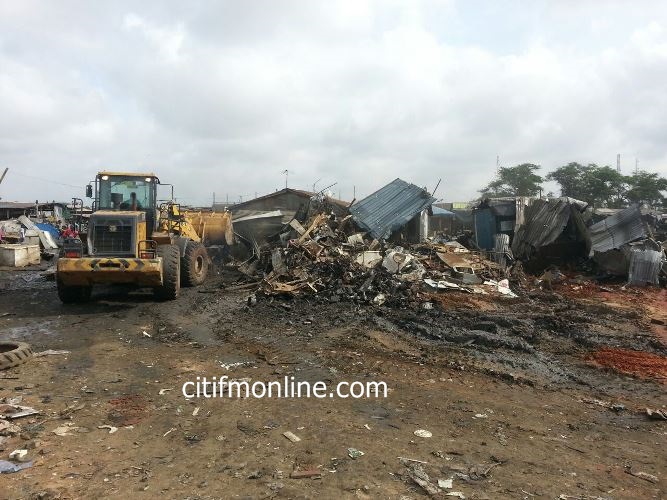
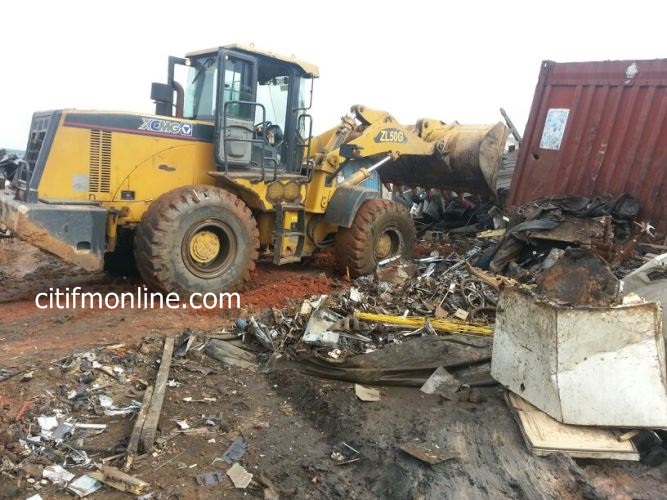
But Interpol and CWIT and UNEP's role in the "Agbogbloshie Sodom and Gomorrah" hyperbole should be investigated.   Posing as concerned about the Dagbani speakers who were Accra's Recycling Caste, they set up this cruel display of heartless eviction-by-bulldozer, which started yesterday.

Agbobloshie Demolishing Underway (citifmonline.com) has photos

Best way to get the news at this point is on Twitter.   @RecyHub, @AdamMinter, @Rubbishmaker, @Heatha_a, @RestartProject, @AfricanSolarLLP, @Kwiens, have been there and know what they are talking about, and new voices, like Abhassan Ibn Abdalla are reporting from the scene.
  1. Forced eviction is not a method of slum redevelopment. Demolishing homes and livelihoods is not good governance.
 2 hours ago2 hours ago2 hours agoAgbogbloshie children centre which was sheltering displaced people is being demolished now
  1. agreed. My sense is 'we' flatter ourselves to think our names relevant to those doing the clearing or those being cleared.
The imprisonment of Joe Benson in the UK for "wastecrime" (secondhand computer sales in Africa) was just a part of the story of #ewastegate. The Blacksmith Institute, GAHP, and Green Cross meant well but the use of the $1.2M was tone deaf to the underlying issues. Kevin McElvaney and other photojournalists have reaped their share of "sponsorship". But the worst part is putting Basel Action and Mike Anane on an expense paid promotional tour that makes destruction of recycling yards and arrests of Tech Sector workers pass as "environmental justice" or "remediation".
It just hurts to have a campaign of connected Accra developers take advantage of an environmental story completely misunderstood by Western NGOs, and label Dagbani neighborhood "Sodom and Gomorrah", as if recycling Accra's scrap was doing something wrong. I don't know if it's as bad as Egypts "cleaning of the Zabaleen" (something I was incensed about a decade ago, now forgotten), or China's flattening of "informal recycling" sites during it's rapid urban development phase. As Josh Lepawsky says, we flatter ourselves to think the Accra AMA powers that be will listen to our Western tweets. But the news editors who printed the "Agbogbloshie E-Waste Tragedy" Propaganda need their clocks cleaned. This cannot keep happening to recyclers and refurbishers.

IMG-20150620-WA0010
This was not really about recycling. This was about forced relocation.
The story is still developing, and the flooding of the area was real, and the photos on twitter don't really show the extent of the evictions. Reportedly classrooms and homes have been demolished, but the story still needs a chance to develop.

PRESS RELEASE: Agbogbloshie e-Waste Investigators Claim "Export Hoax"


Hoax: Investigators call out Agbogbloshie "E-Waste Tragedy"

Three weeks of research at Ghana "e-waste dump" and review of UN Studies and World Bank data confirm waste in pictures was not "dumped" by Western recyclers.

As Americans and Europeans once again are confronted by photos of old white monitors and CRT televisions in a dumpsite in Accra, Ghana, recent investigation confirms suspicion that the story repeated by news sources is a hoax.  Three reports on Agbogbloshie, Ghana, and "ewaste" appeared last week:
"'Developed countries export millions of tonnes of electronic waste annually into developing countries such as Ghana,' the group based in the country claims on its website."  - Daily Mail
People just load up containers to places like Ghana with enough working stuff to satisfy the importers and and then the rest is junk, and that junk gets smashed,” Puckett says. -
"Agbogbloshie, reportedly the world’s largest e-waste dumping site... is now a field home to thousands of tons of the world’s electronics." - Washington Post
Recycling experts have long noted that the number of pieces of junk electronics visible in photos (e.g. Wired News link) do not appear to support the claims made in the articles. Several major media have reported that "millions of tons" of used western electronics are dumped in Agbogbloshie, Ghana, and that "80 percent" of used goods imported are actually not reused.  The Guardian claims it is "the world's largest e-waste site".  But the landscape (behind posed scrap workers) is relatively barren.

A three week investigation involving data journalists, trade news reporters, Ghana customs officials, local Dagbani speakers, and African electronics technicians found that Agbogbloshie only managed between 20 to 50 used electronic pieces per day - a nearly infinitesimal amount as compared to "millions of tons per year" claimed in mainstream press articles on the site. Most scrap workers at the site is concentrated on junk automobile recycling, and most of the wires being burned were from automobile harness wire.  The electronic or "e-waste" material being recycled was collected locally, and manually, by push cart, from neighborhoods and businesses in Accra.

Is the "world's largest e-waste site" a hoax?

The researchers reviewed 2 United Nations reports from 2011 and 2012, which assessed hundreds of sea containers of electronics, to compare against the claims by NGO's.  The UN reports contradict the claim that most of the goods imported are dumped in Agbolgbloshie rather than reused and repaired by Ghana technicians.  World Bank metadata also supported the claims of the scrap workers that the scrapped appliances shown in films were owned by Africans and had been in use for many years.  Africa has over 600 television broadcast stations.

Investigators stressed that concerns over health and pollution were genuine, and expressed particular concern over workers who eat lunch or drink water with hands contaminated by leaded soil. "We do not condone the conditions at Agbogbloshie. We only note that ending imports and arresting repairpeople will do nothing to address the problem," said Robin Ingenthron of WR3A, who organized the investigation.  Copper wire burning by teenagers is not unique to Africa, however.  Reports of copper wire burning in Europe and California emphasize the same "primitive recycling" practices occur in many cities, and are associated with unemployment and high copper prices.

Analysis of the claims by anti-trade NGOs showed their versions of the story to be mathematically and economically impossible. NGO press releases which simultaneously claim "millions of tons" are imported in 500 sea containers per month would indicate a sea container with well over 800,000 pounds per truckload.... the maximum one holds is 42,000 lbs. The cost of shipping used computers from the USA is approximately $10,000 - $14 per television. That is seven times more than the scrap value.  While many of the alarming press releases contain data which are prima facia contradiction of the claims, an emphasis on "child workers" and exotic photography still deliver a powerful message of guilt and liability in the western press.

WR3A spokesperson Robin Ingenthron offered the reporters direct access to African technicians.   The technicians participated in the investigation, and strongly cautioned editors and readers from accepting claims which do NOT interview the Africans who paid for, owned, and generated the "waste" in the photos.  WR3A also provided several studies which provide actual vetted data on e-waste exports rather than rely on emotional or racially charged photos.  Despite many headlines which empasize "child workers" employed in recycling, fewer than 1 percent of the workers in Agbogbloshie appeared to be under 18 years old.  One young man, Rachid, was shown his own photo in a Washington Post story, which indicated he was "between 12 and 18 years old".   Rachid is 22, and married, with a child.

"Africa has plenty of real problems," said Wahab Odoi, a technician and translator. "We don't need NGOs to make up pretend problems for us." Wahab Odoi suggested that donors find other causes to donate to and other environmental crimes to investigate, such as illegal ivory poaching.

A report on the trip and findings will be published soon.

http://tinyurl.com/hoaxAgbo