Showing posts with label CRT glass. Show all posts

Garrison and Olymbec's CRT Glass Mess #2: Triple Jeopardy

Update on the progress of the CLRR lawsuit, where a 5-year landlord is suing people who shipped CRT tubes to the tenant in 2012 (there is a mess still there in 2019).

- The OEMs who backed CLRR are not named.
- The landlords who expanded CLRR 3-fold (3 warehouses) are suing recyclers who ceased shipments at first warehouse.
- Ohio EPA is pursuing tonnage, which means companies who abandoned CLRR before Ohio EPA greenlighted them are being sought for amends.

Weeks ago, we blogged about the Landlord's case against all recyclers, whom the landlord claims participated and profited from a "sham" recycler.  The landlord expects the judge to accept that anyone who shipped a tube there on Day 1 knew it was a sham, but the landlord did not, as they proceeded to extend leases and offer 2 additional buildings, years after some of us pulled the plug.

As an informal consultant to an OEM representative who vouched for CLRR, I have a treasure trove of information on the project between. 

My associates provided a viable downstream outlet for the CRT glass CLRR was able to process (at least, until the trommel broke in 2015), as an industrial mineral useful to primary and secondary metal smelters. In 2016, E-Scrap News published my article on the useful nature of CRT glass sized and graded with trommels. That was the backup plan for CLRR, not the $15M furnace.  When 2014 ended, CLRR had not shipped enough loads of processed furnace ready cullet, and the speculative accumulation had begun.

What could CLRR do, and when could they no longer do it?

It Was 20 Years Ago Today: Good Point Recycling's Eco-Entrepreneurism


Just ran across this photo from 15 years ago (just before we bought the Nissan forklift), at the warehouse across from Agway on Exchange St. The monitors were selling for $7 apiece back then.  Pretty much all we did was to do pickups, pull out the PCs and CRT monitors we could reuse, and load everything mixed back onto a trailer.

5 years earlier, I had announced my resignation at Massachusetts DEP to follow my wife to Middlebury, Vermont, where I'd taken a job running a thrift store while doing consulting work for EPA, MA DEP, New Deal Software, etc.

It was 20 years ago that I took a big chance and left my corner office at One Winter Street in Boston, having successfully instituted the USA's first waste disposal ban on CRT devices in Massachusetts. The consulting work I did for MA DEP and EPA was published in September 2000, about a year after I turned it in. Titled Electronics Re-Use and Recycling Infrastructure Development in Massachusetts, it eventually became the business plan for Good Point Recycling. 


The report was based on interviews with 48 electronic recycling professionals, 176 TV repair shops, 4 white goods (fridges) appliance collectors, 10 thrift shop operations (Goodwill, Salvation Army, etc), 2 retailers, 20 computer monitor repair shops, 7 Original Equipment Manufacturer reps (not credited or cited), and 32 used electronic equipment exporters.

CRT Glass Resolution: An "Own Goal" In Slow-Mo

The path of least resistance is to trust our environmental regulators, trust the watchdogs, and assume that profit-driven industry is the villain, the fox in the henhouse.

The path of least resistance is to assume that people questioning environmental enforcement are "apologists" who care less about environmental pollution than the enforcement proponents.

Sometimes those assumptions are 100% right.  I'm not a carbon climate causality denier, and I'm proud of my 9 years of service as a Massachusetts recycling regulator.


But as a former regulator, I can attest regulators are not always right.  Regulatory agency lawyers tend to be more risk-averse than private sector attorneys, for example.  Regulators understandably want to hold themselves to "the highest environmental standard".  But when there is doubt and uncertainty - an engineering problem for example - the regulator can become obfuscated and defend his own reputation.  That is to say, when in doubt, the regulator has to act - in doubt.  And saying "yes" or "no" sometimes boils down to the regulator's own insecurities.

And these lead to unintended consequences.  #OwnGoal

Let me again state that what the agencies do, for the most part, is great.  I'm suggesting an environmental police chief should look at community concerns the way any police chief looks at protest.  You can stonewall and deny mistakes, claim 100% effectiveness in your policy.  Or you can learn from a mistake and adjust your policy.

Waste Perception Creates Image Problem

Last spring Resource Recycling published an article following WR3A research into leaded silicate mining.  Long before my days as a regulator (Massachusetts DEP 1992-99) I had noticed how recycling happens in cities where property values (NIMBY) made compliance expensive.  Virgin mining and forestry, while far more damaging and polluting, happened farther away from property values, and was thus less regulated.

Here in Ghana, we are looking at lead and zinc mining streams as a way to "piggy back" CRT glass back to secondary primary ore refiners.  Rather than try to construct a "takeback" program aimed at manufacturers (popular because they are extremely costly, charging high fees in a bargain with Planned Obsolescence to squash the secondary market), merely cite the "circular economy" and toss the CRT tubes back into containers bearing Pb Ores.  Africa mines primary leaded silicates for export to refiners in wealthy - and less wealthy (China, India) - nations.  And some of those ores are chemically identical to CRT glass.

And there is no "EPA-EU" "Waste" "speculative accumulation" paperwork or R2 or E-Steward #bs to make it economically unfeasible.  I keep hearing in the west that CRT glass is "impossible" to recycle in Africa, a continent where primary ores are frequently the number one export.  This is a clear case of the EU and USA shooting itself in the foot, and then demanding Africa, Asia, South America follow "equivalent practices" prior to engaging in strategic metals trade.

The difference between recycling and mining is largely an image problem.  It doesn't take much imagination to solve problems like CRT glass recycling markets.  It means being willing to listen to people outside of your "circular economy" box.

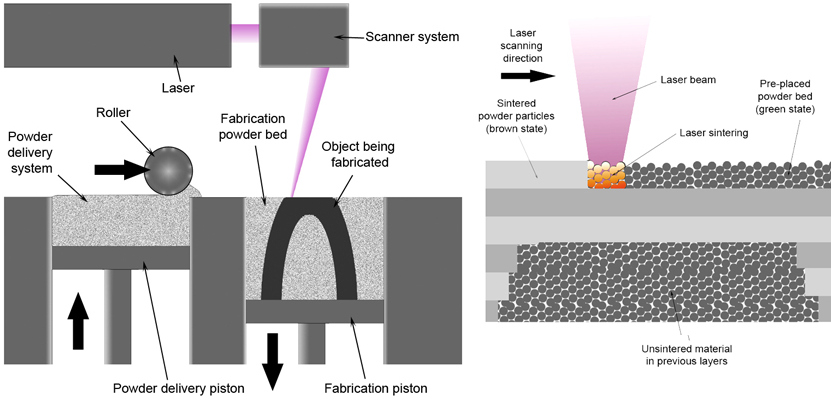
Lesson in CRT Cullet and Sintering: Size Matters


The EPA vs. American Mining Congress case in the early 90s resulted in the "remanded smelter slag" rule.  The mining industry convinced the court, and even EPA, that treating slag piles as "waste" with 365 day storage ("speculative accumulation") under RCRA statute, did more harm than good.   Today, it's an industrial mineral, and can be kept under basically the same conditions  as mined angelsite or other leaded silicate, because treating it otherwise is anti-recycling.

Anti-recycling means that the identical chemical solid is governed more strictly if it's recovered from waste instead of mined from the ground.

Fiddling with Product Stewardship (as E-Waste Burns)

Product Takeback/ Stewardship advocates and laws have manufactured a System for recycling  which requires maintenance and stewardship.  The ship of Product Stewardship is seaworthy, but it's headed for an iceberg if the advocates are just focused on the next legal product and don't take responsibility for the takeback laws they already created.

Check the List, Below, of TV recycling company closures and failures.

The "Product Stewardship" movement needs maintenance... or at least some fiddling with.

When devices go obsolete Stewardship advocates make manufacturers "fix the problem".  But what's good for the goose, is good for the gander, right?

Something is broken in E-Waste Stewardship.

As I testified and wrote 5 years ago, electronics reuse markets are so complicated (compared to mattresses, paint, and alkalines) that "e-waste" was probably NOT the best product for wiser Product Stewardship Advocates to start off with.   Now, the list of problems in the electronics recycling infrastructure in "ewaste stewardship" states is growing bigger.   Primum non nocere - "first do no harm" - needs attention.

But that's water under the bridge.  We have these state "takeback" laws now, and a command and control system of accounting for residential TV recycling.

Take a look out the window, my friends.

Here is a brief (and incomplete) list of CRT Recycling Companies which have left the residential TV and computer recycling markets in the Northeast, some permanently. The squeeze of NOT reusing (liabilities in contracts banning exports), and subsequent glutting of CRT glass end-markets (prices better for buyers), has driven up costs, but there's no way to send a Price Revision.  Meanwhile, in NY, NJ and PA in particular, some OEMs reportedly met their "obligations" and left these recyclers, and others, to "pound sand".

My company is still around in part because of our good fortune losing our largest contract - Oyster Bay in NY Long Island, which we lost in 2012.   The OEMs had said they met their goals, and we thank our lucky stars that a competitor talked Oyster Bay into dropping us as a vendor (that competitor is now on the "casualty list" below - focusing on commercial electronics and out of the residential stewardship game).

Others were not so lucky... The Northeast Product Stewardship map has some big holes to fill...

  • 2TRG - Ohio Recycler that was part of EWSI Roll up.  EWSI failed to fulfill its financing obligations to Good Point Recycling after GPR invested significant accounting.
  • Creative Recycling* - Major service provider on East Coast (including NY, CT, NJ, PA), one of our biggest competitors in NY.
  • CRT Recycling (CRTR)* Brockton MA - was one of our largest competitors in MA and NH.
  • Eco International NY/PA* - This site was one of the oldest and most respected CRT glass processors in the Northeast.  They reportedly left the largest (12k tons) pile of CRT glass during their bankruptcy.
  • Ewaste Recyclers, LLC of Jaffrey, NH closed without finishing the recycling of CRTs they had accepted.
  • EWSI Geneva NY -  See 2TRG.  They affected us not only by being a competitor without a sustainable economic plan, but triggered enforcement in NY raising the costs of recycling.
  • MPC PA/MN* - One of our backup companies when we ran out of manufacturer obligation in NY, discovered with 2,500 tons unprocessed CRT glass in Philadelphia area.
  • North Coast and Kuusakoski did not go out of the residential TV recycling business, but gave up even trying to pay for CRT glass recycling, creating a huge controversy with dumping CRT glass on municipal landfills as "daily wind cover".
  • Sims Metal Recycling NY/NJ/Canada - Closed largest e-waste plants this year after $115M annual "write offs" for e-waste.
  • StoneCastle - Not a Northeast player, but contacted Good Point to ship dozens of trailers of CRT glass in 2012, 2013 (to Retroworks de Mexico).  We did not execute the PO based on our credit review, but this would have taken us down with them.
  • Waste Management Inc. closed its CRT dismantling facility in Springfield, Massachusetts, three years ago.
  • WeRecycle* CT/NY - The company went through a brief bankruptcy (shortly after taking over VT one-day events), was purchased by Hugo Neu Recycling, and then withdrew from residential recycling contracts.  Had been one of the largest CED recyclers in CT, NY, MA, RI.


This is probably over 50% of New England CRT capacity, down in flames (figuratively or literally), since the passage of Product Stewardship Legislation in the Northeast.

Some of this is the scrap metal and plastic market - not anyone's fault.  But the largest recyclers in the list failed while scrap prices were at an all time high...

For the past 12 months, we've lost $250,000 just on scrap prices.  The "high" is over.

True, the Product Stewardship laws did create a booming supply, and brought expansion and investment to the industry.  But now, prices for scrap have crashed, and there appears to be little way for large, single-payer contracts like Vermont's to make adjustments.


And it's not just circuit/wiring board.  Steel scrap prices have crashed.  Copper scrap prices have crashed.  Plastic scrap prices have crashed. The price of circuit boards has gone through the floor, following the lowest gold prices since the recession.  As the USA dollar gets stronger, even reuse markets are shrinking.

Good Point continues to meet all of its obligations, paying what is necessary to recycle the CRT glass, at smelters and new CRT furnaces.  But we can't love a business that doesn't love us back.  The cost of Certification (mandatory in Vermont) keeps going up, and the state keeps increasing its insurance requirements.  We need to keep paying our staff a living wage, and that wage should be changing as the unemployment rates fall.

Time for some leadership.

CRT Glass Recycling "Breakthrough" - Innovator Award Finalist


Great News!

After 5 years of trials at our sister company "Retroworks de Mexico" (see NPR Living on Earth, and MarketPlace), approval of the glass recycling system under EPA CRT Rule last year, and a $469,000 "Fair Trade Recycling" research grant with 3 universities to study the process, Good Point Recycling's CRT Glass management is in the news again.

This month we are being flown as a FINALIST to the National Recycling Innovators Forum in New Orleans, hosted by the national Resource Recycling Conference. This is a very prestigious national competition, which includes all types of recycling innovation (paper, glass, plastic, compost, you name it).  Our "Fundente Production Partnership" (FPP) proposal is recognized as a way for electronics recyclers across the nation to cooperatively share in this new market.  Basically, it supports the use of old TV CRT glass as leaded silicate to replace as a necessary ingredient in copper, zinc and gold smelting.  A single copper smelter we are working with in Mexico uses over 200 tons per day of leaded silicate "fundente" or fluxing agent, and copper smelters (like Phelps Dodge in Arizona) would also become end markets in replacing mined Angelsite, Feldspar, and other virgin leaded silicates for their smelting processes.

News about the Innovators Forum is here, the winning proposal submitted by Good Point Recycling of Middlebury, Vermont is described here (FPP).

 (Breakthrough, or "break, threw"?)

Yin, Yang, Omm Part 1: Responsible Electronics Recycling Act (HR2791)

#FreeJoePenna Blog (one of 8 composed on a France beach vacation 2014)

WR3A became the anti-BAN.  But we have both been part of a Charitable Industrial Complex.

It's like a tug of war over dusty, desolated, impoverished Darfur, a guerrilla morality of ethical posturing.   A war between rich over who gets the rights to the poor's images. 

Poverty and inequality, or the perception of it, is power.  Ask Marxists about how to harvest envy.  The bigger the problem is perceived, the more you can justify meddling and redirecting the marketplace to "fix" the problem.  (appropriate illusion and background music by Brazilian MysteryGuitarMan Joe Penna, below)


There is no denying that there are problems and inequalities in the system.  But whether or not the poor are hurt more by the free market than by BAN.org's efforts to "fix" it, we are contesting a moral high ground which itself has an economic value.  In this series (Yin Yang Omm) I'm attempting to write about how the economically disadvantaged either benefit from the dispute, or from its resolution, or whether they have any interest in it at all, and who-the-heck-are-we in that equation.

In several previous blogs, like Environmental Malpractice, readers get a closer view of what it's like inside the planned obsolescence shredding industrial complex, and how it is driven by white man juju - liability.  The fetishes placed on the secondary market by people "responsible" for the continued life of products they've let go of force many to shorten the lives of the product.  Recycling laws have made it almost impossible to export working assets.  It is taking billions of dollars of USA assets which are wanted by less affluent but rapidly emerging markets, and turning them into toxic piles, and puts people supplying countrymen who cannot afford new product into jail cells.

Reactions to perception of inequality or injustice can drive societies to do irrational things, to burn witches at stakes, ban books, and shred new cars.   Envy can drive liability lawsuits, jealousy can sway jurors... (so Mazda said to heck with it).  That's right, liability for product has created a system which actually shreds new cars rather than punt them into poor countries, and the same system is increasingly positioning itself to shred refurbishing markets.

Through a proposed new law on exports to secondary markets, BAN and CAER essentially propose a paradigm where the emerging markets cheap labor is available to only to corporations, but are blocked from buying their own supply of work.  RERA would allow these people to do warranty repair, and to assemble and disassemble brand name goods, but not to purchase non-working products for reuse, repair or recycling.

The Responsible Electronics Recycling Act (HR2791)   

The Bill is supported by some people I really like. Niel Peters-Michaud, for example, has enlisted himself and his company both with E-Stewards, BAN and CAER, and has also been to Africa and testifies that limits on trade to that continent will produce better results.
"Do we really believe that the dream of someone in a developing world is to process our toxic e-scrap?  I think they would prefer to dream of driving a well equipped Audi." - Niel Peters-Michaud
Before going deeper into the psychology of two white CEOs from liberal northern states arguments over the welfare of Africans, let's look at what a state (California) with a system similar to RERA's has created.  Hint:  no new Audis have been distributed to any African nations.

"Speculative Accumulation" of CRT Glass: Symptom or Cure?

I went into two hospitals.   One hospital was full of patients who might die.  A group was protesting on the sidewalk.  Any patient's death could be - potentially - malpractice!

The other "hospital" was not, technically, a hospital so-to-speak.  It was a cemetery.  They killed and buried every patient.  They explained they were avoiding any speculation.  

This is the argument today about a recyclable commodity, CRT (cathode ray tube) glass.  Somehow or other the idea is getting out there that "speculation" of CRT glass that might get dumped rather than recycled is so rampant that "landfilling" is the solution.   ADC (alternative daily cover, or layering CRT glass in a landfill) is a "final solution", and trumps CRT "recycling" because it happens in less than 365 days.

Basel Action Network, which receives payola from shredding companies for their "E-Steward" certification, is busy waving the warning flag about the dangers of "speculative" accumulation, or possible future landfilling of CRT glass.  Piles of CRT glass in warehouses or in mining territory have been there for more than EPA's 365 days, BAN warns.   The risk behind of "speculative accumulation" is that you begin to doubt whether the glass at the recycler might wind up at the dump.

Lauren Roman of Transparent Planet (a former BAN staffer) is circulating a petition to get EPA to "enforce" against speculative accumulation.  It is true that the CRT glass in certain piles has not been recycled yet, and therefore true it may wind up at the dump.  The solution?  End "speculation" by dumping it.   Kill the patient and put our minds at ease.

Will any of the piles at recycling plants wind up needing to be disposed?  Possibly.  That's what the "speculative accumulation" rules mean.  If you are granted a "recycling exemption" to not be considered a "waste", you have an egg timer on it.  365 Days.

So some states (including Vermont) are buying into the argument that landfilling, if done in the right order, is preferable to recycling on the 366th day.   Broken pieces of CRTs, applied as as wind cover at the end of the day, are somehow "safer" than the intact pieces covered over at the beginning of the day?  Because after 366 days, maybe the CRT glass at the recycler will - gasp - be landfilled.

"Dump the glass now, the suspense is killing us!"

Some of the patients being treated at some of the hospitals will wind up in the cemetery.  How exactly does that make the cemetery preferable to the hospital?  It's such incredibly bad logic that it gags the mind.

Hurry and dump the CRT glass, before the recycling market has a chance to save it.

2013 Good Point Recycling End Markets: 6 Percent Reuse

Good Point Recycling of Middlebury Vermont is now preparing our 1st Quarter Report and Annual 2013 Report for the Vermont Agency of Natural Resources.   Having just had these numbers audited under our R2 Solutions annual surveillance in March, we have more than enough data to demonstrate what kind of a company we are.


The most obvious change over the past 4 years was our decision to bring demanufacturing jobs in house, doing the television and monitor teardown here in Addison County.  Our payroll hit $26,000 per week, much of it in time-and-a-half (OT), and we hired more experienced people to do it.  So Red "CRT whole unit outsource" went down, and blue "Bare CRT tube glass", and associated plastic, went way up.

Something that surprises people is how little we export, and the reasons it has declined.  Good Point never exported more than 30% of the material, I think the peak (28%) was in during the years (2006-8) when we were buying and selling monitors from other companies, for refurbishing in Malaysia and redistribution in Egypt.

Why the decline?  Was it stricter EPA enforcement?  
Responsible Recyclers standards?  
Pressure from Basel Action Network?   
Strict Vermont E-Cycles Program standards?

No, none of these explains the fall from 28% export to 6%.  It's the marketplace.  And there's nothing ghoulish, witches brewy, noxious, or radioactive going on.  There's no Batman villian in the "e-waste" trade.  When the reuse market finds another source, no one wants to import it any more. It's scrap.  Metal and Plastic.  Recycling.  Boring.  Laundrymat scale boring.


"Dead Reckoning": Cross Cultural Risk Part III

Cross Cultural Risk Comparison, Assessment:  Part III "Dead Reckoning"

"Let's take working PC displays away from African hospitals, grind them to dust, and apply it as wind cover in USA cities." - USA E-Waste Policy Expert

Part 1 went to the philosophical morality of risk, as defined by our ability to care about wider and wider circles, in geography and in time, etc.  From selfishly caring about oneself, to caring what one's mother thinks, to caring about decades later, and about people on other continents, and on to the spiritual and supernatural...  The highest risk, for environmentalists, is extinction. Things people do here on in a lifetime on earth that leave a mark, until the next supernova.  We need to value genomes, genes, more than we value carbon, and more than we value individual human lives.

Shark attack child
Part 2 zoomed inward.  Individual human lives, individual acts, small risks.  Thanksgivings past and present.   The blog analyzed the risks of "wasting food", and liabilities for serving "risky" food, from the perspective of my own geography (Ozarks) separated by generations and time.  The perception of risk relates to actual risk.  What is risky in a rich nation - serving blinky food - is risky not to do in a poor nation.

In the third and final part, we turn to risks of leaded glass and childbirth.

Lead is dangerous.  Banning leaded gasoline was the best environmental law the USA ever passed.  Childbirth is also dangerous.  The number one cause of death in Africa is from blood loss during childbirth.

But is the risk of a pound of lead in a working computer monitor at a hospital in Africa the same as a pound of lead ground up in a USA landfill?  The perception of risk, by a USA or EU regulator vs. by a young African mother, is altered through the cross-cultural lens.

Over the holiday I skimmed an article in a journal called Risk Analysis: Vol. 24, No. 3, 2004  "Dead Reckoning: Demographic Determinants of the Accuracy of Mortality Risk Perceptions" (Jahn Karl Hakes1 and W. Kip Viscusi).  From the Conclusion
"One theory for the high degree of observed risk aversion in public policy decisions is based upon public overestimation of small risks and underestimation of large risks, as argued in Viscusi.(20) According to this theory, the public’s difficulty in distinguishing between differing magnitudes of risks leads to similar amounts of spending for reducing each risk. As a result, the resulting regulatory costs per statistical life saved are much higher for low probability risks, whereas the greatest gains in lifesaving will be from reducing very large risks.
"Improved policy treatment of risks, assisted particularly by improved communication of risks, holds the potential to increase the cost effectiveness of public policy."
The paper tries to correlate opinions of risk to actual risks, and how the outliers lead to inefficient regulation and public policy.  This is really germane to the Good Point Ideas Blog  (see "Cognitive Risk: E-Waste Cell Phone Cancer").  How do Africans, North Americans, Asians, Europeans, Oceanians, and South Americans weigh the risk of "e-waste"?   If we broaden the geography of the risks being debated, and the cultural geography beyond USA, does "improved communication of risks" remain associated with "educational attainment"?  Or can the well-educated get something wrong?  We all have our ju-jus, our gri-gris.

CAER is Wrong About E-Waste. Nice, Just Wrong.

Coalition For American Electronics Recycling (CAER) writes:


"We believe that currently about 80% of electronics claimed to be recycled in the US are really just “packed and stacked” into shipping containers and exported.  Aggregators of used electronics work through brokers to ship equipment overseas and get paid pennies per pound for this mixed assortment of electronics. We see solicitations from these brokers all the time.
"If this bill [HR2284] passes, we don’t expect it will completely shut off improper exports of used electronics, but we contend it will flip the equation so that 80% of electronics are processed in the US. Based on our experience, we create at least 7 jobs in refurbishment, demanufacturing or material processing for every job involved in packing and stacking electronics for export. This would lead to tremendous growth in the American electronics recycling industry through existing and new businesses.

CAER is full of good companies.  I'm not attacking those companies, I'm defending my friends overseas from their defamatory statements.  Just want to explain why these statements, on their website, are mistaken.

Since new e-waste blogger JHop has thrown his hat in the ring (comment on CAER report blog from January), we now have dialog.

The two paragraphs above are full of misinformation.  Perhaps, with the qualifier, "We believe", they can say whatever they want.  But no one in our business can really believe this.  No E-Waste Broker Fairy is transporting 80% of USA's used electronics in "stack and pack through brokers".

Impossible.  Here's why:

What is the #1 component of E-Waste collected in USA Programs?

TVs.  Big CRT TVs.

Show me a "stack and pack" operation exporting a significant number of TVs.   There is NO WAY that you can achieve 80% of USA E-waste "stack and pack" without the massive deportation of used televsions.  EPA says we are generating 50,000 used TVs per day.   That's about 100 containerloads per day... 80% is 80 sea containerloads per day, of JUST TVs.

No one at recycle.net, Alibaba.com, Exporters.com.sg, etc. is "packing or stacking" a significant number of USA's TVs.   I know of 2-3 used television buyers, but they are not buying 80% of USA e-waste, and they are pretty small operations and very particular of the TVs they buy.  The ones in Africa generally want very small TVs only (like the ones in Gentleman Jim's photo of Joseph Benson's containers), or very nice (e.g. hotel-takeout) TVs like the ones shrinkwrapped in the Greenpeace video.   AND NOW THEY CAN BUY THOSE USED CRT TVs FROM ASIA!  The USA isn't even a major export player anymore.

Wonder and Doubt: Solved by Machines

Reading about how IBM's Watson computer is learning to make pastries on NYTimes.   If we had the right Bayesian statistics, the right DNA code (to predict likelihood of gene X "liking" taste Y), and the supercomputer to put them all together... theoretically you'd have a Utopia where everyone always got precisely what they ordered in life.  The right taste, the optimum number of calories.  Maybe Watson can even do Kosher...

Taking the hypothesis of ultra intelligence to its next step, what if we really know the absolute outcome of every recipe we make in life?    Not fake, not "The Truman Show".  What if our experience and judgement and data and correct premises were increased a thousand-fold, or by a million?   If we could almost intuitively anticipate the "butterfly effect?"

It might make life incredibly boring.   Would we be like cattle or ants, grazing?   Grazing on lots of different ideas and information, but all predictable, and it would pass through us like cud.

Or we might replace the "risk" and uncertainty by expanding our horizons geographically, taking what we know and are certain of, and placing ourselves in new frontiers.  "Star Trek" or "Dr. Who" is a way we can always imagine shaking things up, going to other solar systems, to seek out new worlds and new civilizations, and boldly go where no one has gone before.

Trying new foods is good.  Eat the same thing, every time, is like ... eating grass.

What if we actually make ourselves feel more in command of all information by reducing the amount of information?  What if we limit our geography so much that we really do know and can anticipate an extremely high percentage of what we encounter?  Instead of a hypothesis where we increase our intellect a million-fold, and then reach outside the solar system, why don't we shrink our system so that the intellect, intelligence, and data we have is preponderant.

If we put our butterflies in fishbowls, or vacuum tubes, their effects will be easier to predict.

When an African really wants to buy something from me... not everything, not all assorted junk, not 75% of the "e-waste", but something rather specific - say a 17" display screen (which will light up in a slum with electric current too weak for a 27"), I may have to admit I don't know what will "ultimately" happen to it.  Perhaps I cannot predict the fate of the monitor in our custody.

If we shred it together with the 32" TVs and obsolete printers and clickety keyboards, and spit out a stream of shredded plastic, shredded copper, aluminum, and steel, drawn by magnets, optical sorters, and eddy currents, then I don't really need Watson to make the decision what to sell anymore.   Everything is now a commodity, a stream of raw material.

Moo.