Showing posts with label #photojournalism. Show all posts

NYT "Recycling Lead for U.S. Car Batteries Is Poisoning People" Stretches the Truth Farther than it Should

From New York Times reporters By Peter S. Goodman, Will Fitzgibbon and Samuel Granados

Following the tradition of Upton Sinclair's 1906 classic gotcha expose "The Jungle", Goodman, Fitzgibbon, and Granados have found a very legitimate way to make environmentalists feel bad about recycled content in auto batteries.

Recycling Lead for U.S. Car Batteries Is Poisoning People

It's much easier for reporters to visit lead recycling operations than it is to visit the only alternative to recycled content lead batteries - which is lead batteries made from mining lead ore and smelting it in a huge primary lead smelter.  The lead in an old car battery is 100% lead. The lead in virgin lead-zinc ore mined from mountains ranges from less than one percent to eight percent lead content.

Consequently (math!) primary lead smelters are about 25% larger / more active than secondary, or recycled, lead smelters. But the production of lead from virgin mining operations - like Perkoa in Burkina Faso, Africa - is really hard to get to, hard to photograph, and stays quiet, not claiming any environmental advantage. 


So if the story was about nutrition, Goodman, Fizgibbon and Granados would be reporting on urban food coops,  not on cannabilism, because it's going to grab the attention of NYTimes readers. That's very typical of journalism, and it has a value in forcing improvement at recycling facilities and urban food cooperatives. We appreciate criticism and the opportunity to improve.

But when not a word or sentence anywhere about the difference between mining and recycling lead acid batteries. Therefore, it is criminally negligent in context.

FACT:  United States Geological Survey (USGS) estimates 73% of USA auto batteries are recycled content rather than mined content.

Recycling: In 2019, about 1.2 million tons of secondary lead was produced, an amount equivalent to 73% of apparent domestic consumption. Nearly all secondary lead was recovered from old scrap, mostly lead-acid batteries. Import Sources (2015–18): Refined metal: Canada, 44%; Mexico, 18%; Republic of Korea, 17%; India, 5%; and other, 16%.

https://pubs.usgs.gov/periodicals/mcs2020/mcs2020-lead.pdf

That's a lot of content right there in that paragraph.  It leaves a lot of mental gymnastics to do to tie automobile scrap generated in Africa, removed in African scrap markets, smelted in African secondary smelters, and sold on the London Metals Exchange as metal, to responsibility to USA car manufacturers.  #DataJournalism called, they want their focus back.

#PhotoJournalism and the Tire Fire Mirror: The Vampire Class Can't Find Its Own Footprints

#PhotoJournalism and the Tire Fire Mirror:  The Vampire Class Can't Find Its Own Footprints

Poverty Porn photographers claiming to "hold up a mirror" to society fail to document the true value of reuse and maintenance is in saving the environmental expense of virgin material extraction and production. The vampires can't see themselves because they are holding the mirror facing forward, where goods go to be reused, instead of at our own extractive environmental footprint.

The perfect example? The tire fire. A fresh one appears today in the respected Council on Foreign Relations... even they use the African Tire Fire to lead their story.

African burning tires - Council on Foreign Relations


Council on Foreign Relations Gets Into the Act.


(This blog is summarized on my Twitter feed in 5 tweets plus 2 postscript, copied at bottom)

ENVIRONMENTALISM cannot be scatalogical. While waste analysis is as vital to earth environmental policy as a pap smear, urine sample, or colonoscopy sample, it isn't the cure for obesity, heart disease, disease exposure, or stupid behavior... all of which are bigger predictors of death than excrement.

PHOTOJOURNALISM likes to tell us (or themselves) that they make complicated science more understandable and relatable. Photos definitely stir a human empathy (nurture) or anger/fear reaction.

For years this blog has drummed about the danger of simple looking solutions which are in fact comically fictitious if the photo is given a time lapse treatment. In today's twitter feed, I use tires as an example of photojournalist "whistle blowing" to well-meaning environmentalists - triggering collateral damage via subconscious racial profiling.

To get your attention, I'll start with the guilty western pleasure of whacking off to an African burning a pile of tires.


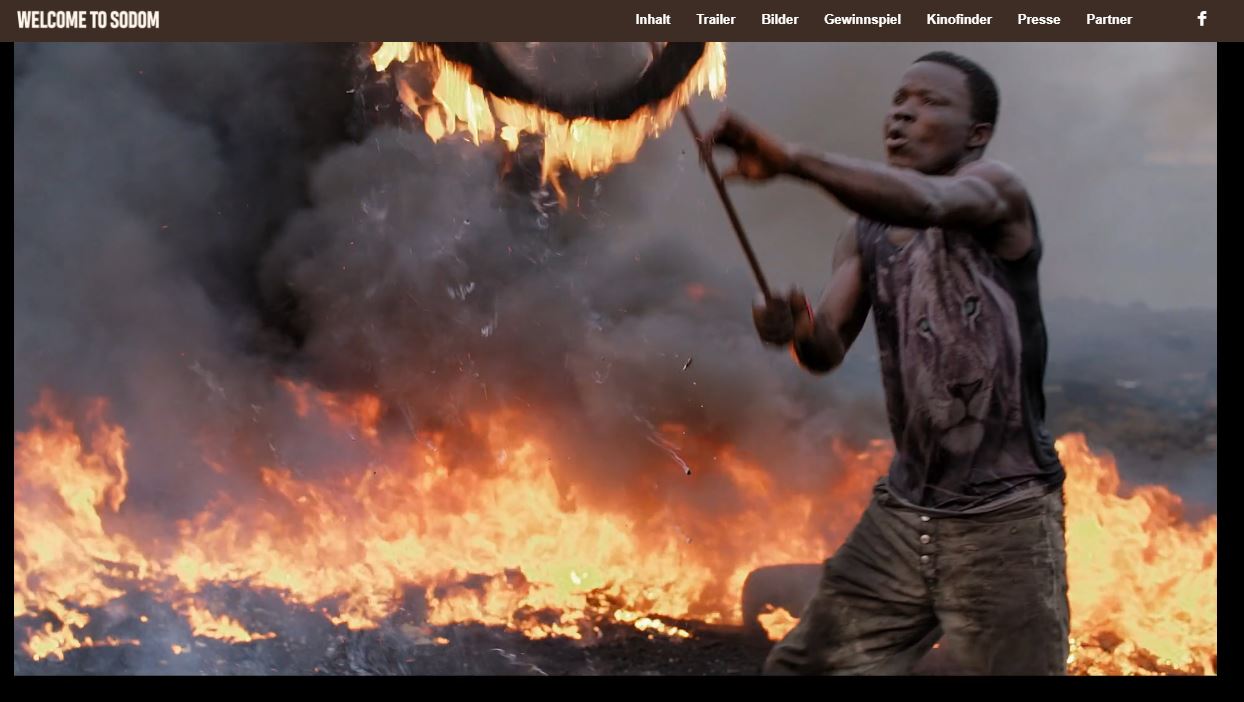
Long term followers will recognize this 30 year old man as Awal Muhammed of Savelugu, used here to solicit hand-wringers to view "Welcome to Sodom", the most recent "documentary" to add to the pile of lies about Agbogbloshie, the auto scrapyard in central capital of Accra, Ghana. Here's another shot of Awal, from #SashaRainbow's glam-rock-band Placebo music video of the same vein of lies about Africa's waste being not African, but recently illegally imported externalized waste from OECD evil recyclers who refused to boycott Africa's Tech Sector entrepreneurs.

I don't credit the photographer, sorry. But the photographer didn't credit, or describe, Awal Muhamed, so call it even. In any case, after one more guilty pleasure shot of Awal's accelerant dowsed tire fire performance art, I will share an actual diagram of the life cycle of automobile tires, from rubber plant production to crumb rubber or cement kiln fate in the USA or Europe.


The entry point here is Sasha Rainbow and whatshisnameWelcometoSodom and Kevin McElvaney's re-treaded claim that they are not exploiting men like Awal, that their photo-economy is necessary to HOLD UP A MIRROR to wealthy societies who, they claim, are unaware that their OECD recyclers are faking it and dumping your electronics (as evidenced by tires) on Africa.

Robin Ingenthron's "Pecha Kucha" presentation (2018)


For me, the rules of Pecha Kucha are a bit like Fight Club... I was so nervous after this 2018 presentation in Burlington, Vermont, that I have never told anyone about it, or mentioned that it's recorded online. I went home and resolved never to watch it.

But I just did... and really, it's not that bad.  *continued

#Distraction From Extraction #4: Negativity Bias in Affective Picture Processing

Another blog descended from a morning tweet. As the global poor emerge in modest economic power, the "elective upgrade" of secondhand goods will result in lower repair rates. There are billions more discarded flip flop shoes in African streets and gutters today than when I lived there 30 years ago. But that just means the raw materials are building up in countries with lower wages - which, like repair and reuse markets of decades ago, represents an OPPORTUNITY for Recycling.

Like the repair export trade, that starts with undoing false, biased, and stereotypical imagery. The opportunity here is for the extraction industries to fund the cleanup in the place it is cheapest to do so.


Been researching, meditating on, blogging about, intellectually debating, dialectically testing, and discovering truths about reuse and repair since 1977.
Elective upgrade (buy a new broom, donate the old one) works when world population is growing unsustainably.


Flashback to 2015.  WR3A issued a press release that Agbogbloshie was largely a "hoax" (as far as a significant percentage of waste there being dumped by rich countries, it being a "pristine fishing village" twenty years earlier, it ever having received a sea container, it being remotely significantly close to "largest e-waste dump", or the scrap sector workers there being remotely involved in anything but collecting scrap metal, or the burning waste being significantly electronics rather than automobile wire and tires, or separation of copper from aluminum "by hand" being less environmentally sustainable than Big Shred in OECD nations.... etc).

Reuse advocate calls Agbogbloshie ‘a hoax’

That 2015 resulted not only in an Op-Ed from the NGO describing me a denier and apologist, but a targeted GPS tracker delivered to a non-public location, hidden inside a $150 laser printer (another sold that week on ebay).  And readers may recall that a year after, I was named, my clients were named, and shamed, in the NGO and MIT collaborative "Monitour". 

Fortunately, thanks to the 2013 Fair Trade Recycling Grant project ($469K project involving Memorial University, University of Southern California, Pontificia Universidad Catolica de Peru), and a wealth of World Bank and IMF data on the history of the electric grid in Ghana, the outcome was a documentary in defense of the Geeks of Color and three books confirming my hypothesis. (J Lepawsky, A Minter, J Goldstein)

The question remains, how did Michael "Fishing as a Boy" Anane ever attract PBS Frontline, INTERPOL, German photojournalists, UNEP, and 1990s glam rockers to hype up a local auto scrapyard in a random African City as being the biggest e-waste story on earth for the next 5 years? His very claim completely discredited him, and any background check revealed the newspaper he claimed to work for does not exist. I interviewed Anane in person on 2 occasions, and when asked the source of his information, he cited the discredited NGO that promoted him to "expert". Complete boondoggle. 


Did you know this is an African's universal power supply for lightboard backlight remanufacturing?

Or did you think it was "e-waste"? If so, why?

Nuance Delivery 2: Awal is BlackboxMedia's Tire Burning Boy

Well, I was working on a different Nuance #2 - the upcoming release of Juan Solera / Palm and Play's documentary "Blame Game" (former working title Clean Hands).

But before I could make an announcement, another German White Savior documentary has just been released!  "Welcome to Sodom" makes Awal Muhammed (and perhaps fellow Musketeers Yaro and Razak? Didn't see them in the trailer) return for another one of his tire-burning-circus acts.

In fairness, I have only been able to see the trailer.  But hey, here's the same theme.  Agbogbloshie in Ghana is presented as "Europe's Ewaste Dump". Shots of girls with water baskets on their heads. Shots of garbage being dumped (not even electronics) through a frame of a 1970 television husk.  But if the trailer and website is any indication, our hero is, once again, Awal Muhammed of Savelugu (north of Tamale) Ghana.

Here he is with his gasoline-filled-tire-burning-act (previously seen on Placebo's MTV video last year).  This is not something they do - use this much fuel to make this big a fire - except when European camerapeople are present. Awal is credited with figuring out that it's the fire that brings the cameras for your close up (a hint for Hollywood Extra Wannabees, perhaps).