Showing posts with label emerging. Show all posts

Cultural Gulfs in Developing Markets 9: Deliverance from Comics

"Dueling Banjos" composer Arthur Smith passed away this week, at the age of 93.  If you call me on my cell phone, the (originally titled "Fueding Banjos") song slowly erupts, and builds crescendo the longer I wait to answer.  When Arthur Smith was born, few Americans lived in cities.  When I was born, more than half of Americans lived in cities, and my Ozarks family was already in the minority.

I grew up very aware of the "cultural gulf" between USA's urban and rural families, at a time too many of us got our news about the world from comic books.   My future wife studied "Snuffy Smith" and "L'il Abner" from her home in Paris (Rosny was considered a kind of ghetto), and I learned about urban life from "The Cross and the Switchblade" comic, and "learned about" Europe from Richard Scarry, and about Africa by reading "Tintin".


Today, you no longer need to go to a college library to find out about what the world is really like.   But many of us hold onto our simplified stereotypes the way we hold onto comic books, hoping they'll become vintage collectibles.

The term "lesser developed country" or "LDC" was retired, and "emerging economy" is much more in vogue.  The same transition which occured in the richest nation on earth, the USA, is occuring everywhere.

"The world is undergoing a sustained urbanization process that's pulling more people into city centers and turning more places from rural outposts into denser urban organisms. A new report [PDF] from the United Nations projects that the world's urban population – roughly 3.6 billion in 2011 – will grow by about 72 percent between now and 2050, bringing the urban population up to 6.3 billion. That's about the same amount of people on the entire planet in 2002." - Nate Berg, The Atlantic Cities Blog
Those of us who see the world first hand, who travel from city to city, comparing Kinshasa, Cairo, Paris, Singapore, Kansas City, New Orleans, Paris, Copenhagen, Hong Kong, Guangzhou, Lima, notice more similarity than differences....  we see the world is melding and growing and culturally merging and mingling.   The internet, stoves, and the city traffic have more in common.  The music is in a state of free exchange, Soukous has rap lyrics, rap has sampled bluegrass.  African, Asian and European visitors to my home in the Ozarks are sometimes a little disappointed how similar it is to Vermont.  Having spent all that money on travel, they want to point their cameras at a hillbilly, the same as I was tempted to take snapshots of 'poverty porn' in city scrap markets in Asia, Africa and South America.

Comic books and photos are not substitutes for policy data.  Fortunately, there are far more people studying cities and urbanization than there are studying "e-waste".  Electronic scrap is an intellectual policy backwater compared to projects like NYU Stern Urbanization Project.   Billions of people are consuming and discarding in ways which make Annie's Story of Stuff seem oversimplified to an almost Biblical degree.

NYU SUP has produced 4 short Youtube videos to show the growth of cities, like modern art ink spots bleeding onto a white canvas.  Paris, Chicago, Sao Paulo, and Los Angeles... from space, they grow like fungus in the fingerprint of a petri dish.  Cities as they would be visible from space.


Cities recycle, and cities finance extraction of metals from rain forests and coral islands.  Cities repair and reuse, and cities discard.

Cultural Gulfs in Developing Markets #2: Guilt Kittens

Well, if ever there was a blog title to discourage readership, I think I found it - "Morality of drowning kittens".  The proper thing seems to be some warning of the subject matter on the relativity of "cultural morality", and giving the proper weight to the moral decisions of the rural and unempowered.  I don't want to lure a reader inside and shock them.  The alternative title to Cultural Gulfs #2 was "A Load of Clue".

When I was four or five years old, I lived in Columbia Missouri, a college town.  My dad and mom were both from Taney County in the Ozarks (Land of Taney, Elmo Ingenthron now $55-210 on Amazon), both studying at the University of Missouri.   Each was the only person in their respective high school classes to go to college (though my mom, a female valedictorian, did not get a scholarship to MU.  The rotarians gave her one to a secretary school in Springfield.  She married my dad instead, at 18 years old, and left the county).

We lived in the basement of my auntie Maude Freeland (dad's aunt), who grew up on Indian reservations in the southwest with her father, a teacher in the Bureau of Indian Affairs.  My great grandfather was a onetime liberal converted to Republican newspaper editor by the "unintended consequences of charity".  He disliked FDR and the TVA, thought government bureaucracy was always worse than private sector development, and he basically fought to keep the TVA out of the Ozarks.  One year, my mom's brother Eddie lived in the basement with us as he went through his freshman year at MU.  It was cozy.  Auntie Maude never married, worked as a photographer for the newspaper and wrote editorials for the Taney County Republican.

Columbia Missouri was the "big city".  Well, really St. Louis and Chicago were not that far away, but for people whose parents grew up in homemade shoes, Columbia had electricity and running water and was a symbol of American progress much earlier than Taney County.  I imagine it wasn't that different from a rural Chinese family moving closer to Guangzhou, living in the basement of an aunt's house, putting up an adult brother from the farm.

(there's a great video posted at the bottom of the blog, John Jacob Niles singing over old film of mining, stay tuned).

Agenda Shifting: Startup Rising (Christopher M. Schroeder)

Just saw a very interesting interview by my man Fareed Zakaria on GPS (CNN) of Christopher M. Schroeder, author of Startup Rising.  (Review here by Kira Newman of "Tech Cocktail").


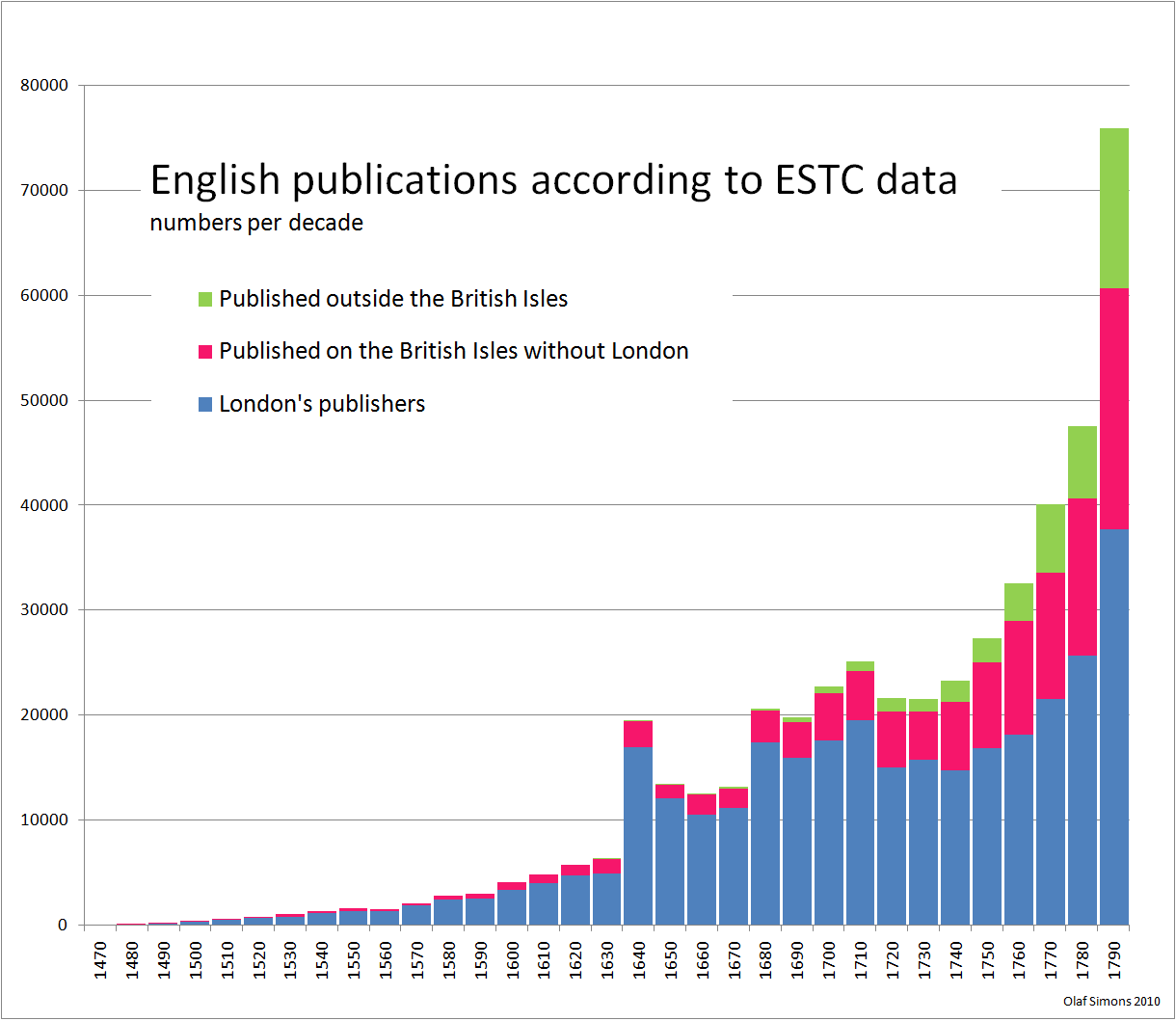
We have seen the exponential growth in interaction and information sharing, described by Schroeder, before.  Media devices are to the Age of Entrepreneurship, or Startup Rising, what paper and printing presses were to the Age of Enlightenment.

English Short Title Catalogue 1470-1790.
The Geeks of Color who I dedicate this blog to are not just being underappreciated, under-noticed, and underutilized (as the CNN coverage suggests).  They are being profiled by faux environmentalists, targeted by Anti-Gray-Market corporations, and actually arrested (Joseph Benson) or their goods seized (Hamdy Mousa), see Environmental Malpractice blogs.

The kind of "witches brew" enforcement by Interpol's "Project Eden" is overseen ghoulishly at USA EPA by none other than the Environmental Justice department.  It is an Orwellian Scale of dysfunction.  Black is white, up is down, recycling is waste, reuse is dumping, progress is degradation, freedom is exploitation.

How to Fix E-Waste in Africa in 5 Easy Steps

StEP into recycling
Here is a roadmap for recycling used electronics in Africa, in 5 Simple Steps.

1.  Correctly report the problems.  
African cities have had TVs and electronics for several decades and generate their own "e-waste".  Most of the "ewaste" filmed (BAN, Greenpeace) at dumps was not recently reported, but "takeback" from reuse markets which import newer product.  We want to further reform the trade, not to nuke it.

2.  De-Criminalize Purchase for repair and reuse in the EU.   
The reuse people are not "going back to Eden" if you boycott them.  They are tinkerers who create good jobs and affordable product in African marketplaces.  We want to improve their jobs, not to nuke them.

3. Use value of exports to incentivize domestic African takeback infrastructure.   
Many Africans who purchase imported reuse goods also do repair for domestic electronics. The abandoned repairs are a form a product takeback infrastructure. In fact, it's EXACTLY the same as the evolution of electronics repair and sale in Massachusetts in the 1970s.   
TV repair shops learned they could make more money if they offered a choice of Retail Replacement as well as Repair, letting the consumer make a choice.  When the consumer chooses not to repair (or worse, asks for the unit to be repaired but then changes their mind and doesn't return for it), the TV repairperson becomes a takeback operation.  When Masschusetts DEP enacted the first "ewaste" law in America (CRT Waste Ban), it was a TV repair family which created the largest TV recycling operation in the USA.  Africa is on the same path.

4.  Recycling, Reconciliation and mass balance.   
Hand-labor recycling is actually cleaner and produces better results than mechanical shredding. Just don't burn the items you disassemble, and recycling is still profitable.  The caveat is CRT glass and mercury backlighting.
Left purely to the free market, Africa will have little incentive to properly recycle CRT glass (the most expensive component).   The value of reuse exports should be adjusted, reducing sale price to Europe or the USA according to the actual recycling and takeback, and should be monitored, or they will accumulate the same CRT glass piles the USA has accumulated.
This system preserves Tinkerer Blessing jobs (compared to StEP's OEM-funded solution).  It will also work in India and other emerging markets.  But there's one immediate step we need to take first.

5.  Where scrap recycling, repair, and refurbishment already exist, nurture it.
Major CRT glass recycling operations have been shut down by friendly fire.    In Indonesia, Malaysia, and Southern China, semiknockdown (refurbishing) factories, glass washing operations, and warranty-repair-turned-takeback operations have been closed.  It is not too late to save repair in Africa.  
As Recycling Director for the Massachusetts DEP in the 1990s, I tried always to preserve existing expertise and infrastructure.   Massachusetts had not prepared Salvation Army, Goodwill or St. Vincent de Paul for new freon rules in the 1980s, and created a "white goods" glut.  I was determined not to do that, and we took care of our scrap paper packers, our TV repairpeople, and our charities.   The Massachusetts model of charity partnerships was later adapted by Dell in its Goodwill ReConnect program (I met with Michael Dell and Pat Nathan personally in 2001, suggesting the partnership would take them out of the BAN attack on Dell's Unicor prison recycling program at that time). 
The same partnership approach can succeed in Africa. Rather than demonize, demoralize, insult and ridicule the scrap boys and repair technicians, the entrepreneurs like Joseph Benson or Hamdy Moussa or Souleymane Sao, we need to defend them.   Touche pas a mon pote, E-Stewards.

Memo from Rich: Mine it, Don't Reuse It.

M E M O

3 / 6 / 2013

To:      Third World
From:  Management


Subj:   Reusing "waste" materials from OECD Bosses


Dear Third World:

Your relationship is very important to us.  Please take note of the following memo to reduce need for escalation of conflict resolution in reuse, repair and recycling chains.

It has come to our attention that you are recycling raw materials sourced, as "waste", from our rich nations.  This was acceptable in the past, but we have new management directives for you, based on recent status updates.

Evidently, some nations importing raw materials are salvaging manufactured goods and repairing them for direct reuse and resale.  This began with Japan Victrola Corporation (JVC) ninety years ago, and led to JVC's reuse of victrola systems from RCA, which eventually led to full scale development of the nation of Japan, and eventually, an increased sense of Japanese self-autonomy, descending into World War II.

While we greatly value the mining and refined content of the new products we sell, and accept recycled content as a "green" innovation, we must draw the line at reuse and refurbishment of our product.

Based on past precedents, reuse and repair of products made in first world countries has sometimes led to reduced purchases of our goods in "good enough" markets.  Self sufficiency, through repair and reuse, will break the chain of our relationships with mining and resource rich nations in the third world.

In order to preserve the important relationships rich countries have engendered with consumer nations, we have taken unilateral steps to seize used goods purchased by Africans and other emerging markets, shipped from ports in the European Union and other OECD nations.

Please, respect the relationships we have developed.   The role of the developed nations is to brand and resell to your nations at an added value which allows us to source raw materials from your mines.  Self sufficiency, through reuse and repair, sets a dangerous example which will threaten the growth of our super rich original equipment manufacturing (who outsource assembly to you as well) corporations.

Sincerely,


First World Management

Term Paper II: "e-Waste" Export, Geography of Environmental Justice


Yesterday's thesis about the relationship between land value, environmental enforcement, and pollution, used a map from http://scorecard.goodguide.com/env-releases/land/,  showing toxic release sites on a map of the USA, and a chart from the same website showing the relative amount of toxics generated in specific localities.  When the releases are charted as "an occurance" and each release is given a single data point, the map shows the "superfund sites" to be concentrated in urban areas.

The sites, when weighted by actual tons of pollutions, are 83.75% in the top 20 / 100 sites (suggesting the 80/20 rule or Paretto Principle may apply).  The top 10 sites are in Alaska, Nevada, Arizona, Utah, Nevada, Arizona, Nevada, Idaho, Missouri (Doe Run area), and Orange Florida.  Each of these sites has a "drilldown" function for data at Scorecard.Goodguide.com  Orange County Florida, the one non-western, non-mining area on the top ten list, has a NASA, USA Department of Defense, WR Grace, Dupont, Department of Energy, Chevron industry, etc. on its list of "potentially responsible parties" for lagoon pollution.  The nine sites above it are raw material extraction industry sites, none of which, my thesis states, could function economically inside a high-property value area.

1.NORTHWEST ARCTIC, AK481,382,100
2.HUMBOLDT, NV350,591,683
3.PINAL, AZ248,792,746
4.SALT LAKE, UT138,824,328
5.ELKO, NV83,494,740
6.GILA, AZ57,220,938
7.EUREKA, NV43,572,135
8.OWYHEE, ID28,887,324
9.REYNOLDS, MO27,313,480
10.ORANGE, FL24,032,977


The enforcement and likelihood that a site is identified as a threat is proportionate to its proximity to a landholder complaining about it.  For this reason, the "superfund" target sites on the USA map above are concentrated around cities and population centers.  This "NIMBY" or "Not In My Back Yard" dynamic is part of a normal democracy.  The spotlight on "environmental justice" in the USA focused on the difference the likelihood of enforcement correlated to race of neighborhoods;  that's an overlyer, according to my thesis, for economics and property values.  As I pointed out in one of the Slums Blogs last spring, 5th Avenue in Manhattan had auto repair shops a hundred years ago... but these relocated to Queens because it's easier to do repair work on an area with lower property value.

The Diagram Below generalizes the relationship between property value, wealth, and awareness of pollution. People live in rural villages, forests, and plains, but their population density is lower, and enforcement of all types is less likely in these areas.


The difficulty or unlikelihood of an enforcement paradigm outside of a population center is why emerging market city-states like Hong Kong and Singapore are more likely to achieve OECD-like status sooner than an emerging market like Malaysia or Indonesia or Brazil... the most recent nations admitted entry into OECD have been small.   Large nations admitted to OECD tend to have gained entrance early on, because of their econmic power (like the USA).  The USA was admitted into OECD while the pollution in Orange County was occuring, but as one of the "founders" of the OECD, the USA benefitted from a simpler formula - wealthy and white.  Not even Japan was not on the first OECD list.

Term Paper on "e-Waste" Export and Geography of Environmental Justice

Thesis:   Woke up, got out of bed, dragged a comb across my head... And wrote a thesis chapter in one sitting.

Regulatory burdens are primarily driven by property value.   People are mobile, but their investment in property is a non-liquid asset, and they will pay a lot to keep it from being polluted.  If it's federal land out west, or a jungle island like Borneo - not so much.    Borneo has more species and more "environment" to spoil, but the property values there make it easier to mine than a richer vein of ore on Long Island.

As wealthy neighborhoods have resources to worry about smaller and smaller cognitive risks, compliance with risk (e.g. toxics in air or wipe tests, employee safety standards) become more expensive in wealthy jurisdictions.  This provides incentives for markets to outsource, or purchase from, areas with lower property values and less regulatory oversight.

This phenomenon has been examined through a lens of "environmental justice" for two decades.  Groups of people who tend to live in less affluent neighborhoods tend to be less critical of local employers who tolerate these risks.  Whether the "disproportionate enforcement" of standards is based on race, income, or real estate value, it coincides with the opinions of neighbors.

In environmental risk, the "worst neighbors" are the industries with the highest toxics and workplace hazards. These are know to be metal mining.  Virgin ore extraction is strongly correlated with releases of mercury and lead.   The number one source of mercury in the USA is gold mining;  number two is silver mining.  The more valuable an end product, the higher the tolerance for pollution, but the farther the activity occurs from high property values.

During the past 50 years, this dynamic has led to the "most polluted places on earth" being located in the least accessible, lowest property values on earth.  Property value is known to be correlated with demand for the property, and remote property has less demand.

Kabwe Zambia has been named the most polluted place on earth (Time Magazine).

La Oroya, Peru is definitely in the running. (NY Times)

Even within the confines of the USA, the most toxic industries are found in the most remote places, usually on federally owned land (a private landowner is less likely to tolerate pollution than the public landowner).  Of the top ten most areas with the most toxic releases, the first eight are in remote areas.. and (according to Scorecard.goodguide.com TRI reports), the states with the most land covered by the General Mining Act of 1872 have the most toxic releases.

1.NORTHWEST ARCTIC, AK481,382,100
2.HUMBOLDT, NV350,591,683
3.PINAL, AZ248,792,746
4.SALT LAKE, UT138,824,328
5.ELKO, NV83,494,740
6.GILA, AZ57,220,938
7.EUREKA, NV43,572,135
8.OWYHEE, ID28,887,324
9.REYNOLDS, MO27,313,480
10.ORANGE, FL24,032,977


Calculated as a percent, the Pareto Principle (80/20 Rule) appears to apply.  The top twenty sites on the list of 100 are 83.75% of the total toxics:  The top 4 sites of the top 20 represent 73% of toxics.


Total Toxics Emitted (Top 10) 1,484,112,451

All Top 100 1,991,863,954
Top 10 of 100 74.51%
Top 4 of Top 20 73.11%
Top 20 of 100 83.75%


Yet spending on "Superfund Enforcement" is not correlated with the toxics... it's correlated to property value and population.  One has to wonder how many sites on federal lands haven't even been sampled... if a pound of mercury drops in the forest, and no regulator is there to detect it, it still makes pollution.


This data is USA only, but the trend (in my thesis) is that the more environmentally damaging or toxic a process (e.g. gold or silver mining), the further the extraction will be placed from property values and populations.   Property value correlates with population up to a certain point (Manhattan Apartment) and then declines (ghettos and slums) because the more income people have, the more personal space they can afford.

Fast income growth would be associated with increasing property values.

In this thesis, the "good enough market" will be a rapidly emerging city, with electricity and potential wifi (like 1990s Guangzhou and Lima Peru, Cairo and Jakarta in the 2000s).  There is a labor force here, but the percentage of that labor force engaged in scrap wouldn't account for the fact that nothing "e-waste" is being shipped to rural areas even lower on the evolutionary scale;  for that matter, the presence of e-waste in concentrations at Guiyu or Agbogbloshie (with proximity to Shenzhen or Accra, cities growing at a faster than average pace for their continents), and the absence of a proportionally similar concentration of E-waste in even poorer cities like Mogadishu or Port-au-Prince, would be best explained by the growth and value added and not by the economics of externalization of pollution.

Haiti is closer and poorer than Accra or Kuala Lumpur, but the prices offered for e-scrap are much higher in cities (see Alibaba or Recycle.net) which are growing.

This establishes a reverse normal curve.  The demand for "used goods" and "cheap displays" like CRT monitors is very low in Manhattan, rises in middle income markets earning $3000 per year, and then drops precipitously again in very poor cities.    Mining, in comparison, grows in direct proportion to poverty, the lower the income level and property values, the greater the potential investments in raw material extraction.  You find coltan mining and gold mining investments in jungles.  A single mine like the OK Tedi Copper Mine, in a single day, dwarfs the toxics created by all the aqua regia and wire burning in all the cities of the world for a year.  If you want to find cataclysmic environmental damage, look in the opposite direction of recycling and repair.

According to my thesis, it is therefore the perception of "waste" formed by rich cities in areas with high environmental enforcement (driven by property value) which has been projected onto middle income cities which are actually buying used goods for "good enough" purposes.  It is true that the middle income cities have lower wage and environmental standards than the rich cities, but the correlation is exaggerated if you can't replicate the business in an even poorer city.  This is an example of "cognitive risk" which is marketed to by corporate interests in planned obsolescence, anti-gray markets, and competition from contract manufacturers scaling into good enough market economies.

It is the relative inexperience in rich nations with extreme forms of poverty which cause us to conflate "good enough markets" with images of suffering.   We create artificial groupings like "non-OECD" which basically mean "not as rich as us".   It's like creating a term "not forest" to describe everything that is not a forest, grouping deserts, meadows, swamps, and tundra together into a single term.

There are many types of snow.

End of Part 1.


AWESOME Exploitation: Crowdsourcing the Developing World

Having documented ad nauseum that 85% of the computers sold to Africa are reused and repaired, and documenting that the 3B3K market (3 billion people earning $3k per year) has added internet access at 10 times the rate of growth of the "developed world", how do we create employment without outsourcing a job?

We outsource work done by an overheated machine.... IBM's Big Blue, perhaps.  It's "immaculate exploitation", no jobs exported, no toxics, creating jobs out of code.

This AWESOME article from MIT Press (found on /.), Human Workers Managed by an Algorithm, explains how human interaction is more efficient for certain mega-computing processes.

Supercomputing is actually more efficient if some of the algorithms are done "by hand".  The programs have to check off boxes which are obvious... humans can do it instinctively, and crowd-sourcing limits or eliminates subjective bias.   The problem is you just cannot afford to do it in Silicon Valley, your maximum return is $4 per hour.
By assigning such tasks to people in emerging economies, MobileWorks hopes to get good work for low prices. It uses software to closely control the process, increasing accuracy by having multiple workers perform every task. According to company cofounder Anand Kulkarni, the aim is to get the crowd of workers to "behave much more like an automatic resource than like individual and unreliable human beings." 
Four bucks per hour is great for MOST people in the world.  Awesome, in fact.   And they are not taking jobs away from  Big Blue, they just give the megacomputers more "leisure time" (if you are stuck in the thinking of Marx, Hegel and John Stuart Mill).

The bad news? Oh gee, people in "Developing Nations" earning less than minimum wage, there's gotta be a downside. Quick, let's send a reporter to photograph the dirty clothes their children wear, the mud huts, trash being burned at the Accra or Lagos landfill.  Because these jobs are available to people who can only afford a $20 used CRT monitor.   Yes... there's a photo of a burning computer monitor that needs to go into the article somewhere, or a "witches brew" of bad capacitors associated with the good enough market.

"Exploitation".

The Trouble with "E-Waste" Stewardship: Part II

Part II:   How States Rushed Into Surplus Technology Policy

We've all got our stories about the ten most feared words in the English language:  "I work for the government, and I'm here to help."  I spent the 90s as a regulator, with a bigger budget and more educated staff than I have today.   And I spent the last decade working in a newly regulated field, as a small business entrepreneur.

Despite company problems with state environmental regulators, most in my business agree that regulators are doing an important job.  If they weren't there, it would be cowboys and Indians.  I would be afraid to invest in doing something better, because another company might seize a share of the market by doing things worse (more cheaply).
  • If you don't take environmental justice and regulation seriously, I'm not the source for your policy.
  • If you take environmental regulation too seriously, I'm surely not the source of your policy. 
 "And that's ok."

Improving on an incomplete design:   If there is an existing set of regulations about squares, we can imagine a better and improved policy about squares.  Our "squares regulation" policy may evolve, differentiating between sides, producers of sides, areas, lengths, completion, fill color, right angles... Imagine an entire cradle to grave, complete lifecycle analysis, encompassing regulation of the "square industry".

Along comes a diamond shape.  Then a rectangle.  No problem.  The regulators derive a new policy based on the precedents set by the square policy.  They may just add a "check box" to the form.  The triangle... it's an interesting discussion, draft policies go back and forth.  But it's nothing the regulatory and policy community cannot handle.

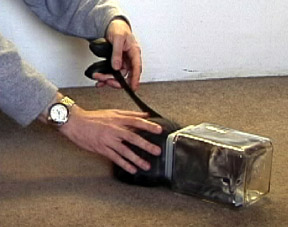
Along comes a kitten.

You can see where this is going.

Working and surplus and repairable surplus electronics have a lot of "moving parts", end markets, lifecycles and ingredients.  But whether they are one man's trash or another man's treasure, the question is when or whether they have been "discarded".  What stewards are trying to do is make it easier to discard without making it harder to donate, sell, or use... and they got in the way of trade between Trash Man and Treasure Man.   This is ultimately about regulation of wealth and value.

EPA's 2007 CRT rule was meant to evolve the existing RCRA definitions for hazardous waste, while admitting that reuse didn't allow them to fit into the previous amendments to govern "universal waste".   The first RCRA solid waste rules had to differentiate for hazardous wastes, and the hazardous rules were too onerous for the product wastes that were generated universally.   The EPA UWR re-simplified hazardous waste so that companies could collect it from millions of small businesses and homeowners (though some states simply allowed "household" to mean non-commercial, and the lamps are dumped with MSW back at RCRA Square One.

The newest version of the CRT Rule tries to take the square, modified for rectangles, and give it a three dimensional shape - a shape to govern not the status of the good (discarded), or the toxicity (TCLP), but adapted for another dimension - time.   Since the reuse CRT might be discarded SOMEDAY by someone else who bought it, in the future, records on the sale needed to be kept, or a loophole could result.


The update to the CRT Rule takes it even another dimension, collecting the same record on the sale of the same device from the broker, the generator, the buyer, etc.  Three sets of records are better than the one set, which EPA never had time to read, ask for, monitor, etc.

The new rules involve not just records of different parties to the transction of goods which will one day (we suppose) be discarded.

Meanwhile, regulators have been using derivatives of the toxic waste risk to take "waste" into new dimensions.  Including the past, or the original cradle of the product.   CRT Rule follows the "future waste" to the country it retires to, and ROHS follows it back to the maternity ward.

What could go wrong?

ROHS (elimination of lead from solder) creates incentives for tin mining operations, once closed in the islands of Indonesia (for environmental reasons) to increase in value and reopen... we mine the coral islands of today to make tomorrow's waste less toxic.

And manufacturers in nations like China and India, where new CRTs are still made, make draconian rules about the used CRTs that will one day become waste, in order to protect brand new manufacturers making CRTs (which will one day become waste).  And the mining companies of lead keep the used CRT cullet from being reused.  Everyone gets into the act.

And Stewardship will solve all of this, we are told, by taking the regulations BACK in time, to the producer, the OEM.   They will set their long time agendas against planned obsolescence aside, and will work in partnership with regulators to protect consumers from ... oh, counterfeit and grey market product, perhaps.

Where is Haliburton?

Ah, yes.  The connection to yesterday's post, about the evolution of landfills to Subtitle C landfills, to incinerators, and flow control.

They are now making shredders to eliminate the labor from hand disassembly.  Those shredders don't sell well in nations which need hand disassembly jobs, or where reuse and repair techs are so talented that they shanzhai used goods into near-new, even counterfeit condition.

What they propose is to put those developing nations into a box.

They will simplify the way we look at the emerging market.

They will just ban the trade, and get us back to Square One.

Back when the perfect shape was the enemy of the good.   There's a Plato Cave somewhere for regulators to find the principles they need to make the policy work.

Which will bring me back to the conclusion of this three part post.

KISS.

Keep It Simple, Stewards.

Don't start your policy around complex electronics made with coltan used for revolutionary internet cafes and surplus property added value planned obsolescence legal software emerging developing toxic market lifecycle jingo kitten problems.

Start with, say LAMPS.

Nairobi and Lima Prove Pixelized World Theory

From the patio above 28 Av Julio in Miraflores, Peru, I can see I've been through 5 different worlds in 12 hours.

The old cliche "first world, second world, third world" was adapted in the 1970s to make the distinctions that "OECD" completely and utterly failed to make.  Within "non-OECD" there were two entirely different worlds.  The "third world/second world" was then dropped by the 1990s, and the term "emerging world" and "emerging markets" was coined.  It better described the BRICK nations (Brazil Russia India China Korea) or BRIC (when it was pointed out that Korea didn't even belong is that pack, it was an industrial superpower like Japan by then).

What we are witnessing in Kenya and Peru is that the entire concept of "nation" and "country" is completely inept at describing movements of recycling, raw material, and waste.   Geographically, it's like trying to fit Youtube into your TV Remote.  It used to be enough to talk about "what country".  Information is pixelizing the world.

Miraflores resembles Barcelona, Penang resembles Miami, Nairobi resembles Guadalajara.

When it's a super-populated nation, like China, the cities like Shenzhen-Guangzhou-Hong Kong conglomerate into something which is so far apart from "OECD" definitions that Basel Convention becomes an NBA referee in a kickboxing ring.

We drove through some very tough barios last night, and our car was accosted by a legless man at an intersection.    I'm not suggesting that the SuperMarcado (Gringo Supermarket) represents the reality of life across Peru, or that the hotel in Nairobi erases Agbogbloshie.  There is a Tech Mall in Nasr City as well as a Goma Market.   There is Guiyu and there is Foxconn.

Most of the waste in the dumps at these cities, and yes I mean e-waste, comes from inside these countries.

I'll try to get pictures of everything.  Everybody in Lima.   We'll feed all their faces into a computer and spit out a trade policy.   Well geez, it makes more sense than CA SB20.

How we think about  Peru:


How many people live in Peru


How others live in Peru


How people recycle in Lima
Fotos de  COMPRO EQUIPOS DE COMPUTO MALOGRADOS

How Lima Sees Lima