Showing posts with label Otherization. Show all posts

Hans Rosling of Gapminder Recognized

A few years ago my son, then a student at United World College, sent me a link to "The Best Statistics You've Never Seen", a TED talk by Swedish doctor and statistician Hans Rosling.  I shared it pretty widely.  In recent years, Dr. Rosling (who still seemed quite young) was increasingly turning over presentations to his own adult son.  Last Friday, we learned Rosling had died of cancer [NYT Obituary]

Over Facebook and Twitter, Rosling has not exactly been a celebrity like Prince or Bowie, but you start to observe really really smart people are all noting his passing.

Here's a short 2015 interview with Rosling with Engish subtitles.   If you haven't seen it yet, go to one of his longer 2006 TED Talk video in English.


It isn't the 1970s.  It has not been the 1970s for over a decade.  The talk about "third world" and "lesser developed nations" and "primtive" and dystopian descriptions are being kept alive by a type of white nostalgia that seeks to leverage exoticism into a kind of nuture-instinct currency.  I do it even now - returning from Africa I find far more photos on my card of grass roofs than of metal ones.  We are attracted to documenting poverty, leveraging schadenfreude, gaining a fantasy of heroicism in the process.

 "Herrschaftskritischer Ansatz" is another good German expression to describe it.

Here is my observation about how Rosling's Gapminder can bring us together.  Yes, this is political.  The wealthier blue state democrat demographic and blue collar red state demographic are both guilty of portraying the rest of the world as seriously far more "other" than it is.



What NGOs Got Right, Got Wrong About E-Waste Exports: Part 1

It is challenging to take 10 years of blogs about ethical recycling, many written in passion, often written in haste, and channel a message which is nuanced, and not just to be brushed away as "denial".  I come from the same generation, post hippy, late 70s early 80s protester.  I shared the same deep sense of alarm from Jacques Cousteau, Jane Goodall, Rachael Carlson, etc., about the population bomb, and the finite nature of world resources.  We read Amory Lovins, Barry Commoner.  Jim Puckett, Barbara Kyle, Ted Smith, Shena Davis, and so many others in our 50s and early 60s grew up with the same Siddhartha Gita Vedanta Black Elk Speaks mantras, and spreading like 1860s prospectors to save parts of the world, we sharpened our arrows and powdered our muskets.

The General Mining Act of 1872 was my target.  I hand wrote letters to my Arkansas Senators, Bumpers and Pryor, in 1980, telling them it was unfair to unborn generations to subsidize the pollution of hard rock mining.  The EPA's Clean Water Act and Clean Air Act were focused like a laser on nonferrous smelters, hitting recycled and secondary smelters hardest (not precisely the same thing btw) but also affecting primary mining and smelting.   The most polluting industry was the first to move offshore, and I shared the alarm of my fellow environmentalists in our 20s and 30s over "externalizing" pollution.

World's 10 Fastest Growing Copper Mining Projects (mining.com)


Copper, Lead, Silver, Tin and Gold mining in places like Borneo, Papua New Guinea, Zambia and Peru seemed like an end-run around our generation's attempt to clean up America's virgin mining to throwaway culture.  And the places where those industries moved to were in many ways a social nightmare. Idi Amin, Mobutu Seko Sede, and dozens of other dictators pocketed "registration fees" for these mines and set up foreign bank accounts, giving rise to the alarms of "Resource Curse".

We were alarmed by the same things.  We protested the same things.  And Africa's "mining map" is growing.

China is charging Africa's mining landscape - 2006 - 2015 maps

Harry Wu recently passed away.  It was thanks to Wu that Americans and Europeans knew about Maos "cultural revolution", which arrested academics for as little as rolling their eyes at Communist Party rallies.  Harry Wu taught us, in the late 1980s, that cheap Chinese toys and tools were often products of slave labor.  We learned about death squads in El Salvador, USA puppet governments like Allende's in Chile.  Globalism was happening, it seemed, for all the wrong reasons.

So what happened.  How did I become what Jim Puckett calls "the biggest thorn" in his side?  We shared so many of the same experiences and same premises.

This is an opening blog to explain what happened, and what BAN and other protest-and-alarm-fueled NGOs have correctly and what they are blind to.  I went to live in Africa for 30 months in the 1980s, and it changed me forever.  But what changed me isn't well represented by poor African children, or poor Chinese children, or halloween language of  "e-waste hell" and "child labor" and "shantytown" and "rice paddy" images.  What changed me are individual people, individual friends, individual rivals, individual students.

Do the actual people in emerging markets serve as nothing more than the NGO's wallpaper?  What divides Fair Trade Recycling from the traditional anti-globalist NGOs of the early 80s is Q-method.  We talk to people overseas.  We get translators, we visit, and we listen.  So we were the first to find out that one NGO in particular was blatantly falsifying data, to the point where it merits a defamation lawsuit.  I loved, adored my family in the Ozarks, but racism is a bridge too far.

Fear of others.

Exoticism.

Poverty porn.

The tactic of scare-mongering is everywhere, and journalists are in on it.  It is easier to make a story exciting and alarming than it is to actually inform.  It's not the datajournalism, it's the photography.  It's not the steak, it's the sizzle.  If it bleeds, it leads.  Journalists and NGOs share the same great and noble mantras of the 1960s and 70s that I do.  They want to save the planet, and basically do what an older generation referred to as "earn their place in heaven".  We didn't call it "to sit beside and hold the hand of Jesus", our reward was more nirvana, more transcendant.

But like the pitfalls of the snake handlers in the Ozarks, we took ourselves too seriously and stopped measuring.

Time to watch again the Hans Rosling TED Talks.    Faith is gravity, but truth is light.  We share the purpose, the gravity, the traction of making the world better for current and future generations.  But Basel Action Network has been selling a product that doesn't work in the low low light of ignorance, and when they are confronted with data and information, they have begun shooting in the dark.

Part II:  What they got right

EU E-Waste Policy: White Knights Seeking Middle Ground On a Slippery Slope (Part A)

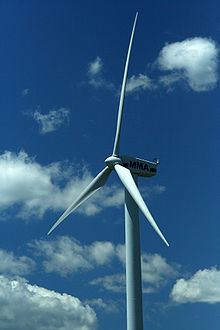
"Solving the E-Waste Problem"  (StEP) is a European association of highly respected professional and academic experts with strong policy pedigrees.   The "Problem Solving" effort is coming into its eight year.  American environmentalists are keen for European environmental leadership.   The electric windmills fanning the landscape are a testament to proactive policy.

StEP represents itself as a "middle ground" organization.  A lot of us have pandered for that position.  BAN labels us as "apologists".

It is natural to seek to leverage the sensational press around "ewaste exports" and the growing tome of facts about international city junkyards.  Agents of conscience naturally seek a middle ground between the Basel Action Network and...  Facts.  Or is it a middle ground between us and "The Other?"   Otherization, or exoticism, the "informal" six out of seven billion people, who have been labelled so likely to poison their children that it warrants a billion dollars in shredding machines and arrests of African traders.  Since BAN has imposed a kind of "original sin" on anyone who has ever purchased an electronic device, replaced one, or sent one for recycling, we begin with a sense of guilt.   "Agents of conscience" once included exporters, a previous generation of ICT and Internet Access "white knights", organized to heal the "digital divide".

These forces have given rise to another EU based organization seeking "middle ground" between internet access and environmental risk of computer waste.  RecyHub has posted an essay on ICTWorks which follows the path into the "middle ground", or "best of two worlds".  RecyHub has asked me, via Twitter, to review it.    ("They asked for it" is an English idiom).

On the one hand, they get the easy A.  A for "Applaud Anything" that moves Europe from the extremely bizarre far-left arrests of African businesspeople, geeks, and technicians.   Any correction from the 2009-2010 "years of breaking CRT glass", is a gift horse.  But since they asked, I have to tell them... they are at a halfway point between alter-globalization (WR3A) and racist slander.
"Electronic components contain toxics and their manipulation without proper tools can easily release them, resulting in environmental damage and health hazards. Up to now electronics have been mainly used in the most industrialized countries and dumped somewhere else when they reached their (perceived) end of life. Although this trade geography is slowly changing, some countries continue to be known e-waste recipients. Ghana, for instance, is trapped between the desire to modernise by acquiring and refurbishing technology and the damaging effects of it when it’s not reusable...
"After all, they don’t have the technology to process that material properly. E-waste exports must therefore end. That’s why a strict ban like the one proposed under the Basel Convention makes sense (taken even further to forbid any e-waste trade), and why the work of countering illegal trade must be supported. 
One thing I've always loved about Europe is the tradition of arguing sophisticated philosophical positions from a historical perspective.  The Europeans often assume Americans don't do that, that we operate in business from some kind of a "lizard brain", seeking efficiency and profit.

OK, Critique of Part A, in pure reason.
  1. Toxics are not "easily released".  Europe had to build shredders, which certainly releases them.  Hand disassembly, harvesting parts and components (down the chips and capacitors and power supplies) is not going to yield toxics.  
  2. Up to now electronics have not "mainly" been dumped somewhere else at the end of their perceived life.  
  3. "Some countries continue to be known e-waste recipients.  Ghana, for instance, is trapped..."  This is absolutely contrary to the study RecyHub refers to, which says Ghana is NOT an "e-waste recipient" but is a 85-91% reuse recipient which generates 90% of its own "e-waste".
  4. "Proper tools"?  A downstroke baler is the most complicated tool we use in Vermont.   The best one we bought used for $2,000.
On the third point, simply visit RecyHub's website, where an entire tab titled "Ghana" offers very scientificky looking "statistics".  It links to a Google Documents Page, with "comment function" enabled, which mostly takes statistics from the E-Waste Assessment (Ghana) study (they should also read the larger Nigeria E-Waste Assessment report).
"9% of the total imports of used equipment is non-repairable and is directly passed on to collectors and recyclers."
The very report they cite disproves most of the allegations.  Nigeria's Assessment was more precise, finding 91% repair and reuse, but we'll accept the 80% estimate from the Ghana study (statistics taken from interviews in the latter case, from actual sea container sorts in the Nigeria study).  In either case, brand new product is as bad or worse.  In either case, the studies explain how Nigeria came to have (World Bank 2007 statistic from 2006 assessment) 6,900,000 households with television.  And cities which have had TVs since Prince Nico Mbarga was on the top 10 are generating junk TVs, just as American and European cities do.

What do developing nations really need?  More development.  And taking away "trade" from the toolkit is exactly what they need least.

Where do "tinkering", "reuse", "recycling", "dumping" etc. fall in Harvard's new Social Progress Index?  If you spend time with people who live in the emerging markets, the developing nations, the cities of the "not yet OECD", their aspirations and measures of progress make Europe and America's obsession with "used electronics dumping" seem obscured by clouds of disinformation.